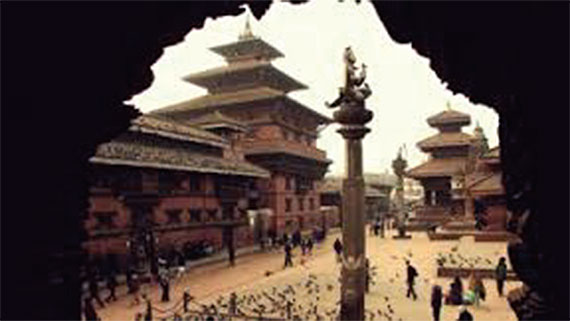
Nepal to criminalise evangelisation and religious conversion

The Nepalese president is expected to approve a bill that will outlaw any attempt to convert someone to a different faith, alongside the “hurting of religious sentiment.”

The country’s parliament passed the law, which will effectively ban evangelisation, on 8th August as fears grow of a crackdown on religious minorities, especially the country’s small Catholic population. Anyone convicted under the new law, including foreign visitors, could face up to 5 years in prison for seeking to convert a person or “undermine the religion, faith or belief that any caste, ethnic group or community has been observing since sanatan [eternal] times.

Anyone who “hurts religious sentiment” also faces up to two years in prison and 2,000 rupee fine. Although the bill does not mention any religious group specifically, it is similar to Pakistan’s blasphemy law, which is frequently abused to harass minorities, particularly Christians. Nepal is over 80% Hindu, with Christians making up barely one per cent of the population.

International free speech group the Alliance for Defending Freedom (ADF) says that in 2016 eight Christians were arrested in Nepal after sharing a comic book on Jesus with children. Since the overthrow of the monarchy in 2008, Nepal’s republican regime has become increasingly authoritarian. The country’s government has been dominated by Moaists and Leninists who have struggled to establish a stable government.

A new constitution, finally approved in 2015, already forbids any attempt to convert a person from one religion to another, but no law to that effect has been formally enacted until now.
Tehmina Arora, legal counsel and director of ADF India, said: “International law and the human rights treaties the country has signed protect religious minorities. They explicitly allow conversion, missionary work, and public worship. Nepal risks returning to a totalitarian society in which individual rights are being severely curbed.”

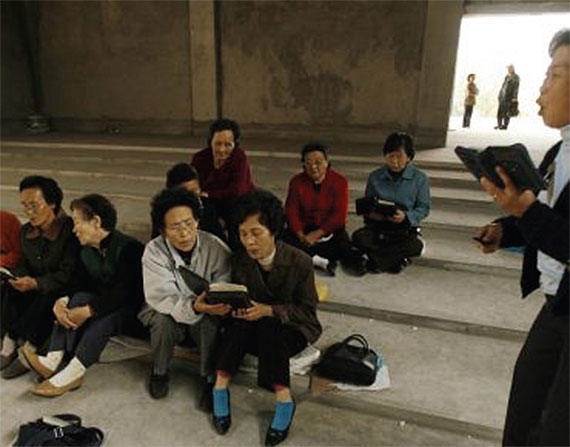
Christianity grows in North Korea despite persecution 

North Korea’s underground Christian community is thriving despite followers of Christ suffering horrific torture and brutal deaths at the hands of the communist government, according to Fox News.

According to Open Doors, a Christian persecution watchdog site, North Korea has ranked No. 1 as the deadliest place for Christians for the last 16 years. Yet, North Korea still has an estimated Christian population of around 9 million people, or 36 percent of North Korea’s total population.

The Korea Risk Group told Fox News that North Korea’s Constitution maintains a non-discriminatory policy concerning the practice of religion, but this is just a facade to please visiting foreigners. Foreign diplomats and tourists are wheeled past state-run churches and mosques for various faiths. Each of these churches has the appropriately dressed clergy worshiping at the appropriate alters with congregations of people passing around collection plates.

According to the Korea Risk Group, this is a show performed by hand-picked state workers. The reality is that Christianity is seen as dangerous to the state, according to Fox News. Those caught practicing it face the harshest penalties.

Catholic priest averts bloodbath in Mindanao convent

A Catholic priest convinced an armed and allegedly “drug-crazed” former choir member to surrender peacefully after he barged into a convent in the southern Philippine island of Mindanao on Ag.23, police said.

Father Roniedon Val-moria, parish priest of San Isidro Labrador parish in Naawan town in Misamis Oriental province, emerg-ed safe after almost four hours of negotiations between police and the suspect, Lavernton Rogedas. The priest said Rogedas used to sing in the parish choir.

“He barged into the convent with a gun. I was not taken as hostage,” the priest said in a radio interview. “He was just there to seek safety from the policemen who were running after him.”
Father Valmoria said he pray-ed for the suspect and convinced him to surrender peacefully.

Senior Supt. Rolando Destura, Misamis Oriental police director, said Rogedas was carrying a .45 caliber handgun and was high on drugs.

Rogedas had gone to the Naawan police station to clear a relative who was implicated in illegal drugs. Police said they noticed a gun tucked into his waistband and asked for it.

Rogedas resisted, briefly brandished the gun and then ran to the convent, which is near the police station, Destura said.

Spiritual poverty and fatalism a drawback for Nepal

Fatalism, including acce-ptance of harmful traditions, exacerbates poverty in Nepal.

However, a lack of spiritual awareness and fatalism are also impedi-ments to progress among educated, well-to-do families.

Karma, the idea that a person’s fate results from their deeds in a past life, can constitute an escapist mentality.

Fatalism, that can be reflected in traditional plays and folk songs dealing with day-to-day struggles and sorrows, needs to also be subject to intellectual reflection. Nepalese society is still trapped by cultural malpractices and superstitions.

There has been a huge gap between Nepal and developed nations in terms of social development. Notwithstanding the sharing of some modern technologies, including social media, Nepal’s lack of sequential development has widened a generation gap.

For example, children in the 1990s still played with clay and stone. How-ever, the newest genera-tion jumped to smart-phones. More positive aspects of Nepalese socio-cultural and religious values have been degraded and confused. Spiri-tuality and social education have been usurped by militancy and street vandalism in support of political demands.

Pakistani Christian dies in jail, authorities accused of neglect

Leading Catholic human rights advocates in Pakistan are calling for authorities to take action after a Christian prisoner died in jail due to a lack of proper medical attention.

Dominican Father James Channan, the Director of Peace Centre Lahore, told Crux the death of Indrias Masih was the “result of negligence” by the authorities in the jail.

Masih was one of 42 people arrested as suspects in the lynching of two Muslims in the aftermath of a March 15, 2015, terrorist bombing of Christ Church, a Catholic church in Lahore’s predominantly Christian Youhanabad neighbourhood.

The two Muslims were suspected by a mob of having been involved in the attack, a charge their families and the authorities deny.

Christian leaders in the city say Masih himself was innocent of being involved in the revenge attack.

He died on August 13 of gastrointestinal tuberculosis. Channan called his death “sad and shocking.”

The National Commission for Justice and Peace, an office of the Pakistani bishops’ conference, said the family and community are demanding the government treat this incident as a murder case.
“His untimely death was a result of negligence on the part of jail authorities, poor prison conditions, consumption of unclean water and food. His deteriorating health was continuously neglected by the jail authorities. According to the family, Indrias was a healthy person and never had any major ailments before his arrest,” the NCJP said in a statement.

Bishop Joseph Arshad, the Chairperson of the NCJP, said police sensitivity should be made a priority, adding the police are often inconsiderate towards the sick and needy.

Pontiff to visit Myanmar, Bangladesh in November

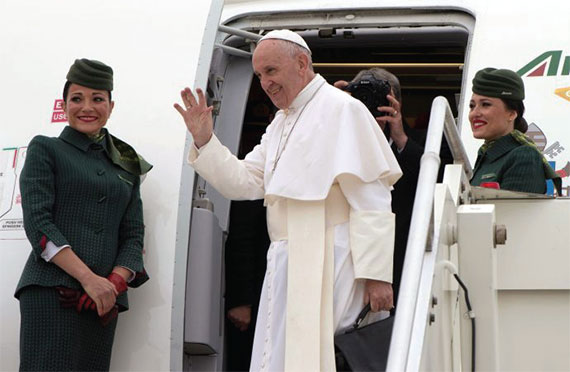
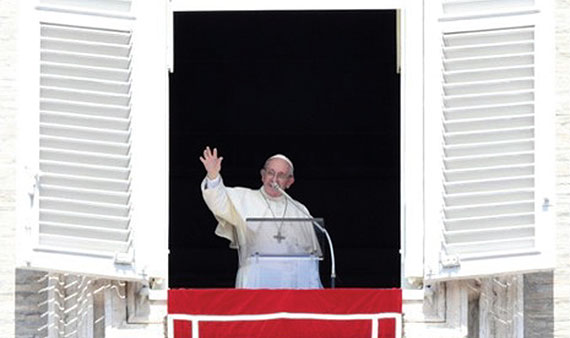
Pope Francis will visit Myanmar and Bangladesh in November, the Vatican has confirmed. Greg Burke, the director of the Vatican press office, announced on August 28 that the Holy Father will travel to Myanmar on November 27, remaining in that country until November 30. He will stop in Dhaka, Bangladesh, from November 30 to December 2 before returning to Rome.

The possibility of a papal trip to Myanmar had been a subject of heavy speculation for several weeks. The plan for a stop in Bangla-desh, a heavily Islamic country, was not generally anticipated.

Some Buddhist leaders in Myanmar had expressed opposition to a papal visit, because of the Vatican’s public protests against the persecution of the country’s (Muslim) Rohin-gya ethnic minority.

Pope Francis had repeated his pleas for the Rohingya in his regular public audience on Sunday, August 27: the day before his trip was announced.

In Myanmar the Pope will visit the cities of Yangon and Nay Pyi Taw, Burke said. The papal spokesman did not mention any cities in Bangladesh other than the capital, Dhaka, as stops on the papal itinerary. More details of the schedule for the papal trip are expected soon. The motto for his visit to Bangladesh is “Harmony and Peace.” According to the explanation given, it’s a call to harmony among “religions, cultures, peoples, society, history, heritage and traditions” in the country, while peace refers to that experience, “as well as a future aspiration with a vision of integrat-ed human and spiritual development in Bangladesh.”

“Love and Peace” this is the motto of Francis’s visit to Myanmar. “Christian peace is founded on Love,” says the statement released by the Vatican. “There cannot be peace without love. Love, which the people of Myanmar value most, will pave the way to peace. The visit of our Holy Father is to promote Love and Peace in Myanmar.”

After the trip was confirmed, Bishop Paul Ponen Kubi of Mymensingh, Bangladesh, told Crux that the “tiny minority” that is the Church in his country lives in communion with the universal Church, and also “in harmony and peace with different cultures, religions and society.”

‘Enemy’ Pope Francis is a symbolic target of ISIS

“Remember this, you mis-creants – we shall be in Rome, we shall be in Rome, Inch’ Allah!” The threat is clear. It comes from an ISIS Jihadi in the Philippines. In a video released on August 25, a group of “soldiers of the Caliphate” filmed themselves desecrating the church in Marawi, a southern town where Jihadists and government forces have been fighting since the month of May.
As he speaks these words, the man shreds photographs of Benedict XVI and Francis. “After all their efforts, it will finally be the religion of the cross that will be broken,” a voice adds off camera. “The hostility of the Crusaders towards Muslims has only served to strengthen the young generation.”

“I saw, that video that was shown on TV: evidently, one cannot avoid worrying. Especially because of this senseless hatred that there is,” said Italian Cardinal Pietro Parolin, speaking to reporters during a Catholic gathering in the Italian city of Rimini.

The prelate also said that, to his knowledge, no particular new security measures are in place in the Vatican as a direct result of that video, and the alarm level is the same as before. Threats by ISIS against the Vatican are nothing new. This video was just the latest example, but it shows that the specter of an attack against the Pope or of the “taking” of the Vatican City by its combatants is still quite real.

In fact, the use of the term “Crusaders” to designate Westerners is a regular reminder of the way the West and Christianity are used synonymously in the rhetoric of ISIS. The Pope thus becomes a prime symbolic target.

Evidence of this is to be found in Dabiq, the English-language propaganda magazine of ISIS, since October 2014. One of its first editions offers a front-page photo montage showing the flag of the Jihadi group flying over the obelisk on St Peter’s square with the title “The Failed Crusade.”

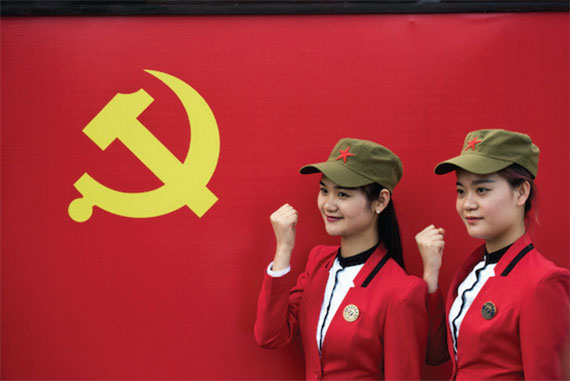
Chinese communist mouthpiece warns Party members: Religion is not a private matter

A major article in an influe-ntial Chinese Communist Party (CPP) journal has warned cadres that adopting religious beliefs is not a private matter. Qiushi is the top-level journal on communist theory run by the Party’s central committee.

The article by Wang Zuoan, director of the State Administra-tion of Religious Affairs, is entitled “Be politically minded while doing religious work.”

Chinese media in and outside of China picked up on his ad-monition to Communist Party members and officials that they should not believe in any religion. When the regime issues specific warnings, it is widely seen as reflecting high-level concerns. There is no doubt that some Party officials have become religious followers.

There are an estimated 90 million Communist Party members in China, with many joining to enhance their career prospects. There is no credible estimate of just how many of them have adopted a religion.

However, Wang Zuoan, in his lengthy article, noted that this had occurred with some senior Communist Party cadres, not only mi-ddle and low-level regime officials. He called for “edu-cation” to induce people to abandon their religious faith or, if necessary, face disci-plinary action.

Pope invokes ‘magisterial authority’ to declare liturgy changes ‘irreversible’

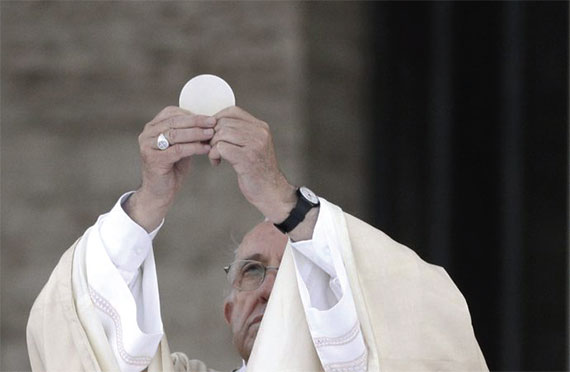
Addressing a group of liturgical experts on August 24, 2017, Pope Francis said that after the teaching of the Second Vatican Council (1962-65) and a long path of experience, “We can affirm with certainty and magisterial authority that the liturgical reform is irreversible.” The declaration came in a speech to Italy’s “Centre of Liturgical Action,” which sponsors an annual National Liturgical Week.

By “liturgical reform,” Pope Francis meant the changes in Catholic rituals and modes of worship which followed from Vatican II, the most immediately visible elements of which included Mass facing the congregation, the use of vernacular languages, and a stronger emphasis on the “full, conscious and active” participation of the people.

Although Pope Francis is often seen as having less interest in liturgical questions than some of his predecessors, this was a lengthy and carefully footnoted reflection, roughly 2,500 words in all. He began by highlighting some of the cornerstones of the liturgical movement of the 20th century, a reminder that the ongoing reform is rooted in tradition, and was actually kick-started by two Popes often seen as  ”conservative”: Pius X, who created a commission for renewal in 1913, and Pius XII, with his encyclical Mediator Dei and changes to the liturgy of Holy Week.

According to Francis, these changes came to fruition with 1963’sSacrosanctum Concilium, the Constitution on the Sacred Liturgy of the Second Vatican Council, the application of which is still ongoing, including overcoming “unfounded and superficial interpretations, partial revelations and practices that disfigure” [the liturgy].

Quoting Pope Paul VI, the Argentine pontiff added that this process is still ongoing in part because reforming the liturgical books is not enough to “renew the mentality.”

Also using the words of his predecessor, Francis called Catholics – priests and laity alike – to leave behind “disruptive ferments, which are equally pernicious in one sense and the other,” and to “apply integrally” the reform approved by the bishops who took part in the Council.

Battles over liturgical practice have been a chronic feature of Catholic life since Vatican II. A desire to maintain the older Latin Mass, for instance, was a primary force prompting French Archbishop Marcel Lefebvre to lead a group of traditionalist Catholics into a break with Rome. During the 1990s, the church in the United States engaged in a decade-long debate over how to translate liturgical texts into English and other matters dubbed the “liturgy wars.”

Nigeria: Archbishop calls for compensation for victims of Boko Haram

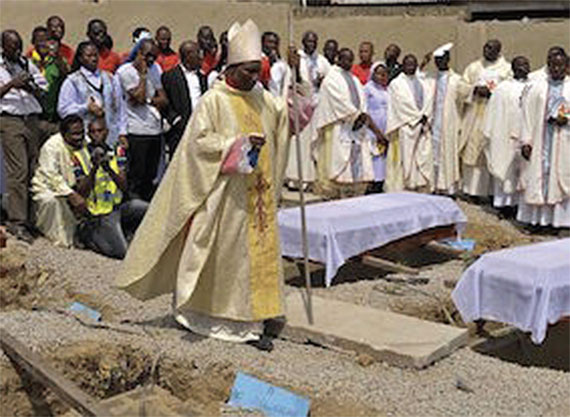
A Nigerian archbishop has called on the government to compensate churches and other victims of Islamist terror group Boko Haram.

“In the past six years, insurgents have attacked churches and other Christian places in the north, but the federal government is yet to compensate the victims,” said His Excellency Msgr Mathews Manoso Ndagoso, Archbishop of Kaduna, speaking on behalf of the Catholic Bishops of Kaduna Ecclesiastical Province.

The conference comprises the dioceses of Kaduna, Sokoto, Kotangora, Zaria, Minna, Kano and Kafanchan in the north of Nigeria, who held their plenary session, at the cathedral in Minna this week. Archbishop Ndagoso told journalists: “I want to inform you that the Catholic Church has not received any support from the federal government for the Churches affected.”

The first terrorist attack was on St Theresa Catholic Church, Madalla, on Christ-mas Day, 2011 in which 32 people were killed and many more injured. Last year, some youths attacked St Philips Catholic Church, Bakin Iku, near Suleja, destroying properties valued at several millions of Naira.

“No one has even sympathised with us,” the Archbishop said. Msgr Ndagoso said that the federal government was supposed to be responsible for giving assistance to the churches and the victims.
In May 2015, Aid to the Church in Need reported that more than 5,000 Catholics in northeast Nigeria had been killed and at least 100,000 had been displaced.