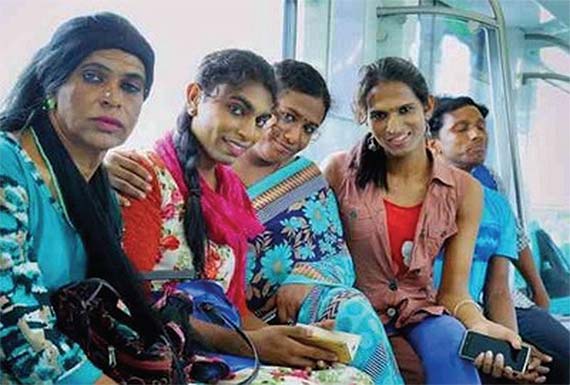
CMC sisters give shelter to Kochi Metro trans employees

The nuns of the Provincial House of the Congregation of the Mother of Carmel (CMC) providing accomodation to the transgenders employed by Kochi Metro who were facing homelessness.

In one of the first major initiatives to employ transgen-ders, the Kochi Metro Rail Ltd (KMRL) hired 23 trans employees through a Kerala government poverty eradication programme aimed at women called Kudumbasree. However, no one was willing to provide the transgenders accommo-dation, and many of them were forced to skip work.

The KMRL has now been able to solve the problem, with the commitment from the CMC nuns. Sister Pavithra of CMC confirmed to Catch that the Congregation will provide “shelter to the transgenders working in KMRL.”

The nuns got the letter from Kochi Metro and are yet to figure the logistics. “They haven’t yet told us the number of people who want to reside. May be 12-13,” she said.
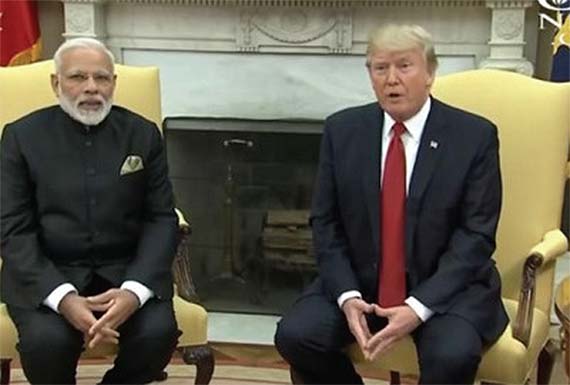
Christians, Sikhs protest Modi at the White House

Protestors waved flags and chanted as Indian Prime Minister Narendra Modi arrived at the White House on June 26 for a meeting with President Donald Trump.

“We’re here basically to raise awareness of the human rights violations that are happening with India,” Jatinder Grewal, director of Sikhs for Justice told CBN News.

The protestors alleged that under Modi’s rule, conditions for Sikhs, Christians and other religious minorities have grown difficult.

“When Modi came into power in 2014 he promised the Christians and other minorities that he would allow freedom of religion, he lied,” declared Pastor Rob Rotola, who also protested outside the White House.

“The only people that have favored status in India is not all people; it’s the Hindu nationalist,” he said. “It’s the far extremist party that tends to violence. And as these groups have ramped up the violence, the police state and the government looks the other way, and is allowing it to happen.”

“I am here to speak for the Indian church,” said Bishop John Lutembeka, a missionary in India, “the Indians who are being persecuted by Prime Minister Modi, by a group of radical Hindus.”

Cow vigilantes ignore PM warning, kill man in Jharkhand

A mob killed a man allegedly carrying beef in Jharkhand on June 29, hours after Prime Minister Narendra Modi termed killing people in the name of cow protection as unacceptable. Police sources said Alimuddin alias Asgar Ansari was carrying the “banned meat” in a van in Ramgarh district. A mob stopped him near Bajartand village and attacked him. His van was also set on fire too. Police l rescued him and took him to a hospital where he died during treatment. “It’s premeditated murder,” Additional Director General of Police RK Mallik told IANS. Tension escalated in the area after a police team returned with the dead body and a crowd gathered outside the Ramgarh police station.

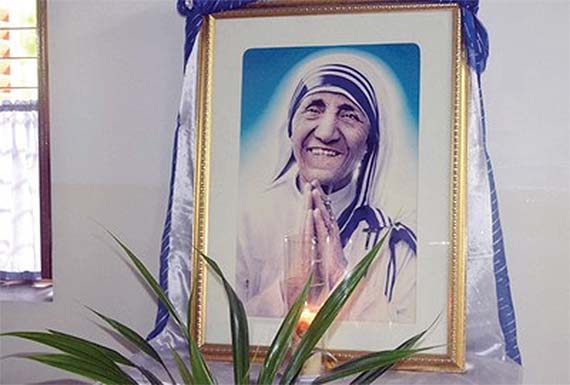
Declare St Teresa’s birthday ‘Compassion Day’: Mumbai NGO to UN

A Mumbai-based NGO on June 27 urged the United Nations to declare August 26, the birth anniversary of St Mother Teresa, International Compassion Day. In a state-ment, Harmony Foundation President Abraham Mathai said compassion is the need of the hour and what better way to have the world observe Inter-national Day of Compassion than by celebrating it on the birth anniversary of Mother Teresa, “whose life symbolised compassion and hope.”

“The Harmony Foundation has decided to celebrate August 26 as the International Day of Compassion to commemorate Mother Teresa’s work among the poorest, hungry, homeless, crippled, lepers and the most unwanted people of society shunned by all. We have written to the UN to likewise declare the day in honour of her selfless services,” Mathai said.

When RSS loyalist Kovind said Islam, Christianity are alien to India

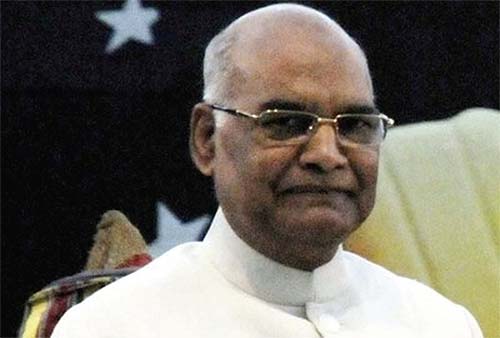
“Islam and Christianity are alien” to India, NDAs Presi-dential candidate Ram Nath Kovind said seven years ago when he was just appointed a BJP spokesperson. Kovind, then a little known BJP leader, addressed a press conference at the BJP headquarters here on March 26, 2010, sought that the Justice Ranganath Misra Commission, which had recommended inclusion of Muslim and Christian converts among the Scheduled Castes, be “scra-pped” and called the move “unconstitutional.”

Asked then by an IANS correspondent as to how Sikh Dalits could enjoy the quota privilege in the same category, he responded: “Islam and Christianity are alien to the nation.” A Supreme Court ruling on March 25 that year had upheld the Andhra Pradesh government’s decision to allow four per cent job quota for backward Muslims.

The proposed reservation for backward Muslims was a burning issue then as the National Commission on Religious and Linguistic Minorities, headed by Justice Misra, former Chief Justice of India, had in a report recommended that backward Muslim and Christian converts should be accorded Scheduled Castes status and given a quota. Kovind, an RSS loyalist who worked for the Scheduled Castes and Scheduled Tribes, said the Misra Committee recommendations were not possible to implement. “Including Muslims and Christians in the Scheduled Castes category will be unconstitutinal,” the lawyer-turned-politician said.Indian society,” he said.

India court affirms priests’ right to property despite poverty oath

A high court in southern India has ruled that Christian priests and nuns are entitled to their right to property despite their vows of poverty, signalling an end to a centuries-old tradition that has left many in the clergy destitute.

In its order in favour of a priest whose relatives cut him out of his share of ancestral property, the court in Kerala said a priest can give up his property if he wishes to, but there can be no “automatic deprivation” because he is in a religious order and has “renounced worldly pleasures.”

The ruling applies to all religions in the state, and to women in a religious order as well. The high court, which overturned a lower court’s ruling against the priest, placed the Indian Succession Act – which guarantees all citizens equal inheritance rights – above canon law, which requires the surrender of any inheritance to the church, said Sabu George, a lawyer for the priest.

“Hundreds of former priests and retired priests are living in penury in India, as most families refuse to take them back when they are old and have no work,” said Kalamparambil, who quit the priesthood after 27 years.

The Catholic priests’ association has long demanded a state pension and compensation from the church for retired priests and those who leave the clergy. They are often forced to live on a small stipend or depend on the largesse of the parish. A spokesman for the Catholic Church in the state said they were disappointed with the ruling, and may appeal. “It is unfortunate that the law of the church has not been appreciated,” said Paul Thelakat, a senior Catholic priest.

“Detachment from property and worldly life is our tradition. This has not been positively valued and upheld.”

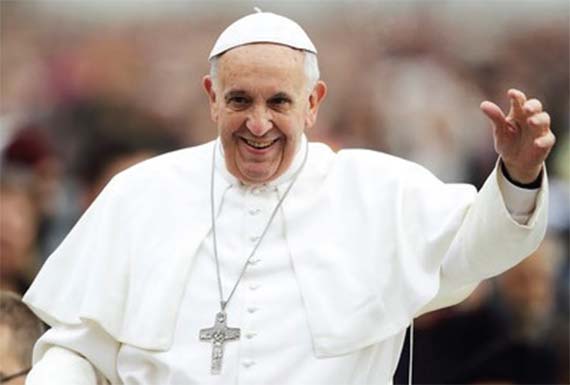
Pope Francis may not visit India this year

Cardinal Oswald Gracias said he thinks Pope Francis may not be able to visit India as planned at the end of 2017. The Archbishop of Bombay said that while he is optimistic the pope will visit India at some point in the future, discussions with Prime Minister Narendra Modi’s government about a visit this year have taken longer than expected.

“I am beginning to lose hope about 2017,” the cardinal, who was in Rome for a meeting of the Council of Cardinals on which he serves, said in an interview with NCR June 15. “We are already in June,” said Cardinal Gracias. “Even if suddenly they said, ‘Come,’ it is a pastoral visit … [and] will take several months for the dioceses to prepare the people.”

“It should not just be a flash in the pan, he comes and goes,” he continued, explaining that for Pope John Paul II’s visit to the country in 1999, the Indian bishops “planned for almost a year before he came to make it effective.”

During the half-hour conversation, Cardinal Gracias touched on a wide range of other topics including the Council of Cardinals’ desire to ensure lay people are consulted on bishops’ appointments and his hope that the Vatican will decentralize more authority to local bishops.

Francis first announced his intent to visit India in October 2016, saying in a press conference he was “quasi-sure” he would visit the country along with Bangladesh in 2017. Vatican officials are known to have been working on a visit for November or December, when temperatures in the region are normally coolest.

Should the India visit be postponed it would be the second expected papal visit for 2017 to be delayed, following the Vatican’s announcement May 30 that Francis will be unable to visit South Sudan this October as previously planned.

Archbishop’s ecumenical prayer for peace in Northeast India

An inter-denominational Christian organization in northeast India has welcomed an ecumenical prayer initiative launched by a retired Catholic archbishop known for his relentless efforts for peace in the restive region.

Archbishop emeritus Thomas Menamparampil, of Guwahati (Assam state) and former apostolic administrator of Jowai (in Meghalaya state) has proposed a “special ecumenical prayer for peace and harmony among communities” at the start of each month, starting in August, by all Churches and friends, following an act of vandalism in the Catholic cathedral of Bongaigaon.

The initiative to calm tension in north-eastern India, one of the most restless regions of the country, has been enthusiastically welcomed by the United Christian Forum North East India (UCF NEI), a grouping of Christian, Catholic, Presbyterian and Baptist organizations.

Archbishop Menamparampil told Asianews that from August, the prayer that he composed would be recited throughout the region.

Catholic Church supports separate Gorkha homeland

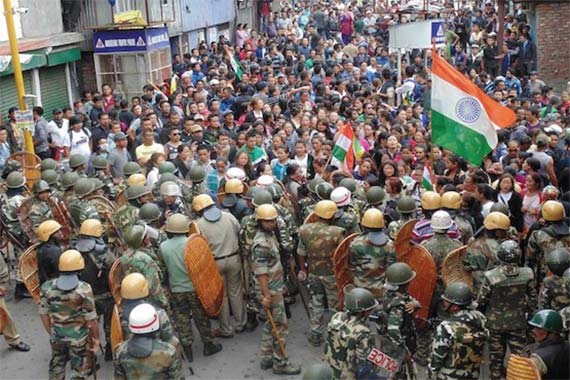
Church leaders have expressed solidarity with ethnic Gorkha people who are on an indefinite strike protesting for a separate homeland in the Darjeeling area of eastern India.

Since June 8 Darjeeling district in West Bengal state has witnessed violent clashes between local people and the police.

Street protests, stone throwing by the public as well as violence from both sides intensified since June 12 when the popular local organization Gorkha Janmukti Morcha called for an indefinite strike demanding for Gorkhaland — the creation of a separate homeland for ethic Gorkha people. At least three people have been killed in the violence so far.

“The church is not directly involved in the protest. But the church is with the people,” Bishop Stephen Lepcha of Darjeeling told ucanews.com explaining that local people are demanding for the right of self-governance as West Bengal state, under which the region falls, does not attend to the needs of local people.

“The problem arises here again because people do not see the government helping with any development in this hilly region. People suffer unemployment and poverty. The administration has failed miserably,” said Bishop Lepcha, a native of Darjeeling.

Msgr Menamparampil warns against the obscurantist danger hanging over India

Outlawed fundamentalist groups have the support of political and religious leaders, and are not punished for violence against minorities. The economy excludes the most vulnerable groups in society. “Vegetarian terrorism” is unleashed against killing cattle. The retired abp Menamparampil said in an interview:

“The details of the incident are widely known. What we notice also in this case is a reco-gnizable pattern in the attack. The central area of worship is targeted, the holiest objects are dishonoured, the aim apparently is to publicly humiliate a minority community. The impression left behind, however, is one of robbery. No definite conclusions can be drawn. Officials put it to anti-social elements; they say that Hindu temples and Muslim masjids are also being robbed. What they do not say is that anti-social elements are being cultivated by fundamentalist groups, irresponsible politicians, and of late, even by corporations.

The police become helpless when lawless groups enjoy patronage from political ‘strong men’ or are linked with emotion-driven religious leaders. These groups are organized into senas and dals (armies and squads), brain-washed, and initiated into various forms of reckless social interventions, e.g. to act as moral police, or as self-appointed protectors of women, to defend cultural values, and humiliate minority communities. Assam seems to be free of such elements at this stage. But there is evidence that that groups may be under training.”