
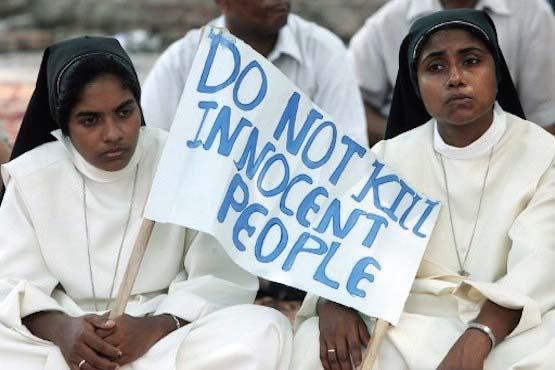
Attacks against Christians are increas-ing in India, with 260 incidents recorded in the first five months of 2017, according to Persecution Relief, an ecumenical Christian forum that monitors incidents of persecution. The organization counted 348 incidents last year, an average of 29 incidents per month, while this year the monthly average, 52, almost doubled. The offences reported include murder, physical violence, destruction of churches, threat and harassment, social boycott, hate campaigns, abduction and attempts to murder. “It is an alarming situation for us,” said Shibu Thomas, founder of Persecution Relief, who started the organization in 2015 to provide support to the victims of persecution in the country.
Daily Archives: June 1, 2017

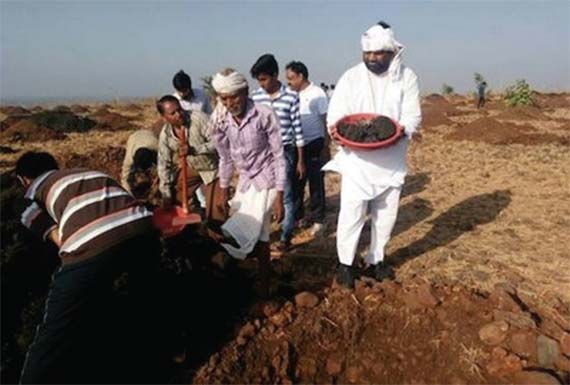
Bishop helps with tree planting in drought-prone Madhya Pradesh
A Catholic bishop is the first religious leader to join community efforts dealing with water shortages in Jhabua district in the central Indian State of Madhya Pradesh. Bishop Basil Bhuria of Jhabua, four priests and nearly 80 Catholic community members worked on Hathipava Hill May 21 to fill hundreds of pits prepared for planting saplings with black soil. The prelate was respond-ing to a call for religious leaders by police superintendent Mahesh Chandra Jain in Jhabua district to support community efforts to tackle water shortages.
“People in many villages in my diocese have to walk several kilometres to fetch water during summer. It is difficult for people to source enough water to drink, for agriculture, cattle and other needs,” Bishop Bhuria said.

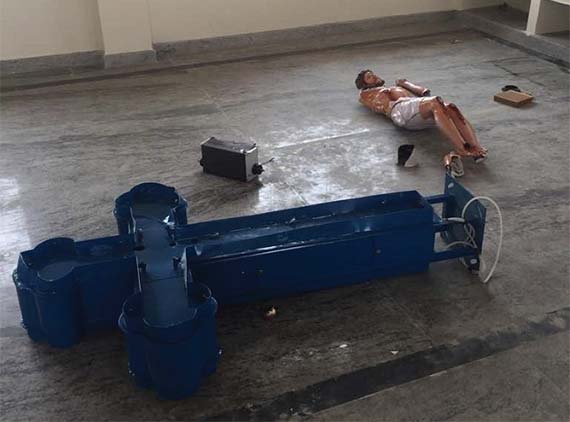
Police arrest church vandals in southern India
Police say they have arrested 22 people from a crowd of over 100 people who vandalized the Lady of Fatima Church in Kundapalli village. They broke statues of Jesus and the Blessed Mother, the crucifix and left furniture in disarray.
“All the attackers belong to the village where the church was built,” Anantha Chari, investigating police officer of the case, told ucanews.com.
George Reddy, a layman, donated land for the church. He applied for permission to construct a church but was never given the go ahead, Chari said.
“The villagers had objected two or three times to the construction,” he said.
The new church was blessed by Archbishop Thumma Bala of Hyderabad on May 13 but the church had not yet been used for service. Finishing touches to the building were ongoing.
Archbishop Bala told ucanews.com that the church was blessed to celebrate the feast of Our Lady of Fatima “otherwise we would have waited a few more months.”
The prelate said that the attack could have happened because the Catholic Church is getting a bad name due to “aggressive preaching” by leaders of the Pentecostal churches in the area.
Pentecostal preachers are going around villages condemning other faiths, telling people they are not saved except in Christ and converting them. It is creating trouble for the Catholic Church, he said.
“Local anger is shown [by attacking churches] as the general public cannot differentiate between a Catholic or other denominations. They see the cross and consider the person a Christian,” Archbishop Bala said.
This is not the first time Christian places of worship have come under attack in the country. In August 2016, Hindu extremists stopped the construction of a church building in Chhattisgarh State accusing Christians of illegal conversion activities.

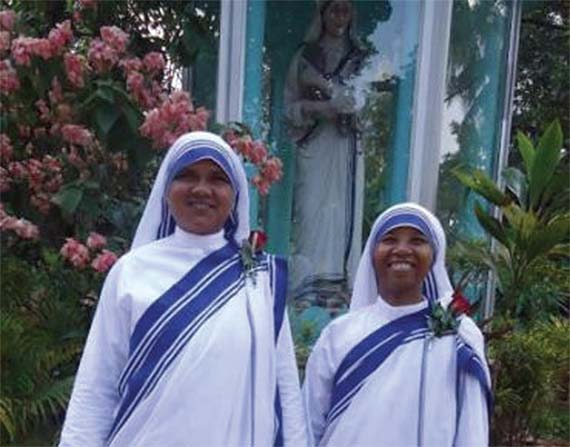
Serving downtrodden enlivens jubilarian Teresa nuns
Two Missionaries of Charity nuns, who celebrated 25 years of religious life, say serving the poorest of the poor continues to thrill them.
“I find real peace and joy in serving the downtrodden and under privileged following the footsteps of our founder, Saint Teresa of Kolkata,” Sister Selena Toppo, one of the nuns, told Matters India after the jubilee Mass on May 20 in Bhubaneswar, capital of Odisha State in eastern India.
Both the nuns expressed gratitude to God for accompanying them in their religious life.
Hindu youth group creates ruckus over conversion of Dalits
Activists allegedly belonging to the right-wing Hindu Yuva Vahini (HVY), founded by Yogi Adityanath, on May 19 created ruckus at Aurai in this district of Uttar Pradesh over “forcible conversion” of Dalits.
The activists reached a newly constructed house in Tiuri village that was being used as church and alleged that forcible conversion of Dalits to Christianity was going on there.
They also caught hold of a person, Ajmon Abraham from Kerala, for his alleged involvement in the conversion. When police reached there the activists handed over Abraham to them.
SHO of Aurai police station Onkar Singh Yadav said a probe into the matter was on and Abraham was being interro-gated. “We are asking the villagers, who were allegedly converted, to know the reality. Security has been enhanced around the house being used as church,” he said.
District in-charge of the HVY Surabh Sharma claimed that forcible conversion was going on in the house and administration was informed earlier about it, India Today reported.

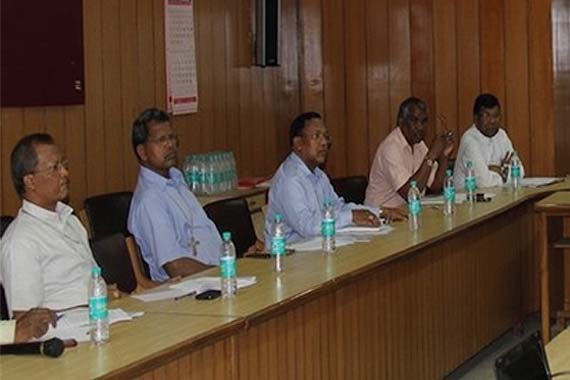
Tribal bishops seek Indian president’s intervention
India’s tribal Catholic bishops have sought the intervention of President Pranab Mukherjee to ensure the rights of millions of tribal people.
The memorandum signed by tribal bishops from six states said, they were “saddened” by the policies of state governments that have trampled over tribal people’s rights. They want the president “to protect the land, forest and socio-cultural rights of tribal people,” the May 10 memorandum said.
“Land is the only means of livelihood and sustenance” for most tribal people, as 90 percent of them are dependent on agriculture or allied activities in their ancestral land, the bishops said. The present federal and most state governments, however, “have taken various actions to alienate tribal people from their land on a massive scale to facilitate industrialists.”
In the most recent example, Jharkhand government amended two laws that guaranteed the protection of tribal land used for agriculture. The government declared their land as non-agricultural and, since non-agricultural land does not come under the purview of protective legislation, tribal people can be deposed.
Father Stanislaus Tirkey, secretary of the Indian Catholic bishops’ office for tribal people told ucanews.com that indigenous people are facing the same problems every state and “we plan to address it collectively.”

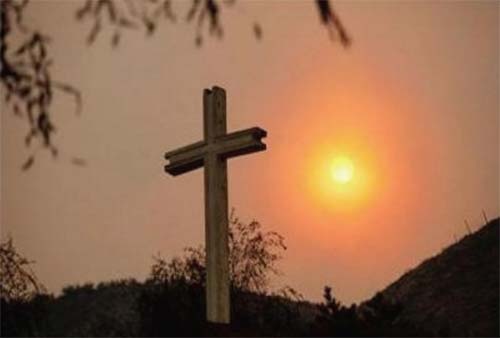
Church, pastor’s home burnt down in southern India
Suspected Hindu nationali-sts in Tamil Nadu burned down a church and the home of its pastor after some high “caste” Hindus converted to Christia-nity and joined the church.
Pastor John Muller and his pregnant wife were out when their home and adjoining church were set ablaze May 3 in Attipattu village in Cuddalore District.
“Recently, some villagers belonging to Vanniyar, a caste-based Hindu sect, came to Christ,” Pastor Muller was quoted as saying.
“The same caste group opposes conversions in the village because they treat Christianity as a religion of lower castes. They don’t want anyone from Vanniyar to convert to Christianity,” he added.
The pastor said that he had been threatened by five people three days earlier who asked him to “get out of this area, or we will see your end.”
However, no arrests have been made in the case.
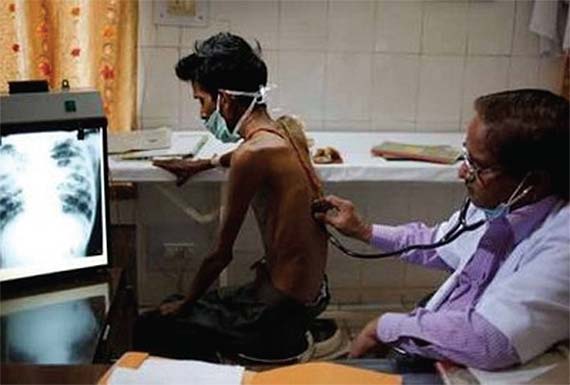
Catholic medicos commit to fight the spread of tuberculosis
The Catholic Medical Association of India (CHAI) is leading a campaign to tackle cases of tuberculosis, in collaboration with government agencies and other civil society organizations, said Redemptorist Fr Dr Mathew Abraham, CHAI Director General. India has the largest number of cases of tuberculosis in the world. Every hour more than 50 people die of tuberculosis in India. CHAI, linked to the Catholic Bishops’ Conference of India, is formed by doctors and healthcare professionals working in Catholic hospitals, health centres and institutes in various Catholic dioceses throughout the country.

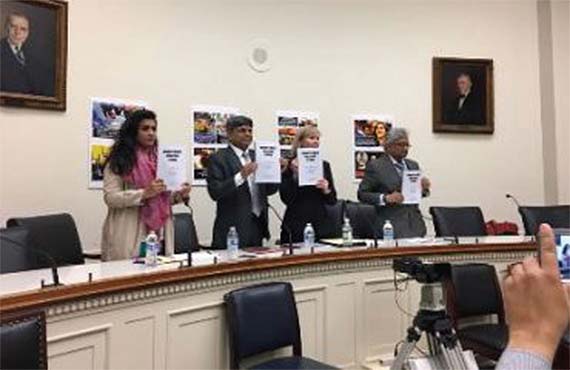
Rise in anti-minority violence grave concern: US body
Human rights abuses against India’s social and religious minorities have been on the ascendance since the BJP government came to power.
This grim reality is already being acknowledged within India as well as internationally, says the Alliance for Justice and Accountability (AJA) of the United States.
The AJA report launched in Washington DC came nearly two months after the United States Commission on Inter-national Religious Freedom (USCIRF) and Human Rights Watch (HRW) declared that religious freedom in India was at stake.
At the launch of the latest report the panellists such as Jennifer Prestholdt (Deputy Director, The Advocates for Human Rights), veteran journa-list Kannan Srinivasan, and Ajit Sahi (Advocacy Director, Indi-an American Muslim Council) briefed the press.
AJA talks about the inability of Indian government in dealing with the anti-minority violence and said that “government action seem to actually protect the perpetrators.” It said, “The Government of India has not demonstrated a sense of urgency to adequately investigate and effectively prosecute perpetra-tors of human rights violations against members of minority groups,” the report said.

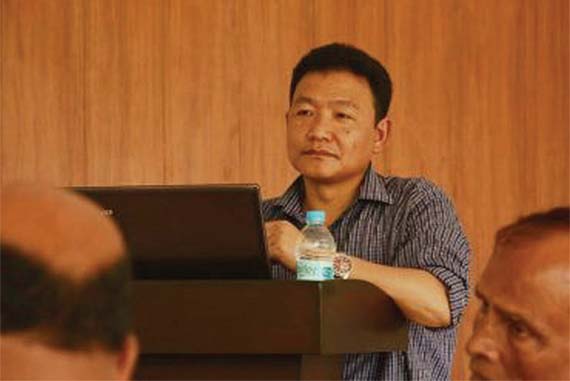
Mukhia defends doctoral study on Impact of Christianity on Lepcha and Tamang community
Guwahati: A Darjeeling hills Mukhia tribal scholar presented his doctoral study on the impact of Christianity on his fellow hills tribal commu-nities of Lepcha and Tamang at Assam Don Bosco University Guwahati, 18 May 2017.
The Ph.D. thesis by Assistant Professor at Salesian College Sonada Mr Terence Mukhia is entitled “Impact of Christianity on the Lepcha and Tamang Tribal Communities in the Darjeeling District (1841-2017): A Philosophical Pers-pective.”
The research was under-taken at Assam Don Bosco University under the super-vision of Salesian Father Dr. Mathew George of Kolkata.
The four year long research was funded by Indian Council of Philosophical Research (ICPR), New Delhi from where the research scholar, Terence Mukhia, passed Junior Re-search Fellowship (JRF).
The thrust of the thesis says Mukhia, “is on the impact of Christianity on the Lepcha and Tamang tribal communities in the Darjeeling District from a philosophical perspective.”