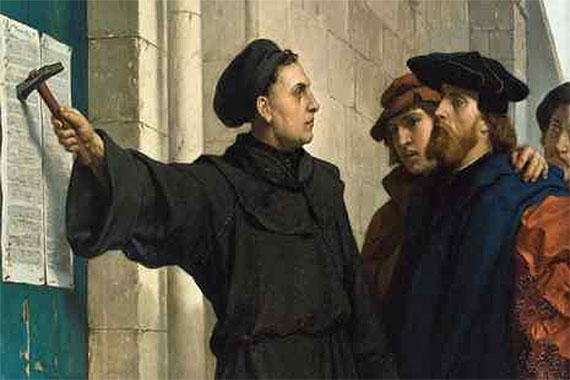
October 31 marks the quincentenary of a certain Augustinian monk nailing his ninety-five theses to a church door in Wittenberg, Germany – a perfect moment to consider having a repeat.
Pundits often claim that Islam needs its own Reformation. But maybe all of us Christian and non-Christian, believer and non-believer – would benefit from a New Reformation, one that changes our sense of what the word “religion” means. Present conditions indicate that we might be on the verge of another Reformation anyhow.
In some ways, Martin Luther’s world was not so different from ours. In 1517, old certainties were failing, and politics was in turmoil. New discoveries transformed understanding, and poisonous nationalisms emerged. Media technology altered how people received information.
And most crucially, a crisis of faith marked his world. We suffer from a similar malady, one that, ironically, was in part precipitated by that brave monk himself.
Depending on whom you ask, Luther is either to thank for liberal modernity or to blame for the doctrinaire, literalist form much of Christianity now takes. Scholars debate the details of the Reformation, concerning both timeline and implications, but maybe it’s still too early to know what Luther’s full influence will be.