- Jo Paul Kiriyanthan
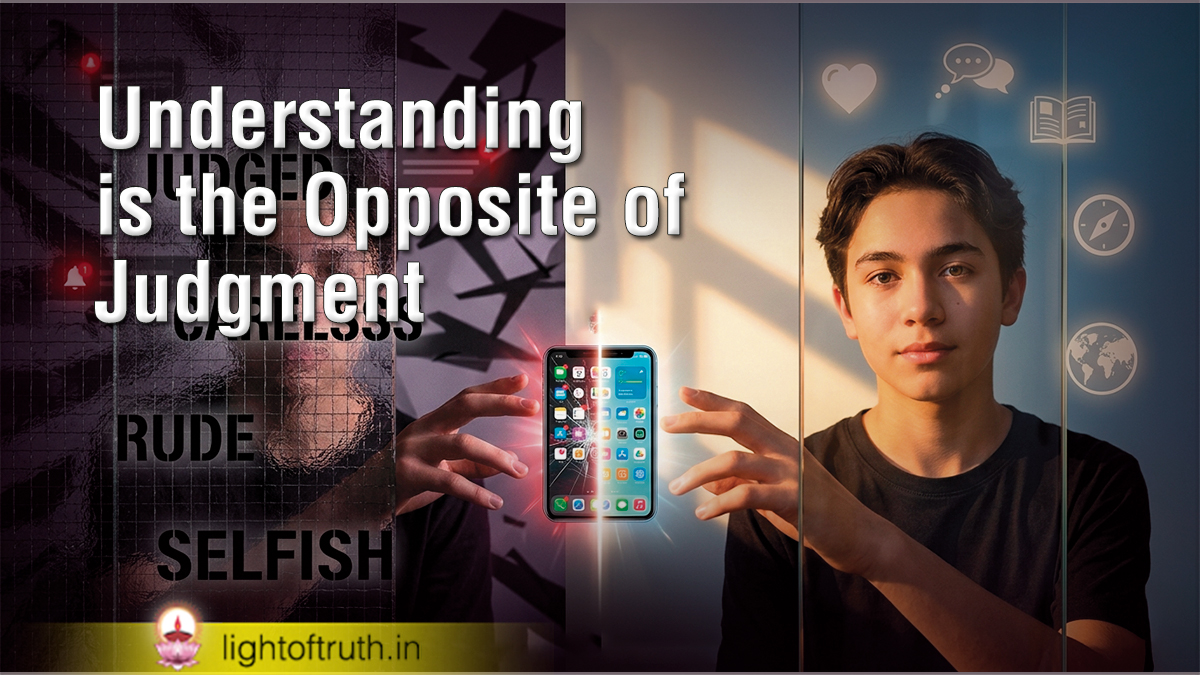
 There is a subtle but powerful shift between judging someone and trying to understand them. Judgment is quick, automatic, and often based on limited information. It is the mind’s way of simplifying the world, but in doing so, it often distorts reality. We label people easily—careless, rude, selfish—without considering the deeper context of their lives.
Understanding, however, requires us to slow down. It invites curiosity instead of conclusions. Rather than asking what is wrong with a person, we begin to ask what they might be going through. This shift engages empathy and perspective, helping us see that behaviour is often shaped by unseen struggles, emotions, and experiences.
Judgment feels easier because it gives us certainty and control. Understanding feels harder because it demands patience and humility. It asks us to admit that we may not have the full picture. Yet, it is this very openness that creates genuine connection.

Judgment feels easier because it gives us certainty and control. Understanding feels harder because it demands patience and humility.

When people feel understood, defensiveness decreases and relationships deepen.
In personal life, this shift can transform everyday relationships. Families, friendships, and close communities often suffer not from lack of care, but from quick judgments and misinterpretations. Choosing understanding allows space for listening, reduces unnecessary conflicts, and builds trust. In social contexts, it fosters inclusivity and reduces prejudice. When people move beyond labels and stereotypes, communities become more compassionate and cooperative. However, understanding does not mean the absence of boundaries; it must be balanced with discernment to avoid enabling harmful behaviour.
This applies not only to others but also to ourselves. Many people live with constant self-judgment, turning struggles into personal failures. Understanding ourselves allows us to see our patterns with compassion rather than criticism, creating space for real growth. In essence, judgment closes the mind, while understanding opens it. One separates; the other connects.