
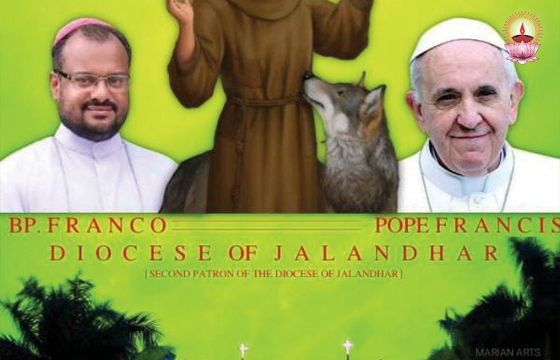
The publication of a rape accused bishop’s picture with Pope Francis in a feast day greeting has upset a group of Catholic women in India.
A press release issued by Sisters in Solidarity on October 6 says its members “are perturbed to see a greeting that is being circulated on the occasion of the feast of St Francis of Assisi where the picture of Bishop Franco Mulakkal is put alongside with Pope Francis.”

Jesuit activist jailed, massive protests over arrest continue
The arrest and imprisonment of an 83-year-old Jesuit priest in a two-year-old case have led to massive protests by people’s organizations, activists, intellectuals and concerned citizens from across India.
The National Investigation Agency (NIA), a federal body to counter terror activities in the country, on October 8 arrested Father Stanislaus Lourduswamy from his residence at the Bagaicha Campus near Ranchi, capital of Jharkhand State in eastern India.
According to the latest information, the agency on October 9 took the priest to Mumbai, in western India, and presented him before a court that sent him to judicial custody until October 23.
The arrest of “Stan Swamy is a gross violation of human rights and democratic norms,” says an October 9 statement endors-ed by more than 2,000 people representing various groups in India.
They have appealed Jharkhand Chief Minister Hemant Soren to oppose the priest’s arrest. The statement hailed Father Swamy as “a valued and public spiritedness citizen who has worked for Adivasi rights since decades in Jharkhand” and decried the “inhuman and insincere act of the NIA authorities.”
The priest’s arrest, it adds, “stands out for its sheer vindictiveness” since the priest had “fully cooperated with the investigating officers” who questioned him at his residence for more than 15 hours in July and August.
“Stan has consistently denied any link with extremist leftist forces or Maoists. He had also clearly told the NIA that some so-called extracts allegedly taken from his computer shown to him by the NIA were fake and fabricated and that he disowned them,” the statement explains.
NIA officials reportedly said investigations established the priest was actively involved in the activities of the banned Communist Party of India-Maoist (CPI-Maoist). The agency also accused him of receiving funds for CPI-Maoist activities.
The agency said they had seized documents and propaganda material of the Maoist and literature from the priest and that he was in contact with the other accused in the Koregaon-Bhima case that dates back to January 1, 2018, the day of the bicentenary celebrations of the Bhima Koregaon battle.
The celebration was marred by violence leading to death of one person and injuries to several others. Dalits and higher-caste Maratha people clashed in several parts of Maharashtra.
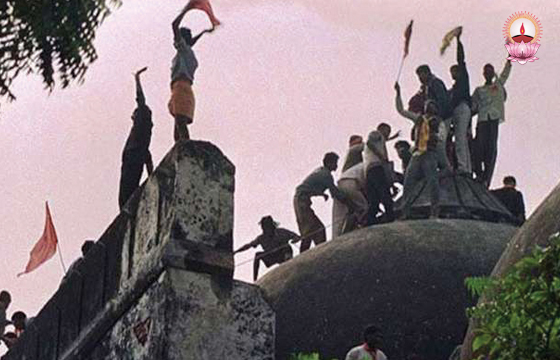
No one responsible for mosque demolition as Hindutva triumphs
“In every democratic country, politicians’ freedom and power are defined by the constitution and, of course, their ability to be credible. After a special court ordered the acquittal of hardline Hindu leaders from a conspiracy charge of bringing down a 16th-century mosque in 1992, most opposition leaders went silent or were guarded in their reactions.” Wrote Nirendra Dev in New Delhi
In India, a multi-faith and multi-language country, secularism took a beating on Dec. 6, 1992, when Hindu zealots demolished the Babri Masjid. They argued they were undoing the act of 16th-century Muslim ruler Baber, who built it after razing a temple at the spot in Ayodhya town, the birthplace of their Lord Ram in present-day Uttar Pradesh State.
Starting in the 19th century, there were several conflicts and court disputes between Hindus and Muslims over the mosque. The disputes came to a flashpoint in 1992 when L.K. Advani of the pro-Hindu Bharatiya Janata Party (BJP) began a roadshow demanding the mosque’s demolition and the building of a temple at Ayodhya.
Following the demolition, Hindu-Muslim riots followed in which some 3,000 people died. Advani, as leader of the opposition in India’s parliament (Lok Sabha), took the moral high ground and resigned. The Congress party, which was running the government in New Delhi then, dismissed BJP governments in the states of Uttar Pradesh, Himachal Pradesh, Madhya Pradesh and Rajasthan. Fast forward to Sept. 30, 2020: Advani and a host of other hardline BJP politicians were acquitted by a special court that heard the conspiracy case…..”
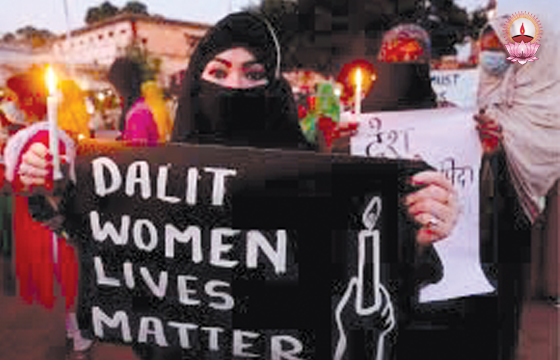
Christian women theologians condemn increasing Dalit rapes in India
A group Christian women theologians in India has expre-ssed shock and pain at the increasing incidents of sexual assaults on young Dalit women in the country.
“We strongly condemn these acts of violence and call upon the state machinery to ensure a free and fair probe into these crimes so that the guilty are brought before the courts of law and justice ensured to the victims/survivors,” says the Indian Women Theologians Forum (IWTF).
In an October 7 press release, the forum deplores the rape of four young Dalit women in Uttar Pradesh districts of Bulandshahr, Azamgarh, Balrampur, and Hathras in September. On Sept-ember 18, another Dalit teenager was set on fire in Telangana state’s Khammam district for resisting the rape attempt of her employers’ son.
“It is time for every right-thinking Indian to raise their voice and demand justice for the Dalits in our country. It is time for each of us to examine our own attitudes and behaviour that continues to treat Dalits as second class. It is time for India to change,” the Christian women theologian assert.
“We are deeply pained that even 70 years after the birth of India’s egalitarian Constitution framed by Dr. B R Ambedkar… Dalits continue to be treated as sub human,” the forum statement bemoaned.
Ambedkar, an eminent jurist, economist and politician, who had himself suffered caste discrimination, ensured that his strong views on social develop-ment, communal harmony and eradication of caste are spelt out in the various articles of the Indian Constitution.
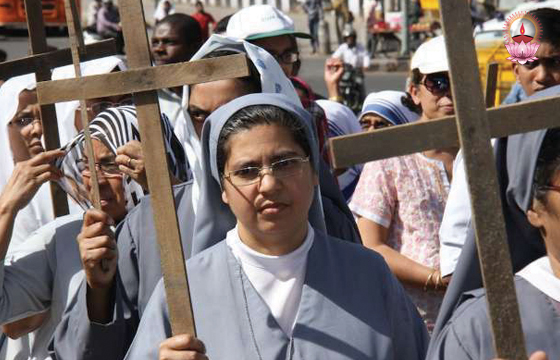
Hindus plan anti-conversion campaign across India
Hindu groups in India are planning to launch a nationwide campaign to curb religious conversion, which they claim is a form of violence and a crime.
Rashtriya Swayamsevak Sangh (RSS) and its affiliate Vishwa Hindu Parishad (VHP) say religious conversion is rampant in tribal-dominated areas and they plan to bring those converted back to the Hindu fold.
But their claims brought a swift rebuttal from Christian leaders.
“The Catholic Church in India does not promote or propagate religious conversion and, as the RSS and VHP claim that it does, then let them prove it,” Father Nicholas Barla, secretary of the Indian Catholic bishops’ Commission for Tribal Affairs, told.
“From time to time, those groups blame us for conversion, but there is no record of any religious conversion where the Church is involved, so there is no question of reconversion.
“Everybody knows that the Church is engaged in many charitable works. Our main concern is that any charitable work can be construed as allure-ment to conversions, but it is not true. We should do our work and should not give heed to RSS and VHP propaganda.”

Christians attacked in India for rejecting idol worship
Christian families in the central Indian state of Chhattisgarh had their houses vandalized after refusing to follow the local Sarna religion.
A mob attacked houses in five villages in Kondagaon district of Bastar division on Sept. 22-23, PTI news agency reported.
“There was an incident of clashes between tribal groups and tribal Christians as the villagers wanted the Christian group to follow the traditional tribal Sarna religion of worshiping nature, which the Christian groups refused to do,” Bishop Joseph Kollamparampil of Jagdalpur told.
“The situation was quite tense as some vested interest people were trying to give it a communal color, but the administration was very alert and the situation is under control now.”
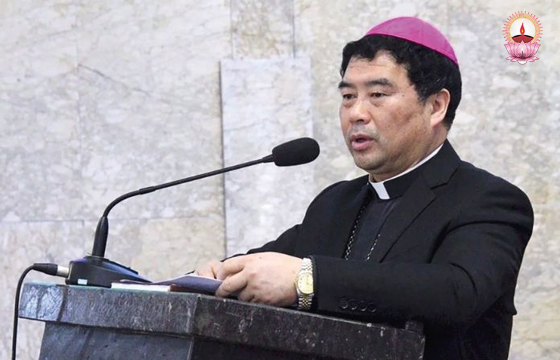
Vincenzo Guo Xijin endured years of communist persecution and Resigns
Bishop Vincenzo Guo Xijin of the Mindong diocese announced his decision to resign from public life and retire to a life of prayer in a speech delivered at his last public Mass on the evening of Oct. 4.
Guo, who has suffered homelessness and imprisonment many times at the hands of the Chinese Communist Party (CCP), submitted his letter of resignation to the Vatican.
“Tonight will be the last public Mass that I preside: From tomorrow I will only do private Masses,” he informed his parishioners. “The faithful can receive the sacraments and attend Mass at the nearby church.”
Guo described the reign of Chinese president Xi Jinping and Pope Francis as “a new era” and “a new page for the Church,” warranting other leaders.
I am no longer able to keep up with this era. Tweet
“In such an extraordinary historical moment, we need people with great talent, wisdom, virtue and knowledge to be able to keep up with this era or even precede the steps of the era by guiding it,” he argued.
The speech was laden with self-deprecatory and resigned remarks:
I am a person who has no talent; my head is now a void unable to change with a changing society; [I am] a shepherd born in a poor village who has no talent, no virtue, no wisdom, no skills, no knowledge; in the face of this age that changes so rapidly, I feel almost incapable.
The prelate, described as “a great confessor of the faith,” thanked God “for enlightening me by making me understand that I am no longer able to keep up with this era,” he resolved. “I do not want to become an obstacle to progress.”
When asked what could be done to stop the persecution of faithful Catholics in China or to support his pleas for a faithful appointment for the See of Hong Kong, Zen replied: ”Nothing. I’ve done more than I can, and there is nothing more to do other than prayer.”

First Swiss-Filipino joins Vatican guard
Vincent Lüthi was among the 38 new recruits who took oath of allegiance to Pope Francis in the Vatican on October 4.
The 22-year-old grew up in Cugy, Switzerland and the only child of a Swiss father and a Filipino mother from Santa Fe town on Bantayan Island in Cebu province.
The ceremony for new Swiss Guards was due to take place in May, but it was moved to October due to the coronavirus restrictions.
The event was also held behind closed doors, in accordance with current protection regulations.
Pope Francis met with the guards and their parents before the ceremony and thanked them for choosing to dedicate “a period of their youth in the service of the Successor of Peter.”
In the audience on October 2, he told the new recruits that “the time you will spend here is a unique moment in your life.”
“May you live it in a spirit of fraternity, helping one another to lead a meaningful and joyfully Christian life,” the Pope said.
The pontiff also emphasized the crucial role of the family in the transmission of faith.
“The presence of your family members expresses the devotion of Swiss Catholics to the Holy See, as well as the moral education and good example by which parents have passed on to their children the Christian faith and the sense of generous service to their neighbor,” he said.
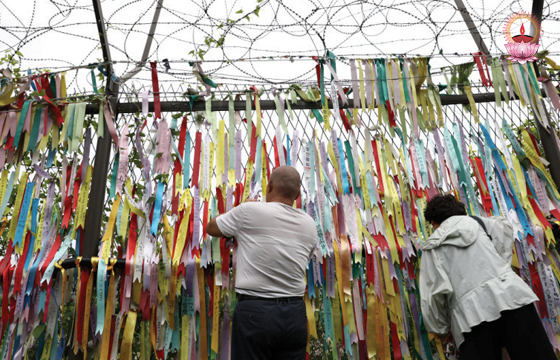
North Korean defectors to reveal harrowing detail of escape at Night of Freedom event
North Korean defectors who risked everything for freedom will speak on October 7 night at Liberty in North Korea’s annual Night of Freedom, which will be held online this year.
The hour long event will be held at 7 p.m. Eastern time and will include three stories from defectors who escaped one of the world’s most repressive regimes, along with appearances by celebrities, raffles, and never-before-released short film.
Liberty in North Korea plans to broadcast the event from its headquarters in Long Beach, California. It will host a similar event on Oct. 15 at 7 p.m. Pacific time.
Anyone interested in participating can sign up for free on Liberty in North Korea’s website. So far, over 2,000 people world wide have done so. Liberty in North Korea CEO Hannah Song said it will be the group’s first large online event.
“What are we willing to give up for freedom?” Song said in an interview with The Christian Post. “When I hear the risks our North Korean friends take, these are things I can’t even begin to fathom deciding. I’ve had to think about that very deeply every time I’ve heard their stories. What is my freedom to me?”
Along the 3,000-mile trek from North Korea to South Korea, defectors must cross the North Korean border, dodge human traffickers and the Chinese police, and brave mountains and jungles. The defectors speaking at the event each fled North Korea in search of different kinds of freedom, Song said.
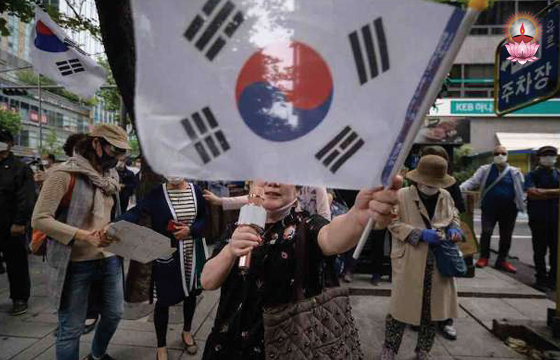
Bishops concerned as South Korea adopts abortion law
South Korea’s government has adopted a draft law to legalize abortion until the 14th week of pregnancy, but Catholic bishops in the country said it violates the foetus’s right to life.
The government on Oct. 7 adopted the bill that plans to ban abortion after 14 weeks of pregnancy except in the case of a sex crime or if it affects the mother’s health or severe congenital disabilities for the foetus.
The law bans abortions after 24 weeks of pregnancy, the Justice Ministry said.
Although the government has adopted the bill, the public have been given around 40 days to submit their views before it is sent to the National Assembly for approval.
The Catholic Bishops’ Conference of Korea has been opposing the move to legalize abortion since August when the government was finalizing the draft bill.
In a letter submitted to President Moon Jae-in on Aug. 20, the bishops voiced their concerns about legalizing abortion. They said human life must be protected “from the very moment of conception.”
The government began to amend the law prohibiting abortion in April 2019 when the South Korean Constitutional Court ruled that the ban was unconstitutional. It asked the government to legalize abortions by the end of 2020 or consider the abortion ban legally invalid.
The bishops said abortion is not the solution to issues related to marriage and pregnancy. Most such issues could be solved by changing the current social culture which makes “women solely responsible for pregnancy and childbirth,” the bishops’ conference said in a statement on September 2 on its website.