When Sr. Mary Rose Mukuki-bogo first approached women in Gisagara, southern Rwanda, about starting an agricultural associa-tion, they were furious. It was 1997, three years after the 100-day genocide in 1994 that killed more than a million people during the fighting and the chaos afterwards. Mukukibogo, a member of Les Soeurs Auxiliatrices (Helpers of the Holy Souls), remembers walking from house to house in the district near the southern city of Butare, asking them if they’d like to join a farming cooperative. “They said to me, ‘I don’t understand how you can ask us to stand up,’ “ said Mukukibogo. “We have lost everyone. How can you ask us to stand?” In 1994, Rwanda lost 13% of its population in the course of a single season, the result of a civil uprising between the Hutu, a peasant majority, and the Tutsi, the minority ruling class. After the genocide, infra-structure lay in ruins. The rural farmers, who had barely eked out a living before the killing, found themselves thrust deeper into poverty. Most men of working age had been killed, were imprisoned or fled to neighboring states as refugees, making economic recovery even more challenging. “It was very difficult for them to do any type of activity, because their spirit was so low,” recalled Mukuki-bogo, a genocide victim herself who lost multiple siblings in the genocide. “I started to accompany them to have hope in life.” Rwanda is a communal society, and farming associations have been a part of community life for hundreds of years, through “Ubudehe,” or mutual field cultivation. Slowly, Mukukibogo built a group of genocide victims, all of whom had lost their husbands, to start farming together.

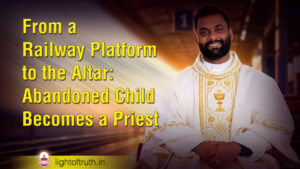
From a Railway Platform to the Altar: Abandoned Child Becomes a Priest
Twenty-eight years ago, a frightened five-year-old boy was found alone at Shoranur railway station. He had no memory of his parents or a family to