
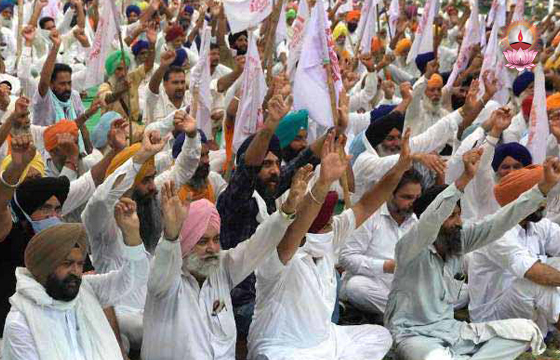
Indian farmers are bracing for another major showdown with the federal government after accusing its new farm laws of ignoring their interests and promoting multinational firms.
A church-backed body has joined farmers’ unions in asking the government to withdraw two laws that parliament passed on Sept. 20.
The government, led by Prime Minister Narendra Modi’s pro-Hindu Bharatiya Janata Party (BJP), said the Farmers’ Produce Trade and Commerce (Promotion and Facilitation) Bill, 2020, and the Farmers (Empowerment and Protection) Agreement of Price Assurance and Farm Services Bill, 2020, are measures to reform the farm sector.
But “the new laws are a real threat to the farm sector and the farmers,” said Father Joseph Ottaplackal, chairman of the Indian Farmers Movement (INFAM), a church-backed body based in southern India’s Kerala State.
More than 70% of India’s 1.3 billion people directly or indirectly depend on farming for their sustenance. But some 80% of them – over 700 million – are marginal farmers with less than two hectares of land.
Indian Christians upset at MP’s remarks about missionary
A Bharatiya Janata Party (BJP) leader has alleged that Australian missionary Graham Stuart Staines, who was murder-ed along with his two sons in Odisha in 1999, was involved in conversion activities among tribal people.
During his submission on the debate on the Foreign Contribution (Regulation) Amendment Bill, Satya Pal Singh told parliament that Staines’ organization, the Evangelist Missionary Society, was converting tribal people to Christianity.
“There was uproar over Graham Staines. What happened to him and his two children was wrong,” the BJP leader from the northern State of Uttar Pradesh said on Sept. 21.
“But agencies like the Central Bureau of Investigations, Odisha Crime Branch and the Justice D.P. Wadhwa Commission con-cluded that tribals were being converted there. It was the biggest reason that people turned against Staines.
Suspected Hindu fanatics burned Staines and his sons Philip, 9, and Timothy, 7, inside their jeep on Jan. 23, 1999, in Odisha State’s Keonjhar district.
However, Singh’s remarks have saddened Christian leaders and communities in India.

Tribal Christians tonsured in Jharkhand village
Seven tribal Christians were allegedly beaten, partially ton-sured and forced to chant “Jai Shri Ram.” (Hail Lord Ram) in a Jharkhand village for allegedly slaughtering a cow.
The September 16 incident, reported to the police the next day, came to public only on September 25 when former zilla parishad (district council) member and social activist Neel Justin Beck told a local news portal about it.
Police have confirmed the incident. Shams Tabrez, the superintendent of police in Simdega district where the attack took place, said four of the nine named as accused in the First Information Report have been arrested and the rest would be picked up soon. The FIR also mentions 10 unnamed accused.
Jharkhand had witnessed the lynching of several tribal people and Muslims on unsubstantiated charges of cow slaughter or beef possession during the tenure of its previous BJP-led government (2014-2019). This is the first reported communal attack since an alliance of various secular parties came to power last December.
Tangkhul Churches fast, pray for Naga solution
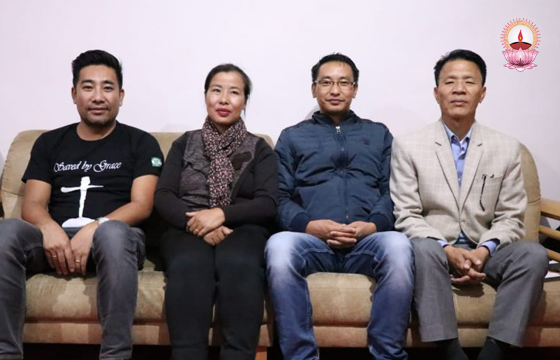
Tangkhul Churches on September 24 fasted and prayed for Naga unity and for peaceful settlement of the Naga political issue. Briefing the media, Remember Rimai, convener of Tangkhul Community Inter-Denomination Churches leaders and a pastor of Union Baptist Church in Ukhrul town, highlighted the main objectives of holding the fasting prayer program across Tangkhul villages. The day is dedicated as “Tangkhul global one day, fasting prayer day” under the banner “Oneness in Christ with Trust,” he added. Rimai said that all the Tangkhul Christians took part in the fasting prayer program at their respective Churches to show support to the collective leadership of NSCN (IM) led by Muivah.
Historic or hysterical? The Modi way and how India was let down
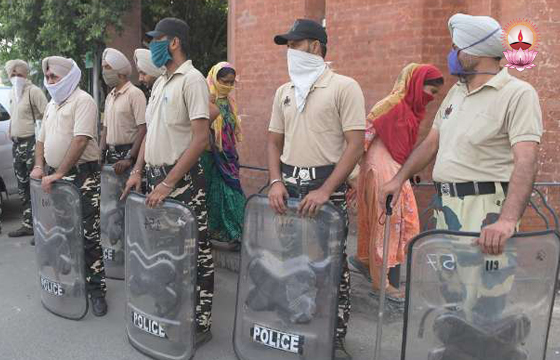
There is a mixed bag in governance in India these days. On one hand, Muslims are demonized, Christians’ charity and philanthropic works are linked to the forced conversion debate and quite often sedition laws or the controversial Armed Forces Special Power Act (AFSPA) are used to silence dissent.
Then there is the latent anguish of the middle class and poor. There is also an agrarian crisis. In any other political set-up, opposition parties could have gone in for the kill and cornered India’s ruling dispensation under Prime Minister Narendra Modi. But often the misguided moves by opposition parties like “creating pandemonium” in parliament come to the rescue of Modi’s publicity wing. The goalposts are changed and the battle which should have been to expose fault lines in the new farm bills goes into another realm.
Steered by an ostensibly decisive and determined Prime Minister, the Indian government is in serious confabulation with the Chinese leadership these days. But there could be a brief lesson for Modi’s leadership to learn from the Chinese context. The reasons could be multiple but how long can Modi brave through the situation with the argument that the Prime Minister of the world’s largest democracy cannot be solely blamed for all the ills and limitations?
“It is appalling that human rights defenders are locked up in overcrowded prisons and continuously denied bail despite calls by the UN to decongest prisons and release political prisoners during the pandemic,” says Josef Benedict, CIVICUS Asia-Pacific civic space researcher.
As many as 332 people were reportedly arrested under the sedition law between 2016 and 2018, though the conviction rates were very poor. Mob lynchings were carried out between 2014 and 2019 in various parts of India and in many instances it has been suggested that there is now perhaps a type of institutionalization of the communal venom.
Vatican envoy’s removal cheers up some Indian Catholics
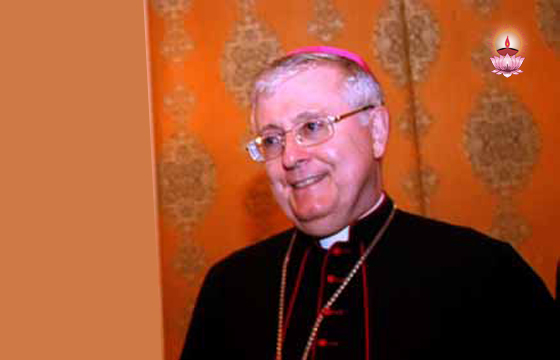
Several Catholic groups in India have expressed relief after the Vatican removed its controversial envoy from the country.
Pope Francis on August 29 suddenly transferred Archbishop Giambattista Diquattro, apostolic nuncio to India and Nepal, to Brazil amid accusations of inaction against allegedly corrupt bishops.
“I saw the nuncio’s transfer as a small moral victory, not something to gloat about, but more a sense of relief,” chhotebhai, coordinator of the Indian Catholic Forum and former president of the All India Catholic Union, the largest lay association in the country, told NCR.
Chhotebhai says he had taken up with the nuncio issues such as the controversy around then-Bishop Gallela Prasad of Cuddapah, in the southern Indian State of Andhra Pradesh. Prasad faced a criminal complaint for allegedly misappropriating diocesan funds to lead a luxurious life with his alleged wife and son.
Another request to the nuncio was to act against Bishop Franco Mulakkal of Jalandhar, who has been accused of raping a nun multiple times.
However, the Vatican later removed Prasad from his post, and accepted Mulakkal’s request for temporary resignation to face the court case. The apostolic nunciature in New Delhi did not respond to request for comment for this story, or on the accusations made against Diquattro during his tenure in India. The Holy See press office also did not respond to a request for comment. Vikram K. Antony, a Catholic politician in Bengaluru, says he had written to the nuncio about the arrest of a few priests in the murder of a seminary rector. “There was no action or inquiry into our complaints,” he told NCR.
Another person happy with the nuncio’s transfer is Kochurani Abraham, a feminist theologian who accompanies the rape survivor nun and her supporters.
Sr Anupama Kelama-ngalathuveli, the spokes-person for the survivor and her supporters, corrobora-ted Abraham’s narration of the developments. She, however, declined to talk further as the trial in the case began on August 13.
Saldanha, who has headed women’s offices under bishops’ conferences in Asia and India, dismisses Diquattro’s tenure in India as insignificant.
John Dayal, current spokesperson of the All India Catholic Union, says people complained against Diquattro because of their ignorance about a nuncio’s role.
A nuncio, according to Dayal, is “not a monitor, or a policeman and magistrate, to admonish, administer instant justice or mete out punishment.” Every bishop, he explains, is sovereign in his diocese and answerable only to the Pope.
Nobody knows how many migrants have died from COVID-19
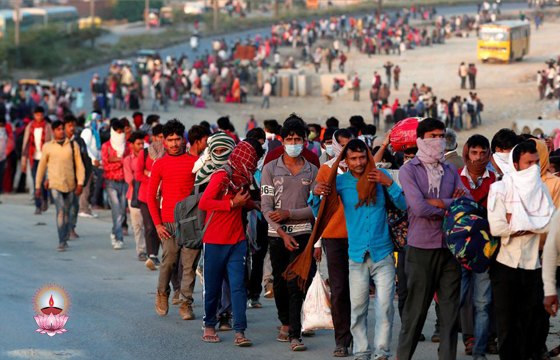
Since there are no data on the deaths of migrant workers from COVID-19, the question of compensation “does not arise,” India’s Minister of State for Labour and Employment, Santosh Gangwar, told parliament. This has sparked harsh reactions by opposition parties and civil society groups.
Against this backdrop, internal migrants are the group that suffered the most. The labour minister admitted that more than 10 million migrants have returned to their places of origin.
Belgian Jesuit who taught Indian seminarians for 55 years dies
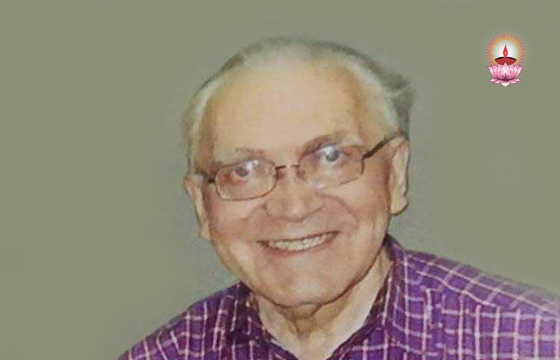
Jesuit Father Erik Breye, a seminary professor, retreat preacher and a confessor and counsellor for seminarians and nuns, died of cardiac arrest on September 18 in Ranchi, capital of Jharkhand State in eastern India. He was 79. Father Raymond Kerketta, socius (secretary) to the Ranchi Jesuit province, noted in a condolence message that Father Breye was a member of the Society of Jesus for 61 years and a priest for 48 years.
Father Achandy named new chancellor of Christ University
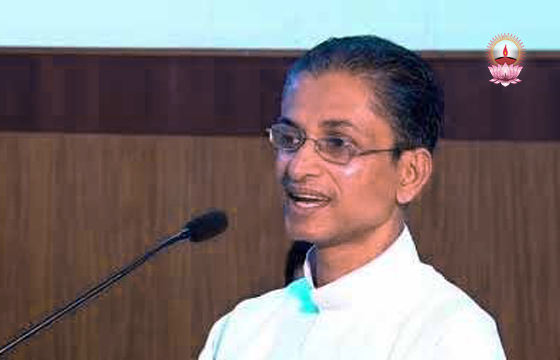
Father Paul Achandy, the former prior general of the Carmelites of Mary Immaculate, has taken over as the new Chancellor of Christ University in Bengaluru. Father Achandy, on assuming office on September 21, addressed the faculty and students of the university. The university has more than 18,000 students and more than 800 faculty members.
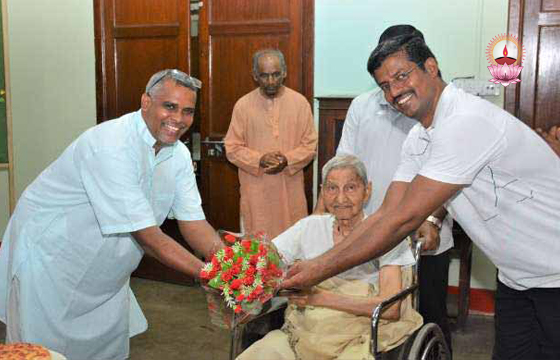
Centenarian Jesuit bishop inspires generations with his profound faith
Even after scoring a century, retired Jesuit Bishop Linus Nirmal Gomes retains his great enthusiasm, profound faith in God and love for people. He marked his 100th birthday on Sept. 7 and became the most senior bishop in India. He celebrated the milestone with fellow confreres in the Jesuit community at St Xavier’s College in Kolkata, his retirement home since 2014.