TRUMP SAYS HE’S ‘BEST PRESIDENT IN HISTORY OF THE CHURCH’ IN CALL WITH CATHOLIC LEADERS

President Donald Trump identified himself as the “best [president] in the history of the Catholic Church” in a conference call for Catholic leaders and educators April 25, where he warned that issues at stake in the upcoming presidential election, particularly on abortion and religious liberty, “have never been more important for the Church.”

Trump also pledged support for Catholic schools in light of the global coronavirus pandemic.

In an audio recording of the meeting obtained by The Tablet, the president repeatedly emphasized his support for the pro-life movement and school choice, attempting to paint a stark contrast between his administration and what a Democratic presidency could mean for Catholics.

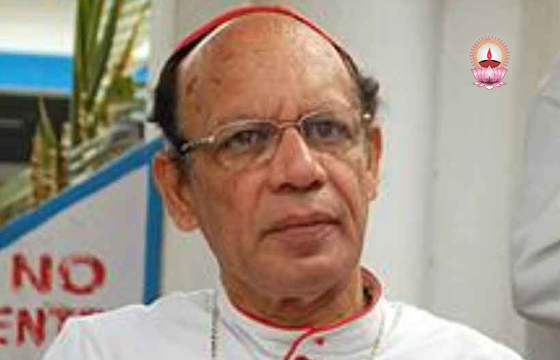
The Tablet was told by two participants that over 600 people were on the call, including Cardinal Timothy Dolan of New York, Cardinal Sean O’Malley of Boston, Archbishop Jose Gomez of Los Angeles and president of the United States Conference of Catholic Bishops (USCCB), Bishop Michael C. Barber of Oakland, chair of the USCCB committee of Catholic Education, as well as the superintendents of Catholic schools for Los Angeles and Denver, among others.

In his opening remarks, the president noted that he was joined on the call by Secretary of Education Betsy DeVos and Secretary of Housing and Education Ben Carson.

Saturday’s call comes just one week after the president held a call with faith leaders on April 17, which also included the participation of Cardinal Dolan and Archbishop Gomez, meant to discuss the re-opening of houses of worship, but where the president also sought reelection support.

In his opening remarks, the president thanked Catholic educators for their efforts in distance learning during the pandemic, as well as the spiritual support they are providing to families. Citing his own childhood of growing up next to a Catholic parish and school in Queens, New York, the president characterized Catholic schools as “a source of strength, hope, opportunity for communities across the country.”

Cardinal Dolan was the first to speak, whom the president hailed as a “great gentleman” and a “great friend of mine,” adding that he respects what the cardinal “asks for.”

Cardinal fears coronavirus could be end of European Union

In a provocative reflection on the coronavirus and Europe, Luxembourg Cardinal Jean-Claude Hollerich said aloud what many at this moment are likely thinking: With the European Union in disarray over the migration crisis and weakened by the withdrawal of the United Kingdom, could the global COVID-19 coronavirus pandemic be the tipping point signalling the end is near?

Speaking of the global impact the coronavirus is having and the need for solidarity with those who will and are suffering in the economic fallout, Hollerich, who was given a red hat by Pope Francis in 2019, said “The largest solidarity network we can imagine is the European Union. Yet the EU seems paralyzed.”

President of the Commission of the Bishops’ Conferences of the European Union (COMECE), Hollerich spoke in an article to be published in Saturday’s print edition of the Jesuit-run journal La CiviltaCattolica, but which is already available on their Italian-language website.

In Europe, “the return to national interests seems obvious to most member countries,” he said; then, turning to the current back and forth over aid packages for EU member states most heavily impacted by COVID-19, he said that so far, “The crisis seems to favour the individualism of nations.”

Noting how past epidemics have left lasting impressions on European life and culture, Hollerich mused aloud as to what will be “the traces of the coronavirus pandemic in the collective memory of the European peoples.”

“Europe cannot be built without an idea of Europe, without ideals,” he said, and pointed to increasingly strict migration policies in many European nations, as well as prominent images of overcrowded refugee camps and capsized boats in the Mediterranean. These incidents, he said, “have inflicted deep wounds on the European ideal.” When it comes to the coronavirus, he said a lack of solidarity with heavily hit countries “can become the fatal wound,” he said. “We see in evidence the difficulty of European solidarity … I fear that for many this will be the disenchantment with the European project.”

Hollerich’s concerns, and those of the pope, were echoed by Italian economist Stefano Zamagni, who in an April 14 roundtable with journalists challenged the current EU model in moments of crisis.

As unemployment grows, Sao Paulo Franciscans serve up to 4,000 meals daily

In the early morning, even before ovens were turned on, people started to form the line. By the time the Franciscans brothers from Santo Antonio do Pari Parish were ready to distribute the food containers, there were thousands waiting for a meal.

“Hunger came before the fever (a main COVID-19 symptom),” Franciscan Brother Jose Francisco de Cassia dos Santos told Catholic News Service.

Santos, who heads the Franciscan Solidarity Service, has been distributing meals to the homeless in the centre of Sao Paulo for more than 13 years. The traditional solidarity service, dubbed the Priest’s Tea, usually drew a few hundred homeless people, who congregated the St Francis rectory. Now, said Santos, the majority of people in line waiting for the Priest’s Tea are those who lost their jobs due to the COVID-19 pandemic.

Santos said since March 24, when the city installed stay-at-home measures to combat the new coronavirus, the number of people seeking food more than quadrupled, forcing his team to set up another distribution center to feed the population: The Franciscan Tent.

“We used to distribute about 350-400 meals per day at the Priest’s Tea, now the line has maybe 3,500 to 4,000 people on a daily basis, and it continues to grow,” he said.

Doctor-priest: Elderly die in U.K. nursing homes while hospital beds empty

Elderly people are being left to die in Britain’s nursing homes instead of being offered care in hospitals, said a priest and former surgeon.Fr Patrick Pullicino volunteered to return to the U.K. National Health Service to work as a consultant at Nightingale Hospital in London. The hospital was one of seven to be built in just 10 days, providing 4,000 of 11,000 new beds for patients requiring emergency treatment for COVID-19.

But just 51 patients have been treated there in three weeks, with thousands of surplus beds in many other NHS hospitals even as the coronavirus passes its peak.

Pullicino, who served as chairman of the Department of Neurology and Neurosciences at the New Jersey Medical School in 2001 before returning to the U.K. in 2005, told Catholic News Service April 25 that the excess beds can be explained by a policy of returning elderly patients from hospitals to care homes even if they have COVID-19.

“If somebody in a nursing home gets COVID, you don’t leave them there. You have to monitor them, and if they get to a certain point you bring them into hospital. You don’t leave them to die with hypoxia and pneumonia and put them on palliative care in a nursing home,” he said. “That’s not the way to deal with it, but that is what they are doing.”

Few sermons mention abortion in U.S. Christianity, Pew finds

The percentage of sermons about abortion is in the single digits, according to a Pew Research Centre study, the results of which were released April 29.

Even a mention of abortion in a sermon is rare, according to the study.

Pew analysed nearly 50,000 sermons shared online or live-streamed by more than 6,000 U.S. churches and delivered between April 7 and June 1, 2019, a time frame that included Easter.

Five percent of Catholic homilies analysed during the study period mentioned abortion, which topped the national average of 4%. Other Christians were grouped into “mainline Protestant,” “evangelical Protestant” and “historically black Protestant.”

Nineteen percent of Catholic congregations heard abortion mentioned in at least one sermon during the study period, which matched the national average. Evangelicals led the way with 22%, with mainline Protestants trailing at 10%.

The percentage of Catholics hearing about abortion may be surprising, according to Dennis Quinn, the lead researcher for the study. The media length of Catholic homilies was 14 minutes — but 37 minutes for all sermons, with black Protestants topping out at 54 minutes.

Moreover, the study found, abortion is more likely to be mentioned in sermons to smaller congregations. Catholic Masses tend to draw sizable congregations. Pew found 23% of smaller Catholic congregations — 200 or less — hearing an abortion reference in a sermon, compared to 18% of a larger assembly.

Catholic clergy used “abortion,” which was also used by their evangelical and black counterparts — but, incredibly, did not make the mainline Protestant list of words.


Seminaries must hire, involve more women, Cardinal Ouellet says
For some priests and seminarians, “women represent danger, but in reality, the true danger are those men who do not have a balanced relationship with women,” said Canadian Cardinal Marc Ouellet, prefect of the Congregation for Bishops. The cardinal was interviewed about the role of women in seminaries and seminary formation for the May issue of the women’s supplement to the Vatican newspaper; the interview was published April 24 by Vatican News. Asked if a lack of women involved in priestly formation programs is to blame for the discomfort women and priests can experience in each other’s company, the cardinal said, “the problem is probably deeper” than that and begins with how women are treated in one’s family.

Chinese communist officials remove crosses from two church buildings

Communist authorities in territory covered by the Anhui Diocese removed crosses from the top of two church buildings, sources told ucanews.com April 27. The sources said they fear more such actions.

Authorities removed the cross of Our Lady of the Rosary Church April 18, said a man ucanews.com identified only as “John, a source in the diocese.”

He said the parish was registered with the government, but had no priests or nuns to lead its religious activities. Lay parishioners managed parish religious programs.

Five days before the incident, John told ucanews.com, parish leaders approached local authorities about repairing the building, but officials said the plan was to remove the crosses of both Catholic and Protestant churches in the area.

On April 16, a local government official asked parishioners for the keys to the church. “They wanted to enter the church and remove the cross,” John said.

The local official told the parishioners that officials were acting on the “directions from superiors.” However, no documents were produced to prove the claim.

The parishioners reported the developments to Bishop Liu Xinhong of Anhui. He directed them to go to the local office of the Chinese Catholic Patriotic Association and ask for details, but local officials of the association denied having information on the matter.

In another incident in Anhui Diocese April 19, a cross was removed from a church in Suzhou City around 4 a.m., said a parishioner identified only as Paul. The cross was originally scheduled to be removed in the afternoon.

South Korean Catholics resume church services

Catholic churches in South Korea have resumed community prayers, maintaining strict precautions of social distancing as they gathered for worship after a gap of two months.

With Cheongju and Jeonju dioceses resuming public services on April 28, at least 12 of the 16 dioceses in the country have resumed public worship, which was stopped around Ash Wednesday on Feb. 26 as a way to check the spread of the coronavirus pandemic.

Religious activities resumed as social and economic life gathered steam after authorities lifted restrictions on public meetings on April 26 following a drop in virus infections.

Seoul Archdiocese was among the first to resume Masses on April 23 and conducted Sun-day Mass on April 26, but it insisted on registration of worshipers to restrict their numbers.

Church and civil authorities have asked people to wear masks and keep social distancing norms within churches as a precaution.

“I’m very happy to celebrate Mass with you beloved people after missing Masses for two months, including Easter Mass,” said Auxiliary Bishop Benedict Son Heesong, the vicar general of Seoul. “We cannot sing hymns [for fear of spreading the virus through droplets] and we have to restrict numbers.”

Asian Cardinal calls for global ceasefire to fight Covid-19

President of the Federation of Asian Bishops’ Conference Cardinal Charles Maung Bo of Myanmar has joined the call of the United Nations Secretary General, Antonio Guterres and Pope Francis, for a global cease-fire to fight the Covid-19 pandemic.

In a statement released in Yangon on 22 April 2020 Cardinal Bo addressed the situation in his own country, Myanmar, and called for an end to hostilities worldwide.

“Without cessation of fighting everywhere,” he says, “the suffering of many will be prolonged the world over and healing delayed indefinitely.”

“The whole planet is in crisis. Every initiative now taken by our leaders will shape our nation and our world for years to come. The pandemic’s consequences are catastrophic for public health and for social and economic life,” the cardinal warned.

Making a passionate appeal to the nation’s leaders the cardinal said, “If we truly wish Myanmar to emerge a united, peaceful, prosperous people, now is the time for speedy, aggressive, respectful decision. Now is the time for wise, coherent, future oriented action. This is no time to escalate conflict.”

“I am convinced that continued military operations, precisely when the whole nation is suffering a crisis, will have catastrophic consequences for our nation,” the cardinal mourned.

The cardinal who is also archbishop of Yangon exhorted Myanmar leaders, “Now is the time for decisions that will build Myanmar as a united, peaceful, prosperous nation and member of the family of nations. Conflict makes Myanmar especially vulnerable.”

Land disputes imperil Bangladeshi Christians

For nearly a decade now, Sumon Gomes has seen how his family’s peaceful coexistence with paternal uncles and cousins has come to an end over a land dispute.

Gomes, 35, is a Catholic father and private jobholder in Bangladesh’s capital Dhaka. He hails from Nawabganj, about 40 kilometers from Dhaka, where his grandfather owned 20 bighas (6.66 acres) of ancestral land.

Trouble brewed between his father and three uncles as they sought to divide the land after their father’s death.

“My father wanted an equal share of land for each brother, but he found one of my uncles was occupying more land than he was entitled to. When he objected, my uncle filed a case against him. It soured our relationship,” Gomes told UCA News.

While the court case is ongoing, Gomes’ family has stopped talking to his uncle’s family.

“I feel sad when I see joint families living happily and peacefully, but our relationship has worsened over a land dispute. I am not sure we will ever have a better relationship,” he lamented.

Catholic couple Mintu N. Rozario and Ruby T. Rozario migrated to Libya in 2008 as expatriate workers. They are now based in Tajura near Libyan capital Tripoli with their four children.

Mintu is employed at the International Committee of the Red Cross and Ruby is a staff nurse in a hospital.

Pakistan condemned for violations of religious freedom

A US government watchdog has recommended the State Department designate Pakistan as a “country of particular concern” for engaging in systematic, on-going and egregious violations of religious freedom.

After documenting developments during 2019, the commission pinpointed 14 countries. These include nine that the State Department designated as of particular concern in December 2019 — Myanmar, China, Eritrea, Iran, North Korea, Pakistan, Saudi Arabia, Tajikistan and Turkmenistan — as well as India, Nigeria, Russia, Syria and Vietnam.

“In 2019, religious freedom conditions across Pakistan continued to trend negatively,” it said, noting there were some high-profile acquittals including that of Asia Bibi, a Catholic woman who spent eight years on death row after being wrongly accused of blasphemy.

“The systematic enforcement of blasphemy and anti-Ahmadiyya laws, and authorities’ failure to address forced conversions of religious minorities — including Hindus, Christians, and Sikhs — to Islam, severely restricted freedom of religion or belief.” The USCIRF sad it is aware of nearly 80 individuals who remain imprisoned for blasphemy in Pakistan, with at least half facing a life sentence or death.

A mob also attacked a Christian community in Punjab after a mosque claimed over its loudspeaker that the community had insulted Islam. In another incident, nearly 200 Christian families in Karachi were forced to flee their homes due to mob attacks after false blasphemy accusations against four Christian women, according to the report.

Official Website

Exit mobile version