
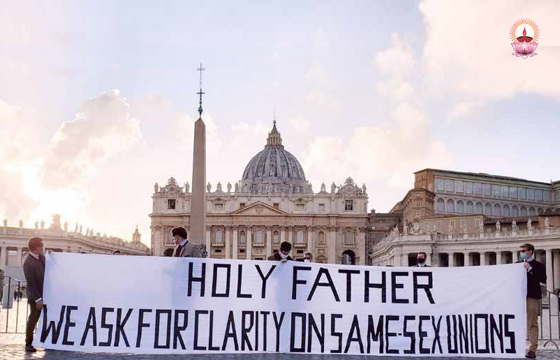
Austrian Catholic Alexander Tschugguel took Vatican police by surprise on October 24 afternoon as the “Pachamama slayer” unfurled a massive banner in St Peter’s Square asking Pope Francis for “clarity on same-sex unions.”
Tschugguel led a band of faithful Catholics from Castel Sant’Angelo — where the Catholic convert had dumped five Pachamama idols into the Tiber River during the Amazon Synod — to the Vatican in protest agai-nst the pontiff’s repudiation of Catholic teaching.
As over 50 Catholics knelt praying the Rosary in front of St Peter’s Basilica, hundreds of onlookers gathered to witness the demonstration.
A veteran Vaticanist who was at the scene told Church Militant he’d never seen anything like it before and commented how long police took to clear the protest.
“On a previous occasion when a much smaller banner was raised, police ordered it taken down in less than a minute,” he remarked. “Today, it took them over 15 minutes to bring the demonstration to a halt.”
In an interview at Castel Sant’Angelo, Church Militant asked Tschugguel why he was asking for clarity when the pontiff was on record declaring his support for gay civil unions on multiple occasions.
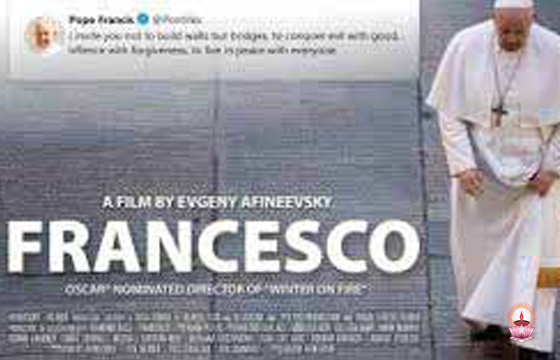
Bottomline on pope movie mystery: ‘If you don’t fix it, you bought it’
When I was a child growing up in a small Western Kansas town, my mom from time to time would take me to Main Street to visit the shops. Most had some version of the following sign on display, meant as a warning to be careful with the merchandise: “You break it, you bought it.”
There’s a PR corollary that could be said to go like this: “No matter who breaks it, if you don’t fix it you bought it.” It means that no matter what a leader actually says or does, if he or she allows an impression to be created and doesn’t publicly disown it, then it belongs to them.
The thought comes to mind in light of the emerging mystery surrounding the new Pope documentary “Francesco” by Evgeny Afineevsky, which debuted and already is a candidate to contain the most-dissected 20 seconds of imagery about a major world leader since the Zapruder film.
In those twenty seconds, Pope Francis makes comments about civil unions for same-sex persons that created a global media frenzy, reported as the first time a Pope explicitly had endorsed civil unions. It also appeared to directly contradict a 2003 document from the Vatican’s Congregation for the Doctrine of the Faith, prepared by the future Pope Benedict XVI and approved by St John Paul II, warning that such laws are “gravely unjust” and insisting that Catholics may never support them.
Over 20 “caliphate builders” exposed in North Caucasus
The Russian Federal Security Service (FSB) has uncovered two extremist cells in Russia’s internal republics of Karacha-yevo-Cherkessia and Dagestan comprising adherents of the Al-Takfir wal Hijra movement, banned in Russia, seeking to establish a caliphate in the North Caucasus, the FSB press centre told.
“The Federal Security Ser-vice of the Russian Federation dismantled the activities of two cells of the Al-Takfir wal Hijra international extremist religious movement, banned in Russia, in the Malokarachayevsk District of the Republic of Karachayevo-Cherkessia and in the cities of Makhachkala, Kaspiysk, and Izberbash of the Republic of Dagestan. In all, they had more than 20 members,” it said.
The cells’ members were actively involved in promoting the radical ideology, recruited new members to this extremist religious sect, called on adherents to renounce secular laws and civil society institutions, “and also sought to set up a theocratic Islamic state – a caliphate – in the territory of the North Caucasus,” it said. “The following items were found and seized at their places of residence and the places of their secret meetings: three grenades with live primers, three PM pistols, cartridges of different calibres, a sawed-off hunting rifle, bladed weapons…” the press centre said.

Indian bishop condemns ‘inhuman’ rape-murder of Dalit woman
Church and political leaders in India have condemned the gang rape and murder of a Dalit woman in the northern Indian state of Uttar Pradesh.
The 19-year-old died in national capital Delhi’s Safdarjung Hospital on Sept. 29 after she was raped in Hathras on Sept. 14. She was taken to Safdarjung on Sept. 28 from Aligarh Muslim University Medical College.
“There are no words that can describe this inhuman and barbaric act. We condemn the heinous crime committed on the poor Dalit girl and destroying her family. It’s a very unfortunate and sad thing to happen in a democratic country where a crime was committed weeks ago but the administration is still in the dark,” Bishop Gerald John Mathias of Lucknow told.
“Crimes and atrocities against Dalits and the downtrodden are nothing new in this part of the country. You take any newspaper or scan a television channel you can read about their plight, the injustice done towards Dalits.
“The main reason behind the rape cases in the state is the mentality of the people here who think of women as objects and treat women as second-class citizens. Unless that mentality changes, we will hear about crimes like these every other day.” The bishop, who is based in the state capital of Uttar Pradesh, said people have no fear of the law and don’t hesitate to take the law into their hands, which is very dangerous for civil society.
According to media reports, four upper-caste men attacked the Dalit woman in Hathras. She suffered multiple fractures, paralysis and a deep gash on her tongue.
Based on the complaint filed by her parents, four men have been arrested and charged with gang rape and attempted murder.
Jesuit Father Cedric Prakash, a human rights activist, told that “the brutal gang rape and the subsequent murder of the Dalit woman in Hathras should make us all hang our heads in shame. This is a heinous crime which we condemn in no uncertain terms.”

Indians rally behind Jesuit arrested for “Maoist” links
In New Delhi, some 200 people gathered at downtown Jantar Mantar to observe the National Day of Solidarity for Father Stan Swamy.
Prominent human rights activists such as Shabanam Hashmi, Harsh Mander and Apoorvanand Jha addressed the gathering. According to them, the government has exposed itself by arresting a Jesuit priest who has worked for the rights of poor tribal communities for more than three decades.
India Matters India Medha Patkar of Narmada Bachao Andolan (save Narmada campaign), who joined the program through Zoom meeting, said her heart beats for Father Stan, who “worked for Atmanirbhar Adivasi” (self-reliant Tribal).
At Guwahati in Assam, the gateway to northeastern India, an ecumenical program was organized to show solidarity with Father Swamy. The participants demanded immediate release of the Jesuit priest all Intellectuals and activists who have been arrested for standing with the poor and the marginalized.
India_Matters India-Guwahati meeting Intellectuals, editors, politicians from the Northeast also had a virtual meeting that attracted over a hundred participants to express their solidarity with Father Swamy and other human rights activists who appear to be arbitrarily implicated by the law enforcement agencies, in what is being seen in liberal circles as an effort to intimidate those who speak up.
In Bengaluru, capital of the southern Indian State of Karnataka, large number of people cutting across religions, formed a 3-kilometer human chain against what they described as “the illegal treatment and arrest of Father Stan Swamy.”
In Kochi, Kerala, various Christian denominations on October 11 demanded the release of Father Swamy, who was arrested in what they called “in gross violation of human rights and democratic norms.”
In a statement, the Kerala Catholic Bishops’ Council expressed shock at the arrest of the Jesuit priest.
In Patna, Bihar, many social and human rights organizations joined a protest rally to express solidarity with Father Swamy. Some hundred people waved posters and chanted for the release of the priest, who they said was legally ‘abdu-cted’ by the NIA on trumped up charges.
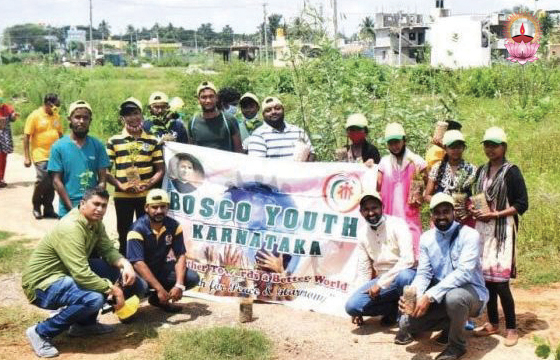
Bosco youth help plant 1,000 trees on Gandhi Jayanti
Bosco Youth of Bangalore Archdiocese has celebrated the birth anniversary of Mahatma Gandhi (Gandhi Jayanti) by pledging a greener nature.
Around 41 Bosco youth and their animators on October 2 planted more than 1,000 saplings at Kishore Farm, Manchanahalli, Chikka-ballapur district about 60 km from Bengaluru city. It was part of a mega rural plantation drive organized by the Lions Club International, Region IV.
It was yet another opportunity for the members of Bosco Youth to pledge towards a greener nature, Fathers William D’Souza, the regional director of Bosco Youth, Karnataka, explained.
He said the youth group is guided by the motto “Together Towards a Better World.”
Caritas India awarded for Covid-19 efforts
Caritas India, the Catholic Bishops’ Conference of India’s social wing, has bagged the award for the best non-govern-mental organization for health-care services during the Covid-19 outbreak.
Federal Health Minister Harsh Vardhan presented the award to Father Paul Moonjely, director of Caritas India, on Oct. 2 in a virtual ceremony organized by media group India Today.
“The institutional strength of the Church as a humanitarian collective helped us to team up and reach out to the last mile with the amazing support of the church leadership,” Father Moonjely said in his message after receiving the award.
“I dedicate this award to all our Covid warriors, health workers and volunteers in different parts of the country at community and institutional levels.”
The Healthgiri Awards 2020 acknowledged the invin-cible spirit of corona warriors who have led the battle against the pandemic. The awards are the reincarnated version of the Safaigiri Awards held annually on Gandhi Jayanti, the birth anniversary of the father of the nation.
This year’s event was held in the national capital to honor the pioneering efforts of corona warriors from all walks of life.
During the Covid-19 humanitarian response, Caritas India went the extra mile to show solidarity with and provide support for the vulnerable and marginalized sections of society.
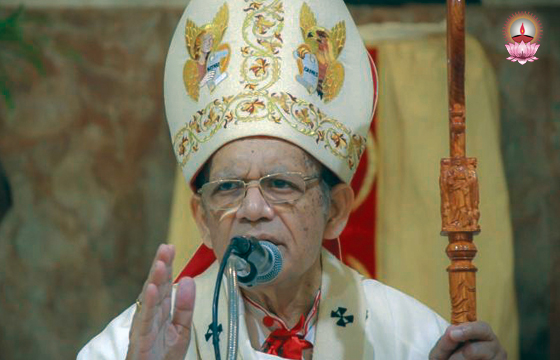
Bombay Archdiocese’s seminary completes 60 years
St Pius X College, the major seminary of the Arch-diocese of Bombay, October 5 celebrated its sixty years of existence.
Cardinal Oswald Gracias, Archbishop of Bombay, celebrated the thanksgiving Mass at the seminary located at Goregaon West.
The seminary has been instrumental in training ‘Ambassadors for Christ’ for Western India and beyond, the cardinal said. He also thanked all associated with the establishment and growth of the seminary since 1960.
The cardinal prayed that the seminary continue to send forth messengers for Christ.
The seminary is named after Pope Pius X (1835–1914), who was known for vigorously opposing modernist interpretations of Catholic doctrine, promoting liturgical reforms and scholastic philosophy and theology.
Seminary training in Bombay Archdiocese had many beginnings starting as early as 1770.
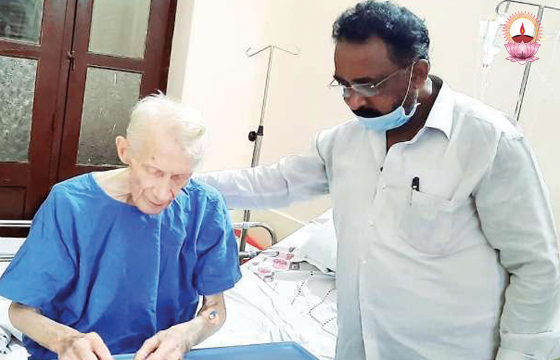
Indian Catholics mourn loss of Belgian priest
Catholics and Jesuits in the eastern Indian State of Jharkhand are mourning a Belgian priest who worked tirelessly to educate tribal people and the downtrodden.
Father Louis Francken died on Oct. 5 in Constant Lievens Hospital and Research Centre in Mandar, a suburb of Ranchi, the state capital. He was 82 and died of age-related illnesses.
“His first love was education and until the end he was dedicated to his work educating tribal people and the downtrodden so that they can become self-dependent and improve their socioeconomic conditions in society,” Father Ajay Soreng, secretary to the Ranchi Jesuit provincial, told.
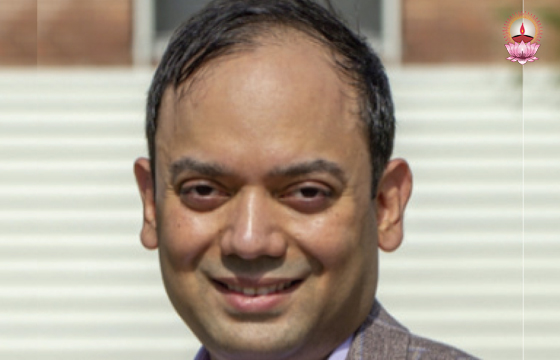
Jesuit college honors Patna-born international scientist
St Xavier’s College of Management and Techno-logy in Patna October 6 conferred the Xavier Pride of Bihar Award 2020 on Saikat Guha, the new director of Centre for Quantum Networks under the University of Arizona in the United States.
The award was presented during an online interactive session the Patna-born scientist had with the students of the Jesuit college. Guha was appointed the director of CQN in August this year. His team has been given the task of developing the internet of the future, ruled by quantum mechanical pro-perties.