

Sacramental blackmail, clergy sexual abuse, clericalism and property disputes are among challenges facing Catholic women religious in India, an international webinar was told.
The July 10 meeting organized by Voices of Faith, a Rome-based international network, discussed the findings of a Conference of Religious India survey conducted among the leaders of the women religious in the country.
Around 370 nuns, priests and laypeople from many English-speaking countries, Germany and Italy attended the two-hour program.
The survey was commissioned in 2018 by the women’s section of the Conference of Religious India, the national association of religious major superiors in the country, after media reports indicated widespread exploitation of nuns in the Catholic Church.
A four-member team conducted the study in 2019-20 and published the findings as a book in June this year.
“It is a landmark document,” Astrid Lobo Gajiwala, a laywoman theologian who coordinated the webinar, said of the book. “For the first time, we have hard data that cannot be discounted. Women religious from across India have courageously called out the exploitation they experience in the church.”
The book lists these problems faced by the Indian nuns: low wages, disputes over property, harassment from priests, refusal of sacramental celebrations, and verbal abuse in person and from the pulpit.
The issues discussed in the book were earlier discounted, Gajiwala says, lest they invite “the wrath of powerful priests and bishops,” adding the concerns “are finally out in the open.”
The India conferences of both bishops and religious have not responded to the survey or its findings.
The 86-page book titled It’s High Time: Women Religious Speak Up on Gender Justice in the Indian Church, was written by a three-member team led by Sr. Hazel D’Lima, former superior general of the Society of the Daughters of the Heart of Mary.
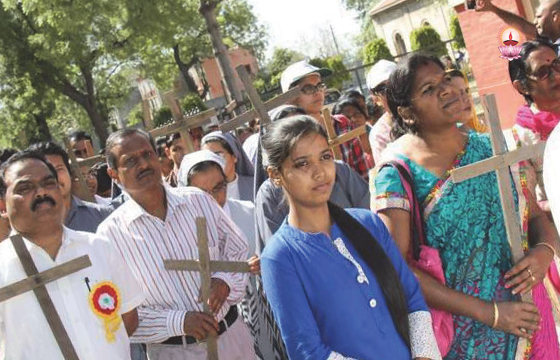
Indian Christians suffer 154 acts of violence this year
A human rights group that monitors atrocities against Christians in India says it has confirmed 154 incidents of violence in 17 states in the first half of the year.
The New Delhi-based United Christian Forum (UCF) said that perhaps a new ministry of cooperation may bring a better understanding of other faiths, especially among those who oppose Christianity.
“This year hasn’t been any different for Indian Christians except that Indian Christians across the globe came together to establish an exclusive day for themselves on July 3 and launched a decade of celebrations (2021-30) to honour the 2,000th anniversary of the earthly ministry of Jesus Christ,” the UCF press note said.
The press statement dated July 10 said 154 incidents of violence were reported on the UCF toll-free helpline number against Christians across India.
The UCF is an inter-deno-minational Christian organization that fights for the rights of members of the Christian minority, mainly through protest.
Other states which witnessed violence against Christians for their faith are Madhya Pradesh (15), Odisha (12), Maharashtra (nine), Tamil Nadu (six), Punjab (six), Bihar (six), Andhra Pradesh (four), Uttarakhand (three), Delhi (three), Haryana (two), Gujarat (two) and one each from Telangana, West Bengal, Assam and Rajasthan.
Some 1,137 calls were received by the UCF helpline and callers were given help through advocacy and assisting in forwarding their grievances to authorities.
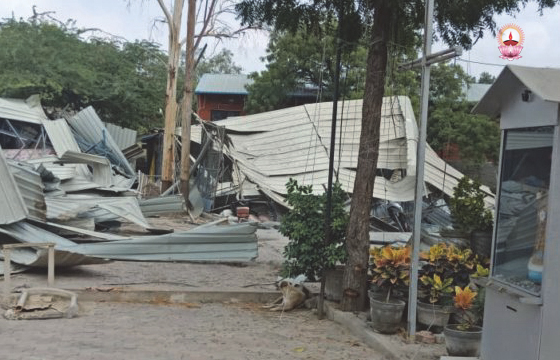
Church demolition upsets Catholics in Delhi
The demolition of a church in south Delhi has upset the Syro-Malabar Catholics living in the national capital.
Fr Jose Kannukuzhi, parish priest of Little Flower Church in Lado Sarai, said that on July 12 morning officials of the South Delhi Municipal Corporation came with three bulldozers and some 150 police personnel.
“They told me they would only demolish a hall adjacent to the church building. So I did not remove the sacred things from the church building,” the priest told.
As the news of the demolition spread through social media, parishioners came to the demo-lished church to protest. People from other parishes also gathered at the church compound and joined a Mass and a candle light protest late in the evening.
Monsignor Joseph Odanat, vicar general of Faridabad Syro-Malabar diocese, said the demoli-tion was a “calculated hidden agenda of the local administration and the land mafia to evacuate us from there.” He claimed the diocese had obtained a stay order in 2015. “We will go ahead with legal actions,” Monsignor Odanat told.

Father Stan Swamy’s tragic death challenges Church’s silence
The tragic death of Father Stan Swamy has triggered an unprecedented outburst of grief and fury against a system that unleashed a reign of cruelty to let an innocent champion of the poor die so miserably. The rallying cry over a victim of the state’s terror from across India and the globe has once again put the spotlight on the dangers of speaking up for the exploited and the neglected.
Father Stan was a Jesuit missionary who stood with India’s tribal people to oppose state policies that they thought went against their constitutional rights as tribal people and Indian citizens.
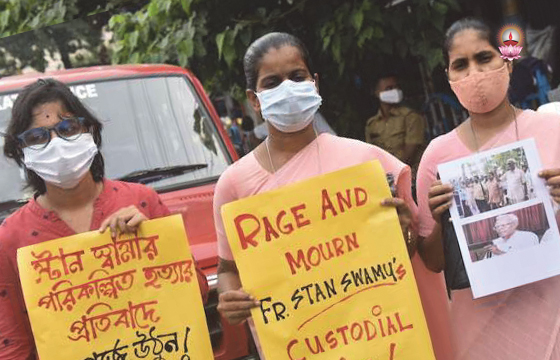
Rights group blames Modi regime for Jesuit’s death in detention
An international alliance of civil rights groups has blamed the administration of Prime Minister Narendra Modi for the death of an 84-year-old Jesuit social activist who died under detention.
Human rights defender Father Stan Swamy’s death on July 5 while awaiting trial has deeply shocked and outraged global civil society alliance CIVICUS.
The priest’s death “is a result of the persecution he has faced by the Modi government after revealing abuses by the state,” the group said in a press state-ment.
Father Swamy worked among tribal groups and other minorities of eastern India’s Jharkhand state for over four decades, creating awareness among communities about their tribal and civil rights.
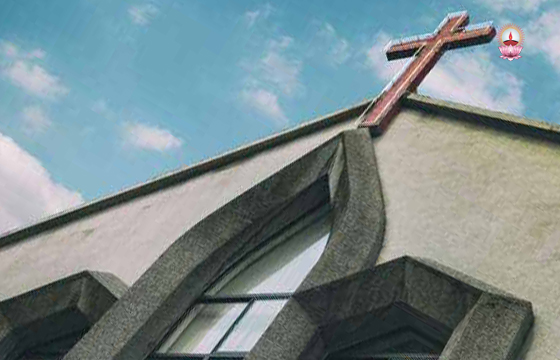
Indonesian police arrest 3 for attacking Protestant church
Police have arrested three people in Indonesia’s East Kalimantan province for attacking a Protestant church.
The attackers threw stones at the church belonging to the Congregation of Christ Church in the provincial capital Samarinda on July 8, smashing its windows, according to police. The three were arrested soon after the early-morning attack after police examined the church’s CCTV footage.
Samarinda’s police chief, Inspector Creato Sonitehe Gulo, told reporters that the attackers were vendors based in front of the church.
They were angry at not being able to tap into the church’s electricity supply to light their stalls after it was shut off when the church closed recently due to Covid-19 restrictions.
The attack was not motivated by religion or race, Gulo said.
Nevertheless, Reverend Gomar Gultom, chairman of the Communion of Churches in Indonesia, condemned the attack.
“We are really concerned about such a violent act against a place of worship, particularly during this pandemic. We all want a peaceful life in this difficult situation,” he told on July 9.
The Protestant pastor called on the church’s members not to retaliate.
Reverend Analita Migang, chairwoman of the East Kalimantan chapter of the Communion of Churches in Indonesia, said the church’s pastor intends to meet with the disgruntled vendors to iron out the problems.

Hòa Hung, the thousand faces of charity in one parish
The new wave of Covid-19 in Vietnam is putting a strain on the poor. How-ever, it is also an opportunity for many to discover the vitality of Catholic realities as in the parish of Hòa Hung, in the archdiocese of Ho Chi Minh City, which is not at all discouraged in these difficult times.
In 1946, the Catholic community in Hòa Hung numbered just 46, but today it has grown to about 9,000. In the compound there is rice and bread distribution for the poor, a drinking water station, a hostel for female students, a support group for those who live by collecting rubbish. Father Joseph Ph¡m Bá Lãm, parish priest, explains that the rice distribution has been active for seven years now and is supported by monthly offerings from benefactors.
“It continues to operate even today with the pandemic,” he explains, “while members of the Catholic Association visit the poorest families”. As for the drinking water station, Father Lãm says it was set up three years ago and provides clean water every day to all the residents of the neighbourhood, Catholics and non-Catholics alike.
The Pastoral Council creates the conditions for all the faithful of the parish to participate in the activities. The groups of elderly people,” says Peter Nguyen, one of the leaders, “have been working together with the Dominicans. The group of Catholic mothers is involved in charitable activities. The Eucharistic Youth Movement has also set up aid missions for people living in remote areas in the mountains: before leaving, a project is prepared with the Catholic Association of the parish, which is then checked on return”. The parish has also asked the local authorities for a list of poor families living in the neighbourhood, and on the basis of this information is supporting them all with rice and essential goods.
Vietnam jails dissident writer on anti-state charge
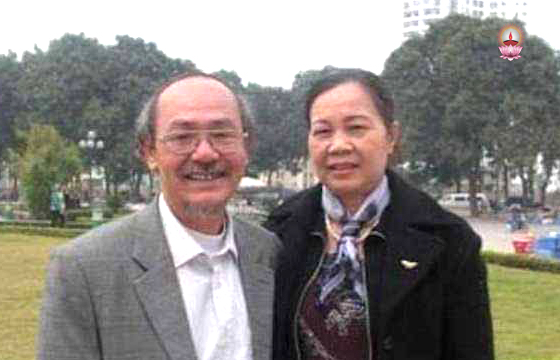
A court in Hanoi has jailed a dissident writer who used to work for a state-run radio station for satirizing government leaders.
On July 9, the People’s Court of Hanoi City sentenced Pham Chi Thanh to five-and-a-half years in jail for “making, hoard-ing, disseminating and spreading information and documents against the Socialist Republic of Vietnam,” under the Penal Code’s Article 117.
Thanh, who used to work as an editor at the state-controlled radio station Voice of Vietnam until he was sacked for writing articles criticizing China in 2007, will serve five years’ probation after finishing his jail term. He was also fined 18 million dong (US$782) for selling his book The thien hanh dao hay dai nghich bat dao (Holder of the mandate of heaven or great immoral traitor).
The 69-year-old dissident writer, who was arrested in May 2020, was accused of distributing 220 copies of his book to readers in Vietnam and abroad. His self-published book includes his posts that allegedly “distorted information and vilified the people’s government that caused social concern.”
Pakistani bishop rejects bill on minorities’ properties
A Lutheran bishop in Pakistan has opposed an act that mandates a federal ministry to sell the properties of religious minorities.
Under the Protection of Communal Properties of Minorities Act, 2020, a “ministry concerned” is mandated to issue a no-objection certificate for the sale / purchase / transfer / gifts of minority properties on the re-commendation of the National Commission for Minorities.
The National Assembly’s standing committee on religious affairs and interfaith harmony has approved the bill.
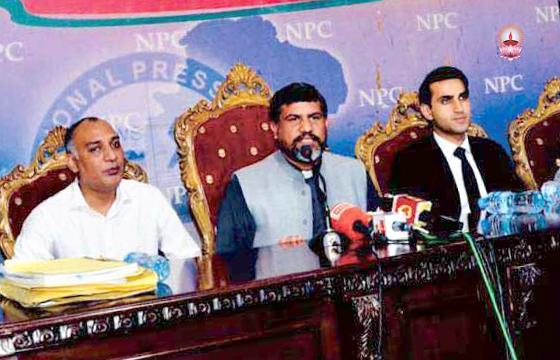
“We reject this ordinance. It only paves the way for selling these properties. It is a conspiracy against Christians. We shall challenge it in court,” said Bishop Jimmy Mathew of Mardan in Khyber Pakhtunkhwa.
The bishop, who also spear-heads the Save the Church Property Movement, was addressing a July 6 press conference at the National Press Club Islamabad.
The act has sent shivers of unease through the Church of Pakistan, which has been engaged in court cases to reclaim land from rival factions. The disputed Protestant properties include schools, shops, church compounds and missionary and educational organizations.
Christian schools struggle to survive in Pakistan
Yousaf Adnan remembers retiring as principal of a Pakistani high school in 2011 due to a shortage of funds.
“After serving for two decades in the Catholic school, my salary was only 5,700 rupees [US$36]. The teachers used to get half of that amount. The ceiling fans were as old as our careers,” Adnan, 56, told.
“Summers were especially tough for the students amid frequent power cuts. There was no generator. Our parish priest had lost interest in the building.”
St Paul High School was located in Hajvery Town, a Christian neighbourhood of Faisalabad Diocese with more than 400 families. Students, most of them from poor families, paid 150-300 rupees in monthly fees.
The school officially closed in 2014. One of the remaining teachers is now running the facility on a self-help basis with only 60 children.
“It is one of the 63 schools that closed in Faisalabad Diocese in recent years. Most of them were primary schools [up to grade 5],” said Adnan, who now runs an organization for minority rights.