

The Bombay High Court has permitted the Jesuits to initiate separate proceedings to clear Father Stan Swamy’s name from accusation in the Bhima Koregaon Elgar Parishad case.
The Jesuit Adivasi activist died July 5 under police custody at Holy Family hospital in Mumbai, western India. The National Investigation Agency arrested him October 8, 2020 from his residence near Ranchi, the capital of the eastern Indian state of Jharkhand.
Father Swamy was arrested the 16th civil liberties activist to be arrested under the Unlawful Activities Prevention Act for alleged anti-national activities.
The NIA accused 84-year-old Jesuit of being a member of banned Maoist group that conspired to overpower the Indian government.
On November 24, the bench comprising Justices Nitin Jamdar and Sarang Kotwal heard Jesuit Father Frazer Macarenhas’ interim application that sought to clear Father Swamy’s name from the allegations.
The plea from the former principal of Mumbai’s Saint Xavier’s College urged the court also urged the court to order a mandatory judicial inquiry under section 176 (1-A) of the Code of Criminal Procedure into his elderly confrere’s death, reported Live Law, a website that reports legal matters.
Church official blames government policies for increased suicide cases
Church officials in India say suicide cases in India have increased mainly because of government’s wrong economic reforms and insensitive policies.
“Many have come to a rock-bottom with no jobs, no income and no hope for a better tomorrow,” says Father Faustine Lobo, regional director of social apostolate of bishops in Karnataka, a southern Indian state.
The priest, who is engaged in grassroots works, also says demonetization and increasing fuel prices on a daily basis has hit the common man directly.
According to the recently released Indian government data, an average 30 suicide cases took place daily in the country in 2020, allegedly due to “joblessness, bankruptcy and poverty.”
The report published by the National Crimes Records Bureau says as many as 10,662 suicide cases in 2020 were directly linked to poverty — 5,213 due to bankruptcy, 3,548 suicides joblessness and 1,901 cases from other forms of poverty. “The increase in deaths by poverty went up by 69 percent from the previous year, while suicides from joblessness hiked by 24 percent,” says the report as quoted in the Times of India.
Father Lobo says the hike suicide case indicates the frustration people go through because of the government’s pro corporate policies and actions that are “totally against common man’s welfare in the country.” He said bankruptcy and joblessness contribute to poverty and the crime bureau’s report indicates a state of “utter hopeless situation” people now face.
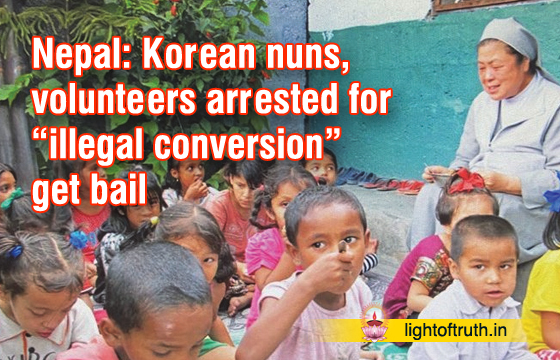
Nepal: Korean nuns, volunteers arrested for “illegal conversion” get bail
A High Court in Nepal on November 18 granted bail to two Catholic nuns and two volunteers from South Korea, who were arrested for “illegal conversion” in Nepal slums.
“Thank God for praying for Korean Sisters and volunteers. They got bail finally, thank you all for praying,” says a note from Father Silas Bogati, the vicar general of Nepal, posted on the “Couples for Christ – Nepal” WhatsApp group.
Sisters Gemma Lucia Kim and Martha Park Byongsuk, members of the Sisters of St Paul of Chartres Congregation, and two volunteers wee arrested September 14 after being accused of converting Hindus by coercion and allurement. The Koreans were kept in a jail at Pokhara, the nuns’ base in Nepal some 200 km northwest of Kathmandu, the national capital.
The High Court granted the bail after the district court in Pokhara rejected the nuns’ application. The bail was given at around 4 pm (local time). The nuns are expected to be released November 19 after the bail is paid and formalities are done at the lower court, a source in Kathmandu told Matters India.
The nuns will have to appear for hearing in case at the lower district court at a given date.
Nepal’s Catholic Church, which has been praying for the nuns and their companions, was relieved and happy, the source added.
The two nuns have been managing “St. Paul’s Happy Home,” a center in Pokhara that provides accommodation, food, education, medical services and skills training to about 120 slum children at Bus-Park. The home is named St. Paul’s in honor of their congregation’s patron.
During the Covid-19 pandemic, the nuns distributed food rations to the poor, but some people accused them of alluring them to become Catholics by giving low-quality food.
Bishop Paul Simick, the Apostolic Vicar of Nepal, has told Aid to the Church in Need that the nuns’ arrest and denial of bail has shocked the Nepalese Catholic community. The allegations against the nuns “are utterly baseless and unjust,” he asserted.
The prelate clarified that Catholics do not indulge in forceful conversion and “the Korean sisters are known for doing exclusively social work.”
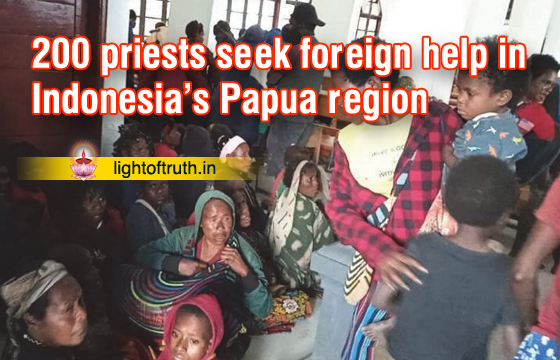
200 priests seek foreign help in Indonesia’s Papua region
Nearly 200 Catholic priests in Papua have called on the international community, includ-ing the United Nations, to play a more active role in bringing peace to Indonesia’s violence-plagued easternmost region.
In addition to diocesan priests, Franciscan, Augustinian, Jesuit and Missionaries of the Sacred Heart clerics were among 194 priests who said their call was part of an effort to be “pro-actively involved in the fight for justice, truth and peace” in Papua.
The region is caught in the grip of an insurgency being waged by separatist rebels against security forces in which innocent civilians are caught in the middle, they said in a statement.
The priests asked other countries to join them in urging rebels of the National Liberation Army of the Free Papua Organi-zation and security forces to call and observe an immediate cease-fire.
“We also firmly support inviting the UN high commissi-oner for human rights to come, see and hear the actual human rights conditions in Papua,” they said.
They also called on the go-vernment and agencies providing funds for development in Papua to review certain policies being conducted such as increasing troop deployments, which trigg-ers more violence and increased state oppression.
“There are even those in government who accuse priests who talk about human rights issues of being among the separa-tists,” they said.
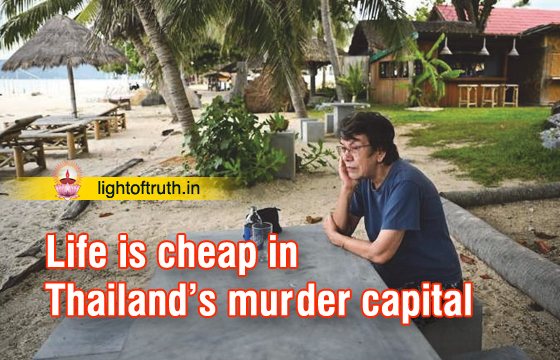
Life is cheap in Thailand’s murder capital
Violent crime targeted by disgruntled locals at family members and acquaintances has been claiming victim after victim in southern Thai provinces notorious for hair-trigger tempers and rampant gun violence.
In one recent incident in the southern province of Nakhon Si Thammarat, which has been dubbed “the murder capital of Thailand,” the assistant head of a village shot dead his two-year-old daughter on Nov. 16 during a heated, drunken quarrel with his 27-year-old wife.
The man, who took umbrage at his wife for berating him for getting visibly drunk at home, reached for his gun and took a shot at his wife but missed. He then shot his daughter, killing the toddler instantly.
The villager then tried to commit suicide by shooting himself in the head but survived with a severe head wound, according to police.
The day before, a 60-year-old man in the southern province of Songkhla, which borders Nakhon Si Thammarat, shot his 88-year-old father dead following a quarrel in an incident that was recorded on a home surveillance camera. The man tried to flee but was arrested by police.
Gun violence has long been a serious problem in Thailand, especially in the South, with a per capita murder rate that is higher than that in the United States, according to experts.
In Nakhon Si Thammarat, which has a population of some 1.5 million, scores of locals have been shot dead this year alone and many more are likely to die before the year is out.
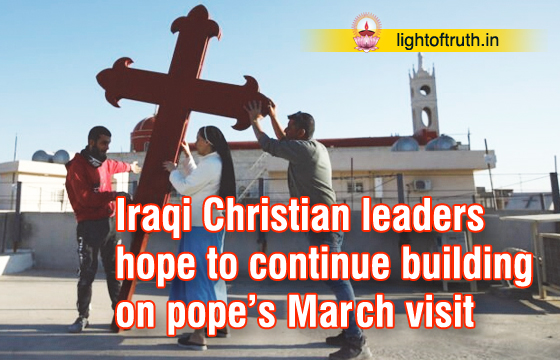
Iraqi Christian leaders hope to continue building on pope’s March visit
Nahla and Valentina like to stop and pray at Mar Elia Chaldean Catholic Church in the centre of this small majority Christian community. The grounds of the church once shelt-ered several hundred Christians who were forced to flee their homes in 2014 when Islamic State militants attacked Mosul and surrounding villages some 50 miles away.
The tents and caravans that dominated the property are gone, but the women say many Christian families remain unable to return home.
“Although we are from Ankawa, there are still many displaced in our midst from Mosul, Qaraqosh, and other towns, but they are now in apartments, having to pay rent and wondering if they will ever be able to go back,” Nahla told the Catholic News Service after lighting a candle near the saint’s statue.
“The pope gave us a lot of hope with his visit in March. It was wonderful to see our churches united in welcoming him and enjoying the many Masses, but in practical ways, we don’t feel much has changed in the circumsta-nces,” she said. “Being separated is so difficult.”
Chaldean Catholic Abp Bashar Warda of Irbil and other church officials acknowledge the pain that many still feel, but Abp Warda said the papal visit helped to inspire and recharge Iraq, which has struggled to regain a firm footing after years of conflict and sectarian violence.
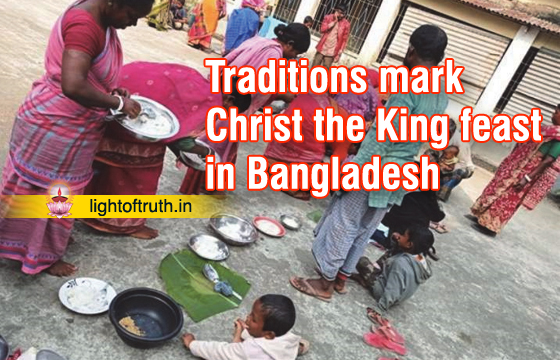
Traditions mark Christ the King feast in Bangladesh
Catholic Surobhi Minj never misses a Sunday Mass. And, the November Sunday of the feast of Christ the King has become a harvest festival for her community in Bangladesh.
On the Solemnity of Our Lord Jesus Christ, King of the Universe on November 21 Surobhi and family members wore new clothes to go to the church. They carried with them 15-kilogram rice from the latest harvest and offered it to Christ the King.
Surobhi also carried a cake she baked from the newly harvested paddy and shared it with everyone including the priest and nuns after the priest blessed the harvest offerings.
Local Catholics like Surobhi offer a share of their farm produce during the feast, making it a sort of harvest festival for indigenous Catholics across Bangladesh.
Surobhi planted paddy in her 0.251 hectors of land. “We harvested and stored it in the house. I am yet to measure this year’s yield but it’s better than previous years. I devoted a little to God because, without His grace and blessings, we cannot consume this crop at home,” the 34-year-old Oraon indigenous farmer said.
The premises of her Saint Anthony’s parish Church in Rajshahi Diocese were flooded with a variety of fresh crops on Sunday morning.
Like Minj, several Catholics in the parish had come to offer their harvests to Christ the King. Some even sold a part of the yield to gift new clothes to the priest.
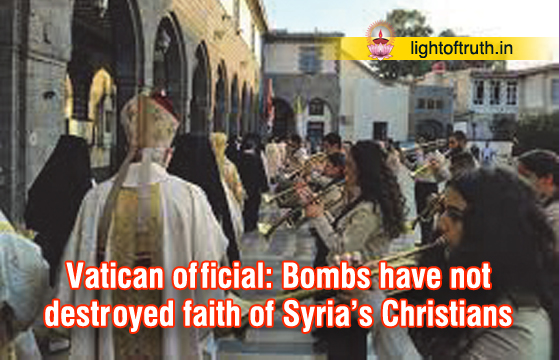
Vatican official: Bombs have not destroyed faith of Syria’s Christians
While much of the world has forgotten about the war in Syria and the extreme poverty plaguing most of its people, Pope Francis has not forgotten the Syrian people and the Christians there who continue to witness to the faith, said Cardinal Leonardo Sandri, prefect of the Congregation for Eastern Churches.
At the end of a meeting with the country’s bishops in Damascus Oct. 26, the cardinal announced that Pope Francis had sent $10,000 for each of the nation’s bishops to use to meet the greatest needs in his diocese or eparchy, according to information released at the Vatican. “The strings of the harps have for too long played the song of pain and mourning, especially for the dead, the kidnapped, the prisoners, for the children and young people who grew up under the bombs and were deprived of the affection of parents and of normal education,” the cardinal told the bishops.
“Now the lament can be heard that there is no bread, with a shocking percentage of the population forced to live below the poverty line,” he said. The U.N. World Food Program has estimated that 60 percent of the country’s population is “food insecure,” reflecting a record level of poverty after 10 years of civil war.
“The air, which was made unbreathable by the bombs and chemical agents, now may be polluted by the indifference that seems to have fallen over the drama of Syria, including in the media,” he said. “However, you know how Pope Francis, from the beginning of his papacy, has kept his gaze on all of you, inviting people to fast and to pray, calling for the end of the fighting, the reestablishment of justice and respect for law.”

How Archaeologists Are Finding the Signatures of Bible Kings, Ancient Villains, and Maybe a Prophet
The closest I’ve ever felt to the prophet Jeremiah was sitting at the bottom of an empty cistern. About 20 years ago, I was taken to an excavated water reservoir in Jerusalem and told this could be the actual hole in Jeremiah 38:6 where the prophet was left to starve when four government officials decided they didn’t like his messages from God.
I sat on a bench and looked up at the stone walls. Jeremiah sank into the mud, according to the biblical account.
But maybe it wasn’t at that spot. Who’s to say it was this cistern, which was dug up in 1998, and not another one that has yet to be found? Or perhaps it will never be found. I could imagine the prophet trapped in that exact place, wondering if God would rescue him, but short of finding “Jeremiah” scratched on the wall, no one could say for sure. In the time since I was there, questions have been raised about that cistern, casting doubt on its role in the Jeremiah drama. It’s not a place people visit these days. Archaeology can take you so close to the biblical world and still leave you wishing someone had left a signature.
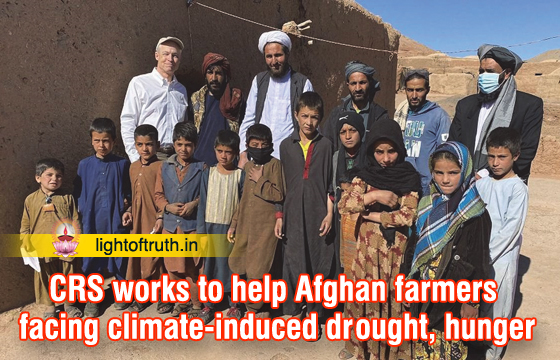
CRS works to help Afghan farmers facing climate-induced drought, hunger
Overshadowed by the politi-cal and military turmoil engulfing Afghanistan with the Taliban takeover in August, climate change – particularly drought – is relentlessly striking this Central Asian nation with dire consequences, warns a Catholic aid agency official. “CRS has been working on a response to this climate-induced drought over the past two years. But the rest of the world is only waking up to the fact that we have the worst climate – induced drought in the world right now – the worst in living memory in Afghanistan,” said Kevin Hartigan, the Middle East regional director of Catholic Relief Services.
“It was not apparent to people because there was so much focus on the political and military crisis. Now that has calmed, you are seeing the United Nations and the rest of world waking up to this enormous climate phenomenon, drought and hunger,” Hartigan told Catholic News Service by Zoom from Herat, Afghanistan. The lack of rain has compounded Afghanistan’s problems.