- Dr. Jacob Chanikuzhy
The largest book in the Holy Bible is a book of songs—the Psalms. Songs, hymns, and sacred music have always played a vital role in the worship practices of all religions. “Nothing so uplifts the soul, gives it wings, sets it free from earth, releases it from the chains of the body… as sacred song,” says St. John Chrysostom. In his Confessions, St. Augustine describes the profound effect of sacred music on his own spiritual life in these moving words: “How I wept, deeply moved by your hymns, songs, and the voices that echoed through your Church! Those voices flowed into my ears, and the truth was distilled into my heart.”
The Psalmist gives voice to the full range of human emotions, sentiments, and experiences, including disease, defeat, sorrow, anguish, fear, shame, anxiety, worry, sleeplessness, humiliation, despair, trust, hope, resilience, comfort, contentment, gratitude, joy, excitement, and many more. In every human situation, one can find an appropriate Psalm to pray with. Hence, the Book of Psalms became the Jewish prayer book par excellence. Evidently, it was also the prayer book of Jesus, who quoted from the Psalms on several occasions. Most strikingly, according to many biblical scholars, he prayed a Psalm 22 while dying on the cross: “My God, my God, why have you forsaken me?” The fact that the Book of Psalms is the most frequently quoted Old Testament book in the New Testament stands as compelling testimony to its immense importance in the life and worship of the early Christian communities.
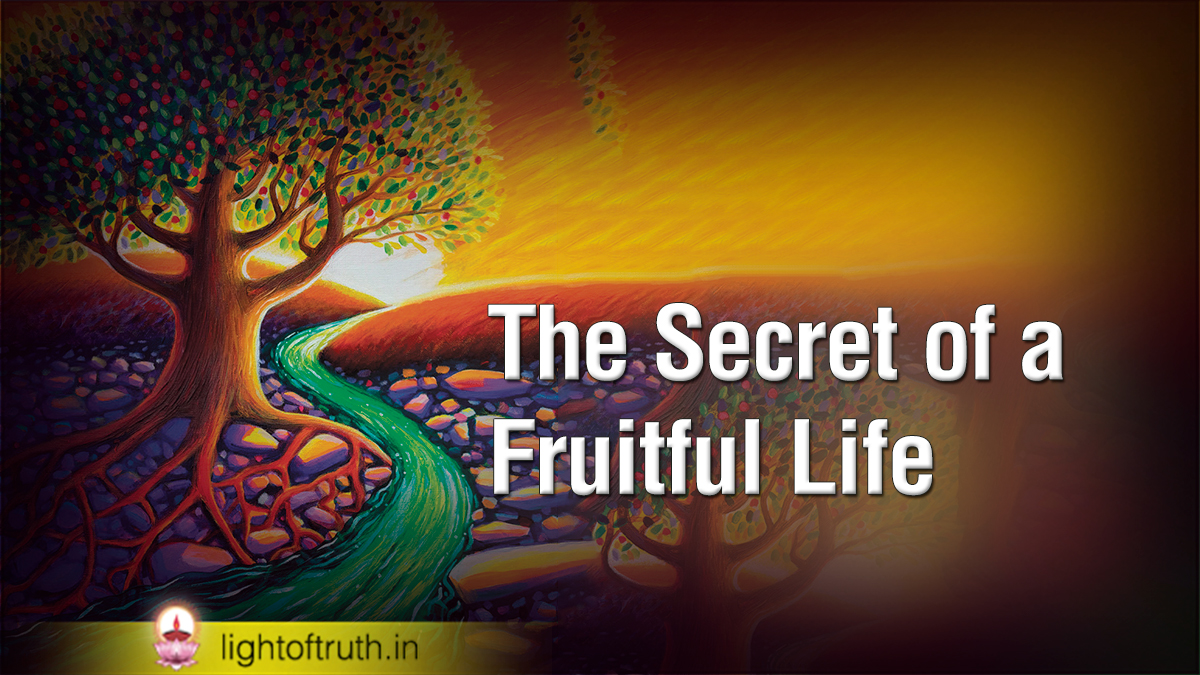
The Psalms are filled with vivid symbols, powerful metaphors, and striking imagery that speak directly to the human heart. The very first Psalm presents the memorable image of an evergreen and fruitful tree. This flourishing tree symbolizes the righteous person. It is able to withstand scorching heat and prolonged drought while continuing to bear abundant fruit in its proper season because it is planted beside a flowing stream. A fruitful tree thus becomes a metaphor for a meaningful, productive, and successful life. As we reflect more deeply on this sacred hymn, we realize that the tree maintains its luxuriant foliage and abundant fruit because its roots continually draw nourishment from a stream that never runs dry.
The Psalmist expects the attentive reader to recognize that this life-giving stream represents the Law of God, the Torah, or the Word of God. Throughout the Jewish Scriptures, rivers, streams, wells, and fountains frequently serve as metaphors for the life-giving Word of God. It is the Word of God that sustains believers amid all the ambiguities, and challenges of human existence. Human experience repeatedly teaches us that even our closest friends and our most dependable resources can fail us, drying up like a wadi precisely when they are needed most. By contrast, the Word of God is like an ever-flowing fountain that continually refreshes, nourishes, and strengthens weary travellers on life’s journey.
The Psalmist opens the Book of Psalms by proclaiming the distinguishing marks of a truly blessed person. A blessed and happy person is one who has no contacts with the ungodly. Human beings are often tempted to seek happiness, prosperity, and influence by closely associating with people who appear successful, joyful, and affluent, even though they achieve their goals through wicked, sinful, and immoral means while disregarding God and despising the righteous. The Psalmist makes it abundantly clear that the person who deliberately distances himself from such ungodly influences in every aspect of life is the one who is truly blessed. He then reveals that the genuine source of joy for such a blessed person is the Word of God. The righteous delight in the Word of God so deeply and find it so life-giving that they meditate upon it day and night. The first Psalm concludes with yet another striking image, portraying the wicked as worthless chaff. Whereas the righteous flourish like a lush, evergreen, and fruitful tree, the wicked are like chaff that is blown away by the wind and ultimately destined for the fire.
The first Psalm therefore invites every reader to reflect seriously on the blessedness of a life firmly rooted in the Word of God. At the same time, it offers a solemn warning against becoming ensnared by the seductive attractions of a wicked lifestyle, whose apparent success is fleeting and whose ultimate end is destruction. The choice placed before every believer is therefore clear: to become like the evergreen tree that flourishes besides living waters or like the useless chaff that is scattered by the wind and consumed in the fire.