Fr. Dr. Paul Muriath CMI
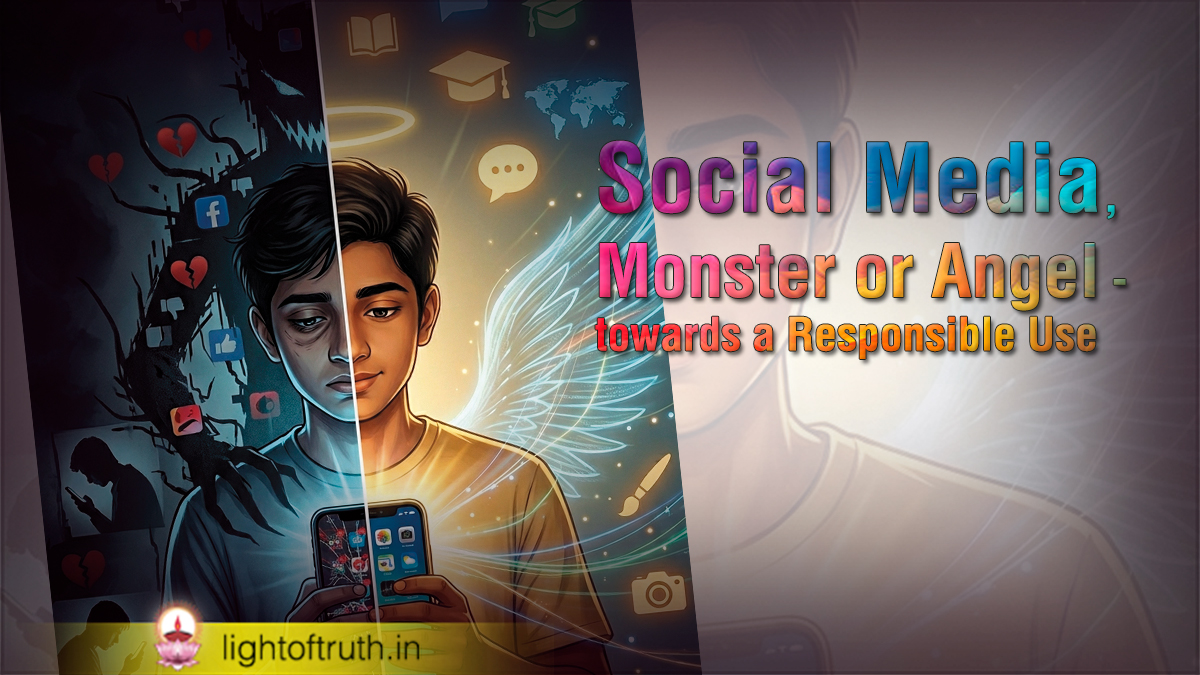
 The modern digital landscape is a double-edged sword. On one hand, new media platforms are the arteries of global communication, indispensable for education, awareness, and connectivity in today’s scenario. On the other, the uncontrolled consumption of these platforms by us, especially children, and youngsters are brewing a silent crisis – one that threatens to manifest into highly dangerous psychological and societal situations in the immediate future.
In today’s digital landscape, social media has become an integral part of everyday life. It serves as a powerful tool for communication, relaxation, education, and self-expression. However, its rapid expansion has also exposed children to risks that were previously unimaginable. As media theorist Neil Postman once warned, “Children are the living messages we send to a time we will not see,” reminding us of our responsibility to shape their environment wisely. In the context of digital media, this responsibility has become more urgent than ever.
- New Media and Man
The term “New Media” generally refers to emerging information and communication technologies and applications such as mobile phones, internet streaming technologies, wireless networks, and the high-quality publishing and information sharing capacities of the World Wide Web. But this new media era has had many negative impacts on society. Even though it is said that the world became a global village as part of the emergence of the new media, the influence of the culture and lifestyle of one also will affect the other as well. From a Catholic perspective, human life is rooted in dignity, community, and truth, as taught by the Catholic Church. New Media, when used responsibly, can serve these values by promoting communication, education, and solidarity. However, its misuse can distort human relationships and weaken moral life.

From a Catholic perspective, human life is rooted in dignity, commu- nity, and truth, as taught by the Catholic Church. New Media, when used responsibly, can serve these values by promoting communication, educa-tion, and solidarity.

According to the detailed study by BBC on “Social media damages teenagers’ internal health”, in January 2021, the number of young people with probable internal illness has risen to one in six, from one in nine in 2017. New media has become an addiction to society, especially among youngsters. This new media addiction leads youngsters to physical and mental problems such as fatigue, digestive issues, body aches, carpal tunnel syndrome, insomnia, vision problems, weight gain or loss, change in physical appearance, depression, inadequacy, dissatisfaction, isolation, low self-esteem, loneliness etc. In addition, uncontrollable media usages lead people to crime and violence, the vulgarity of life, sexual misconduct, alcoholism, infidelity, and invasion of privacy. St. Paul teaches that the human body is a temple of the Holy Spirit and must be treated with dignity and care (1 Corinthians 6:19). Excessive use of new media that harms physical and mental health goes against this teaching. Moreover, moral issues such as violence, impurity, and dishonesty in digital spaces contradict Christian values rooted in love, respect, and truth. As emphasized in the teachings of Pope Francis, digital media should be used responsibly to promote human dignity, authentic relationships, and the common good rather than leading individuals into addiction, isolation, and moral decline.
- New Media: Bad Stimulus
The Hindu daily newspaper reported that the addiction to new media, especially, digital games like Blue Whale, caused the death of youngster in two months’ time. It is reported that the family of a twenty-two-year-old young man, who had committed suicide by hanging himself inside his home in July 2017, and a family of sixteen-year-old teenager boy in the state capital of Kerala, who had committed suicide by hanging himself, on August 15, had suspected that he had taken the step as the part of the ‘Blue Whale Challenge’ game. And another case was reported that the school student from Vilapilasala in Thiruvananthapuram had allegedly committed suicide by hanging himself at his home on July 26.
The impact of technology depends largely on how it is used. Therefore, the goal should not be to eliminate social media from children’s lives but to ensure that it is used responsibly and in moderation.
After the investigation, the police department declared that all those who committed suicide were addicted to some computer games for the past few months, and they used to always play some games on their mobiles and laptops and used to sleep in the morning after playing computer games the whole night. The study and enquiry about the ‘Blue Whale Challenge’ game and its connection with youngsters and teenagers made the police investigation team led by the IG of the Police Department submit a report to ban such games in India, particularly in Kerala.
On March 29, 2026, a report published in Deepika newspaper highlighted a crucial and timely issue – the need to regulate the age at which Indian citizens, especially children and teenagers, access social media and new media platforms. According to the report, the Parliamentary Committee on Communications and Information Technology, under the leadership of Nishikant Dubey, is preparing to present recommendations in the Lok Sabha regarding age-based restrictions for children using these platforms.
- Is Social Media Restrictions Necessary?
Across the world, many nations have recognized these risks and implemented legal restrictions on children’s access to social media. These laws are designed to protect minors from cyberbullying, harmful content, privacy violations, and addictive usage patterns. In contrast, India still lacks a clear and strictly enforced national framework to regulate such access. At present, only regions like Andhra Pradesh and Telangana have introduced certain restrictions for individuals under the age of 18. However, these measures are limited and not uniformly applied across the country.
The absence of a comprehensive policy leaves children vulnerable to the negative consequences of excessive social media use. Studies and reports have consistently shown that uncontrolled digital exposure can lead to mental health issues, reduced attention span, sleep disorders, and declining academic performance. As psychologist Jean Twenge notes in her research on digital culture, “The more time teens spend looking at screens, the more likely they are to report symptoms of depression.” This observation underscores the urgency of addressing the problem before it escalates further.
“Children are the living messages we send to a time we will not see,” reminding us of our responsibility to shape their environment wisely. In the context of digital media, this responsibility has become more urgent than ever.
At the same time, it is important to acknowledge that social media is not inherently harmful. It offers valuable opportunities for learning, creativity, and global connectivity. As communication scholar Marshall McLuhan famously stated, “The medium is the message,” suggesting that the impact of technology depends largely on how it is used. Therefore, the goal should not be to eliminate social media from children’s lives but to ensure that it is used responsibly and in moderation.
The challenge before India is to strike a balance between access and protection. Effective regulation, combined with digital literacy and parental guidance, can help create a safer online environment for young users. The proposed discussion in Parliament is a significant step in this direction, signaling a growing awareness of the issue at the national level.
In conclusion, as India continues to advance in the digital age, safeguarding the well-being of its younger population must become a priority. Without proper regulation, the unchecked use of social media could lead to serious consequences in the near future. However, with thoughtful policies and collective responsibility, it is possible to harness the benefits of new media while minimizing its risks – ensuring a healthier and more secure digital future for the next generation.