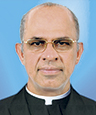
- Msgr. Dr. Antony Perumayan
(Spiritual Director, counsellor, Lisi Medical institutions)
 In the light of the Bible, healthcare is a continuation of Christ’s ministry. The expression, “Healthcare: Gospel in Action”, says something simple, yet profound – the message of Scripture becomes visible, tangible, and real when it is lived out in caring for the sick. For, long before there was a United Nations Universal declaration of Human Rights, before Aristotle developed the notion of distributive justice, before bishop or pope spoke about our duty to provide medical care to all persons, there was a biblical narrative that invited us to recognise the poor, suffering, sick, and dying stranger, as our neighbour and come to their aid. And implicitly or explicitly, this story tells that “this (wo) man is you” and “go and do likewise”.
I. Healthcare for All: Biblical Foundations
We can find some biblical foundations for the healthcare for all. Behind the conviction that human person has a right to healthcare, we can see a story in Luke’s gospel the story of Good Samaritan. It is a rich, imaginative and inspired story, a story both human and divine. This story will help us fully grasp the weight of our moral obligation to come to the aid of those standing outside the gates of the world’s most exclusive healthcare club. In the above said biblical story, there are two lessons; 1) human beings are sacred and social; 2) God hears the cries of the suffering bodies and demands that we show hospitality to these strangers in need. These lessons form the bedrock of the Catholic Church’s commitment to healthcare. They lead us to affirm the right of all people to basic healthcare.
A. Humans are sacred and social
The Bible’s first lesson is that humans are sacred and social. In Gen: 1:26-28, it is told that humans are fashioned in the image and likeness of God (Imago Dei). Being created in the image and likeness of God, we have a free will, intellect, a soul. That means, we have a spark of the divine, and so, we are capable of love, justice and mercy, and are capable of caring for each other. Every time we stand before another human being, we are standing before and looking upon the face of God.
Scripture also tells that humans are social. Gen.1:27 reports that humans are made “male and female”. This means that we are social. The biblical author notes this gender differentiation of humans only. He notes that humans are made “male and female” just after reporting twice that humans are made in God’s image, so the phrases are connected. What Gen.1:27 tells is that humans are made in the image and likeness of God and are made male and female or made as a community. Gen. 2:18 repeats this assertion about our social nature.
In Gen. 1, seven times it is written that ‘God looked upon creation and saw that it was good’. But when God looks at the solitary figure of Adam, we are told “the Lord God said:
it is not good for the man to be alone”. God sees the ‘aloneness’ as a kind of imperfection, rendering the creature grotesque – like Shakespeare’s Richard III with his twisted back and shrunken soul. God remedies this awful aloneness by fashioning a companion for him. Where there was only one, there are now two – and that makes all the difference.
B. To be Sacred: Be a Neighbour to Stranger
Indeed, the man who was fashioned by God from the clay becomes fully human only when he speaks his first words (Gen. 2:23); crying out with joy and exultation – ‘this one, at last, is bone of my bones and flesh of my flesh’. In the moment when the solitary creature recognises this other – indeed all other humans – as neighbour and companion, then and only then does he become fully human. We have the full dignity and sanctity of the human being only when we reach outside ourselves to recognise and love the neighbour.
C. God Hears the Cries of the Suffering Poor
Normally, only the voices of the powerful are heard. But the God of the Bible hears the cries of the countless faceless souls – and this is the second lesson of the Bible.
The God who comes to Moses in Ex.3, tells Moses that He has heard the strangled cries of the Hebrew slaves toiling under the cruel taskmasters, heard the bone racking wailing of the Hebrew mothers who watch the bloated corpse of their sons float down the Nile.
The God was so moved by the cries of someone else’s children that He rushes out to conspire against empires in order to adopt and rescue these children. This God demands that we, too, hear those cries and respond to them as well.
The same God continues to be haunted by the cries of those in pain…. The same reminding continues still. In the book of Deuteronomy, we see 46 times God commands the Hebrews to ‘remember’ (not to forget) those at the bottom of society. Time and again the God of the Bible demanded that Israel show the same hospitality to the suffering (Amos 5:21-24; Hos: 2:11, 19).
II. Christian Calling: A Call Respond to the Cries of the Suffering
Jesus, too, is haunted by the cries of those in pain. The Gospel presents healing not as a side activity of Jesus, but as part of His mission of salvation. So caring for the sick is a continuation of the ministry of Christ Himself.
A. Healing at the Heart of the Gospel
St. Camillus de Lellis, patron saint of nurses, said: “The sick are the heart of God.” When Jesus described His mission, He spoke in terms of healing and liberation: The crippled, the blind, the sick and the possessed flock to Jesus, begging to be touched, blessed and healed (Mt.15:21-30, Mk.5:25-29). Women with haemorrhages push through the crowd just to touch the hem of his garment hoping to be healed. The centurion comes asking this rabbi for healing for his servant and neighbours open holes in the roof of the place where Jesus is staying, so they can lower their friend to him to be healed (Mt.8:5-13, Mk.2:3-5). They knew that here is one who hears their cries and attends to them. We constantly see Him touching the leper, raising the broken, and comforting the suffering. Jesus spent more time healing the sick than preaching sermons. This shows that healthcare is not outside the Gospel; it is the Gospel in action.
B. Serving the Sick is Serving Christ
St. Teresa of Kolkata said: “The sick and the suffering are Christ in distressing disguise.”
One of the strongest Gospel foundations for healthcare is Matthew 25: 31-45. “I was sick and you visited me… whatever you did to the least of my brothers and sisters, you did to me” (Mt 25:36, 40). This is a revolutionary Gospel teaching: When we touch a patient, we touch Christ. When we clean a wound, we clean the wounds of Christ. When we comfort a dying person, we comfort Christ on the cross. Healthcare is not just a profession; it is a vocation. A doctor treats, a nurse cares, but it is God who heals. God heals people through the hands of healthcare workers. So, a hospital becomes: A place of healing, a place of hope, a place of compassion, a place where the Gospel is lived, not just preached. Therefore, Jesus tells his audience to make room for the sick and the suffering. Compassion is the foundation of Christian healthcare. The Gospel repeatedly says about Jesus: “He was moved with compassion;” he is moved to tears and feels the sufferings of others in his loins. The Good Samaritan in the parable, is the model of every doctor, nurse, and hospital worker.
D. The Church: A Communion of Compassionate Care
“The Church must be a field hospital after battle;” so says, Pope Francis. In the early Church, Christians understood that both Yahweh and Jesus demanded that they hear the cries of the suffering and come to their aid. Peter and others laid hands on the sick and tended their wounds and illnesses. The early Church opened its doors and arms to people of every community. From the early centuries, Christians were known for caring the sick, especially during plagues when others ran away. We are all part of the sacred flesh the body of Christ, that every other Christian was bone of our bone and flesh of our flesh. Didiscalia Apostolorum, directed bishops to take a weekly collection to feed and care for the sick and the suffering. Christian hospitals were born from this Gospel vision -not as businesses, but as ministries of compassion. The Church knows pretty well that physical illness imprisons the spirit just as the illness of the spirit enslaves the body. Services to the spirit of man cannot be fully effective if not presented as a service to his psycho-physical unity.
In early Christianised Europe, Christian widows and monastic communities of religious men, and women founded hospitals and all sorts of institutions and committed themselves to caring for the bodies of the sick and the suffering. And they did this because they saw this caring as part and parcel of the Christian vocation – the calling to hear and respond to the cries of the suffering. In time the practice of Christian medicine arose, and its most important characteristic was a focus on the good of the sick patient. The medical profession still remains an art in which the most important goal is to strive for the healing of the person, the softening of pain, and to be close to one’s sick brother.
As the Pope John Paul II said in his message on the World Day of the Sick: “Over the centuries, shining pages have been written of heroism in suffering accepted and offered in union with Christ. And no less marvellous pages have been traced out through humble service to the poor and the sick, in whose tormented flesh the presence of the poor, crucified Christ has been recognized.” The Church is convinced that every poor and suffering neighbour is another Christ-alter Christus – and that the only worship Christ will accept from us is compassionate care for the poor and suffering neighbour.
Conclusion – Healthcare is the Gospel in Action
For 3000 years – from the daughters of Pharaoh to the daughters of Charity – the God of the Bible has commanded that we recognise that all human beings are sacred (for in the image and likeness of God) and social (bone of our bones and flesh of our flesh), and demanded that we – like God – hear their cries and tend to their wounded bodies. For those of us who believe in the God of the Bible, for those who believe that Jesus command us to live in a certain manner, for women and men shaped and formed by the Biblical narrative, we see every other person on the planet as a sacred and social being, as a child of God, a bone of our bone and flesh of our flesh, as another Christ. And for those of us formed by the Word of God, must hear the cries of the suffering bodies of these neighbours and companions as the intolerable sound of injustice and as a command to go and follow the example of the Samaritan. We can summarise the Gospel theme of healthcare in three sentences: to care is Christian; to heal is divine; to serve the sick is to serve Christ. The Gospel may be read in the Bible, but it is seen in the hospital. The Gospel may be preached in the church, but it is practised at the bedside of the patient. Healthcare is not only a profession. It is a Gospel in action.