Category Archives: National

Church calendar stirs controversy

Featuring the photo of Bishop Franco Mulakkal of Jalandhar on the official calendar of Trichur archdiocese for 2019 is seen as the prelate’s clout in his home State of Kerala.

Bishop Mulakkal, who is accused of raping a 44-year-old member of the Missionaries of Jesus congregation under his authority, is now out on bail. The court has forbidden the prelate from entering Kerala except to appear before the investigating officer once in two weeks.

The calendar, which is published by the Catholicasabha, the mouthpiece of the archdiocese, features pictures of all bishops hailing from the archdiocese. Bishop Mulakkal’s photo appears in his birth month of March.

The move has not surprised those supporting the survivor since it is in line with the patronage the Church has extended to Bishop Mulakkal. It had allegedly tried to cover up the crime and shield the accused when the nun complained to the Church authorities.

Political leaders are overwhelmed by the open support extended to the bishop by the Church and its various organizations. The Church continued the support even after the police found him prima facie guilty and arrested him.

While bishops and priests made a beeline to the jail where he was lodged after the arrest, special prayers for the accused were organised in many churches across the state.

Goan priest-turned-activist buried after three years

The body of a Catholic priest-turned-activist was buried in western India after a three-year wait by his family and friends who suspect he was murdered for his strong stand for environmental protection.

Some 60 priests and 2,000 admirers of Jose Bismarque Desidor Dias joined the Nov. 6 burial service in his village of Sao Estevam in Goa State, a former Portuguese enclave.

The burial of Dias, a former Blessed Sacrament priest, was delayed after his friends and family sought a detailed probe into the mysterious circumstances surrounding his death.

Dias, 51, went missing on Nov. 5, 2015, after he went for a swim in a river near his home with friends. His body was found floating two days later. Local police claimed it was a case of drowning.

However, his family and associates delayed burial and demanded an investigation, suspecting that he could have been murdered by those who were angry with his campaign against mining and unbridled property development.

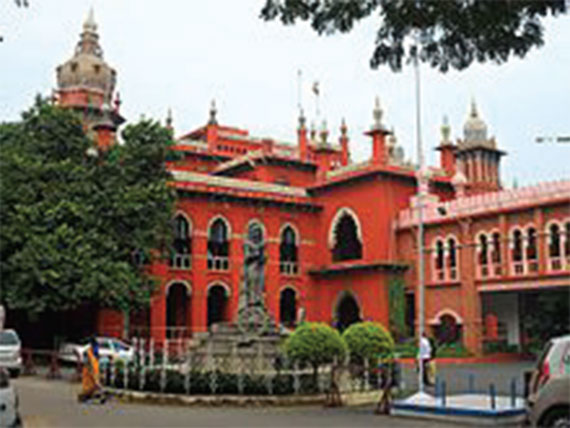
Following pressure, the Bombay High Court that also covers Goa in April 2017 ordered the state’s specialized Crime Branch police to probe the case, considering it a murder.

In March 2018, however, investigators submitted a closure report to the court asserting it was a case of drowning.

“Only the body of Dias is laid to rest, not the concept of justice. The fight for our fallen comrade will go on,” said Sudip Dalvi, an associate of Dias who was among those pressing for court intervention.

Dalvi told ucanews.com a review petition has been filed in court. “But all connected with him thought it was time to give him a decent burial” and decided to do it on his third death anniversary, he added.

Dias’ parish priest Eusico Pereira highlighted Dias’ childhood wish for priesthood.

“He lived for others,” he said. Pope Francis’ on May 2015 encyclical Laudatosi’ made him overjoyed because he felt he had the mandate of the Pope.

Dias was a “fearless witness to Christ in truth,” Father Pereira added.

Dias mobilized people through music, rallies and meetings against large government and private projects including a golf course of a seven-star hotel and Goa’s second airport.

Indian Muslims upset over Taj Mahal prayer restrictions

The Archaeological Survey of India (ASI), which is tasked with the monument’s management, said in a Nov. 5 order that only Muslims living around the Taj Mahal can pray on Fridays in the mosque adjacent to the mauso-leum. Muslims from other areas are barred, Vasant Swarankar, super-intending archaeologist at the ASI’s Agra chapter, told media. Namaz (prayers) can only be offered on Fridays. Imams and staff can enter the mosque only from noon to 2 pm, according to the order.

The world-renowned mausoleum was built by Mughal emperor Shah Jahan in memory of his wife in 1658.

The UNESCO-designated world heritage site receives more than 200,000 overseas tourists and some 4 million local tourists every year. But Friday is a holiday when no tourists are allowed. The ASI said it was only implementing a July Supreme Court order that only residents of Agra should be allowed to enter the mosque for congregational prayers as unregulated entry could adversely affect the monument.

However, leaders of Muslims, who comprise 14 percent of India’s 1.2 billion people, say the order is unnecessary.

Warriors for women’s dignity

Six years ago, at the age of 26, Laila Talo Khuder Alali was sold as a sex slave eight times to men of different nationalities by militants of Islamic State in Iraq and Syria (ISIS).

Standing in a hotel auditorium in India’s commercial hub of Mumbai to receive an award in the name of St Mother Teresa, she told of how her husband and a child were still missing.

Several of her family members had been killed, but eight were rescued.

Those missing are among more than 3,000 people known as ‘Yazidis’ still in ISIS captivity, Alali said when receiving the Mother Teresa Memorial Award for Social Justice on Oct. 21.

The militants of ISIS are accused of perpetrating genocide against the Yazidi, a religious minority group in northern Iraq.

Yazidism combines elements of Islam, Christianity, Judaism and Zoroastrianism. ISIS, also known simply as Islamic State, seeks to wipe out their faith. “We faced torture, sexual slavery and unimaginable acts,” the 30-year-old woman recounted at the award ceremony in Mumbai.

Indian deaths in Persian Gulf: Nun endorses NGO analysis

A Catholic nun working among migrant workers agrees with a voluntary group’s finding that at least 10 Indians die every day in the Persian Gulf countries. “I am not surprised. The number could be more,” Sister Josephine Amala Valarmathi told Matters India on November 7.

The member of the Missionary Sisters of the Immaculate Heart of Mary was responding to the findings of the Commonwealth Human Rights Initiative. The 43-year-old nun, based in Chennai, has addressed the problems of Indians working in the Persian Gulf countries, Malaysia and Singapore, for the past 16 years.

She says she is quite familiar with the problems of Indians working overseas as she often gets such distress calls from them.

The Commonwealth Human Rights Initiative released early November its analysis of the deaths of Indian workers in Bahrain, Oman, Qatar, Kuwait, Saudi Arabia and the United Arab Emirates from January 1, 2012 to about mid-2018. Venkatesh Nayak of the voluntary group provides the figures for six years from 2012.

“Available data indicates, at least 24,570 Indian workers died in the six Gulf countries between 2012 and mid-2018. This number could increase if the complete figures for Kuwait and UAE are made available publicly. This amounts to more than 10 deaths per day during this period,” Nayak told reporters.

He said he had got those figures through the Right to Information data from External Affairs Ministry.

Nayak’s data was provided by Indian missions in Bahrain, Oman, Qatar and Saudi Arabia but the embassy in the UAE refused to give information. The Indian embassy referred to data on their website which was only 2014 onward.

In order to fill gaps, Nayak used data provided in Parliamentary questions in LokSabha and RajyaSabha.

Sister Valarmathi shared another list compiled by an unnamed person on the number of Indian workers who died in the Persian Gulf countries between 2005 and 2015.

Her list has a total of 31,810 deaths reported from Bahrain, Iran, Iraq, Kuwait, Oman, Qatar, Saudi Arabia and the United Arab Emirates during the 11-year-period. This accounted for 8 deaths daily.

The nun’s list gives the number of bodies repatriated to India between 2005 and 2015.

Oman expatriated bodies of all 5,402 Indian workers who died there, Qatar sent all 2,396 bodies, Bahrain 1,493, Iran 52, Iraq 123 and UAE 384.

However, no data is available for the number of repatriation in Saudi Arabia where 13,248 Indian deaths occurred. Kuwait had 5,249 deaths, but repatriated only 4,021.

Christians in Indian state seek religious freedom

Chhattisgarh Christian Forum presents charter of demands to political parties before election.

Christian leaders in India’s poll-bound Chhattisgarh State have presented a charter of demands to major political parties seeking to end discrimination and violence. The charter prepared by leaders of the ecumenical Chhattisgarh Christian Forum expressed concerns over the security of the miniscule Christian community in the central state, now ruled by the pro-Hindu Bharatiya Janata Party (BJP).

It also calls on the next government to ensure freedom to practice religion.

“We have already handed over the charter to all major political parties,” Arun Pannalal, president of the forum, told ucanews.com on Nov. 7.

The state of 25 million people, where Christians make up barely 2 percent of the population, is scheduled to elect its 90-seat legislative house in two phases on Nov. 12 and Nov. 20.

Prime Minister Narendra Modi’s BJP, which has ruled the state for 15 years, is aiming to prevent the Indian National Congress party, its archrival, from gaining power. The smaller Bahujan Samaj Party and Aam Aadmi Party are also in the fray.

Synod representative shares thoughts on Vatican synod

The young Catholic representative at the just concluded Bishops’ Synod on youth in Rome says corporate culture and digital influence are major concerns for the Indian youth. Percival Holt, 25, was one of the 38 young people from various parts of the world who participated in a Synod that concluded on October 28 in Vatican City. “I represented all the youth in India, not just Catholic youth,” said Mr Holt, who holds a masters in biotechnology. The Delhi resident, the national president of the Indian Catholic Youth Movement, was the only Indian youth representative in the synod.

CHURCH SCHOOLS IN INDIA AMONG THOSE THAT ‘SHOULD NOT EXIST’

Muslim and Christian leaders in India see danger in a pro-Hindu group’s demand that the government revoke a policy allowing minority groups to own and manage educational institutions in the country.

A report released on Oct. 10 by the Centre for Policy Analysis, a think tank of hard-line Hindu group Rashtriya Swayamsevak Sangh, stated that allowing religious minority groups to have institutions for their own people was tantamount to “compartmentalization” that works against the unity of India.

“There is no rationale for the existence of a separate wing for education of minorities such as [the] National Commission for Minority Educational Institutions in the Ministry of Human Resource Development. Aren’t such types of national level regulating bodies compartmentalizing education on religious lines and weakening the national mainstream?” asked the report.

The Centre for Policy Analysis wants the government to discontinue the National Commission for Minority Educational Institutions, a legal body that advises the federal and state government on issues related to minority institutions.

Archbishop Thomas D’Souza of Calcutta, who chairs the Indian bishops’ office for education, said the demand goes against the provisions of the Indian constitution that allows religious minorities to establish and administer educational institutions of their choice to help advancement of their community members. “In effect, they are asking to change the Indian constitution,” the archbishop told in ucanews.com.

Technically, the Hindu group has only asked to close down the National Commission for Minority Educational Institutions. But by de facto the demand is to remove the provision to have minority institutions as the commission is the authority to grant minority status to an educational institution.

“All Indians, particularly religious minorities, should be afraid about such demands,” Archbishop D’Souza said. Some 220 million people or 18.4% of 1.2 billion Indians are officially considered part of a religious minority. Some 140 million Muslims, the largest minority, constitute 13.4% of the population, while 27 million Christians (2.3%) are the second largest minority group. Other religious minorities are Sikhs (1.9%), Buddhists (0.8%) and Parsis (0.07%) of the country’s total population.

POLICE PURSUE CHRISTIAN DONATIONS

Officials probing more than 80 Indian Christian institutions in eastern Indian Jharkhand State have recommended a federal investigation on fund diversions, which church leaders say is an attempt to project Christians as law breakers.

The state’s Criminal Investigation Department (CID) has recommended a probe by the Central Bureau of Investigation (CBI), the premier agency under the federal government, the local Hindi language daily Prabhat Kabar (Morning News) reported on Oct. 17.

Since July, the state has been investigating 88 Christian organizations, including those managed by various Catholic dioceses and religious congregations such as Jesuits, Salesians and several groups of nuns. They are accused of diverting overseas donations to help win converts.

Senior CID official Ajay Kumar Singh, in a report submitted to the chief of state police, claimed irregularities in the financial transactions of these institutions and recommended an in-depth federal probe, the newspaper reported.

The CID has completed investigating 10 of the Christian organizations allegedly involved and found there were “suspicious cash transactions” involving of millions or rupees. It also found that funds were being used illegally for religious promotional activities as well as in the providing of inaccurate information to the government, the news report stated.

An Indian law, the Foreign Contributions (Regulations) Act stipulates that overseas donations must be received through a government regulated system and used strictly for defined purposes.

Audit reports must be submitted to the government annually, the law stipulates.

However, Bishop Theodore Mascarenhas, secretary general of the Indian bishops’ conference, maintained that church organizations have been strictly following the law and the recommended further probe was a clear case of harassment.

PRO-HINDU TRIBAL PEOPLE TAKE OVER INDIAN CHURCH

Pro-Hindu tribal people have removed a cross from a Protestant Church and converted the building into their community hall in India’s Jharkhand State in a move that Christian leaders believe is linked to upcoming elections.

Some 50 tribal people took down the cross from the Vishwa Vani (voice of the world) church in Khadnga village, 25 kilometres from state capital Ranchi, on Oct. 20. They also repainted the name as Sarna Bhavan — the house of those following the traditional tribal Sarna religion. They also held a purification ceremony and prayers at the church.

“We lodged a complaint with the police on Oct. 24 after our efforts to amicably settle the issue failed,” said Pastor Emmanuel Kujur, coordinator of the Protestant group in the state.

He said tribal people in the village captured the church on grounds that it was built on tribal land. They claimed to have a government order to reclaim the land and the building but failed to produce the document, he said.

Pastor Kujur admitted there was a dispute over the land. The church was built on land donated by a tribal Christian. He and his brothers had a dispute over their property and a local magistrate ruled the land belonged to the government.

“But that does not give anyone the right to capture the church. The dispute continues between the brothers. Until it is settled, how can someone take it over?” he asked.