Category Archives: National

Education policy: Church wants to be consulted

Catholic bishops have proposed a series of changes in a draft education policy prepared by the Indian government, criticizing its silence on the rights and contributions of Christians.

The government of Prime Minister Narendra Modi, led by the pro-Hindu Bharatiya Janata Party (BJP), drafted the National Education Policy (NEP 2019) in its attempt to revise and modernize the country’s education system and invited public responses to it.

The Indian bishops’ Office for Education submitted a 28-page proposal on July 25, when a six-member delegation met with Human Resource Development Minister Ramesh Pokhriyal Nishank at his office in New Delhi. Education comes under Nishank’s portfolio.

Father Joseph Manipadam, secretary of the bishops’ education office, told ucanews.com the draft policy failed to address basic issues of education such as lack of teachers and lack of basic facilities such as drinking water, basic hygiene and clean toilets.

Government asked to invite Pope to India

The Indian government should invite Pope Francis to come to the populous nation as vast numbers of people were anxiously hoping for such a visit, according to an Opposition Congress Party Member of Parliament.

Kodikunnil Suresh told the lower house that a papal visit would enhance the nation’s reputation for honouring individuals who enhance communal tolerance and understanding.

It was not just Catholics, but rather a broad cross-section of Indians who wished to see Pope Francis visit, argued the parliamentarian from the nation’s south. Suresh, himself a Hindu, added that the presence of the leader of the Catholic Church would encourage acts of mercy and charity as well as the elimination of social evils.

No Pope has visited India since Pope St John Paul II in November 1999.

However, Suresh told ucanews.com that Francis, since his election as Pope in 2013, had on several occasions expressed a personal desire to come.

And Catholic Church leaders in India during the past six years have publicly appealed to the government to issue an official papal invitation. In March last year, Indian Cardinal Oswald Gracias directly asked Prime Minister Narendra Modi to do so.

Indian Church to observe August 10 as ‘Day of Mourning’

The Church in India will observe August 10 as a “Day of Mourning” for Christians and Muslims of Dalit origin.

“Throughout India, August 10 is being observed as ‘Day of Mourning’ in all the churches. Rallies, demonstrations and candle vigils are conducted and specials prayers are offered in the churches,” says a press release from the Office of Scheduled Castes and Backward Classes under the Catholic Bishops’ Conference of India.

In the national capital, the office will collaborate with the National Council of Churches (NCCI) and National Council of Dalit Christians (NCDC) to hold a special program at Jantar Mantar near the Parliament building, a venue marked for public protest.

The program will begin at 10 pm and last for two hours, according to a press release from the Catholic bishops’ conference.

NCCI is the national body of Protestant and Orthodox Churches and their associations and centres in India.

“We request your presence for the Day of Mourning observance… and support the marginalized minorities,” says the press release.

The Constitution (Scheduled Caste) order 1950 was signed on August 10, 1950, by then President of India that says that “No person who professes a religion other than Hinduism shall be deemed to be a member of the Scheduled Caste.”

Church pays tribute to Indian politician who loved Christians

Church leaders have expressed their condolences following the death of Sushma Swaraj, India’s former external affairs minister, recalling her role in securing freedom for two abducted Catholic priests.

Swaraj, a prominent member of the pro – Hindu Bharatiya Janata Party (BJP), died on August 6 following a heart attack. She was 67.

“She brought a human touch to all decisions of the ministry. As foreign minister, she was our best ambassador and projected a great image of the country in international circles,” said Cardinal Oswald Gracias, president of the Indian bishops’ conference.

Swaraj headed the foreign ministry during the first term (May 2014 to May 2019) of Prime Minister Narendra Modi. An acute diabetic, she underwent a kidney transplant in 2016. She later moved away from active politics and was not part of the cabinet.

The untimely death of BJP leader and former external affairs minister Sushma Swaraj has saddened Salesian Father Tom Uzhunnalil, who freed 18 months after his abduction by suspected Islamic militants in strife-torn Yemen in 2016.

Recalling Swaraj’s role as external affairs minister in securing his freedom, Father Uzhu-nnalil said he prayed for the 67-year-old leader, who “was like a sister” to him.

“I feel so sad about the demise of such a beloved and pleasant personality. Of course, I prayed at once for her soul and then prayed for her near and dear ones,” the Indian Express quoted Father Uzhunnalil saying as saying.

The priest was abducted in Herat province in western Afghanistan by unidentified gunmen on June 2, 2014. He was released on Feb. 22, 2015.

For 3 months, no girls were born in 132 Indian villages

A northern Indian district has launched an investigation into a region in which the birth rate of baby girls is in dramatic decline. Government data has revealed that among 216 babies born across 132 villages in the last three months, not even one of them was a girl. The district administration of the Uttarkashi region has announced that it will form a task force to examine the reason why no girls have been born in the region.

But some experts in the area say the reason is clear. “No girl child was born for three months in these villages. It cannot be just a coincidence. This clearly indicates female foeticide is taking place in the district. The government and the administration are not doing anything,” social work Kalpana Thakur told NDTV.

The region’s district magistrate, Ashish Chauhan, told reporters that the matter is “suspicious, and has highlighted female foeticide.”

“We have identified areas where the number of girl childbirth is zero or in single-digit numbers. We are monitoring these areas to find out what is affecting the ratio. A detailed survey and study will be conducted to identify the reason behind it,” Chauhan said.

Chauhan added that health workers in the area have been told to be vigilant.

In 1994, India outlawed sex-selective abortion. However, some experts say that the practice persists because male children are perceived to be more able to contribute financially to a family’s needs, and marriage customs require that the parents of girls pay a substantial dowry. In Hinduism, India’s predominant religion, male children perform the funeral rites of their parents.

A 2011 census found that there were 943 females for every 1,000 males in the country, and recent statistics suggest that the ratio of women to men is moving further from even.

Government officials claimed in 2015 that as many as 2,000 girls are killed in India daily, through both abortion and infanticide.

Concern grows as Mother Teresa nun remains in Indian jail

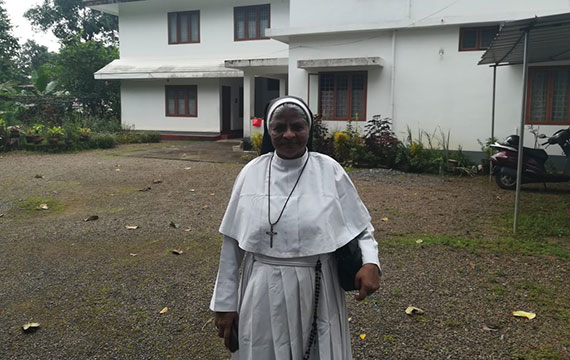
Church activists suspect political interference and sectarian hate in the continued incarceration of a Missionaries of Charity nun who was arrested a year ago accused of child trafficking in eastern India’s Jharkhand State.

Sister Concelia Baxla filed a fresh bail application in the state’s High Court on July 12. Her bail was rejected by several courts including India’s Supreme Court early this year.

The nun, now 62 and a diabetic, was arrested on July 4 last year along with Anima Indwar, a staff member of the home for unwed mothers that the Missionaries of Charity managed in state capital Ranchi. The arrest followed a complaint that Indwar took money to provide a baby but failed to keep the promise. They were accused of having already sold three babies from the home. The Supreme Court rejected her bail application on Jan. 29 on grounds that police had not yet completed the investigation of the case.

Spate of lynching incidents worry church people in India

Church leaders in India have concerns of further civilian unrest after mob attacks killed eight people in three separate incidents over the weekend.

In the latest incident on July 20, a group of more than 10 men beat and killed four people, two men and two women, in the Gumla district of Jharkhand State.

The four deceased, all aged between 60 and 65, came from three different families.

Local media, quoting unnamed sources, said the fatal beatings were handed out after leaders of the local village assembly met and found the victims guilty of practicing black magic.

In a similar incident the day before, three people were beaten to death by a mob in the Saran district of the neighbouring State of Bihar.

Police said the perpetrators claimed that they had attempted to steal a buffalo, something denied by the victims’ families.

Two of the three died at the scene while the third died on the way to hospital, said Police Superintendent Har Kishore Rai.

Archbishop Leo Cornelio of Bhopal, the capital city of Madhya Pradesh, said mob lynching was evidence of “a dangerous path” to which the nation was being pushed. “It is not people generally,” Archbishop Cornelio said. “In most cases it is local goons and fanatic Hindu groups who are involved in such violence,” he said.

Visakhapatnam Police circular on churches irks BJP leaders

A circular from the office of the Visakhapatnam police commissioner asking police stations to take steps to prevent attacks on Christians and churches has led political uproar and protests.

The Bharatiya Janata Party leaders objected to the circular’s choice of words. They say the police should not have mentioned any community or place of worship by name.

The BJP leaders include former federal minister D Purandes-wari and legislator PVN Madhav.

The commissioner’s office issued the circular after a local pastor submitted a memorandum to the Andhra Pradesh State government, seeking protection for churches and Christians in the south-eastern Indian state. He alleged that right wing activists targeted Christians and their places of worship.

The police chief reissued the circular without referring to any community, but the BJP leaders remain unsatisfied.

Visakhapatnam police commissioner Rajeev Kumar Meena issued the circular on July 4 in response to a petition by B Daniel Shyam through the CM’s Praja Darbar and Spandana portal. The petition was sent to all the districts for necessary action.

The circular instructed station house officers in Visakhapatnam to conduct intensive patrolling by covering all churches and provide protection to them. He also instructed ACPs to visit all churches in their jurisdiction once a month, discuss with church elders on such activities and take preventive measures.

The memo irked BJP workers. “We will meet the chief minister on July 22 and tell him about the feelings of people of different religions. We will not leave this issue,” Madhav said.

Missionary bishops pray for unity, plead for peace

Missionary bishops and other missionaries from the Syro-Malabar Church working in Northeast India have decided to pray for Peace and Unity in their Mother Church and urge especially other missionaries of the same background to do the same.

They have also decided to make an earnest appeal to every section of the Syro-Malabar Church, Hierarchy, clergy, religious and faithful to forget all differences, whatever they be, and sincerely work for peace and Unity among the children of St Thomas.

They said they were proud of the heritage of the Great Apostle of India, their common Father, and of the immense contribution the sons and daughters of this Church had made to the growth of God’s Kingdom, especially in recent years. They said, they also rejoiced at the recent recognition that their Church had received at the World level.

However, they said, they were greatly pained at the recent incidents that have threatened the Unity of the Church which they love so much, and whose missio-nary zeal they would like to see growing daily.

“Human needs are growing and Christian anxieties are multiplying over the face of the earth,” Archbishop John Moolachira of Guwahati said.

“This is not the time to allow little differences to divide us and make our work ineffective.” He foresees common enemies taking advantage of their lack of Unity. The decision to make this humble appeal was made in Guwahati in a gathering of bishops, priests, and religious at the service of Ecumenism in Northeast India after they had reflected on July 12, under the guidance of Fr Gilbert Aranha, the CBCI Secretary of the Office for Ecumenism, on the causes of historical divisions in the Church.

They were very emphatic that they did not want to be judge-mental with regard to anything about which there are differences of opinion.

Church land probe sparks anger in India

Christians in India’s Jharkhand State have claimed that a government plan to probe church land holdings amounts to persecution.

The state government is controlled by the pro-Hindu Bharatiya Janata Party (BJP), which also rules nationally and has been accused of having an anti-Christian agenda.

“This is surely a vindictive action,” Kuldeep Tirkey, leader of the ecumenical Christian Youth Association, told ucanews. com. “It is the latest in a series of such probes and actions taken deliberately to target minority Christians.”

Tirkey said that since early July state chief Minister Raghubar Das has been talking publicly about the need for a probe to determine whether or not church groups legally own all the land they are occupying.

At issue is the implications of two state laws called the Chhotanagpur Tenancy Act of 1908 and the Santhal Pargana Tenancy Act of 1949 that prohibit outsiders buying traditional tribal land.

Most of the state’s 1.5 million Christians are tribal people and many Christian institutions and parish churches stand on land said to have been donated by them.

If an investigation showed that some church-occupied lands were actually sold by tribal people to non-tribal missionaries, the state could initiate legally proceeding, church sources said.

Father Anand David Xalxo, spokesman for the archdiocese covering state capital Ranchi, said the Church had not received any official communications from the government about the investigation. “We have been hearing about such a probe from media,” the priest said.

If and when there is an official notification of the government’s intentions, church officials would respond, he added.

Christian leaders see the threat as part of what they regard as a vendetta.