
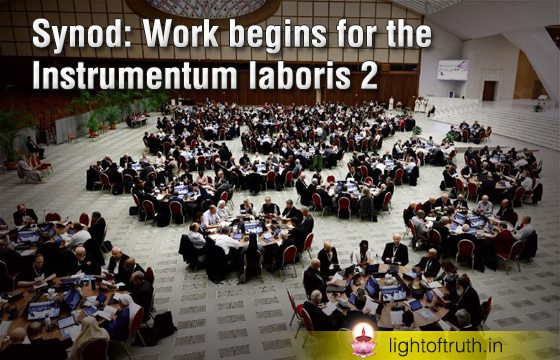
With the document Towards October 2024 sent last December to all the bishops of the world, the General Secretariat of the Synod asked the local churches and groups of Churches to deepen some aspects of the Synthesis Report that are fundamental to the theme of the Synod, starting from a guiding question of the entire synodal process: ‘HOW to be a synodal Church in mission?’ During these months, the individual local Churches have carried out their work by sending their contribution through the Bishops’ Conferences, the Eastern Catholic Churches and the International Reunions of Bishops’ Conferences.
“I am particularly impressed to see the involvement of the entire church community in this long process of discernment”, says Cardinal Mario Grech, Secretary General of the General Secretariat of the Synod. “In addition to the reflections arising from the Synthesis Report of the First Session, the material received often adds real testimonies on how the particular churches not only understand synodality, but also how they are already putting this style into practice. The synodal Church is not a dream to be realised, but already a living reality that generates creativity and new relational models within the same local community or between different churches or church groupings’.
From Tuesday, 4 June 2024, the group of theologians, experts in various disciplines (dogmatic theology, ecclesiology, pastoral theology, canon law, etc.), will analyse all this material. ‘We are not leaving anything to chance. Each document is to be carefully read with the aim that at the end of this meeting, the group will present a text that reflects the work, questions and insights received from the grassroots” says Cardinal Grech.
Category Archives: International
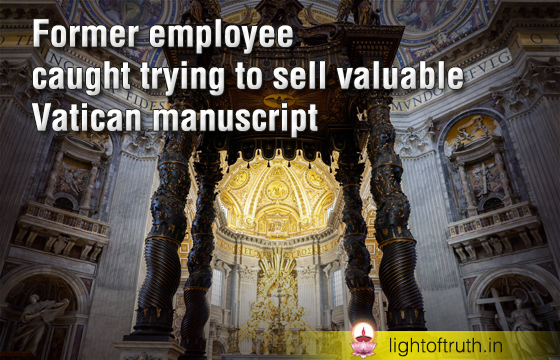
Former employee caught trying to sell valuable Vatican manuscript
The suspect, a former employee of the Fabbrica di San Pietro – the office responsible for the basilica’s upkeep – reportedly attempted to sell an 18-page manuscript, which had been missing from its archives, back to the basilica. The Italian newspaper Domani first reported the arrest on June 6, and the Vatican prosecutor’s office later confirmed it.
Though it is not clear where the manuscript was obtained, Domani reported that the suspect was arrested on May 27 after a fabricated transaction in which Cardinal Mauro Gambetti, arch-priest of St Peter’s Basilica, ex-changed a check for 120,000 euros (about $195,000) for the manuscript. Upon leaving the meeting with the cardinal, the suspect was taken into custody, interrogated and arrested.
According to Vatican News, the manuscript describes specifications for gilding the friezes on the baldachin, or canopy, that towers over the main altar of St Peter’s Basilica; the baldachin was designed and constructed by Bernini in the early 17th century. The manuscript reappeared in 2021 when a photocopy of it was used in a book on Bernini. The suspect was the editor of the volume and after its publication began negotiations with the basilica to sell the manuscript. Alessandro Diddi, the Vatican’s chief prosecutor, is expected to reach a decision about the indictment this week.
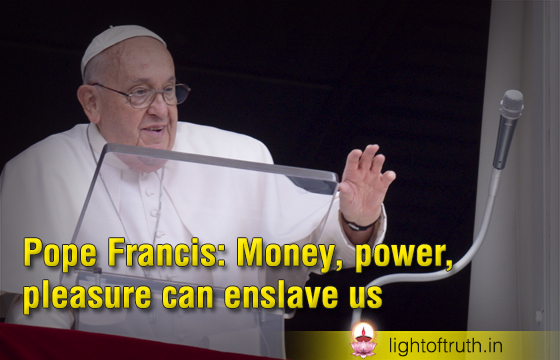
Pope Francis: Money, power, pleasure can enslave us
Pope Francis urged people to reflect on whether they are sacrificing their serenity and freedom to be enslaved by money, power, and pleasure. Speaking in his Angelus address on June 9, the pope asked people to contemplate the temptations that can imprison us and the freedom found in Christ.
“If we let ourselves be conditioned by the quest for pleasure, power, money, or consensus, we become slaves to these things,” he said. “If instead we allow God’s freely-given love to fill us and expand our heart, and if we let it overflow spontaneously by giving it back to others with our whole selves without fear, calculation, or conditioning, then we grow in freedom and spread its good fragrance around us in our homes, in our families, and in our communities.”
In his speech from the window of the Vatican’s Apostolic Palace, the pope highlighted the many ways in which “Jesus was a free man.” Jesus was not enslaved by wealth but embraced “a poor life full of uncertainties, freely taking care of the sick and whoever came to ask him for help, without ever asking for anything in return.”
“He was free with regard to power,” Francis added. “Indeed, despite calling many to follow him, he never obliged anyone to do so, nor did he ever seek out the support of the powerful but always took the side of the least, teaching his disciples to do like-wise.” The Lord was also free from the need “for fame and approval, and for this reason, he never gave up speaking the truth,” he said. Pope Francis underlined that Jesus never gave up speaking the truth “even at the cost of not being understood or becoming unpopular – even to the point of dying on the cross.”
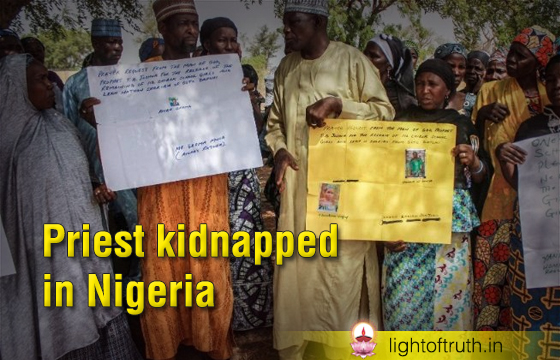
Priest kidnapped in Nigeria
The Vicar General of the Diocese of Kafanchan, Ni-geria, has decried the kidna-pping of yet another priest in the area.” “While we pray for the safe release of Father Ukeh,” Fr Emmanuel Kazah Faweh said, “we condemn the incessant kidnappings for ransom of innocent and defenceless citizens of our parishes.” Father Gabriel Ukeh was kidnapped by armed men who broke into the rectory of St Thomas Church in northwestern Nigeria in the early hours of Sunday, 9 June.
Kidnappings are rampant throughout Nigeria, with bandits and insurgents taking people captive for hefty ransoms, but also for political or ideological reasons. More than 4,000 kidnappings have occurred since May 2023. Earlier this year, the Vatican’s Dicastery for Evangelization issued a statement denouncing the wave of kidnappings and expressing its “deepest and heartfelt solidarity” with the Nigerian people in the face of the crisis.
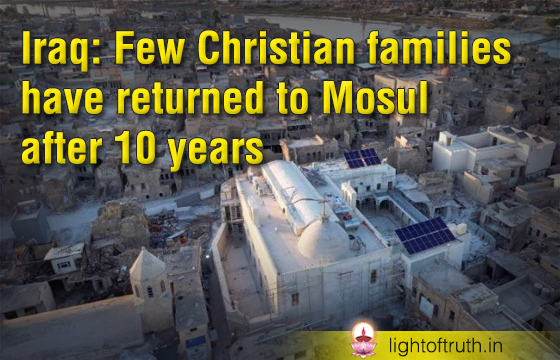
Iraq: Few Christian families have returned to Mosul after 10 years
After being forced to leave their homes in the Iraqi city of Mosul because of religious extre-mism and violence ten years ago, very few Christian families have returned home. According to Chaldean Archbishop of Mosul, Amel Shimon Nona, the majority of the 1,200 Christian families had left the city of Mosul due to the violence carried out by the so-called Islamic State (IS).
In an interview with the Vatican’s Fides news agency, the Archbishop said he and his priests sought refuge in the villages of the Nineveh Plain, such as Kra-mles and Tilkif, during the height of the war. “Our church, dedicat-ed to the Holy Spirit, was looted by gangs of thieves while the city was being taken over by IS. How-ever, the Muslim families living nearby called the Islamist mili-tiamen, who intervened and put an end to the looting,” said Abp Nona. Christians began departing in droves after IS “marked” their homes for expropriation. Two nuns and three teenagers were tempo-rarily kidnapped by the jihadists. Then, in January 2015, the soldiers of IS expelled from Mosul ten elderly Chaldean and Syrian Ca-tholic Christians after they refused to renounce Christianity and con-vert to Islam.
Bishops in Bolivia start digitization process in dioceses
“The adoption of specialized software in our parishes is a crucial step toward a more efficient and connected Church for the faithful in the digital age, allowing us to modernize our administrative processes and giving us the opportunity to offer better service to our communities in the country,” according to Bishop Coter, Apostolic Administrator of Reyes.
In this way, parishioners will be able to obtain any certificates from their parishes, saving time and money. The update was released by the Bolivian Bishops’ Conference, which, in collaboration with Ecclesiared, a management software, decided to launch this digitization plan to help dioceses and parishes use digital technologies as tools for their pastoral works and initiatives.
This enterprise will not only help the Church adapt to the digital times, but also protect and preserve the rich heritage of the Church in Bolivia by making digital copies of parish archives. The digitization process will begin in the Vicariate of Pando and the Vicariate of Reyes, gradually extending to the dioceses of San Ignacio de Velasco and the rest of the entire Church in Bolivia.
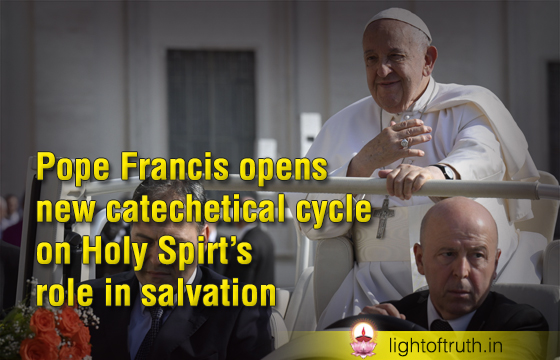
Pope Francis opens new catechetical cycle on Holy Spirt’s role in salvation
Pope Francis on May 29 opened a new catechetical series during his weekly general audience, focusing on the theme of creation across history and the role of the Holy Spirit in the story of salvation.
Titled “The Spirit and the Bride: The Holy Spirit Guides God’s People Toward Jesus Our Hope,” the new cycle will unfold across three main themes: the Old Testament, the New Testament, and “the time of the Church.”
“The Spirit of God, who in the beginning transformed chaos into cosmos, is at work to bring about this transformation in every person,” the pope said during the general audience held May 29 in St. Peter’s Square.
The first part of the series will begin with an overview of creation according to the Old Testament, but it will not be “biblical archaeology.” The pope explained that it will instead focus on how the promise given in the Old Testament “has been fully realized in Christ.” “It will be like following the path of the sun from dawn to noon,” he added. Quoting from the first two verses from the Book of Genesis, Francis observed that “the Spirit of God appears to us here as the mysterious power that moves the world from its initial formless, deserted, and gloomy state to its ordered and harmonious state.” Referencing the division between the “confused” and the “beautiful and ordered,” Pope Francis observed that it is God who “makes the world pass from chaos to the cosmos.”
The pope underscored the Holy Spirit’s role in creation and as a protagonist in the story of salvation by pointing to the Psalms and the New Testament. “The Apostle Paul introduces a new element into this relationship between the Holy Spirit and creation,” the pope said. He speaks of a universe that ‘groans and suffers as in labour pains.’ The pope emphasized that St. Paul understands the “cause of the suffering of creation in the corruption and sin of humanity,” which has alienated man from God and is a theme still present today.
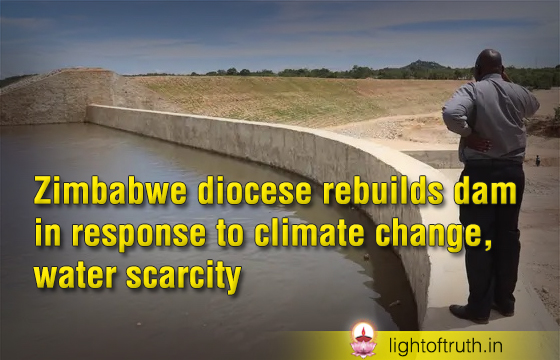
Zimbabwe diocese rebuilds dam in response to climate change, water scarcity
Catholic diocese in Zimbabwe has rebuilt its own dam as part of faith-based responses to water challenges brought by climate change. The Diocese of Gweru in the country’s low rainfall Midlands province says the Holy Cross Dam, reconstructed at the beginning of this year, will go a long way toward reviving long abandoned agriculture projects.
The dam is also expected to create a greenbelt for local farming communities and drive other downstream economic activities to help support long-term sustainable development. Gweru is in Midlands, one of the country’s 10 provinces that have in recent years experienced below average rainfall, sending agriculture pro-duction into a tailspin that has left thousands of households threatened by hunger.
The construction of the Gweru Diocese dam comes at a time when the Catholic international aid agency Caritas is also helping rural communities with the rehabilitation of a defunct dam as part of efforts to cushion against cli-mate-induced water stress. The government has touted more dam rehabilitation and dam construction as the answer to escalated food production after successive poor harvests due to below normal rainfall.
The government sees dams as a way to power the country’s vast irrigation infrastructure, with the minister of finance media, “When it comes to investment in irrigation, we are going to accelerate investments now that we have the water bodies. We have to impound water. So, it’s an ongoing program to complete dams under construction.” The government says so far that 12 large dams are under construction across the country.
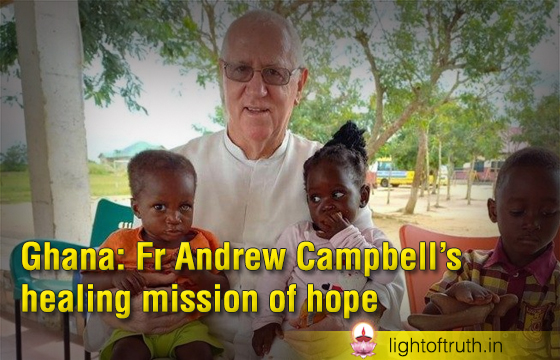
Ghana: Fr Andrew Campbell’s healing mission of hope
On 27 May 2024, Pope Francis received in private audience the Irish SVD priest, Fr Andrew Campbell, a missionary who has lived and worked in Ghana for the last 53 years. Inspired by Saint Theresa of Kolkata, India, Fr Andrew Campbell has dedicated his life to working with the poor and marginalized of Ghana. He has had great impact, especially working with street children, those suffering from disabilities such as Leprosy, and those generally disadvantaged by society.
“I was working at the age of 13 as a Labourer. So, I know what it is like to go without education. I don’t want anybody to go through what I went through. …there are a hundred thousand street children in the City of Accra living on the streets. They range from little kids onwards…. But with the Lepers, I am actually living with them. I help them, ensuring everything is okay: their health and food. I care for these needs while living with them,” Fr Campbell said.
Speaking to Vatican News after meeting with Pope Francis, Fr Campbell expressed his great joy at the encounter. “I can’t put words to it. It was so wonderful meeting him (Pope Francis). This man has always attracted me with his love for the poor,” Fr Campbel said.
It all started when someone suffering from Leprosy gave Fr. Campbell a bag of Mangoes. He failed to eat them, fearing he could contract the disease himself. Then, his conscience got the better of him. He went to see where those suffering from Leprosy were staying. He was appalled by the conditions and, from there, started an apostolate to Ghana’s marginalised.
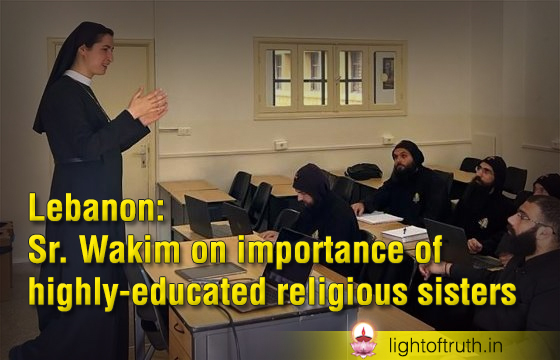
Lebanon: Sr. Wakim on importance of highly-educated religious sisters
Sister Suzanne Wakim is one of many religious sisters who teach in Lebanon’s Catholic universities. She teaches philosophy in four universities, and her students include people of different faiths, among them Muslims. She is an expert in Pope Benedict XVI’s anthropological and philosophical thought, and her work on the topic is the first on the late Pope to be written in Arabic. Sr Wakim began teaching in 2021. She has a sense of mission, and wants to do something good for the Church. She has written four academic publications over the past three years. Among other things, she explores the topic of teaching ethics in universities.
As the religious sister high-lighted, today it is important to read and study, to educate oneself. “I also encourage the younger religious sisters to develop their interests and broaden their horizons; people need educated sisters,” she said. “We cannot focus only on our religious duties; today we are in contact with many educated people, which is why it is important to grow also in our education.” This also changes the congregation’s image. Sr Wakim added that when she was presenting one of her articles for publication, someone asked her who would read it. “Today, we read too little and do not educate ourselves enough, often simply out of laziness,” she added. The religious sister speaks Arabic and English, and she is learning Italian. For work, she has also dabbled in Greek and Syriac. With her family she also speaks Aramaic. “The biggest challenge is finding a balance among all my responsibilities,” she confided.
Sr Suzanne Wakim belongs to the Salvatorian Sisters of Our Lady of the Annunciation. She teaches at Holy Spirit University of Kaslik, Saint Joseph University of Beirut, Antonine University of Baabda, and the Saint Paul Institute of Philosophy and Theology of Harissa, in Lebanon. She also teaches at a school managed by her same religious congregation: the High School Department of Notre Dame de la Délivrance of Hadath.