

Pope Francis released a new encycli-cal Dilexit Nos (“He Loved Us”) on 24 October, calling for a renewed understanding of devotion to the Sacred Heart in the modern era and its many pressing challenges.
In the document, the pope argues that the spirituality of the Sacred Heart offers a vital response to what he calls a “liquid society” dominated by technology and consumerism. Pope Francis writes: “Living as we do in an age of superficiality, rushing frenetically from one thing to another without really knowing why, and ending up as insatiable consumers and slaves to the mechanisms of a market unconcerned about the deeper meaning of our lives, all of us need to rediscover the importance of the heart.”
Subtitled “Letter on the Human and Divine Love of the Heart of Jesus Christ,” the document is the first papal encyclical dedicated entirely to the Sacred Heart since Pope Pius XII’s Haurietis Aquas in 1956. Throughout the document, Francis weaves together traditional elements of Sacred Heart devotion with contemporary concerns, presenting Christ’s heart as the principle unifying reality in a fragmented world.
The approximately 30,000-word encyclical draws extensively from Scripture and tradition, featuring insights from St. Thérèse of Lisieux, St. Francis de Sales, and St. Charles de Foucauld. Released as the Synod on Synodality is concluding its monthlong deliberations in Rome, the document emphasizes both personal spirituality and communal missionary commitment.
Francis develops his vision across five chapters, beginning with a philosophical and theological exploration of “the importance of the heart” before moving through reflections on Christ’s actions and words of love, the theological meaning of Sacred Heart devotion, its spiritual dynamics and social implications.
Category Archives: International
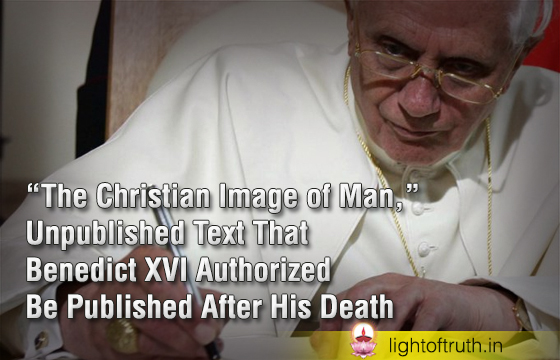
“The Christian Image of Man,” Unpublished Text That Benedict XVI Authorized Be Published After His Death
An unpublished document of Pope Emeritus Benedict XVI, titled “The Christian Image of Man,” reveals a profound reflection on the moral and social problems that contemporary humanity is facing. This text, written between Christmas and Epiphany of 2019-2020, addresses with special attention the crisis of identity, the family and human love, subjects that for the Pope Emeritus are essential in the quest for a more coherent future with the dignity of the human being. The publication was carried out by the “Veritas Amoris Project,” founded in 2019, with the objective of continuing the work of the John Paul II Institute for Studies on Marriage and the Family. Benedict XVI’s text appears in the third volume of the Italian Review of the project, a space that seeks to trace ways to the truth of love amid a world in constant transformation. One of the most salient points of the writing is the Pope Emeritus’ criticism of today’s ideological currents, such as gender ideology and the manipulation of life in laboratories.
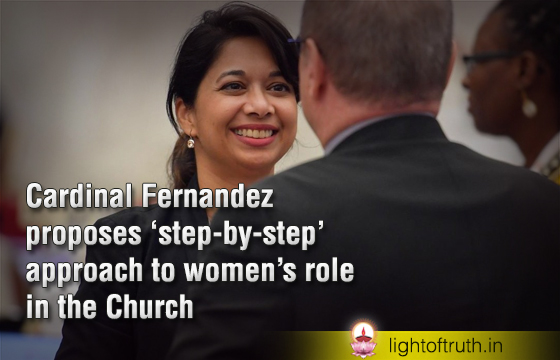
Cardinal Fernandez proposes ‘step-by-step’ approach to women’s role in the Church
Addressing the Synod Asse-mbly on October 21, Cardinal Victor Manuel Fernandez, ex-plained that his absence at a meeting of Synod delegates last week on the topic of female diaconate was due to a medical procedure undergone by a co-lleague responsible for coordi-nating the group. His absence had raised questions in some of the press that suggested it showed a lack of interest in the topic. The Cardinal addressed the issue as part of a broader communica-tion and apologized for what he called a “misunderstanding.”
According to Cardinal Fer-nandez, Pope Francis has expre-ssed that “at this moment the question of the female diaconate is not ripe”. “The commission studying the topic has reached partial conclusions, which will be made public at the appropriate time he explained, adding that the commission, chaired by Card-inal Giuseppe Petrocchi, will continue its work and those who wish to submit proposals or re-flections on the topic are en-couraged to do so.
While the question of female deacons remains unresolved, Cardinal Fernandez stressed that the Pope is deeply concerned about enhancing the role of women in the Church.
The Holy Father, he said, has asked the Dicastery for the Doctrine of the Faith to explore ways to elevate women’s leader-ship within the Church without focusing exclusively on the Sacrament of Ordination.
Cardinal Fernandez argued that focusing solely on the female diaconate would not address the broader issue affecting millions of women in the Church. He pointed out that several steps toward increasing women’s roles could already be implemented, and the Church has not fully embraced them.
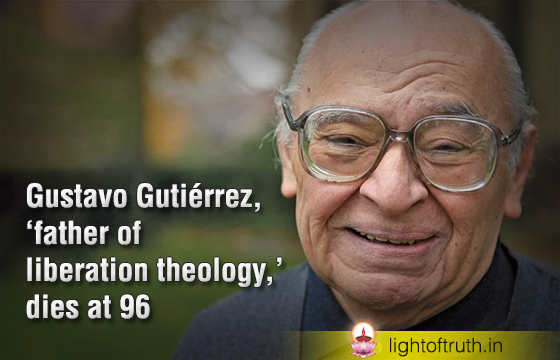
Gustavo Gutiérrez, ‘father of liberation theology,’ dies at 96
Gustavo Gutiérrez Merino, the Peruvian Dominican priest considered the “father” of liberation theology, died Oct. 22 at the age of 96.
The Dominican Province of St. John the Baptist of Peru announced the death of Gutiérrez, noting he was the author of the influential 1971 book “A Theology of Liberation: History, Politics, and Salvation.”
The theology of liberation is a school of thought that explored dimensions of liberation from the standpoint of Catholic social teaching. In some of its radical expressions, in particular in Latin America, liberation theology embraced many elements of Marxist theory and advocated for social change through various forms of revolution. At times, it also cast Christ as a form of revolutionary figure. Its more orthodox expressions emphasized a closeness with the poor and the suffering and called for authentic liberation in Christ.
Born on June 8, 1928, Gutiérrez was ordained a priest in 1959 and joined the Dominican order in 2001. He studied medicine and literature at the National University of San Marcos while participating in Catholic Action. He later studied theology at the University of Louvain in Belgium and the Institut Catholique of Lyon in France. Gutiérrez served as the John Cardinal O’Hara Endowed professor of theology at the University of Notre Dame in Indiana. His books have been translated into multiple languages.
One of Gutiérrez’s last international appearances was in Rome in October 2019 at a congress held at the Jesuit General Curia. There, at the invitation of the Pontifical Commission for Latin America (CAL), he delivered a lecture on “The Preferential Option for the Poor.”
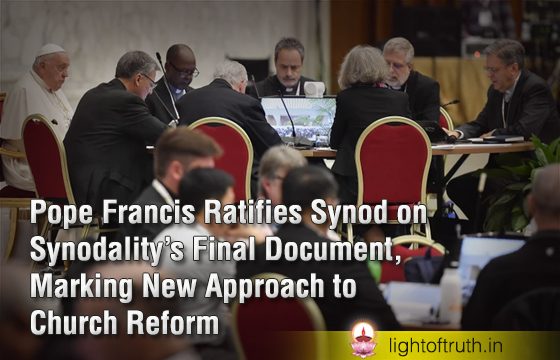
Pope Francis Ratifies Synod on Synodality’s Final Document, Marking New Approach to Church Reform
In a surprising move at the conclusion of the Synod on Syno-dality on Saturday evening, Pope Francis ratified the final report, approved its immediate publica-tion, and said he will not publish a separate postsynodal document.
The Pope is permitted in canon law to ratify the final document of a Synod of Bishops, giving more power to the assem-bly’s “guidelines” something that has never been done before.
“I want, in this way, to re-cognize the value of the comple-ted synodal journey, which throu-gh this document I hand over to the holy faithful people of God,” the Pope said in a livestreamed address to synod participants in the Vatican’s Paul VI Hall on Oct. 26. “That is why I do not intend to publish an apostolic exhortation; what we have appr-oved is enough,” he said. “There are already very concrete indi-cations in the document that can be a guide for the mission of the Churches, on the different conti-nents, in the different contexts: that is why I am making it immediately available to every-one, that is why I said it should be published.”
In 2018, Pope Francis decre-ed in the apostolic constitution Episcopalis Communiothat re-formed the Synod of Bishops that the pope has the authority to approve and promulgate the final document, at which time it parti-cipates “in the ordinary magiste-rium.” The authority is also stipulated in Canon 343 of the Code of Canon Law. ”
What Pope Francis said after approving the document is in compliance with what is provided by Episcopalis Communio,” Fr Riccardo Battocchio, the synod’s special secretary, affirmed at a press conference presenting the final document Oct. 26.
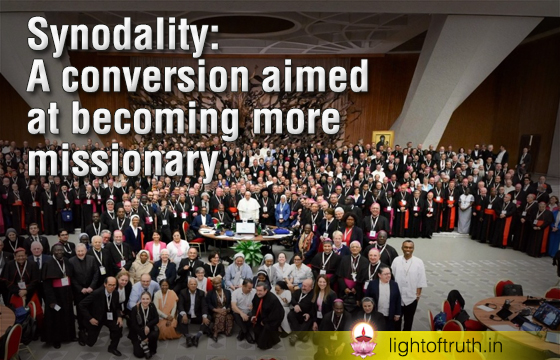
Synodality: A conversion aimed at becoming more missionary
The Final Document, adopted on October 26 after each of its 155 paragraphs were approved, has been published, and will not become the basis of an Exhortation by the Pope, who has decided that it should be released immediately in order to inspire the life of the Church.
“The synodal process does not conclude with the end of the current Assembly of the Synod of Bishops, but it also includes the implementation phase” (9), involving all in the “daily journey with a synodal methodology of consultation and discernment, identifying concrete ways and formation pathways to bring about a tangible synodal conversion in the various ecclesial contexts” (9).
In particular, the Document challenges Bishops on their commitment to transparency and accountability, while noting, with Cardinal Victor Fernandez, the Prefect of the Dicastery for the Doctrine of the Faith, that work continues to provide women greater roles and greater power within the Church.
Two key words that emerge from the text permeated by the perspective and proposal of conversion are “relationships”, a way of being Church; and “bonds”, marked by the “exchange of gifts” between the Churches lived dynamically and, therefore, converting processes. It is precisely the local Churches that are at the centre in the missionary horizon, which is the foundation of the experience of plurality of synodality, with all the structures at the service of mission, with the laity increasingly fulfilling their role as subjects, or protagonists, of the process.
In this perspective, the Final Document emphasizes the concrete reality of being rooted in a “place”. Notably, the Synod Fathers and Mothers propose that the Dicasteries of the Holy See initiate substantive consultations “before publishing important normative documents” (135).

Synod an opportunity ‘to overcome walls’ between Christians
The Pope presided over a candlelight vigil on October 11, the anniversary of the opening of the Second Vatican Council in 1962, and texts from council documents introduced the prayers of praise and the prayers of petition.
The Synod participants at the prayer service included the 16 “fraternal delegates” representing Orthodox, Anglican and Protestant churches, as well as the Rome-based representatives of the Anglican, Methodist and Reformed churches to the Holy See and other Christian ministers and faithful in the city.
Pope Francis did not read the meditation he prepared for the service, although it was distributed and published on the Vatican website.
Halfway through the Synod of Bishops, Pope Francis wrote, participants wanted to “express our shame at the scandal of division among Christians, the scandal of our failure to bear common witness to the Lord Jesus”.
“This Synod is an opportunity to do better, to overcome the walls that still exist between us,” the Pope wrote.
The vigil took place in the Square of the Roman Protomartyrs, just south of St Peter’s Basilica, which is the site where St Peter and other Christians were martyred in the first century under the Emperor Nero.
Noting the anniversary of Vatican II, he said the council “marked the official entry of the Catholic Church into the ecumenical movement,” which was begun by mainline Protestant churches out of a conviction that the lack of unity among Christians was harming their ability to preach the Gospel.
The goal of the work for Christian unity is the same as the goal for the Synod on Synodality, Pope Francis wrote. Both are focused on the mission Jesus gave to all his disciples to share the good news of salvation with everyone.
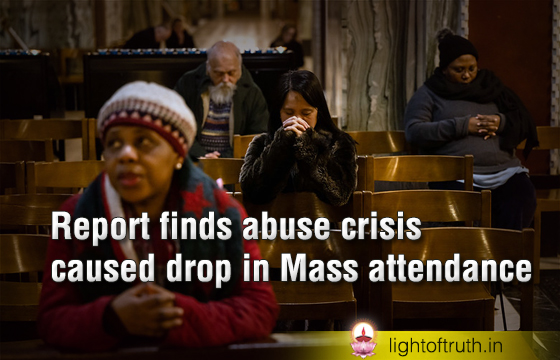
Report finds abuse crisis caused drop in Mass attendance
One in three Catholics who previously went to Mass have reduced their attendance or stopped going altogether as a result of the child sexual abuse crisis in the Catholic Church, according to a new report by Durham University. There has also been a corresponding fall in the number of financial donations, with a third of Catholics who previously donated no longer giving money to the Church. The YouGov survey was commissioned by the Centre for Catholic Studies at Durham University as part of a wider research project, “Boun-dary Breaking”, where research-ers are looking at the implications of the abuse crisis for the Catholic community.
More than 3,000 adults who identify as Catholic responded to the questionnaire, with 79 per cent saying that the Church needs to change “a great deal” to prevent further cases of child sexual abuse.
The sample was representative of the Catholic population in England and Wales. It included regular Mass-goers attending at least once a month and people attending less than once a month, as well as people who do not go to Mass but identify as Catholics.
According to the survey, the scandal of abuse has been a direct cause of distancing from the Church. However, it also shows that regular churchgoers have a more positive attitude towards the Church than non-attenders.
Nearly a third of those attending Mass regularly were more likely to consider child abuse in the Church to be a thing of the past compared to those who never attend Mass. Nearly half of regular Mass-goers were more likely to view the abuse as being about the same at other institutions that work with children.
Dr Marcus Pound from the Centre for Catholic Studies, who co-authored the study, said: “Overall, our analysis of the data shows that the Catholic community feels abuse is not a uniquely Catholic or clerical problem. However, there is also a conviction that the Church needs to make changes to prevent such abuse happening in the future.”
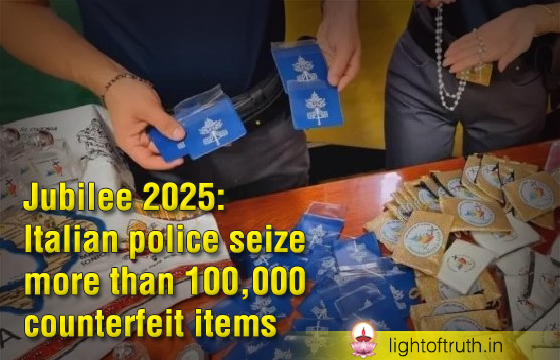
Jubilee 2025: Italian police seize more than 100,000 counterfeit items
As preparations intensify for the upcoming Jubilee Year in Rome, Italian authorities have cracked down on counterfeit religious merchandise flooding the city’s souvenir market. In a large-scale operation conducted by Italy’s financial police, more than 100,000 fake items bearing the official logo of Jubilee 2025 were seized from shops in the historic center of the capital.
The contraband haul, which included rosaries, medallions, bracelets, and pendants, was adorned with religious symbols, such as the image of Pope Francis and the emblem of the Papal Tiara, as well as the Jubilee slo-gan, “Pilgrims of Hope.” How-ever, these items failed to meet European Union safety standards, with several reportedly contain-ing harmful metals that pose health risks.
According to the Guardia di Finanza, the police force respon-sible for economic and financial crimes, four individuals of Chi-nese origin have been arrested in connection with the illegal trade. These suspects are accused of importing and selling counter-feit goods, as well as marketing items that contain substances banned under EU regulations. The authorities confirmed that these charges could lead to seri-ous legal consequences.
The discovery comes at a critical time, as Rome braces for the arrival of millions of pilgrims for the Jubilee Year, set to co-mmence on December 24, 2024. This Holy Year, an ancient Catholic tradition held roughly every 25 years, is expected to draw over 30 million faithful from around the world, who will visit the city’s major basilicas and sacred sites. With Rome already welcoming about 50 mi-llion tourists annually, the surge in visitors for the Jubilee poses additional challenges, including ensuring the safety and authenti-city of religious souvenirs.
Counterfeit religious items are a growing problem in Rome, especially around significant events like the Jubilee, when demand for holy symbols and memorabilia skyrockets. Not only do fake goods undermine the local economy and tarnish the sanctity of the event, but they also often fail to comply with safety regulations, posing a threat to consumers.
Authorities are stepping up efforts to prevent the circulation of counterfeit Jubilee items as the Holy Year approaches. In a statement, police stressed the importance of protecting consumers and the integrity of the event, warning that further raids and controls will be carried out across the city in the coming months.
With the official launch of the Jubilee Year fast approaching, both local authorities and the Vatican are keen to ensure a smooth and safe experience for pilgrims. Organizers are working closely with the Italian government to manage the anticipated influx of visitors and maintain order during this momentous religious event. As the countdown to Jubilee 2025 begins, the seizure of these counterfeit items serves as a reminder of the complex challenges that accompany major global religious celebrations in a city as iconic as Rome.

Ghana: Consecrated men and women combating plastic pollution
Consecrated religious in Ghana make time alongside their numerous other activities to help the wider community recognise the need to protect Creation, focusing especially on plastic pollution, which has become a major problem especially in suburban areas near cities.
Pollution is easily spotted in Donkorkrom, in the Eastern Region of Ghana, West Africa. Taking a leisure walk in Donkorkrom, from the doorstep through the streets to the markets, plastic bags can be seen lying on the ground.
Residents of Donkorkrom are frequently in the habit of drinking sachet water, and often as soon after consuming the water, the plastic is thrown anywhere on the ground. It is not unusual to see plastics littered on school or Church grounds, despite numerous pleas by priests and religious to take more care.
The indiscriminate dumping of plastics on the ground has serious effects on the environment. For instance, the rain collects the plastic from the ground and incorporates it into the land, which is often only discovered when one goes to plough the land for planting, and finds a dead land on which nothing can germinate as a result of plastic pollution.
Another problem with plastic pollution is that when the plastics get choked in the gutters, and it rains, the water is not able to move, resulting to spillage and floods, causing enhanced damage to the community.
Plastic pollution is not only detrimental to the soil but to animals as well, which are part of God’s Creation. Some of the plastics carried by the rain or floods hang on the grass, and if by any mistake any of the animals happen to swallow them, they die.
Consecrated religious have taken it upon themselves to sensitize the community on the need to protect the environment. They are doing this by engaging the community in talks and other activities on the subject, but mostly by their own lived realities. They undertake to take the lead so that others will follow.
Their goal is to continue to practice environmental care in their religious communities and parishes, so that when members of the local community visit their homes, they will see, become conscious, and follow suit.
The religious also believe that for this fight to be successful, there must be some kind of replacement to take care of the plastic pollution. In that light, they plan to produce shopping bags using fibre or material that can be disposed of, which they can consciously use for shopping instead of carrying numerous plastics from the shop, which only contributes to more pollution.
They believe that if the community sees them making this move, it will definitely effect a positive change in them, and they will become more conscious of preserving the earth.