Category Archives: International

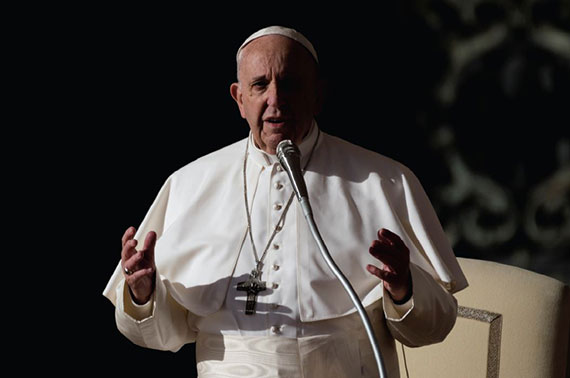
Even before recent revelations, U.S. Catholics gave Pope Francis declining ratings on sex abuse scandal

The long-simmering Catholic Church sex abuse scandal has been back in the headlines following new allegations against Theodore McCarrick, the former arch-bishop of Washington, D.C., who resigned from the College of Cardinals. Pope Francis accepted the resignation — reportedly making McCarrick the first cardinal in church history to resign over allegations of sexual abuse. In addition, some church officials have been accused of having long known about at least some of the allegations against McCarrick.

Even before news stories about McCarrick came to light recently, U.S. Catholics were increasingly unhappy with the church’s handling of the sex abuse scandal. A January 2018 Pew Research Centre survey found that just 45% of U.S. Catholics said Pope Francis is doing an “excellent” (13%) or “good” (33%) job addressing the crisis, down from 55% who said this in 2015, the last time the question was asked. The same recent survey also found that 46% of American Catholics said he is doing only a “fair” (27%) or “poor” (19%) job handling the sex abuse scandal, up from 34% three years prior.

The 2018 survey was conducted just days before Pope Francis’ January trip to South America, which included a stop in Chile, where questions also have been raised about the church’s handling of widespread sex abuse allegations there.

The survey also found that U.S. Catholics’ ratings of Pope Francis had become less positive on some other issues, including spreading the Catholic faith and standing up for traditional morals. But seven-in-ten still said he was doing an excellent or good job in these areas. And an overwhelming majority (84%) expressed a favorable opinion of the Pope overall, roughly unchanged in recent years.

The path to holiness isn’t for the lazy, pope tells altar servers

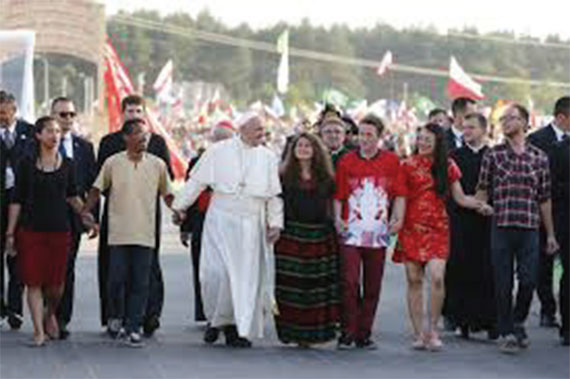
Christ’s commandment to love God and neighbour is a path trodden by those who have the desire to become saints, Pope Francis told thousands of altar servers from around the world.

“Yes, it does take effort to keep doing good and to become saints,” the Pope told the young people July 31. “You know that the path to holiness isn’t for the lazy, it requires effort.”

The Pope presided over an evening meeting and prayer service with some 60,000 altar servers making an international pilgrimage to Rome. The majority of young men and women came from Germany, but there also were pilgrims from Italy, France, Austria, the United States and other countries.

After circling St Peter’s Square in his popemobile, Francis smiled brightly as Bishop Ladislav Nemet of Zrenjanin, Serbia, waved his arms and urged the young men and women to welcome the Pope with cheers and applause.

“You are very courageous to be here since 12 p.m. in this heat!” the Pope told the young people before responding to questions posed by servers from Luxembourg, Portugal, Antigua and Barbuda, Germany and Serbia.

Pope revises catechism to say death penalty is ‘inadmissible’

Francis has ordered a revision of the Catechism of the Catholic Church, asserting that “the death penalty is inadmissible because it is an attack on the inviolability and dignity of the person.” He has committed the Church to working for its abolition worldwide.

The catechism’s paragraph on capital punishment, 2267, had already been updated by St John Paul II in 1997 to strengthen its scepticism about the need to use the death penalty in the modern world and, particularly, to affirm the importance of protecting all human life.

The latest change builds on the development of Catholic Church teaching against capital punishment.

Announcing the change on August 2, Cardinal Luis Ladaria, prefect of the Congregation for the Doctrine of the Faith, said: “The new text, following in the footsteps of the teaching of John Paul II in ‘Evangelium Vitae,’ affirms that ending the life of a criminal as punishment for a crime is inadmissible because it attacks the dignity of the person, a dignity that is not lost even after having committed the most serious crimes.” “Evangelium Vitae” (“The Gospel of Life”) was St John Paul’s 1995 encyclical letter on the dignity and sacredness of all human life. The encyclical led to an updating of the Catechism of the Catholic Church, which he originally promulgated in 1992 and which recognised “the right and duty of legitimate public authority to punish malefactors by means of penalties commensurate with the gravity of the crime, not excluding, in cases of extreme gravity, the death penalty.”

At the same time, the original version of the catechism still urged the use of “bloodless means” when possible to punish criminals and protect citizens.

The catechism now will read: “Recourse to the death penalty on the part of legitimate authority, following a fair trial, was long considered an appropriate response to the gravity of certain crimes and an acceptable, albeit extreme, means of safeguarding the common good.

Churches burned and priests killed in the Somali region

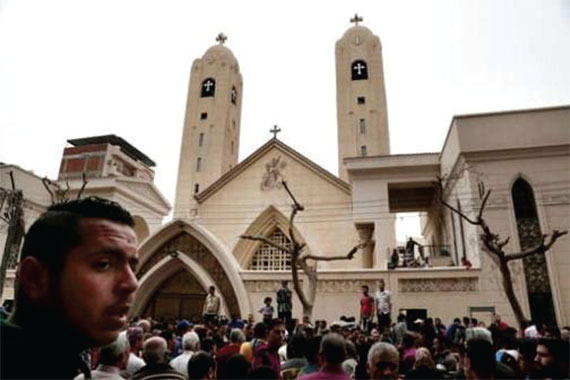
Patriarch Matthias I and the Holy Synod of the Tewahedo Orthodox Church of Ethiopia have decided to offer 16 days of fasting and prayer that precede and follow the liturgical solemnity of the Dormition of St Mary Mother of God–(celebrated on August 15), to invoke the gift of peace and reconciliation in Jijiga and in the Somali region, after ethnic violence, which in recent days, exploded in that part of Ethiopia, causing about 30 victims. The Ethiopian Orthodox Church has paid a high price due to the spiral of violence: accord-ing to information by local media, at least seven Orthodox Churches have been attacked and set on fire, and local sources speak of at least six priests and several faith-ful killed.

The clashes began at the end, when armed men of the Liyu militia, of ethnic Somali and under the orders of AbdiIlley (President of the Somali Region) tried to interrupt a meeting between members of the regional parliament and representatives of the city of Dire Daua, with the intent of denouncing the violation of human rights in the region.

Belgium’s euthanasia nightmare

One striking thing about modern Western societies is how quickly bioethical practices that would once have been shocking quickly become un-remarkable. It happened with abortion, it happened with embryo selection, and now it is happening with euthanasia. It emerged that during 2016 and 2017 three children in Belgium were given euthanasia, and the media reaction was one giant shrug. As far as I am aware it has barely been reported outside Christian and pro-life circles.

Pro-lifers who warn against weakening the legal protection offered to all human life are often accused of believing in the supposed “slippery slope fallacy.” But the Belgian experience, over the 16 years since euthanasia was introduced, suggests that logical slippery slopes do exist.

Once you have conceded into law a particular ethical principle – say, “intentional killing is a legitimate treatment option for patients who request it, or whose best interests demand it” – it is very difficult to control the further application of that principle, because of the way the law works, with a high value attached to precedent and equal treatment. By the internal logic of the pro-euthanasia position, any law or ruling permitting some form of euthanasia carries within it the seeds of its own extension. If someone with a prognosis of six months is eligible, why not someone with a prognosis of nine months?

If someone who wants to die because of unbearable physical pain, why not someone with unbearable existential pain? And so on.

The direction of travel in Belgium has been clear for a long time. Euthanasia was introduced in 2002 under fairly liberal conditions – for example, the legislation permitted what Belgian law calls “emancipated minors” to have access to it. The numbers taking advantage, steady for a long time at somewhat under 1,500 per year, have recently started to increase. The law allowing children to be killed was introduced in 2013.

Study: Most US major superiors think women deacons ‘theoretically possible’

A major new study has found that more than three-quarters of the leaders of religious orders of priests, brothers and sisters in the U.S. believe it is “theoretically possible” to ordain women as deacons in the Catholic Church.

Nearly as many, according to the just-released report from the Centre for Applied Research in the Apostolate at Georgetown University, believe the church “should authorize” the ordination of women to the diaconate.

The study was released by CARA on August 2, the second anniversary of Pope Francis creating a commission to study the women’s diaconate. It surveyed all 777 leaders of Catholic men and women religious orders in the U.S., and got responses over a four-month period from 385, or just below 50 percent.

Among the findings:
• 77% believe it is “theore-tically possible” to ordain women as deacons;
• 72% say the church “shou-ld authorize” such ordinations;
• 76% say ordaining women as deacons would be “very much” or “somewhat” “beneficial to the Catholic Church’s mission”;
• 45% believe the church will return to the practice of ordaining women as deacons.

The new CARA study, which focuses only on attitudes of leaders of religious orders, follows an earlier study by the group on the wider attitudes of U.S. Catholic women. That study, released in January, found that 60% of women thought the church should implement a women’s diaconate.

Thousands March in Support of Nicaraguan Bishops

The streets of Nicaragua were filled July 28 by thousands of demonstrators supporting the country’s bishops and priests after repeated attacks by para-militaries with ties to the government.

The march was organized by the “Outcry for Nicaragua” movement and the Civic Alliance for Justice and Democracy. Its theme was “Pilgrimage for Our bishops, Defenders of Truth and Justice.” The Nicaraguan Bishops’ Conference did not participate in the event.

The march, which concluded at the Managua cathedral, took place after President Daniel Ortega accused the bishops of being “part of the plan with those plotting a coup,” after they proposed that he hold early presidential elections to alleviate tensions in the country and not run for office again.

Participants in the demonstration carried banners with phrases such as “Thank you, courageous bishops, for being with your people” and “The bishops, heroes of pea-ce.” They chanted, “Bishop, friend, the people are with you.”

Study says practical reasons, not lack of faith, keep people out of church

Pope Francis insists that attending Sunday Mass isn’t just an obligation of the faith, saying last year that “only with the grace of Jesus, with his presence alive in us and among us, can we put into practise his commandment and be his credible witnesses.” Yet, according to a new study from the Pew Research Centre, many Americans choose not to attend religious services because of practical or personal reasons – not because of a lack of faith.

“Why Americans Go (and Don’t Go) to Religious Services” aims to make sense of the decline in regular attendance at mass, synagogue, mosque, or some other house of worship. The study finds that the primary reason for attendance is straight forward: People want to be closer to God.

It’s making sense of why they don’t go that is more complicated.

While 81% of respondents said they attend services regularly to grow closer to God, 69% said they do so in order that their children will have a moral foundation, 68% said they do so in hopes of becoming a better person, and 66% said it’s an important comfort in times of grief or sorrow.

Latin-rite bishop appointed to administer Eastern-rite diocese following legal dispute

Latin-rite Bishop Thomas Olmsted of Phoenix has been appointed apostolic administrator of a Byzantine Ruthenian eparchy also based in Phoenix in USA, following a legal dispute among Eastern Catholics. Archbishop Christophe Pierre, Vatican nuncio to the United States, announced the appointment of Bishop Olmsted to the Holy Protection of Mary Byzantine Catholic Eparch on August 1. Bishop Olmsted, who remains the head of the Phoenix Diocese, said that the current head of the eparchy, Bishop John Pazak, remains in place.

Humanae Vitae at 50: Help people to live out the teaching of Pope Paul VI, says Commission head

The Church should stop arguing over the rights and wrongs of artificial contraception but instead find ways to help people live out the teaching of Pope Paul VI, according to the leader of a commission set up by Pope Francis to study Humanae Vitae.

MgrGilfredo Marengo, who coordinated a research group examining material in the Vatican secret archives on the compiling of Paul VI’s controversial encyclical, said there was an urgent need for pastoral work because “objectively what Humanae Vitae says” is “very distant” to many people.

“Today we have a difficulty in accompanying families pastorally on the path marked out by Humanae Vitae. Perhaps if all those years we had invested more energy on this pastoral path instead of debating, in a strict way, if Humanae Vitae is right or Humanae Vitae is wrong, maybe today we would be in a better place,” Msgr Marengo said.

Today marks exactly half a century since Paul VI released one of the most controversial encyclicals of recent times, reaffirming the Church’s opposition to artificial contraception. Its release was met with fierce criticism from inside the Church and, fifty years on, the evidence suggests it is a teaching largely ignored by Catholic laity.

According to a 2014 poll by Univision 79% of Catholics across the world favour the use of contraception, a figure that rises to more than 90 percent in the Pope’s home continent of Latin America.

At the same time there have been a growing number of voices inside the Church defending the encyclical, in particular where it argues that contraception is “intrinsically wrong” and should be “absolutely excluded” in all cases. Last month 500 priests in England signed a letter stating their full support for Humanae Vitae.

When the Pope asked Msgr Marengo and a commission to look at the Vatican’s secret archives into the compiling of Humanae Vitae, it was met with alarm in traditional Catholic quarters that Francis was trying to covertly undermine – or re-write – Paul VI’s teaching.

But Mgr Marengo and his body conducted a solidly historical analysis of Humanae Vitae which has now been presented in a book “The Birth of an Encyclical,” currently only available in Italian. Then there was a commission of experts, set up by Pope John XXIII, with a majority of them arguing for contraception to be allowed in some circumstances. In 1967, this commission’s report was leaked to and published by The Tablet, The National Catholic Reporter and Le Monde.

Yet it was the divisions within that expert commission – four of its 72 members were opposed to any change in teaching – that led Paul VI to disregard its advice.