Category Archives: International

Anti-Christian violence continues in Nigeria

A pregnant woman and a child were among four people killed in attacks by suspected Fulani herdsmen in Nigeria’s Plateau State on mid July.

The attackers targeted the villages of Ancha and Tafigana in the Bassa Local Government area, as reported by news site Nasoweseeamonline.
Margaret Wakili, 27, from Ancha village and who was 6 months pregnant, was killed at the farm where she was visiting her husband. They both fled but the attackers caught his wife. As they killed her he heard them shout “‘Allahu Akbar, we have killed infidel, we need to kill more,” he said. He identified the 8 attackers as Fulani from Hayin Rukuba. An older woman in the village also was killed.

In Tafigana, 46-year-old Thomas Wollo, and his 7-year-old son Nggwe Thomas were beheaded when they returned home from choir practice on July 14 night.

Following the killings, the attackers went on to a nearby village where they destroyed crops to the value of millions of naira, according to Zongo Law-rence, Publicity Secretary of Miango Youth Development Association.

Pope Appoints German Scientist Stefan Walter Hell Member of Pontifical Academy of Sciences

Pope Francis appointed Professor Stefan Walter Hell, Director of the Max Planck Institute of Biophysical Chemistry in Gottingen, and of the Max Planck Institute for Medical Research in Heidelberg, Germany, an ordinary member of the Pontifical Academy of Sciences.

The Pontifical Academy of Sciences is of international scope, multi-racial in its composition and non-sectarian in the election of its Members. The Academy’s work includes six areas: Basic Sciences, Sciences, and Technology of Global Problems, Science of the Problems of the Developing World, Scientific Policy, Bio-ethics, and Epistemology.

Professor Hell has worked on the error of fluorescence of super-resolution, which made it possible to visualize details with a ten times greater superior precision, attaining the resolution of a few nano-meters; thus the micro-scopes became nano-scopes. He has been awarded numerous prizes, including the Kavli Prize for Nano-Science and the Nobel Prize in Chemistry in 2014.

Britain relentlessly becoming land of secularists and atheists

A “dramatic decline” in Christian belief and practice, along with a “substantial increase in atheism,” are recorded in the latest findings on religion from the British Social Attitudes survey.

“Over time, there has been a dramatic decline in the proportion of people who identify with Christianity along with a substantial increase in those with no religious affiliation, and a steady increase in those belonging to non-Christian faiths,” the report says.

The percentage identifying as Church of England or Anglican fell from 40 in 1983 through 22% in 2008 to 12 percent last year. Catholicism, however, fared better, with equivalent percentages falling from 10 to just 9 and then 7% last year. One increase over the period was among non-denominational Christians, up from 3% in 1983 to 10% in 1998 and 13% last year – a higher proportion of the population than Anglicans.

Meanwhile, new analysis from Pew Research shows that between 2007 and 2017, laws, policies and actions by state officials that restrict religious beliefs and practice increased markedly around the world. Violence and harassment by private individuals, organisations or groups, along with other social harassment, also increased.

Pew found that 52 governments, including China, Indonesia and Russia, impose either “high” or “very high” levels of restrictions on religion, up from 40 in 2007.

Christians the “most persecuted” religious group

The British government should consider sanctions on countries where Christians are persecuted, according an independent review for the Foreign Secretary.

The report, by the Church of England Bishop of Truro Philip Mounstephen, reco-mmends the UK “be prepared to impose sanctions against perpetrators of Freedom of Religious Belief (FoRB) abuses.”

It also recommends the government explore how social media strategies can promote religious freedom and counter religious hate, and that a standard definition of FoRB be established.

Foreign Secretary Jeremys Hunt said that if he becomes prime minister, he would make sure all the recommendations were acted on.

It is estimated 5 that one third of the world’s population suffers from religious persecution in some form, with Christians constituting “by far the most widely per-secuted religion,” the report says.

Examples include the removal of crosses, the destruction of Church buildings and other Church symbols and the killing and abduction of clergy.

The report details how the eradication of Christians and other 33 minorities on pain of “the sword” or other violent means was revealed to be the stated objective of extremist groups in Syria, Iraq, Egypt, north-east Nigeria and the Philippines.

“The main impact of such genocidal acts against Christians is internal displacement and exodus. Christianity now faces the possibility of being wiped-out in parts of the Middle East where its roots go back furthest. In Palestine, Christian numbers are below 1.5 percent; in Syria the Christian population has declined from 1.7 million in 2011 to below 450,000 and in Iraq, largely through the ‘ethnic 37 cleansing’ of ancient Christian communities from the Nineveh Plains, Christian numbers have slumped from 1.5 million before 2003 to below 120,000 today. Christianity is at risk of disappearing, representing a massive setback for plurality in the region. It is that plurality which has been a key for security and stability in the region for hundreds of years.” Christianity is at existential risk in Iraq and other Middle Eastern countries. Since 2003, over 1 million Christians fled the country, reducing the size of the Christian population by nearly 80%.

Blessed John Henry Newman to be canonized on October 13

The Vatican announced  that Blessed Cardinal John Henry Newman will be canonized on October 13 in Rome.

During a consistory of cardinals on July 1, Pope Francis decreed that New-man and four other blesseds will be canonized together in St Peter’s Square.

Indian Sister Mariam Thresia, founder of the Congregation of the Sisters of the Holy Family; Italian Sister Giuseppina Vannini; Brazilian Sister Dulce Lopes Pontes, and Mar-guerite Bays, a Swiss consecrated virgin of the Third Order of St Francis will be canonized alongside Newman.

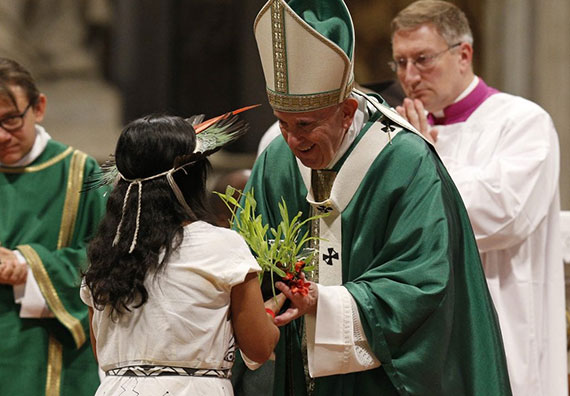
Their canonizations will take place during the 2019 Special Synod of Bishops from the Pan-Amazonian region to be held at the Vatican on Oct. 6-27.

Newman was a 19th century theologian, poet, Catholic priest and cardinal. Originally an Anglican priest, he converted to Catholicism in 1845 and his writings are considered among some of the most important Church-writings in recent centuries.

First women members of Vatican department that oversees religious orders appointed

Pope Francis has named the first women members of the Vatican department that oversees religious orders.

On 8 July 2019, it was announced the Pope had named a raft of new appointments to the board of the Congregation for Institutes of Consecrated Life and Societies of Apostolic Life, including seven women.

A Vatican spokesman confirmed  that they are the first female members to hold such a position on the body.

The women chosen include the following superiors general from religious order: Kathleen Appler of the Daughters of Charity, Yvonne Reungoat, of the Daughters of Mary Help of Christians (Salesian Sisters), Françoise Massy of the Franciscan Missionaries of Mary, Luigia  Coccia, of the Comboni missionary sisters, Simona Brambilla, Consolata Missionary Sisters, M. Rita Calvo Sanz, of the Order of the Company of Mary Our Lady. He also named Olga Krizova, general president of the Don Bosco Secular Volunteer Institute.

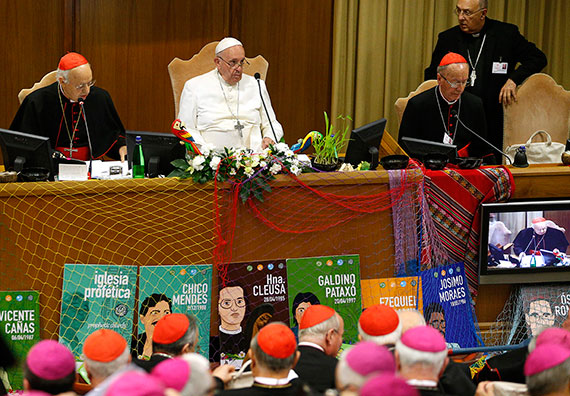
German cardinal says Amazon synod is ‘heretical’, must be ‘rejected’

German Cardinal Walter Brandmüller, widely seen as a key opponent of Pope Francis, has penned a rare essay openly criticizing the upcoming Synod of Bishops on the Amazon, saying the official preparatory document breaks with Catholic teaching.

According to Brandmüller’s essay, published on June 27, on the Settimo Cielo blog of Italian journalist Sandro Magister, the Synod’s recently published preparatory document “burdens the Synod of Bishops, and finally the Pope, with a grave breach with the depositumfidei, which in its consequence means the self-destruction of the Church or the change of the Corpus Christi mysticum into a secular NGO with an ecological-social-psychological mandate.”

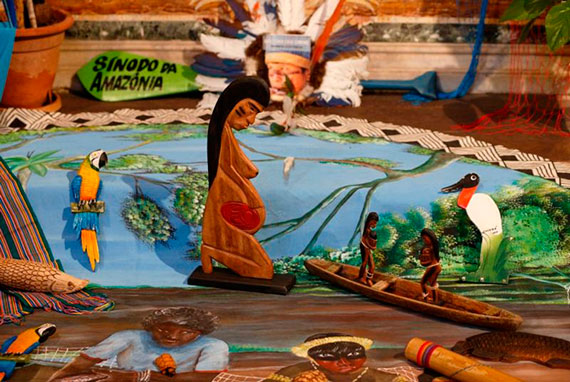
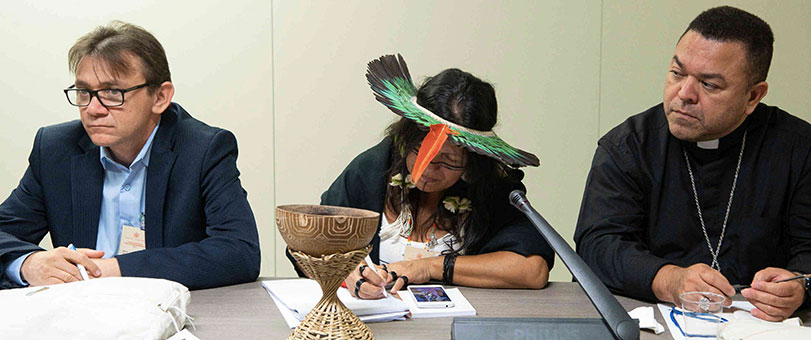
Published on June 17, the document, known as the instrumentum laboris, will set the ground work for the Synod of Bishops on the Amazon, that will take place in Rome on Oct. 6-27. Among other things, it opened a cautious door to the ordination of married “elders” as a possible solution to the region’s priest shortage. In his essay, Brandmüller insisted that “the Instrumentum Laboris contradicts the binding teaching of the Church in decisive points and thus has to be qualified as heretical.”

“Inasmuch as even the fact of Divine Revelation is here being questioned, or misunderstood, one also now has to speak, additionally, of apostasy,” he said, voicing grievances over the document’s take on liturgy, spirituality and priestly celibacy.

Women present at the altars in early Christianity, argues academic

The debate over female ordination inside the Catholic Church hinges on the role of women in early Christianity. When he addressed the question of women deacons, the Pope said a commission he set up to look at the historical origins of deaconesses, could not agree over whether they had received sacramental ordination or not.

He told a group of leaders of religious sisters last month: “I cannot make a sacramental decree without a theological, historical foundation.”
How much emphasis can be given to art or artefacts from the early church?

Dr Ally Kateusz, a research associate at the Wijngaards Institute and a historian, believes there is plenty of evidence to show women were present at the altars. She was in Rome to present her case at the Pontifical Gregorian University in a lecture and to discuss the findings in her book “Mary and Early Christian Women: Hidden Leadership,” published this year by Palgrave Macmillan.

In this book, Dr Kateusz examines fifth-century artefacts from Old Saint Peter’s Basilica, Rome, and the Hagia Sophia, Constantinople which appear to depict women in liturgical roles.

“They show the early Christian liturgy as it was performed at that time,” she told me while she was in Rome. “A gender parallel liturgy – men and women at the altar.”

“The overarching theology for the liturgy would have been ‘there is neither Jew nor Greek, because both Jew and Greek were leaders in the ecclesia; there is neither free nor slave, because both were leaders in the ecclesia; and there is neither male nor female, and both were leaders in the ecclesia’,” she says.

Church defends captain who defied Italy by bringing migrants to shore

A much-watched migrant vessel finally docked at an Italian island on June 29 , following two weeks at sea. The captain of the “Sea Watch 3” divided public opinion in Europe when she defied Italy’s populist leader by bringing 40 immigrants to shore, but the Catholic Church is standing firmly by her side.

“I think that human life must be preserved in any way. This must be the North Star that guides us, everything else is secondary,” said Italian Cardinal Pietro Parolin, the Vatican’s Secretary of State, in a June 29 press conference.

The Sea Watch 3 NGO migrant vessel spent over two weeks in the Mediterranean Sea carrying more than 40 immigrants and 20 staff members, before German Captain Carola Rackete decided the ship couldn’t wait any longer and docked at Lampedusa, an island off the coast of Sicily, in the early hours of June 29.

The leader of Italy’s ruling right-wing populist party, Deputy Prime Minister and Interior Minister Matteo Salvini, has ordered all Italian ports to close their doors to vessels carrying immigrants in an effort he says to reduce migration flows into the peninsula and to combat human trafficking.

On June 26, Salvini said the Sea Watch’s attempt to approach the Italian coast was a “hostile act” and vowed to compel other European countries to take in the immigrants. While the vessel flies the Dutch flag, it’s run by a German NGO.

“I had to dock. I feared that some migrants might commit suicide,” said Rackete in a June 30 video interview with local daily Il Corriere Della Sera, adding that some passengers had tried to cause themselves harm.

“I was afraid. We were taking turns for days, even at night, out of fear that someone might throw themselves into the sea. For those who don’t know how to swim, it means suicide. I feared the worst,” she said.

After ramming patrol boats and docking, Rackete was arrested by Italian police  and she faces an investigation for favoring illegal immigration. She also risks a fine and the impounding of the vessel, but she said she will own up to the legal consequences of her “act of disobedience and not violence.”