Category Archives: International

Prince of Wales pays personal tribute to Newman the reconciler

The Prince of Wales has commended Cardinal John Henry Newman as a saint for our times, suggesting in an article that his example as a harmoniser of differences, of inclusivity and respect, “is needed more than ever.” Writing ahead of his visit to Rome, where he will attend Newman’s canonisation as the head of the British delegation, Prince Charles says Newman stood “for the life of the spirit” and against forces that debase human dignity and destiny.

“In the age in which he attains sainthood, his example is needed more than ever – for the manner in which, at his best, he could advocate without accusation, could disagree without disrespect and, perhaps most of all, could see differences as places of encounter rather than exclusion,” says the Prince. The article, which appears also today in Italian in L’Osservatore Romano, reveals a deep familiarity with and respect for Newman, who tomorrow will become the first English saint of modern times. It will be published in full in the print edition of The Tablet next week.

Recalling the climax of Newman’s famous spiritual poem The Dream of Gerontius, when the soul glimpses the harmony of the divine vision, Prince Charles writes: “Harmony requires difference. The concept rests at the very heart of Christian theology in the concept of the Trinity.” This revelation of the Trinity, the Prince says, shows that “difference is not to be feared.”

He goes on to write: “In the image of divine harmony which Newman expressed so eloquently, we can see how, ultimately, as we follow with sincerity and courage the different paths to which conscience calls us, all our divisions can lead to a greater understanding and all our ways can find a common home.”

Describing Newman as “a great Briton,” Prince Charles notes in particular his significance for “those who seek the divine in what can seem like an increasingly hostile intellectual environment find in him a powerful ally who championed the individual conscience against an overwhelming relativism.” Elsewhere in the article Prince Charles pays tribute to the contribution of the Catholic community to British society, something he describes as being “immeasurably valuable.”

Catholics need to recognize ‘ecological sins,’ synod members say

Synod members called for the Catholic Church to deepen its theology in a way that would help people recognize “ecological sins.” According to a Vatican News summary, an “ecological conversion” was necessary to ensure that Christians understand the “gravity of sin against the environment as a sin against God, against one’s neighbour and against future generations.”

“No to individualism or indifference that makes us look at reality like a spectator, like looking at a screen,” the summary said. “Yes to an ecological conversion centered on responsibility and an integral ecology that places at its center human dignity, which is too often trampled.”

At a Vatican press briefing Oct. 9, Paolo Ruffini, prefect of the Dicastery for Communication, said that a number of interventions given by bishops, observers and delegates from other Christian churches dealt with the issue of ecology and the need for a “profound ecological conversion that passes from a technocratic paradigm to a caring paradigm.”

Ruffini reported one member saying that Christianity is “a call to an ecological morality in the knowledge that ecological sins exist, which also can be described as ‘ecocide.’” Through catechesis and particularly in the sacrament of penance, the reality and impact of ecological sins can be explained.

Nigerian Bishops decry attacks on Pope Francis

At the end of their recent meeting, the Catholic Bishops of Nigeria have said that attacks aimed at Pope Francis are ill-advised and describe them as “the proverbial ill wind that blows no one any good, bearing in mind that there are other more legitimate avenues of expressing opinions to the Holy Father.

The Second Plenary Meeting of the Catholic Bishops’ Conference of Nigeria (CBCN) was held at the Divine Mercy Pastoral Centre, Abeokuta, Ogun State from 11 September to 20 September 2019.

In their Communique issued at the end of the plenary, the Bishops particularly criticise those within the Church who are attacking Pope Francis.

“The Holy Father Pope Francis has come under attacks in recent times. Of more serious concern are the attacks coming from some higher levels of the church in some parts of the world. As members of the Episcopal College, of which the Holy Father is the Head, we regard these attacks as the proverbial ill wind that blows no one any good, bearing in mind that there are other more legitimate and traditionally tested avenues of expressing our opinions to the Holy Father,” the Bishops said.

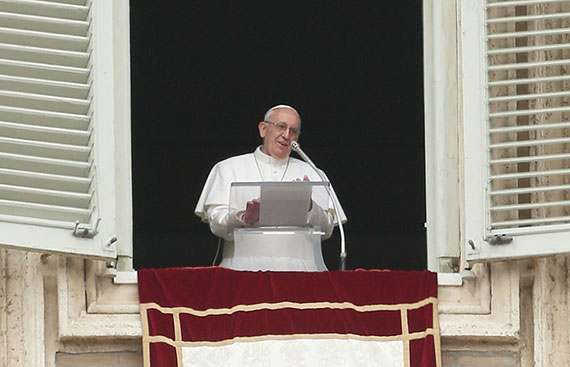
Being elected pope doesn’t wash away one’s sins, pope says

While his responsibilities are greater and his prayer list longer, Pope Francis said he’s basically the same person he was before and he was elected in 2013, so he still goes to confession every two weeks. “The mere fact that I now dress all in white has not made me any less sinful or holier than before,” he told Jesuits in Mozambique on September 5th, according to a transcript of the meeting published on September 26th by La Civilta Cattolica.

Often on trips abroad, Pope Francis spends time with local Jesuit communities and holds a question-and-answer session with them. Weeks later, a transcript of the exchange is published by La Civilta Cattolica, a Jesuit journal in Rome.

In Mozambique, a Jesuit had asked the Pope how his experience of God has changed since he was elected Pope.

“I guess my experience of God hasn’t fundamentally changed,” he responded. “I speak to the Lord as before. I feel God gives me the grace I need for the present time. But the Lord gave it to me before. And I commit the same sins as before.”

“I am and I remain a sinner,” he told his fellow Jesuits. “That’s why I confess every two weeks.”

Populism is pushing democracy to the brink, warns new cardinal

Democracy is under threat due to the rising tide of populism, according to a new Luxembourg cardinal who is urging the church to stand against anti-democratic forces present in politics.

Archbishop Jean-Claude Hollerich, who made a cardinal by Pope Francis on 5th October, said the simple answers offered by populist politics will not solve complex problems and end up leaving people even more disillusioned. “The church has a very clear standpoint. We are against populism, we are in favour of human rights and we are in favour of democracy. And democracy is in danger because civilisation is changing,” he told The Tablet.

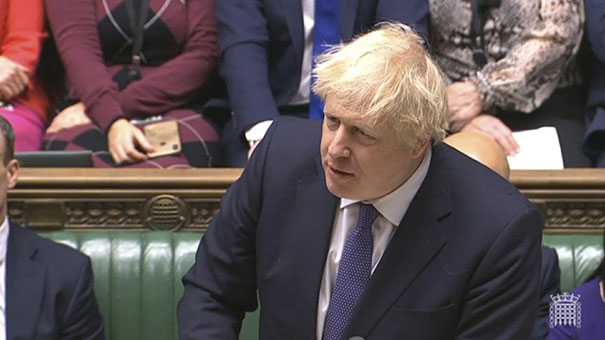
The interview is published on the day the Supreme Court ruled that the Prime Minister Boris Johnson’s suspension of parliament was unlawful, although Hollerich spoke to before the ruling was announced by Lady Hale.

Cardinal-designate Hollerich, 61, who is President of Comece (the Commission of Bishops’ Conferences of the European Union), said the pace of change caused by digitisation raises questions about how democracies can function in the future.

“Populism in that sense is very dangerous because the questions are not asked anymore,” he said. “You give a very simple answer – and simple answers are popular nowadays. It’s much more difficult to present a complex situation and find complex solutions. But people will also be disillusioned.” “If the United Kingdom is not a member of the European Union, it is still a European country, and we need to have good relations,” he explains. “So we should do everything to have the best deal, and compromises have to be found, and that is very important for me.”

Pakistani archbishop warns of surge in Christian girls kidnapped, forced into marriages

A Catholic bishop in Pakistan has warned of an increase in young Christian and Hindu girls being kidnapped, then forced to convert to Islam and marry their captors.

“There have been many kidnappings recently,” Archbishop Sebastian Shaw of Lahore told papal charity Aid to the Church in Need.

“The girls are usually 14, 15. The men often already have one wife. They can be 25 or older. They can also be younger, more like 20,” he added.

The archbishop said he believes the kidnappings sometimes include a religious motivation, since the victims are typically Christian or Hindu. However, he also said that the perpetrators are driven by lust.

According to Aid to the Church in Need, research in Pakistan indicates that up to 700 girls were kidnapped in one year alone.

Shaw said Church leaders had reported the abductions to the police, who were unresponsive. They then contacted government officials, who were more receptive to their concerns.

“Along with the Islamic council, they arranged a meeting with myself and leaders from the Muslim and Hindu communities,” the archbishop said. During that meeting, “[o]ne young Islamic scholar criticized the kidnappings and said forced conversions are not allowed.”

Shaw stressed the importance of enforcing laws against kidnapping in order to end the growing surge of abductions.

“Kidnapping is a crime. It has to be treated as one,” he told Aid to the Church in Need. In August, Catholic and other religious leaders signed a joint resolution asking the Pakistani government to adopt safeguards protecting religious minorities, a move that they said is much needed in the 97% Muslim nation.

Pew survey looks at public’s level of confidence in nation’s leaders

A new Pew Research Centre report examines public confidence in groups of people who hold positions of power and responsi-bility in America, including religious leaders.

The other groups included in the survey were members of Congress, military leaders, police officers, principals of K-12 public schools, journalists, leaders of technology companies and local elected officials.

Respondents were asked their views about several aspects of confidence in the performance and outlook of these groups of leaders, such as whether they care about people, handle resources responsibly or provide accurate information to the public. Results were released on 19th September. “In general, U.S. adults express positive opinions about the role of religious leaders play in their communities,” said a Pew report on the survey results. “U.S. adults express the most confidence in religious leaders’ ability to fulfil the spiritual needs of their communities on a consistent basis.

“Three-quarters say religious leaders do a good job providing for the spiritual needs of their communities ‘all or most’ or ‘some of the time,’ while just 23% say religious leaders do this only a little or none of the time. Another seven in 10 U.S. adults say religious leaders care about people like them at least some of the time.”

U.S. adults “are divided over how frequently religious leaders admit their mistakes and take responsibility for them,” it said, with half saying these leaders do this at least some of the time and half saying religious leaders do this “only a little” or “none of the time.”

Pew said the opinions about religious leaders varied by religious affiliation, age and frequency of attendance at religious services.

Adults who have a religious affiliation are more likely than the religiously unaffiliated — those who identify themselves as atheist, agnostic or “nothing in particular” — to say religious leaders “perform key parts of their jobs at least some of the time.”

Among adults who identify with a religious faith, Pew said, evangelical Protestants are among the groups who hold the most positive opinions about religious leaders.

Report: Over 120 churches damaged by war in Syria since 2011

A Syrian war monitor associated with the opposition said on September 9 that over 120 Christian places of worship have been damaged or destroyed by all sides in the country’s eight-year conflict.

Some of the attacks were deliberate, such as the Islamic State group using bulldozers to destroy the ancient Saint Elian Monastery in Homs province in 2015. The majority, however, were caused by front-line combat, shelling or rockets.

Christians made up about 10% of Syria’s pre-war population of 23 million, who co-existed with the Muslim majority and enjoyed freedom of worship under President Bashar Assad’s government.

The report by the Qatar-based Syrian Network for Human Rights, which collects statistics on the war, said government forces were responsible for 60% of the 124 documented attacks since fighting erupted in March 2011. The rest were blamed on IS militants, the al-Qaida-linked group Hayat Tahrir al-Sham and other factions of the armed opposition.

Warning World of Persecution of Christians Govt Duty, Official Says

The Hungarian government and researchers have a joint responsibility to warn the global community of the ongoing persecution of Christians, “the largest and least talked-of humanitarian crisis today,” a government official told a conference in Budapest.

Tristan Azbej, state secretary at the Prime Minister’s Office for persecuted Christians, spoke at a conference organised by the state secretariat, the Konrad Adenauer Foundation and Budapest’s National Public Service University (NKE).

Christianity is said to be the most persecuted religion in the world, with 215 million people suffering discrimination or genocide-like persecution for their religion worldwide, he said. Some 4,150 Christians have been murdered in 2018, he said.

Azbej noted that the government’s Hungary Helps programme, aiming to help persecuted Christians in their homelands, was launched on the basis of data provided by the university.

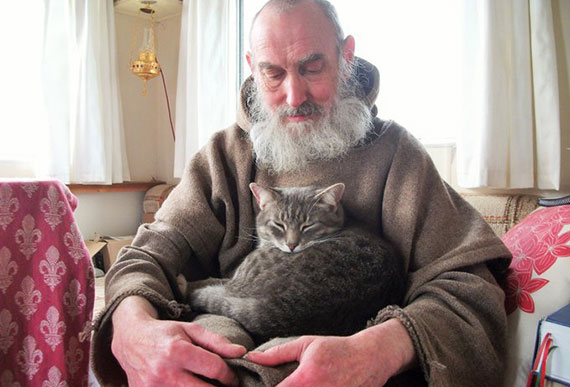
This secular Franciscan lived among lepers. Could he become Zimbabwe’s first saint?

British-born John Bradburne, who died in Zimbabwe 40 years ago, could be on his way to be-coming the country’s first canonized saint.

Bradburne is a revered figure among the Catholic community in the landlocked southern African country of Zimbabwe. According to reports, Bradburne was shot in the back after he was abducted from his hut in Mutemwa in the north-east of Zimbabwe. Born in 1921 to Anglican parents in Cumbria, England, Bradburne converted to Catholicism in 1947 while living with Benedictine monks, after he had a religious experience during World War II.

He lived after his conversion as a pilgrim, shuttling between England, the Middle East and Italy, living out of one bag. He was a prolific poet. Bradburne joined the Secular Third Order Franciscan in 1956.

He later made contact with Fr John Dove, a Jesuit friend living in Zimbabwe. Bradburne asked whether there was a “cave in Africa” where he could pray. Dove encouraged him to move to Zimbabwe, where he arrived in 1962.

In Zimbabwe, he told a Franciscan priest the three desires of his life: “to serve leprosy patients, to die a martyr, and to be buried in the Franciscan habit.”

In 1969, seven years after his arrival in the country, Bradburne’s desire to care for leprosy-afflicted patients was fulfilled, when he was appointed the lead caretaker at Mutemwa Leprosy Settlement, a center that cared for leprosy patients.

Bradburne spent hours with patients. He rose at 3:00 each morning, and washed patients, bandaged them, ate with them, and talked with them. Some of them he carried to Mass. But he clashed with leaders at the centre over the conditions in which patients lived, and eventually, he was fired.