Category Archives: International

Poll shows pope’s country doesn’t know what the Church does, doesn’t go to Mass

As bishops from Pope Francis’s native Argentina figure out how to pay their own salaries instead of taking funds from the state, a new poll shows that while seven in ten Argentines declare themselves to be Catholic, six in ten don’t know what activities the Church is doing in the country and seven in ten attend Mass less than once a month.

At first glance, the results of the study, commissioned by the bishops after they announced the progressive end of public funding for the Church late last year, aren’t all bad news: 67% of Argentines identify as Catholic, and most know the main missions of the Church: Evangelization, education and guidance, providing spiritual and emotional support, and material aid.

In addition, seven in ten Argentines believe that the basic sense of religion is to give meaning to life in this world.

Yet only 16% of Catholics attend Mass weekly and just 13% more do so once a month, while 49% attend less than once a month and 22% never go to church unless it’s for a wedding or a baptism.

Five out in ten Argentines believe that the main beneficiary of the Church’s work are religious – bishops, priests and nuns – and only 21% say the institution helps lay Catholics, while just 17% believe the Church helps the entire country.

Pew survey shows divide among religious believers over views about Trump

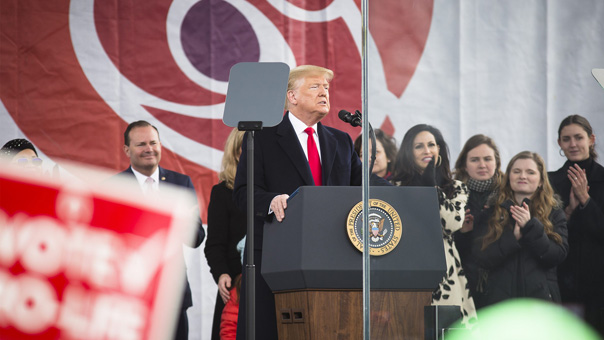
President Donald Trump may be as divisive to religionists as he seems to be to other groups in American society, as indicated by the latest Pew Research Cent-re survey.

“We’re seeing a big divide between white Christian and minority Christians and non-Christian groups,” said Pew research associate Claire Gecewicz, who was the lead researcher on the 55-page Pew survey, released on March 12.

Gecewicz also cited a lengthening “bridge between white and Hispanic Catholics, especially with the questions about Donald Trump.”

White Catholics increasingly believe their side has been winning politically. This Pew poll, taken on Feb. 4-15, showed 55% believing that, more than double the 26% recorded in May 2016, and up from 41% from just last May.

Hispanic Catholics look at Trump differently. Majorities said he was “prejudiced” and “self-centered,” while minorities of 21-24% described him as “honest,” “morally upstanding” and “even-tempered.” Only 31% said Trump “fights for what I believe in,” and just 30% agree with Trump on all, nearly all or many issues.

Survey shows decline in US Catholics’ concern about global Christian persecution

Global Christian persecution is ranked as less urgent an issue than human trafficking, poverty, climate change and the global refugee crisis.

A new poll shows that although more than half of US Catholics are “very concerned” about the persecution of Christians around the world, that level of concern has sharply declined in the past two years.

The percentage of US Catholics who say that they are “very concerned” about global Christian persecution dropped from 69% in winter 2018 to 52% today – a decline of almost 25%. The percentage of US Catholics who think that Christian persecution is very severe  declined 11% compared to a year ago, falling from 46% to 41%.

As to actions US Catholics can take themselves, 68% of respondents ranked prayer as “very important,” followed by raising awareness of the plight of Christian persecution at the parish level (59%), donating to agencies that help persecuted Christians (53%) and contacting Members of Congress (52%).

Ethiopian cardinal barred from event in Eritrea

Ethiopia’s most senior Catholic, Cardinal Berhaneyesus Demerew, has been prevented from attending an event in Eritrea by officials barring his exit from the neighbouring country’s primary airport. The action taken by the airport officials in question on 22 February is an apparent break in the protocol followed since the 2018 peace deal between Ethiopia and Eritrea. After the deal, which ended a 22-year border conflict between the two nations, citizens of Ethiopia received a visa on arriving in Eritrea.

No handshakes: Viral outbreak spooks Asian places of worship

The few hundred worshippers who showed up were asked to refrain from shaking others’ hands or holding them during prayers to prevent the spread of the virus that started in China.
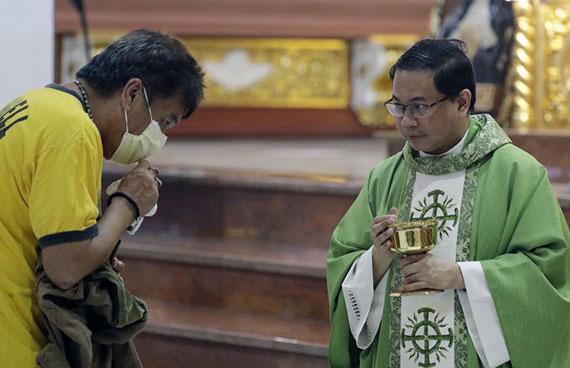
In Hong Kong, Cardinal John Hon Tong, wearing a mask, announced the suspension of public Masses for two weeks and urged churchgoers to instead watch them online.

Buddhist Temples, Christian churches and Muslim Mosques have been ordered closed since Jan. 29 in mainland China, where the new coronavirus strain was first detected in the central city of Wuhan, the epicentre of the outbreak. Mosques have cancel-ed weekly Friday prayers since January under an order to avoid “collective religious activities.”

The restrictions and dwindling crowds in religiously diverse places of worship underscore the extent of the scare over the out-break that has permeated many aspects of life in the hard-hit Asian region. The virus has killed more than 1,500 people and infected more than 67,000 others, mostly in China, where several cities that are home to more than 60 million people have been placed under lockdown in an unprecedented effort to contain the disease.

As evangelicals gain, Catholics on verge of losing majority in Brazil

A survey released in January showed that the percentage of Catholics in Brazil continues to decline, while the proportion of evangelicals has increased at a higher annual rate in the past few years.

According to the private institute Datafolha, the proportion of Catholics in Brazil currently corresponds to 51%, while the percentage of evangelicals grew to 31%. In 2013, another Datafolha survey had shown that Catholics represented 57% of the Brazilian population, and Evangelicals amounted to 28%. The last official census produced by the Brazilian Institute of Geography and Statistics demonstrated in 2010 that the proportion of Catholics corresponded to 64.6% and evangelicals amounted to 22.2%. The institute will conduct the next census this year.

From our sister publication: A Place to Call Home, a new series focusing on women religious helping people who are home-less.

Although the surveys produced by Datafolha and the Brazilian Institute of Geography and Statistics are not comparable — due to methodological differences — it’s clear that the number of Catholics is decreasing at a faster rate in the past few years, explained José Eustáquio Diniz Alves, a demography expert who worked at the Brazilian Institute.

“From the end of the 19th century to the end of the 20th century, the Catholic Church lost about 1% of its followers per decade. From the 1990s on, it started to shrink about 1% per year,” he told the National Catholic Reporter.

Alves believes that this process has accelerated since 2010 and now he estimates that the current rate of Catholic decline corresponds to 1.2% per year — with 0.8% of annual evangelical expansion. If nothing changes, evangelicalism will surpass Catholicism in Brazil by 2032, he calculates.

That would be a major transformation in a country that has the biggest Catholic population in the world, with more than 90% of Brazilians identifying as Catholic in 1970.

‘The Vatican lost everything, got nothing’: An interview with Card. Zen

On Feb. 11, Cardinal Joseph Zen, emeritus bishop of Hong Kong met with Congressional leaders on Capitol Hill in Washington, D.C. After that meeting, the cardinal gave an exclusive interview to CNA in which he discussed the Church in China, the Holy See’s agreement with the Communist regime, and his relationship with Pope Francis and the Vatican Secretary of State Cardinal Pietro Parolin.

“More and more, the Church is under persecution [in China]. Both the official Church, and the underground. Actually, the underground is doomed to disappear. Why? Because even the Holy See is not helping. The older bishops are dying, there are less than 30 bishops left in the underground Church, and no new priests being ordained.

“But we hope that [Chinese Catholics] can keep the faith in their families — so we have to say, ‘back to the catacombs!’

“The Holy Father Francis shows special affection to me. In interviews, they ask him ‘What about Cardinal Zen?’ and the Pope says ‘He’s a good man.’ …he says ‘maybe he’s a little frightened, his age…’ I say my age? I’m old, I’m 88, but the age helps me not to have any fear. Because I have nothing to gain, nothing to lose.”

“So I’m—I can sincerely say that I am not—I think the Pope is okay. But I’m fighting [Cardinal Pietro] Parolin Because the bad things come from him. From him. He’s still so, so, so optimistic about the so-called ‘Ostpolitik,’ the compromise.”

Pope on women in Amazon church: Don’t try to ‘clericalize’ them

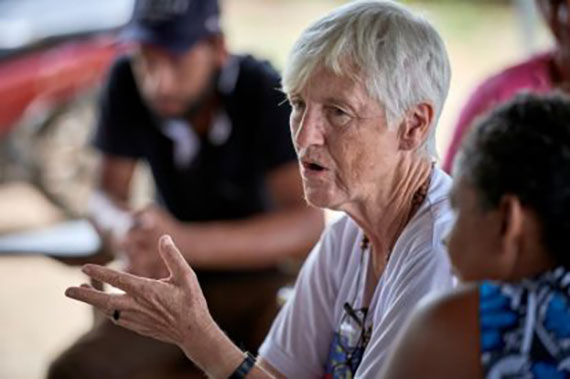
Pope Francis released his document on the Amazon region on the 15th anniversary of the assassination in Brazil of U.S. Notre Dame Sister Dorothy Stang, a missionary who defended the poor and the environment.

Her life and sacrifices are emblematic of what many participants at the October Synod of Bishops for the Amazon had said: Women in the region are leaders of both community and religious life; their defense of the poor and the natural environment is consistent and consistently results in threats to their lives. In his postsynodal apostolic exhortation, “Querida Amazonia” (Beloved Amazonia), which was published on Feb. 12, Pope Francis said consecrated men and women in the Amazon are “closest to those who are most impoverished and excluded.”

The Pope devoted an entire section of the document to praising the way women — lay and religious — have kept the faith alive in the Amazon region. But he flatly rejects a request made by several synod participants to consider ordaining women deacons; the request did not receive enough support to be included in the Synod’s final document. At the end of the Synod of Bishops for the Amazon, and on numerous other occasions, Pope Francis has said Catholics still have not understood how and why women are important in the church.

Gunmen kill 24 in attack on Burkina Faso church

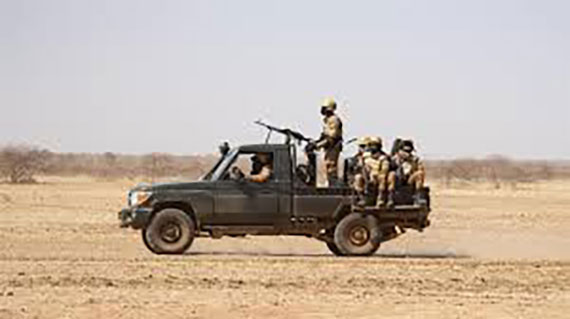
At least 24 people were killed after unidentified gunmen attacked a church in northern Burkina Faso, officials said on Feb. 17, in the latest assault against places of worship in the West African nation.

The attack took place on Feb. 16 during a weekly service at a Protestant Church in the village of Pansi in Yagha, a volatile province near the border with Niger.

A group of “armed terrorists attacked the peaceful local population after having identified them and separated them from non-residents,” Colonel Salfo Kabore, the regional governor, told AFP news agency.

“The provisional toll is 24 killed, including the pastor… 18 wounded and individuals who were kidnapped,” he added.

A resident of the nearby town of Sebba said Pansi villagers fled there for safety.

“It hurt me when I saw the people,” Sihanri Osangola Brigadie, the mayor of Boundore commune, told The Associated Press news agency after visiting victims in the hospital in Dori town, 180km (110 miles) from the attack.

The attackers looted oil and rice from shops and forced three youth they kidnapped to help transport it on their motorbikes, he said.

‘Alarming rate’ Christians and churches have become frequent targets in the north of the country.

Before fewdays, also in Yagha province, a retired pastor was killed and another pastor abducted by gunmen, according to an internal security report for aid workers.

Violence has dramatically escalated in the once-peaceful West African nation.

Analysts are concerned that attacks against civilians, including Christians, are increasing “at an alarming rate.”

More than 1,300 civilians were killed in targeted attacks last year in Burkina Faso, more than seven times the previous year, according to Armed Conflict Location and Event Data Project, which collects and analyses conflict information.

China temporarily closes places of worship in effort to contain COVID-19

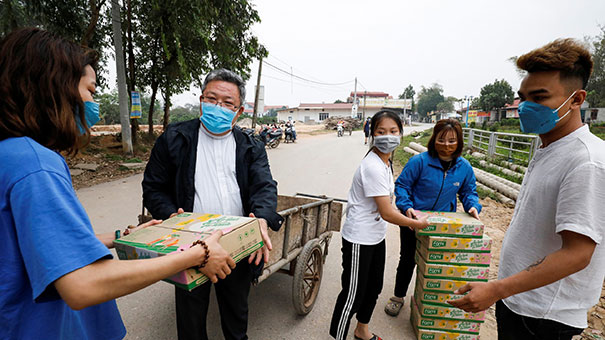
The Chinese government has temporarily closed all of the country’s places of worship in an effort to contain the COVID-19 respiratory coronavirus that has now killed almost 3,000 people, with more than 80,000 around the world verified with infections.

The government also banned all group religious activities, including at the YMCA. But it also praised religious groups of all faiths for raising money in an effort to help people afflicted by the disease, people trapped in quarantine zones as well as health workers and others on the front line of the fight to contain the epidemic.

“The party committee and government have unified requirements to suspend the opening of religious venues, suspend all collective religious activities, delay the opening of religious schools, strengthen publicity and guidance for religious people, actively donate goods, and do a lot of work to win the fight against epidemic prevention and control,” said an official statement.

Government religious regulators said religious groups should adhere to the health of staff, believers and members in the first place, and make sure they have deployed and purchased disinfectants, hand sanitizers, masks, etc. They have ordered testing and disinfection of public areas.

The disease is now thought even more highly infectious than first thought by medical researchers, and it continues to spread throughout Asia, North America and in Europe. Most of the fatalities and infections remain in mainland China, which reported 508 new cases and 71 new deaths on Feb 25, bringing totals in the People’s Republic to more than 77,000 cases and more than 2,660 deaths.