
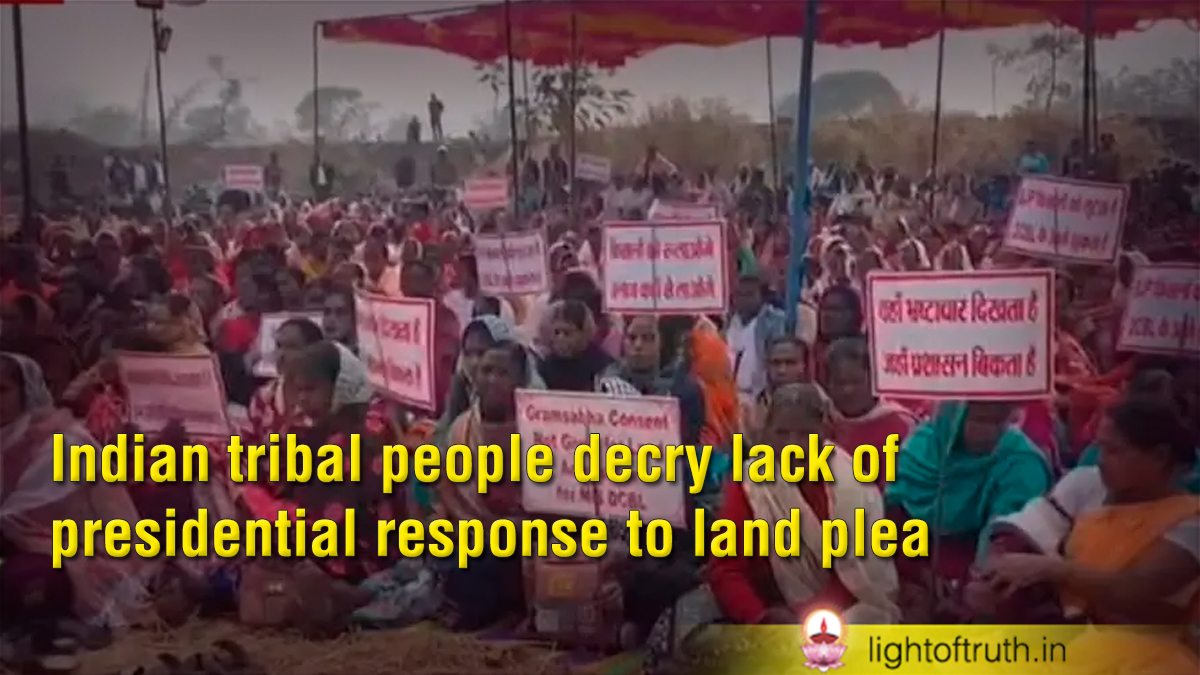
Tribal communities in India’s eastern Odisha state, including many Christians, have expressed disappointment after President Droupadi Murmu did not respond to their appeal seeking protection of ancestral lands from industrial acquisition. Local tribal leaders said they felt particularly hurt as Murmu herself belongs to a tribal community from Odisha. Despite the lack of response, community representatives affirmed that their struggle to safeguard tribal land rights would continue until justice is achieved. The concerns centre on a proposed expansion of limestone quarry operations by Dalmia Cement Bharat Ltd. near Rajgangpur in Sundargarh district. Tribal groups claim the company plans to acquire additional land affecting hundreds of families, adding to previously sanctioned areas. Protests against the project included a major highway blockade in January that halted work at the site for several hours. Community organizations allege that the acquisition process has moved forward without the informed consent of the Gram Sabha, or village assembly, which is legally required under India’s constitutional safeguards for designated tribal regions. The area falls under the Fifth Schedule, which provides special protections for tribal lands and mandates consultation with local councils before external development projects proceed. Church representatives supporting the tribal cause say such projects risk displacing vulnerable communities who depend on traditional farming for their livelihood. Residents also fear losing cultural identity tied to ancestral lands. Tribal leaders maintain that despite existing legal protections, industrial expansion continues to threaten their land rights and long-term economic security.
Category Archives: From The States
Delhi High Court Questions Delay in Appointments to National Commission for Minorities
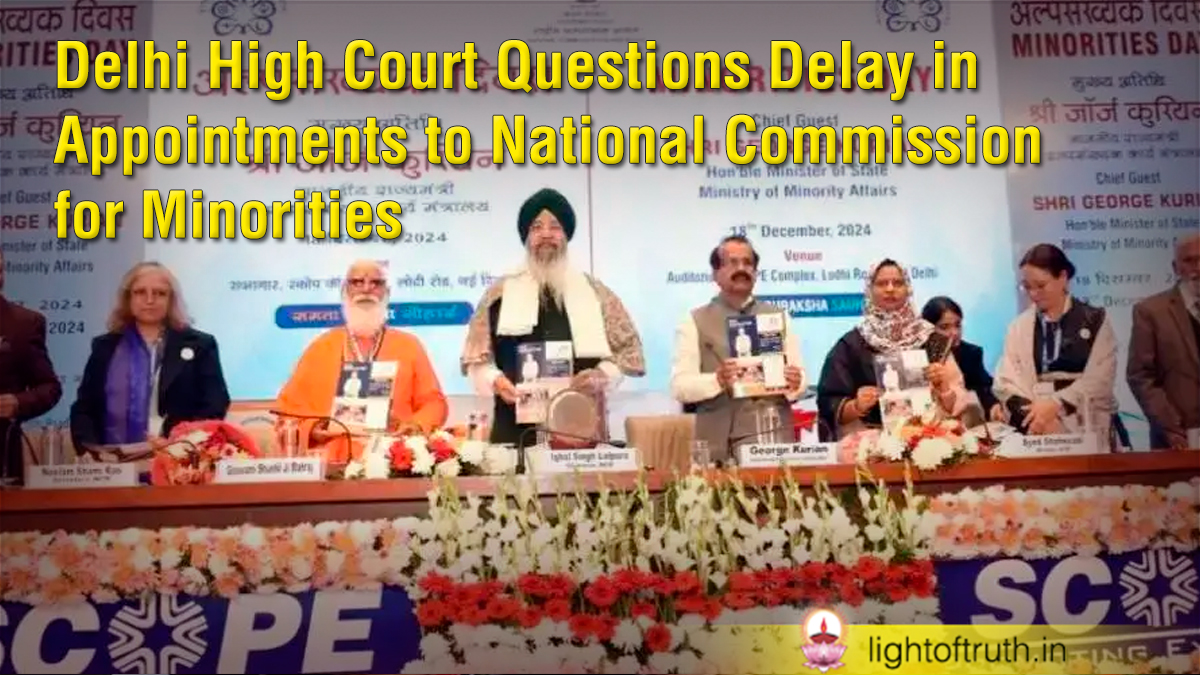
The Delhi High Court has expressed concern over delays in appointing new members to the National Commission for Minorities (NCM), noting that the statutory body has remained largely non-functional since late 2024 due to prolonged vacancies.
A bench comprising Chief Justice D.K. Upadhyaya and Justice Tejas Karia described a status report filed by the Ministry of Minority Affairs as “bald and vague,” stating that it lacked clarity on when the appointment process began and the stages completed so far. The court directed the government to submit a fresh affidavit outlining concrete steps taken and a clear timeline for filling the vacant posts.
The observations came during a hearing of a public interest litigation that alleged the government had failed to appoint a chairperson, vice-chairperson, and five members to the commission, effectively paralysing its functioning. Established under the National Commission for Minorities Act, 1992, the NCM serves as a quasi-judicial body tasked with safeguarding the rights and interests of minority communities.
Several positions became vacant after members completed their terms in November 2024, while the chairperson’s tenure ended in April 2025. The commission traditionally includes representatives from six notified minority communities — Muslims, Christians, Sikhs, Buddhists, Parsis, and Jains. The High Court had earlier raised concerns over the delays, highlighting the importance of maintaining functional institutional mechanisms for minority welfare and protection.
Salesians Conclude Centenary Celebrations in Kolkata with Focus on Youth Empowerment
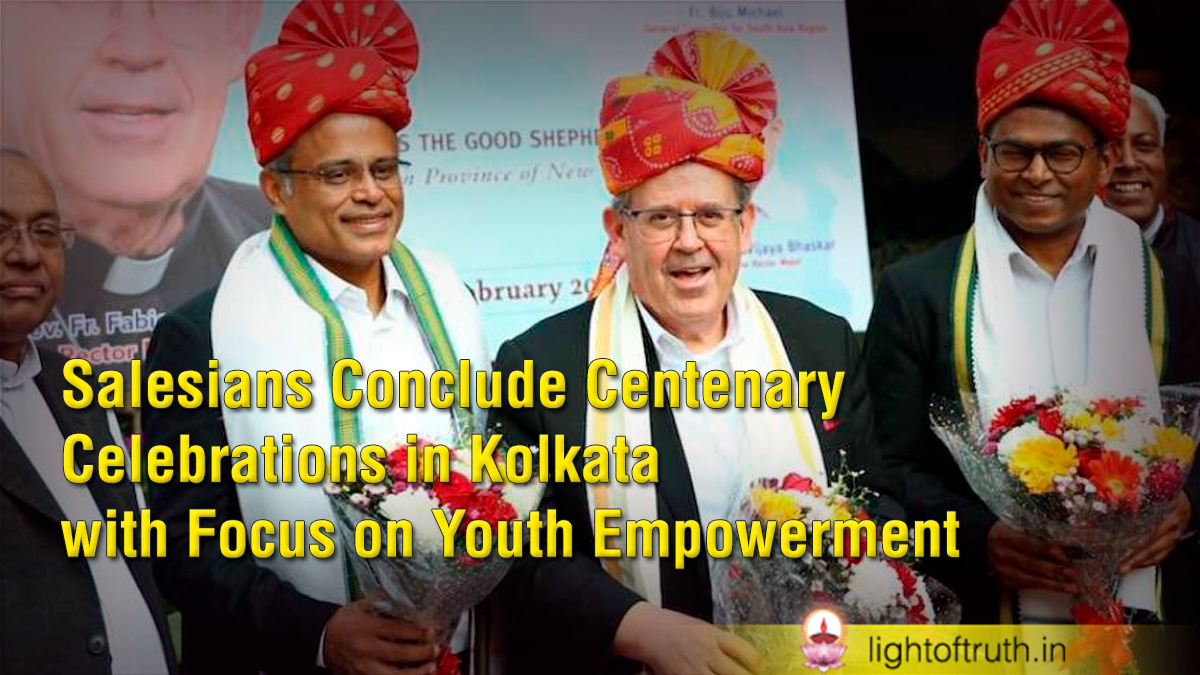
The three-year-long centenary celebrations of the Salesian Province of Kolkata concluded with a grand finale highlighting renewed commitment to youth education and empowerment. More than 2,000 participants attended the event at Don Bosco Park Circus, including leaders from 12 Salesian provinces in India and Sri Lanka, along with major superiors of religious congregations collaborating in youth ministry.
Salesian Rector Major Father Fabio Attard, addressing the gathering, described the celebrations as a tribute to young people and the transformative role of education. He emphasised that poverty and unemployment are global challenges that can be addressed through the “arms of education and empowerment,” reaffirming the Salesian mission among vulnerable youth.
Reflecting on the congregation’s history, he recalled that Saint John Bosco had envisioned a mission extending to India as early as 1886. The Salesians arrived in India in 1906, and the Kolkata province, the first in the country, was established in 1926 after taking charge of the Catholic Orphan Press and Cathedral parish.
The centenary celebrations began on May 27, 2023, with a jubilee Mass at the Marian Shrine in Bandel presided over by Archbishop Thomas D’Souza of Calcutta. Outgoing provincial Father Joseph Pauria noted that the rector major’s presence inspired renewed enthusiasm for youth ministry. New provincial Father Sunil Karketta highlighted the importance of technical education in empowering young people.
Kerala Archdiocese Donates School for Displaced Families in Manipur
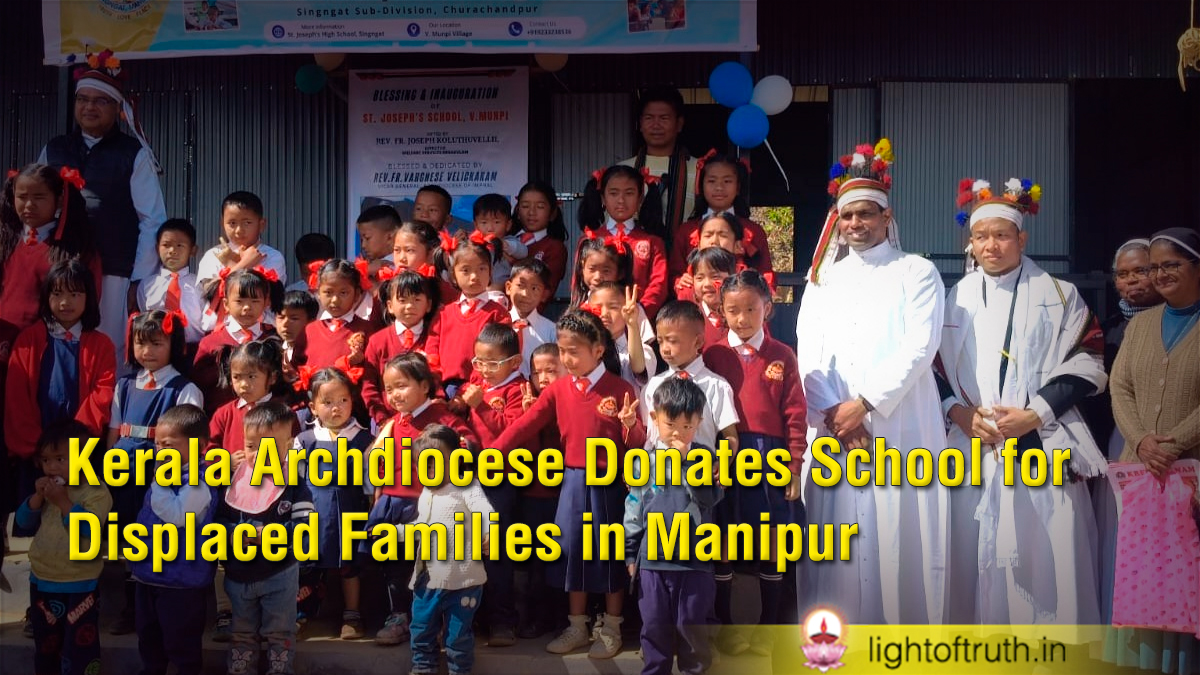
A newly constructed school was inaugurated on February 7 at the Catholic resettlement centre for internally displaced persons (IDPs) at V. Munpi in Manipur, bringing renewed hope to families rebuilding their lives after recent ethnic violence.
The school was made possible through the contribution of the social service department of the Archdiocese of Ernakulam-Angamly. The building was blessed by Fr. Varghese Vellickakam, vicar general of the Archdiocese of Imphal. Fr. Joseph Koluthuvellil, executive director and secretary of Welfare Services Ernakulam attended the inauguration.
Though modest in structure, the facility represents a significant step forward for the displaced community. The resettlement centre includes 76 houses constructed with the support of the Archdiocese of Imphal and Catholic donors. Fr. Mung, parish priest of St. Thomas Parish, Singngat, religious sisters, and members of the resettled families were also present.
During a felicitation programme, Fr. Mung highlighted the challenges faced by families adjusting to a new environment, noting that many lack prior experience in farming or business. He emphasised education as essential for rebuilding lives with dignity and stability.
Fr. Varghese underscored the importance of gratitude and self-reliance, recalling the project’s beginnings and acknowledging divine providence. Fr. Joseph expressed joy at supporting the people of Manipur, describing the school as an investment in the children’s future and assuring continued assistance, including educational opportunities in Kerala. The new school stands as a symbol of solidarity, resilience and hope for the displaced community.
Church centre for HIV/AIDS rehabilitation receives state award
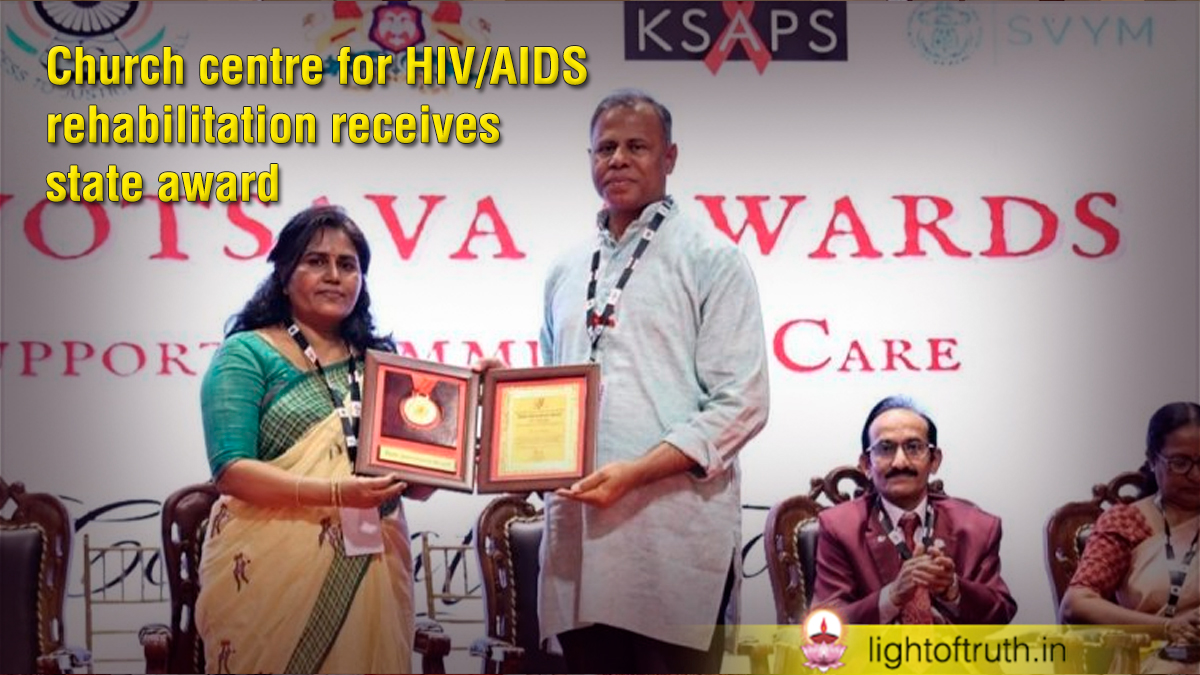
The Karnataka Network for People Living with HIV/AIDS has given the Jeevotsava (Festival of Life) Award to the Claretian-run Support Care Centre in Bengaluru for its 20 years of dedicated service to people living with HIV/AIDS. The award recognizes the centre’s commitment to care, treatment, and rehabilitation of destitute and marginalized persons.
Claretian Father Tomy Urumbumkuzhiyil, director of the Support Care Centre, received the award on January 21 from Gangu Bai Mankar, secretary of the Karnataka Department of Health and Family Welfare. The award was presented during the state HIV Conclave, which brought together more than 50,000 youth living with HIV, along with policymakers, NGOs, and Church representatives.
Speaking after receiving the award, Father Urumbumkuzhiyil said the centre has been serving people living with HIV/AIDS through both institutional and community-based care for two decades and expressed happiness and gratitude for the recognition.

All-India Bible Conference 2026 Highlights New Ways to Proclaim God’s Word
The All-India Bible Conference 2026, focusing on innovative and contextual approaches to proclaiming the Word of God in India, concluded on January 22 at Jnan Deepa, Pune. The three-day national gathering was held from January 20 to 22 and brought together 232 delegates from across the country. The participants reflected the wide involvement of the Indian Church in biblical ministry. The conference was centred on the theme “Innovative Pathways in Proclaiming the Word of God in India.” The programme featured scholarly paper presentations, panel discussions, and faith-sharing sessions that encouraged meaningful dialogue between Scripture experts, pastoral leaders, and lay participants. Regional group discussions were also organised, helping participants reflect on practical ways to strengthen biblical ministry in different local and cultural contexts across India. During the inaugural session, renowned biblical scholar and missionary Fr. Lucien Legrand, MEP, was honoured with a Lifetime Achievement Award in recognition of his 70 years of dedicated service to the biblical apostolate in India.
Illegal Structure Near Mumbai’s Mount Mary Church Removed After Public Protest
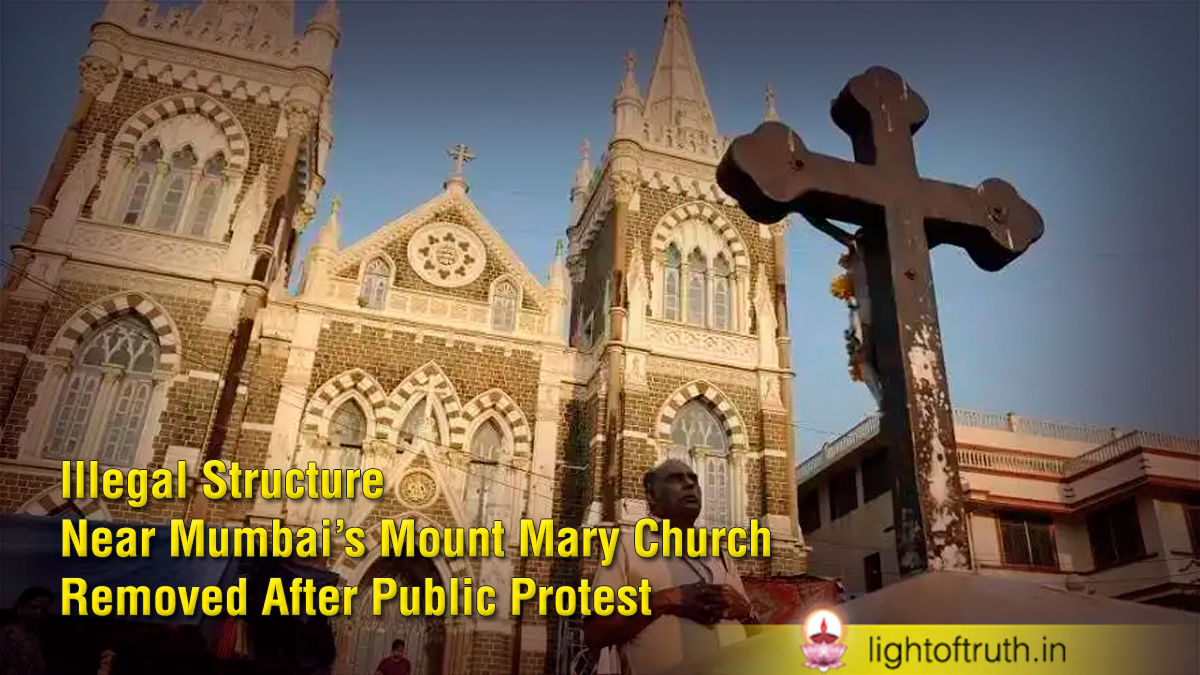
Authorities in Mumbai have removed an illegal structure that came up near the pathway leading to the historic Mount Mary Church in the Bandra area, following strong objections from Catholic groups and local residents.
The unauthorized construction, including an embankment wall and aligned structures, appeared near the church steps in mid-January. The area is clearly marked as an open public space and falls within a protected heritage zone. The Mount Mary Church is an important part of Mumbai’s religious and cultural history, and any construction in its surroundings requires special permission.
Members of Catholic organizations raised concerns that the construction violated heritage and town planning rules. They warned that allowing such activities could damage public trust in governance and threaten the protection of historic sites. Complaints were submitted to both municipal and police authorities, demanding immediate action and legal steps against those responsible.
The construction reportedly began soon after the local municipal election results were announced on January 16. Community leaders expressed concern over the timing and called for transparency and fairness in civic administration.
Following the complaints, civic authorities ordered the contractor to stop work, remove the embankment, and clear all construction materials from the site. Local representatives assured residents that there would be no further encroachment on the pathway leading to the church.
Church officials expressed gratitude to vigilant community groups for their timely intervention. Municipal authorities later clarified that the work was initially planned to provide access for a nearby settlement, but it was halted once it was confirmed that the land belonged to the church.
Mount Mary Church, located on a hill overlooking the Arabian Sea, houses a revered 16th-century statue of the Virgin Mary and attracts thousands of pilgrims every year, including people from other faiths.
Thousands Gather in Kochi to Remember Young Scholar and Music Minister Ajna George
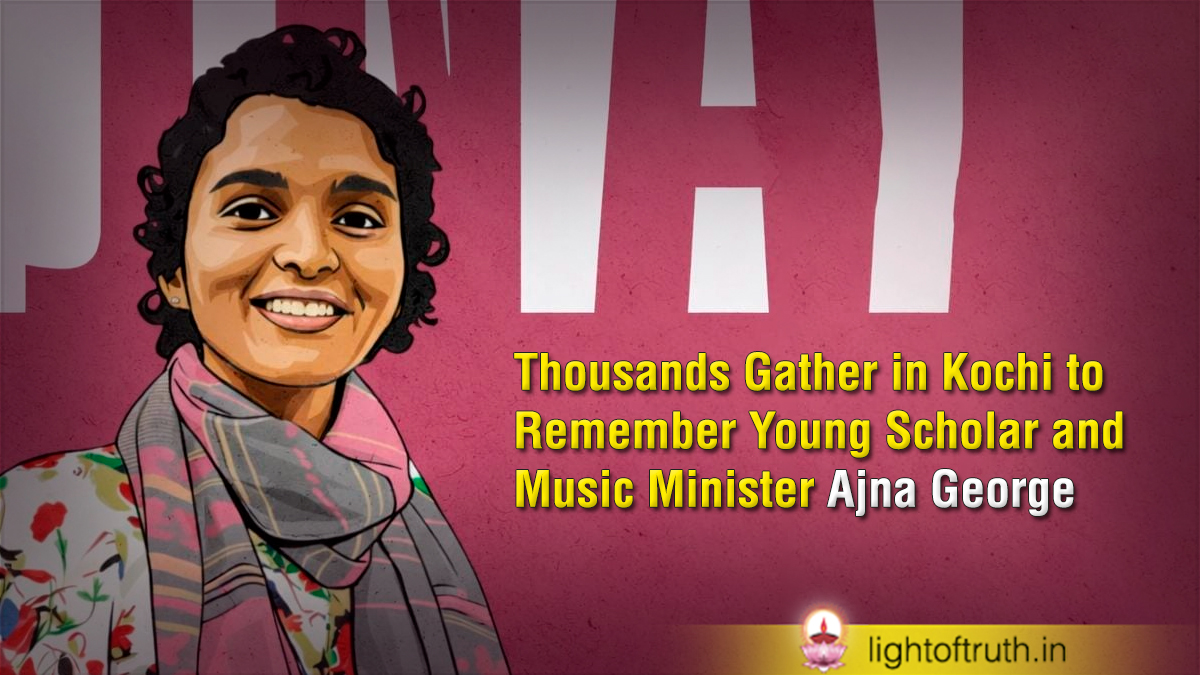
Thousands of people gathered at St. Raphael’s Church, Thykudam, on January 21, 2026, to observe the fourth death anniversary of Ajna George Muttungal, a young assistant professor and a dedicated member of the Jesus Youth Kerala Music Ministry. Ajna passed away at the age of 27, but her life of faith and service continues to inspire many. Born on April 2, 1994, Ajna was known for her deep love for God, simple lifestyle, and humble nature. The memorial Holy Mass saw an unexpectedly large turnout, with the church filled beyond capacity. Many people stood outside the church as there was no space left inside. Volunteers said it was one of the biggest memorial gatherings they had witnessed in recent years. The remembrance programme included exhibitions prepared by young people, personal sharing, and a short theatrical presentation that reflected Ajna’s life and values. Many participants said the atmosphere was deeply prayerful and emotional, and they felt spiritually strengthened during the event. Ajna is especially remembered for her strong devotion to the Holy Eucharist. Even during the COVID-19 pandemic and while undergoing treatment for osteosarcoma, she never missed attending Holy Mass. Though she was talented in music, she chose to serve quietly, praying for others and supporting ministries from behind the scenes. Even four years after her passing, many continue to seek Ajna’s prayers, remembering her as a young woman who lived her faith through humility, silent service, and personal care for others. The large gathering in Kochi stood as a powerful sign of the lasting impact of her life.

Global Autism Convention in Bengaluru Calls for Better Care and Awareness
The third global convention on autism concluded in Bengaluru on January 25 with a strong call to improve facilities and services for people with autism, as their numbers continue to rise worldwide. Experts noted that about one in every 100 people globally is on the autism spectrum and needs professional support along with understanding and empathy from society.
The weeklong convention was hosted by St. John’s Medical College, which is owned by the Catholic Bishops’ Conference of India. During the event, the college announced plans to set up a special wing on its campus dedicated to the treatment and rehabilitation of people with autism.
Around 1,000 delegates from different countries took part in the scientific conference. About 155 speakers presented research papers and shared insights on caring for people with autism at home and in the community. Parents, caregivers, and social workers also spoke about their experiences and efforts to improve the quality of life of autistic persons.
One inspiring speaker was Alina Alam, who founded “Mitti Café” at the age of 22 to create jobs for people with autism and other disabilities. The café chain now has more than 50 outlets, including in major public institutions, and has created over 6,500 livelihoods while serving millions of meals.
Indigenous Women in Manipur Demand Justice for Victims of Violence
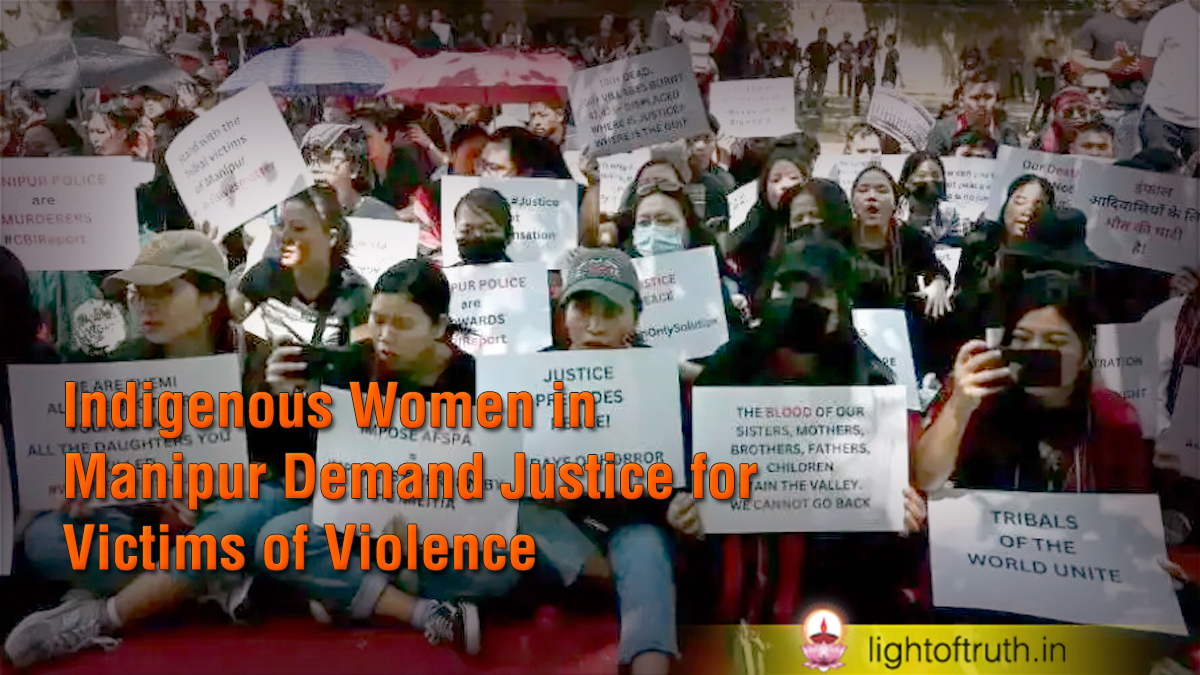
Indigenous women in Manipur, a troubled state in northeast India, have demanded justice for women victims of sexual violence and ethnic killings, most of whom belong to tribal Christian communities. The protests were held on January 21 and 22 in the district headquarters of Kangpokpi and Churachandpur.
The women, mainly from the Kuki-Zo indigenous communities, submitted a memorandum addressed to Prime Minister Narendra Modi through local authorities. They demanded immediate justice for women who were killed or sexually abused during the ethnic violence that began in May 2023.
According to the memorandum, at least 29 indigenous women were killed during the violence. The victims included young girls, elderly women, and even a woman with mental disability. The protestors alleged that the women suffered extreme forms of violence such as rape, gang rape, lynching, hacking to death, burning alive, abduction, and neglect while in custody.
The protest gained renewed strength after the death of a 20-year-old gang rape survivor on January 10 this year. She was abducted and assaulted in May 2023 and later abandoned. Her death without justice deeply affected the community and pushed women to speak out.
Protestors carried placards demanding arrests of the perpetrators and an end to government inaction. They questioned why justice had not been delivered even after cases were registered and investigations handed over to the Central Bureau of Investigation.
Manipur has witnessed severe ethnic violence between the Kuki-Zo tribal people and the Meitei community since May 3, 2023. Around 260 people were killed, over 60,000 displaced, and thousands of homes and churches destroyed.
Although the state is now under federal rule, peace has not fully returned. Indigenous leaders say justice and lasting peace will remain difficult without a clear political solution that ensures safety and dignity for tribal communities.