Since its launch in all dioceses worldwide in October 2021, the synod 2021-2023 entitled ‘For a Synodal Church: Communion, Participation, Mission’ has evoked mixed responses ranging from excitement and optimism to indifference and cynicism.
The Synod inaugurations in the Indian dioceses of the Conference of Catholic Bishops of India (CCBI, Latin rite) were followed by consultations of cross-sections of people: lay faithful, youth, children, diocesan clergy, religious men and women, the elderly and infirm, seminarians, the poor and peripheral, lapsed Catholics and so on.
“The synod is an ecclesial event and its protagonist is the Holy Spirit. If the Spirit is not present, there will be no synod,” said Pope Francis during his ‘moment of reflection’ while launching the synodal consultations on October 9, 2021. Viewing how processes have unfolded in diverse dioceses, there is no doubt that the omnipresent Spirit “blows where it wills” (Jn 3:8).
Category: From The States
-
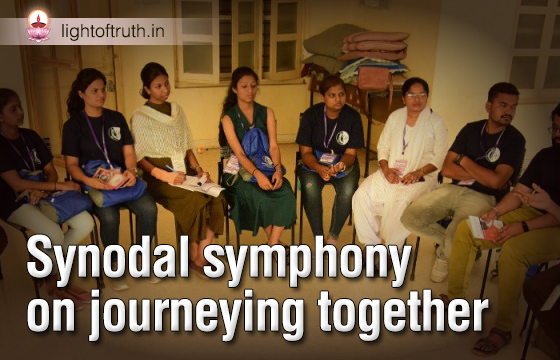
Synodal symphony on journeying together
-
Christians surprised as High Court admits forced conversion petition
Christians in Tamil Nadu have expressed surprise that the state’s high court has admitted a public interest litigation to stop forcible conversion of students in schools.
The bench of Justices R. Madhavan and S. Ananthi of the Madras High Court on May 6 admitted the petition and posted the matter to a regular bench on June 6 after the summer vacation ends.
Jesuit Father Arockiasamy Santhanam, spokesperson for the National Lawyers Forum of Religious and Priests, says the vacation court should not have entertained the petition. “One wonders what urgency is found in this petition,” he added.
Father Devasagayaraj M Zackarias, a former secretary of the Office for Scheduled Castes and Backward Classes under the Catholic Bishops’ Conference of India, says he was surprised the High Court admitted the petition when the incidents it has quoted are still under investigation.”
The case, Father Zackarias laments, is nothing but a way to create unnecessary disturbance in the state where schools impart quality education, especially to the poor and the marginalized. -

Nobel laureate and physicist Wilczek wins Templeton Prize
Frank Wilczek, the Nobel Prize-winning theoretical physicist and author renowned for his boundary-pushing investigations into the fundamental laws of nature, was honored Wednesday with this year’s prestigious Templeton Prize, awarded to individuals whose life’s work embodies a fusion of science and spirituality.
In a statement, the John Templeton Foundation praised the 70-year-old Wilczek for transforming “our understanding of the forces that govern our universe,” while also applying “the insights of his field to the great questions of meaning and purpose pondered by generations of religious thinkers.”
Established in 1972 by the late philanthropist Sir John Templeton, the prize is one of the world’s most lucrative individual awards, currently more than $1.3 million. Past winners include Jane Goodall, Mother Teresa, the Dalai Lama and Archbishop Desmond Tutu.
“It’s encouragement in a direction that I’ve really only taken up in a big way quite recently, although I’ve been building up to it for many years,” he said, “which is thinking about not just what the world is and how it came to be this way but what we should do about it.”
Over a long career, Wilczek has recorded many distinguished achievements. That includes the 2004 Nobel Prize in Physics, along with David J. Gross, and H. David Politzer, for their 1973 breakthrough explaining the unusual properties of the strong force, which binds fundamental particles known as quarks into protons and neutrons.
He has also authored several books that are informed by science but delve into the spiritual and philosophical. They include “ A Beautiful Question,” in which he asks, “Does the universe embody beautiful ideas?”; “ The Lightness of Being,” an examination of what humans are made of; and “ Fundamentals,” an exploration of radical life ex-tension, the longing for immortality, the limits of science and other topics.
“In studying how the world works, we are studying how God works, and thereby learning what God is,” he writes in “Fundamentals,” released this year. “In that spirit, we can interpret the search for knowledge as a form of worship, and our discoveries as revelations.”
Growing up Catholic, he embraced the idea that there was a grand plan behind existence. But as he learned more about science, he eventually lost faith in conventional religion and, in his words, “jettisoned detailed dogmas.” -
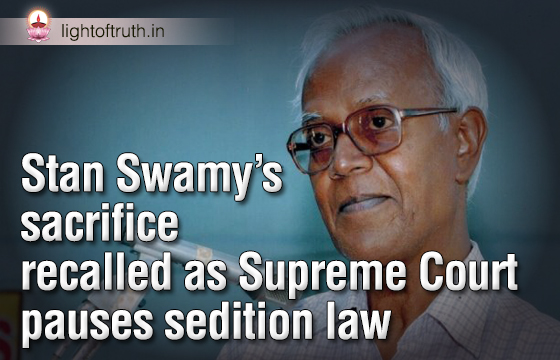
Stan Swamy’s sacrifice recalled as Supreme Court pauses sedition law
Christian activists in India on May 11 recalled “the sacrifice” of Jesuit Father Stan Swamy while welcoming the Supreme Court order to keep the country’s sedition law on abeyance. Father Stan, as he was popularly known, died July 5, 2021, in a Mumbai hospital as an undertrial prisoner.
A three-judge Bench led by Chief Justice of India N V Ramana also directed that an accused in a fresh case could seek bail and the court that deals with it would provide relief taking into account the apex court order. -
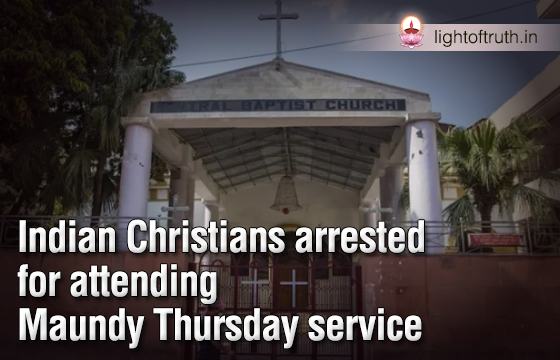
Indian Christians arrested for attending Maundy Thursday service
Police in northern India’s Uttar Pradesh state charged 55 Christians who took part in a Maundy Thursday service with violating a law that criminalizes religious conversion following complaints by right-wing Hindu groups.
Among them, 26 people were arrested and later released on bail, but police say they are searching for others included in the first information report (FIR).
Christian leaders denied the allegations and said the Maundy Thursday service on April 14 was “portrayed as a religious conversion activity and those who attended it were harassed for no fault of their own.”
Some 70 believers of the Evangelical Church of India gathered at their church in Fatehpur in Harihar Ganj district for the service to commemorate the Last Supper of Jesus with his disciples before he was crucified.
One Christian said right-wing Hindu activists who gathered outside the church locked its two main gates. “They then began to shout slogans like ‘Stop conversion’ among other things,” he said.
When police arrived at the scene after being alerted about the incident, they questioned the Christians about their details and kept them inside the church for close to three hours.
“We were told that we were kept in the police station for our own safety, but when we were taken for a medical examination we realized that we were being charged”
Hindu leaders also entered the church and demanded the personal details of the Christians.
Officers then took the Christians, including women and children, to the police station on the assumption that they were being taken to their homes.
Later that night, the women and children were allowed to go home while 26 males were kept in custody.
“We were told that we were kept in the police station for our own safety, but when we were taken for a medical examination we realized that we were being charged,” said one of the Christians. -

Church opens Indian state’s first palliative care centre
The Catholic Church has set up the first-ever palliative care centre in Nagaland, a Christian-majority state in northeast India.
The St. Joseph Pain and Palliative Care Centre at Chumukedima, near the state’s commercial hub of Dimapur, was inaugurated by Chief Minister Neiphiu Rio, a Baptist Christian, on April 24.
The centre is an initiative of the Diocese of Kohima and will be run by the Medical Sisters of St Joseph, Nirmala Province from Kerala, known for their dedicated service to the sick, the poor and the least of the brethren irrespective of caste and creed.
“This first fully fledged palliative care centre in Nagaland intends to provide service free of cost. The state government will extend all possible help to carry out this gratuitous service to the people,” announced Rio.
Nagaland, a predominantly Baptist Christian stronghold, along with the southern state of Tamil Nadu has the highest percentage of elderly people living alone without a spouse, children or any other support, according to the first Longitudinal Ageing Study in India released in 2021. -
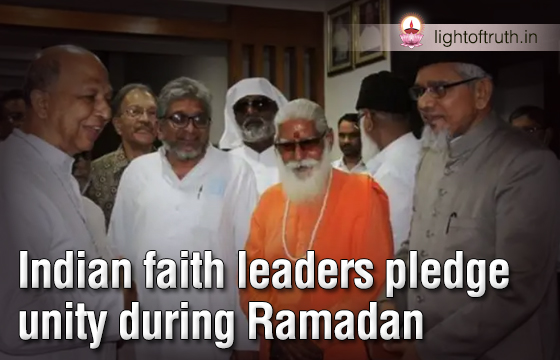
Indian faith leaders pledge unity during Ramadan
Leaders of different faiths at the first-ever iftar organized by the Archdiocese of Delhi pledged to remain united amid sectarian violence and growing unrest in India.
The iftar or evening meal with which Muslims end their daily Ramadan fast at sunset was a symbolic gesture to show solidarity with members of the national capital’s Islamic community who are fasting during the holy month.
“Through this program we wanted to spread love and peace among all people,” Archbishop Anil Joseph Thomas Couto of Delhi said at the interreligious event held by the archdiocese’s Commission for Ecumenism and Interfaith Dialogue on April 22.
The prelate said there was nothing to gain from what was happening in the country, where one community was pitted against the other in the name of religion, caste and creed.
“Let not the communal forces divide us,” said Archbishop Couto while urging all faith communities to come together and address the challenges before the country. -
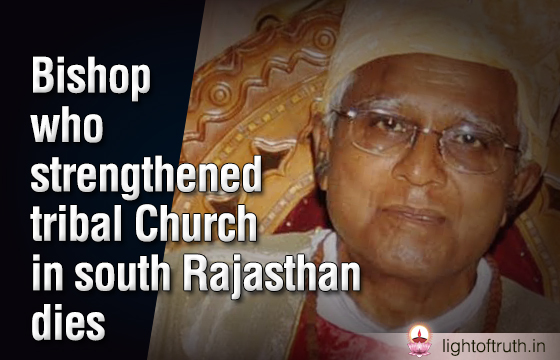
Bishop who strengthened tribal Church in south Rajasthan dies
Emeritus Bishop Joseph Pathalil, the first prelate of Udaipur diocese in Rajasthan, died April 14 after a long illness. He was 85. The death occurred at 12 noon at Paras KJ Hospital in Udaipur.
A message from Bishop Devprasad Ganawa of Udaipur said his predecessor had developed some breathing difficulties in the morning and was rushed to the hospital. “Due to a cardiac arrest, he breathed his last,” Bishop Ganawa added. -
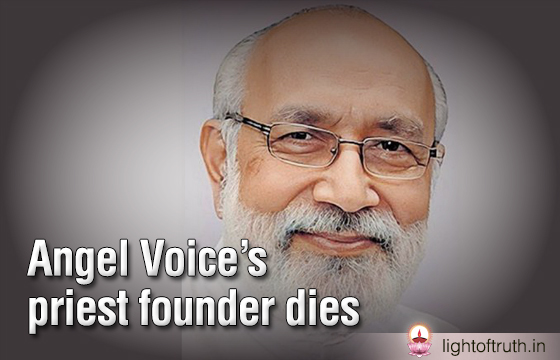
Angel Voice’s priest founder dies
Father Kuriakose Kachiramattom, the founder director of the nationally famous Christian music troupe – Angel Voice Gospel Music Group — died April 22. He was 79.
The death occurred in the after-noon at Lissie Hospital in Ernakulam, Kochi. Father Kachiramattom be-longed to Kothamangalam Syro-Malabar Eparchy. -
Rani Maria film to hit silver screen soon
A Bollywood feature film on Blessed Rani Maria, a martyred social reformer, will be released in August, says director Shaison P Ouseph.
“This is the culmination of a 5-year dream and hard work, which is at the final stage of completion,” Ouseph told Matters India April 27.
Cardinal George Alencherry, head of the Syro-Malabar Church, released the film’s title – “The face of the faceless” – two days earlier.