
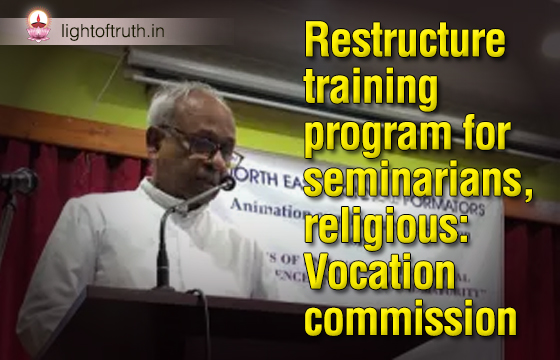
The sharp decline in the current standard of education has prompted the bishops of northeastern India to call for restructuring the initial forma-tion years for priests and reli-gious.
The all-promotion system in schools and making subjects like maths not compulsory to pass grade ten have adversely affected the reading, writing and numeracy skills of those entering minor seminaries and other formation houses, says a survey conducted by the Com-mission for Vocation, Seminaries, Clergy and Religious, North East India Regional Bishop’s Council.
The commission organized a meeting to address the current drawbacks in the training pro-grams.
Around 130 people engaged in training priests and nuns attended the August 17-18 meeting at Guwahati, the nerve center of northeastern India.
The meeting recommended increasing the initial formation to two years. Presently, the initial remedial education in formation houses is one year.
At the meeting, Bishop Thomas John Katrukuidyil, the commission chairman, presented a paper on the “Present Scenario of Formation” in north-eastern India.
The paper explained the results of an extensive survey the bishop undertook on the current vocation scenario in the region.
Category Archives: From The States
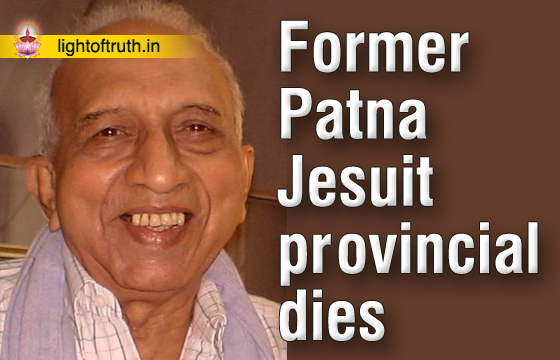
Former Patna Jesuit provincial dies
Father John D’ Mello, a former Patna Jesuit provincial and renowned spiritual director, died August 24. He was 89.
The death occurred at 7:30 am at Xavier Bhavan at Digha Ghat, a western suburb of Patna, where Father D’Mello was leading a retired life.
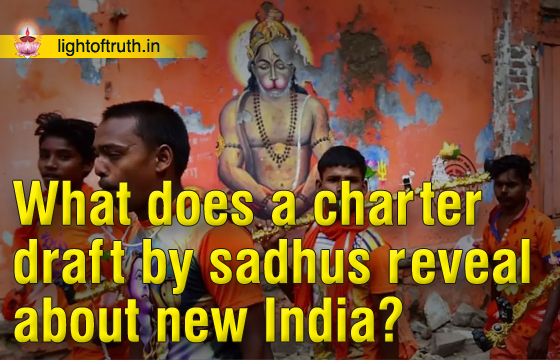
What does a charter draft by sadhus reveal about new India?
India’s constitution came into effect on Jan 26, 1950, completing the nation’s transition toward becoming an independent, democratic republic. But a self-appointed constituent assembly of 30 Hindu seers and scholars has come up with the draft of a “new constitution” for their proposed “Hindu Rashtra” (Hindu nation).
If the Hindu savants associated with the Shankaracharya Parishad of Varanasi, the northern city regarded as India’s spiritual capital, have their way then Muslims and Christians will be barred from voting in the Hindu Rashtra.
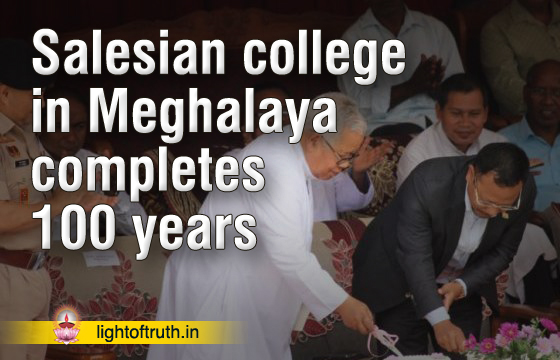
Salesian college in Meghalaya completes 100 years
A Salesian college in Meghalaya has completed 100 years of service in the northeastern Indian state.
The centenary of the Salesians entry into the region and Don Bosco college in Tura recently took place at the college on August 18.
Minister of Food and Civil Supp-lies James Pangsang K Sangma, the chief guest, hailed the Salesians’ contributions to northeastern India and Garo Hills in particular. He expressed gratitude and assured that the people of the region are also grateful to them.
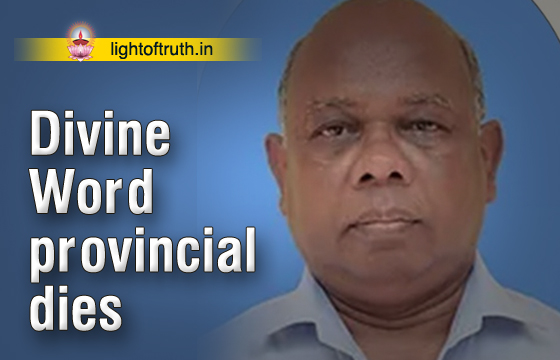
Divine Word provincial dies
Father Petrus Kullu, provincial of the Divine World Society’s Eastern Indian province, died August 18 of suspected Covid-19 infection. The death occurred at 4:15 pm in the Covid ward of Vikash Hospital, Bargarh near Sambalpur, a major town in the eastern Indian state of Odisha, according to a message from Father Victor Rodrigues on August 10.
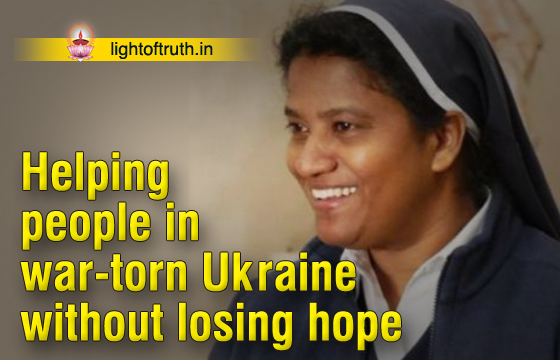
Helping people in war-torn Ukraine without losing hope
Sister Ligi Payyappilly, a native Indian, is worried that the Russia-Ukraine conflict continues, even after passing the six-month mark.
The member of the Sisters of St. Joseph of Saint-Marc has been serving war-hit people since Russia launched a full-scale invasion of Ukraine on February 24.
First, Sister Payyappilly help-ed evacuate hundreds of overseas nationals, mostly students, in Ukraine. The native Indian nun, who is now a Ukraine citizen, then turned her attention to Ukrainians who have become refugees in their own country.
Sister Payyappilly, superior of the congregation’s convent in Mukachevo, a town in western Ukraine, had followers across Ukraine as a renowned retreat preacher. She used this network in her rescue operations and refugee services.
“The crisis in Ukraine is worsening day by day. But the hopes of the people to get through the crisis too have increased.
Initially, everyone expected the war would end soon. But this is like the war between Goliath and David. Russians are mighty and powerful; Ukrainians are weak but determined. God is with us, and my mind says the final victory will be ours.” She said.

Police hunt for Sri Lankan priest deplored
Rights defenders and church officials in Sri Lanka have deplored the police raid on a remote parish church allegedly to search for a Catholic priest who has been a key figure in anti-government protests in the crisis-hit nation.
Police raided the church at Ratnapura in Sabaragamuwa Province of south-central Sri Lanka on July 27 and searched for Father Amila Jeewantha Peiris, media reports said.
The raid came two days after a Sri Lanka court slapped a travel ban on the 45-year-old priest and five others for their alleged participation in “unlawful assembly and damage to public property” during a protest rally in June.
Father Peiris has been at the forefront of the months-long anti-government pro-test at Galle Face Green in the capital Colombo that effectively ousted the long-reigning Rajapaksa family dynasty blamed for the nation’s worst economic crisis.
The huge protests forced President Gotabaya Rajapaksa to flee the country and resign. Last week, parliament elected former prime minister Ranil Wickreme-singhe as the new president. However, protests have continued demanding the resignation of Wickremesinghe, who is known as a loyalist of the Rajapaksa dynasty.
Prominent rights activist Ruki Fernando said police actions against Father Peiris are absolutely unacceptable, noting that he is among the few Sinhalese Catholic priests who have spent years serving communities in minority Tamil-dominant North and East that were ravaged by decades of civil war in the ethnically-divided Sri Lanka.
The priest is loved by the Tamil clergy, religious and laity, said Fernando, a consultant to the Justice, Peace and Integrity of Creation Commission of the Conference of Major Religious Superiors.
“He faces reprisals for his unwavering commitment to the struggle of people. I hope church leaders and all others will come forward to support and protect him, as he had done for others,” he told.

Preserving a vanishing culture in Pakistan
Goan vibes were in full swing, complete with melodious tunes in the Konkani language and traditional music, at Goa Fest 2022 held on the grounds of St. Patrick’s Cathedral in the southern port city of Karachi recently.
Among the beautiful damsels and stylish men turned out in their best outfits was Saphrina Bella Coelho, a banker who regaled the colorful gathering with a Konkani ‘masala medley.’
“Good things should never end,” she told. “We are Pakistani Catholics with a Goan ancestry; hence we prefer being called Goans.”
Coelho is part of a small community of some 5,000 people in Karachi, descendants of Catholics who arrived in Pakistan from Goa, a former Portuguese colony in western India.
During the British colonial days, their ability to handle English and Western lifestyle helped them get employment in government services such as the judiciary, port, police, railways, post and telegraph, and healthcare.
The partition of British India in 1947, at the end of colonial rule, gained them Pakistani citizenship, making their return to Goa almost impossible.
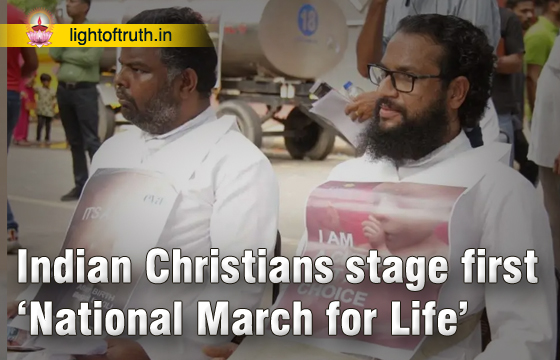
Indian Christians stage first ‘National March for Life’
Marchers seek to raise awareness in a country that records more than 15 million abortions each year. Pro-life activists and Christians gathered to observe the first National March for Life in New Delhi on Aug. 10.
The day also marked the 51st anniversary of the passing of the Medical Termination of Pregnancy Act which legalized abortion.
Some 100 people from across the country assembled at Jantar Mantar, a place allotted by the government to hold protest marches, holding placards against abortion, singing Christian hymns and reciting prayers to end abortion.
The protesters including a bishop, priests, nuns and laity observed a “Day of Mourning” in memory of the millions of aborted fetuses across the world.
The protest was organized by the Catholic Charismatic Renewal Services in India and the Delhi Catholic Charismatic Service of Communion to raise awareness about abortion.
The march was followed by prayers and a Life Gala at Sacred Heart Cathedral hosted by the Archdiocese of Delhi.
“Being a Christian, at least we can try in our capacities to help stop this practice in our country”
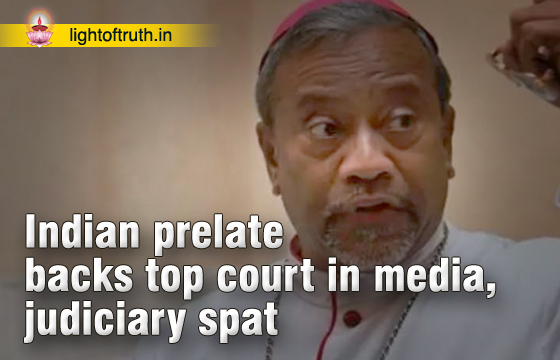
Indian prelate backs top court in media, judiciary spat
A Catholic archbishop has condemned media re-ports saying India’s top court was delaying the hearing of a case seeking an end to violence against Christians.
“I am extremely distressed about articles in news-papers that the honorable Supreme Court, India’s top court, is not taking up the matter of attacks against Christians. There is no merit in the allegation. I strongly condemn it,” said Archbishop Peter Machado of Bangalore in southern Karnataka province, on July 30.
The prelate’s statement came a couple of days after Supreme Court Justice D.Y. Chandrachud criticized a section of the media for carrying news items hinting that the top court was not very keen on hearing the petition.
“You get it published in newspapers that the Supreme Court is delaying the hearing. Look, there is a limit to which you can target the judges. Who supplies all this news,” asked Justice Chandrachud on July 27 while clarifying the last hearing was postponed as he was down with Covid.
Archbishop Machado was concerned as there was a possibility of a misunderstanding that the petitioners including himself, the National Solidarity Forum and the Evangelical Fellowship of India, could have briefed the media against the top court.
Affirming his complete faith in the judiciary, the archbishop in his statement said: “The Christian community wishes to place on record its immense faith in the judiciary. We would never imagine or doubt that the Supreme Court would delay or hesitate to take up important issues that affect human rights or religious freedom.” The prelate also reiterated that attacks continue against Christians, especially in states where anti-conversion laws were enacted, and hoped the Supreme Court would bring justice for the victims of violence.