Category: From The States

  • Nun leads silent social change in Indian villages

    Nun leads silent social change in Indian villages

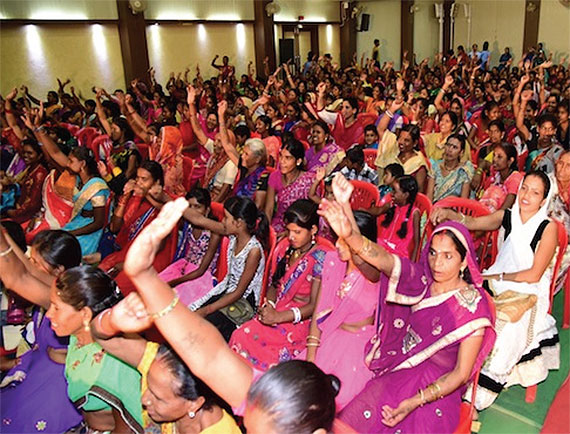
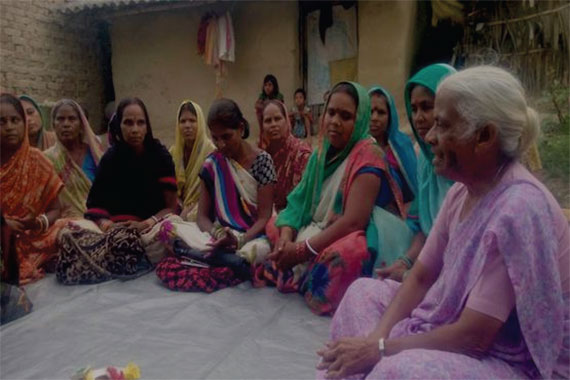
    Clad in a simple sari, Sister Jyoti Rosamma sits among the women in a self-help group discussing their issues. In a circle they are all equally important, including the 74-year-old nun, who taught them to fight abject poverty.

    The frail-looking Catholic nun was “a stranger to us but now she’s like a mother goddess. Our eyes were opened and we were appalled to see our reality,” said Malti Devi, who escaped poverty because of the self-help groups.

    Malti Devi, a 52-year-old woman, is among hundreds of socially and economically poor caste women the nun has helped free from the clutches of moneylenders in the Chhapra area of the eastern Indian Bihar State.

  • Religious leaders condemn lynching, stress restoration of law

    Religious leaders condemn lynching, stress restoration of law

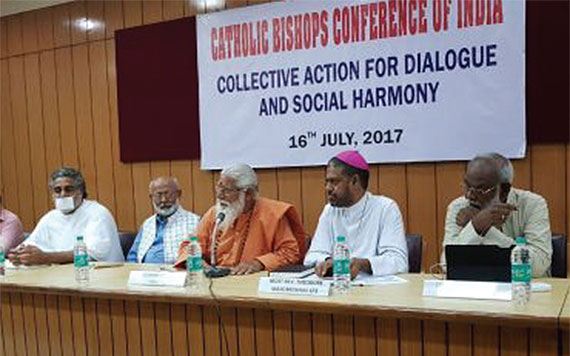
    Around 40 spiritual leaders and intellectuals in the national capital on July 16 urged Indians to check an environment of hate, violence and disregard for the rule of law spreading across the country.

    They met under the aegis of the Catholic Bishops’ Conference of India (CBCI) and called upon the government to end impunity, which they noted, was at the root of the atmosphere of fear that stalks the land today. They also said these developments threatened not just secularism, but the country’s Constitution as well as the democratic fabric.

    They want people to draw from India’s deep spiritual reservoirs to check increasing cases of lying that have claimed “many innocents of religious and marginalized communities.”

    The meeting welcomed Prime Minister Narendra Modi’s assurances to leaders of Opposition parties on the eve of the Monsoon session of Parliament.

    However, the leaders noted that lynching in various states on the pretext of protecting cows have shocked majority of Indians from all communities. The Prime Minister must now see that state governments and their police forces acted against the guilty in an impartial manner, they assert-ed. The meeting agreed two of five of urgent program of action:

    • The ideology of hate is a reality and needs to be challenged by governments, political parties, civil society activists, the criminal justice system and religious communities in a concerted manner.

    • Religious leadership must act at the grassroots to assert the inherent unity of the people. This will help restore public confidence and remove the mutual suspicion that had started growing.

  • Kerala nurses strike called off after government agrees to hike minimum pay

    Kerala nurses strike called off after government agrees to hike minimum pay

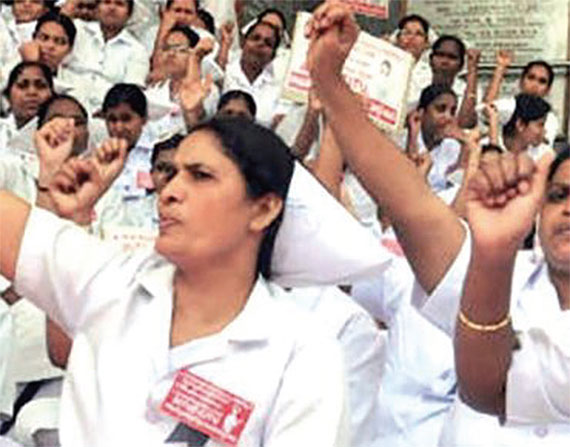
    Following intense protests for almost two months, private hospital nurses in Kerala called off their strike on July 16 after the government agreed to enforce a hike in their minimum pay to Rs 20,000.

    The decision was taken in a meeting of the representatives of nurses’ associations with Chief Minister Pinarayi Vijayan at his office on July 20 evening. The Chief Minister’s office said that the decision on the wage hikes was unanimous.

    “The decision was unani-mous. It has been decided to hike the minimum pay of nurses working in hospitals with a bed strength of up to 50 to Rs 20,000. The government will appoint a committee to decide on the salary of nurses working in hospitals where the number of beds is more than 50,” a statement from the Chief Minister’s office said.

    “There will be timely increase in the stipend of nursing trainees. The committee will also consider and submit recommendations on the trainees’ stipend and the period of training. The committee will submit its report in a month,” the statement added.

  • Cathedral dedicated to Mother Teresa due to be consecrated

    Cathedral dedicated to Mother Teresa due to be consecrated

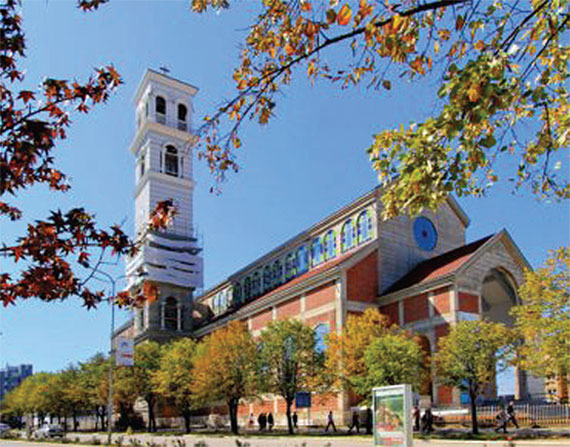
    A cathedral dedicated to St Teresa of Calcutta is due to be consecrated on September 5, the 20th anniversary of the saint’s death. Pope Francis has appointed Cardinal Ernest Simoni to be his delegate at the consecration in Pristina, the capital of the partially recog-nised State of Kosovo.

    Although the building has been a place of worship for Catholics since 2010, the shrine will be formally dedicated to Mother Teresa at the consecra-tion. The Italianate-style build-ing has been under construction since 2007 and remains unfini-shed. When complete, it will have two bell towers, each standing at 230 feet tall, making it one of the tallest buildings in the city.

    Among the designs on its stained-glass windows are depictions of St Teresa with Pope St John Paul II, and Pope Benedict XVI embracing Pope Francis.

  • Church group launches peace education for Kashmir students

    Church group launches peace education for Kashmir students

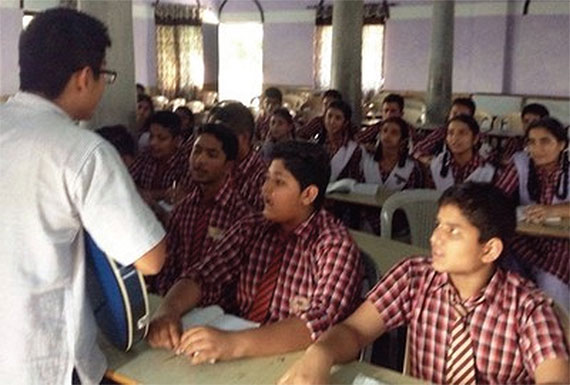
    Jammu-Srinagar Diocese has launched a project to educate young people on the need for peace on the Indian side of the India-Pakistan border where hostilities between the two countries have killed hundreds of people.

    The diocese covers the entire Indian State of Jammu and Kashmir, a disputed territory between the two neighboring countries. Both India and Pakistan claim the region and each administer part.

    The two nuclear-power rivals have fought at least three major wars over Kashmir. The border area is prone to occasional exchange of fire between the armies of India and Pakistan, often adversely impacting the local people living there. The region has been a sensitive issue for both India and Pakistan ever since they become two different nations in 1947 when British rule ended in the subcontinent.

  • St Xavier’s starts Mizoram campus

    St Xavier’s starts Mizoram campus

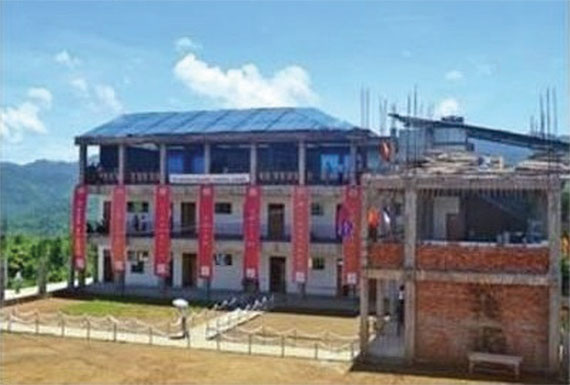
    St Xavier’s College, one of the country’s most illustrious colleges run by Jesuits, has started a campus in Mizoram.

    This is the first Jesuit college in Mizoram. It will be administered by the order’s Darjeeling province.

    St Xavier’s University Kolkata, which is the oldest educational institution of the Jesuits, will offer academic help to the new college. The Bishop of Aizawl, the head of the Catholic Church in Mizoram, had requested Jesuits to start a college in the state to give a boost to higher education.

    “The college was inaugurated on July 17. It has started inducting students in both its plus two and undergraduate sections,” said Father Daniel Bara, principal of the college.

  • Indian bishop welcomes extra judicial killings probe

    Indian bishop welcomes extra judicial killings probe

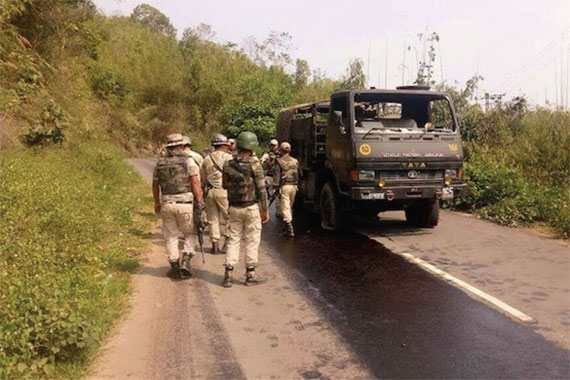
    A Catholic bishop and human rights groups in India have welcomed a Supreme Court order for a federal investigation into allegations that thousands of people were killed by security forces in the northeastern State of Manipur.

    India’s top court July 14 directed the government to engage the country’s Central Bureau of Investigation agency to probe allegations that army, paramilitary forces and police killed without trial 1,528 people in the state between 2000 and 2012.

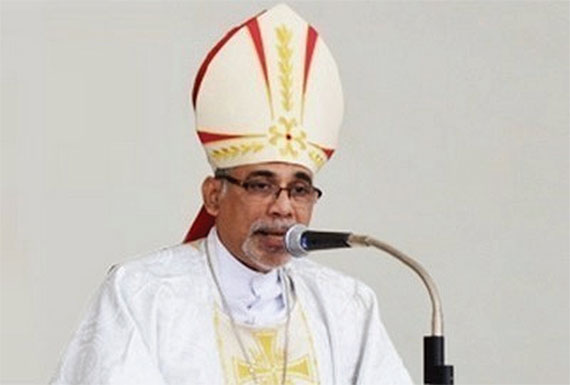
    The court’s decision came while hearing a petition seeking an investigation and compensation. “We welcome the decision and hope the probe will be impartial, devoid of political goals, and bring justice to the victims,” said Bishop Dominic Lumon of Imphal, whose diocese covers the whole state.

    The entire northeastern region consisting of seven Indian states, bordering China, Bangladesh and Myanmar remains heavily militarized because of insurgency. Some five decades ago the federal government passed the Armed Forces Special Power Act to check insurgency in Assam and Manipur.

    The law was later extended to another seven states as the insurgency spread with the government describing the situation in the region as “war-like.”

    Rights groups say the law gives sweeping powers to armed forces in their efforts to crush insurgency and results in unchecked violence that includes night raids, rapes and killings without trial or provocation.

    The Asian Human Rights Commission estimates there is at least one security personnel for every 20 citizens in Manipur.

  • Desecrations aimed at promoting religious hatred: Goa Archbishop

    Desecrations aimed at promoting religious hatred: Goa Archbishop

    Goa Archbishop Filipe Neri Ferrao on July 12 said, that he is “deeply pained” by the recent spate of religious desecrations, suggesting that the violent acts were aimed at provoking communal discord and promotion of religious hatred.

    “The Church in Goa is deeply pained with the recent spate of desecrations of religious structures and burial places of the Christian community, along with a stray incident also targeting the Hindu community in the State,” Ferrao said in a statement issued here. More than 100 crosses and plaques at a cemetery in southern Goa were desecrated in the wee hours of Monday, July 10, police said.

    Police sources said that a CCTV camera installed at the Guardian Angel Catholic cemetery in Curchorem village, 45 km from Panaji, was damaged before the vandals went around indiscriminately desecra-ting crosses and plaques fixed atop graves. “We do not tolerate such mis-chief,” Parrikar said, when asked to comment desceration of the Holy Crosses in St Jose de Areal and Gudi Paroda villages, located nearly.

    “These violent incidents seem to be designed by vested interests to provoke communal discord and promote religious hatred. While we strongly condemn the same, I personally appeal to our brothers and sisters of all faiths to refrain from taking any retaliatory action or even fanning the flame of religious hatred in their hearts,” archbishop added.

    The statement comes in wake of a series of desecrations of Catholic and Hindu religious symbols, including the incident, when several Catholic crosses were smashed and grave-stones broken at a cemetery in south Goa’s Curchorem town, located 45 km from Panaji.
  • Indian nuns launch new forum to curb violence against women

    Indian nuns launch new forum to curb violence against women

    A congregation of nuns in central India is helping domestic workers who face sexual abuse and other forms of violence access legal help, counseling and rehabilitation.

    Abp Leo Cornelio of Bhopal, who is based in the Madhya Pradesh State inaugurated June 28 the Nyay Chaupal — forum of justice initiated by the congregation of Holy Spirit Sisters for domestic workers.

    The office plans to monitor cases of rape, sexual harassment and violence of domestic workers and help them file police complaints, provide them legal help and well as counseling and rehabilitation. The new office is part of the congregation’s Uday Social Development Society that already works with victims of abuse.

    Holy Spirit Sister, Sister Lizy Thomas, its secretary, told ucanews. com that they were compelled to launch this new office as nuns found many domestic helpers women “stressed and in need of help.”

    A 2015 survey by the Uday Social Develop-ment Society in two slums of Bhopal found that most domestic servants came to the city from villages in search of employment and had “no means to get legal remedies” against exploitation.

    More than 60 percent of the 800 families that took part in the survey came from the Dalit or socially poor communities once considered untouchable, while 36 came from other economically weak communities.

  • Naga tribal Christians laud Modi’s Israeli visit

    Naga tribal Christians laud Modi’s Israeli visit

    Christian leaders in tribal-dominated Nagaland State say the Indian Prime Minister’s recent visit to Israel will help their people have easy access to holy places such as Jeru-salem, a right they have been demanding for decades.

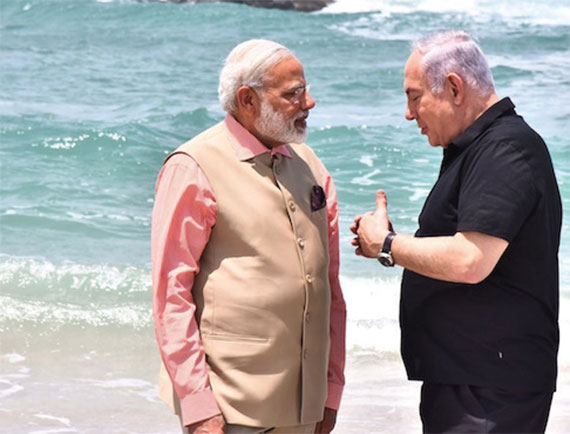
    Thomas Ngullie, a legisla-tor in the Christian dominated state, lauded Prime Minister Narendra Modi’s July 4-6 visit to Israel, saying the improved India-Israel relations bode well for Christians.

    Modi is the first Indian Prime Minister to visit Israel.

    Former lawmaker Khyamo Lotha echoed Ngullie’s comm-ents acknowledging Jerusalem as a place of Christian pilgri-mage. The 77-year-old retired politician was the first to stress the need for improved Indo-Israel relations as far back as 1991.

    Bilateral ties between India and Israel were first established in 1992 under then Prime Minister P.V. Narasimha Rao. Prior to that, Christians could not go to Israel, even with diplomatic passports.

    During his visit, Modi struck a good rapport with his Israeli counterpart Benjamin Netanyahu and both leaders have vowed to take the relationship to new heights, media reports said.