Category: From The States

  • CSI pulls out of Kerala Council of Churches

    CSI pulls out of Kerala Council of Churches

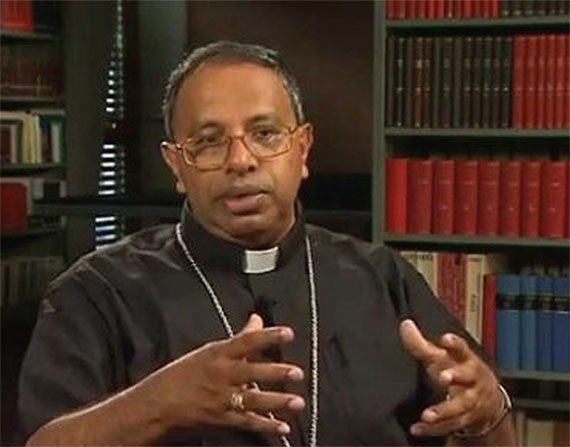
    The Church of South India (CSI) has decided to pull out from the Kerala Council of Churches (KCC), an ecumenical forum of non-Catholic Protestant Churches in Kerala, in protest against the KCC decision to provide membership to the Believers Church. The second largest Christian denomination after the Catholic Church, CSI is the largest Protestant denomination in India. The CSI Moderator, Bishop Thomas K. Oommen, said the CSI could never accept inclusion of the Believers Church in the KCC strictly on moral and ethical grounds.

    Believer’s Church is the country’s top foreign-funded NGO. Its head K.P. Yohannan, who is also founder of Gospel for Asia, is facing a lawsuit in the US for fraud and misuse of charitable donations.

    Bishop Oommen told The Hindu that the regional forum of the CSI Synod members had unanimously decided to disassociate with the KCC and its programmes. The latest development has to be viewed in the backdrop of the controversy over the episcopacy claims of the Believers Church that its head, K.P. Yohannan, was consecrated by then CSI Moderator Bishop K.J. Samuel in 2003.

    The CSI has outright rejected this claim of the Believers Church, saying that the former has never done such a thing at any point of time.

    According to Bishop Oommen, the CSI had never consecrated Yohannan and whatever news spread in this regard were baseless.

    “The CSI never considers the Believers Church as an episcopal church or accept its leader, K.P. Yohannan, a bishop. As per the CSI view, K.P. Yohannan is a layman and the KCC decision, overlooking the CSI objection, was unfortunate,” he said. He said the bishop was the constitutional head of CSI. As per the constitution of the Church, the Synod executive has to authorise the Moderator to consecrate a clergy as a bishop. The CSI Synod executive never authorised the Moderator to consecrate K.P. Yohannan as a bishop, he said.
  • Christians protest Baptist-Catholic row in Manipur village

    Christians protest Baptist-Catholic row in Manipur village

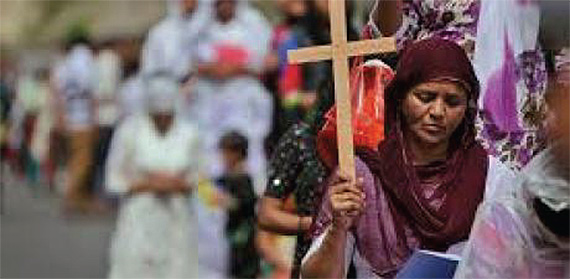
    Christians in India are pro-testing the “inhuman behavi-our” of some villa-gers from north-eastern Manipur State for refusing the burial of a woman who left the Baptist Church to become a Catholic.

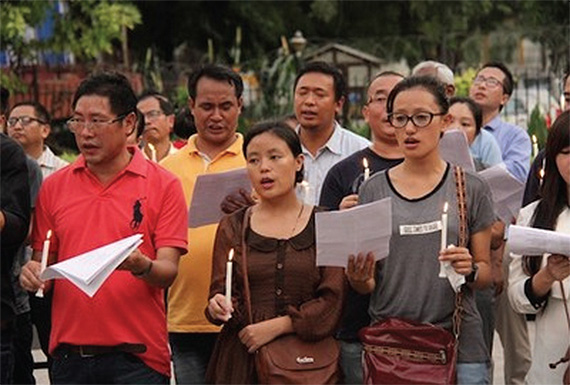
    More than 200 Christians from various denominations gathered in front of the Catholic Sacred Heart Cathedral in New Delhi Aug. 17, holding candles, singing hymns and praying. They condemned the incident in a statement and sought help from the government to bury the woman who died Aug. 7. Leingangching villagers in Manipur state denied permission to bury the woman because the village council had excommunicated her family about seven years ago for leaving the Baptist Church and becoming Catholic.

    Rita Haorei, the deceased is still not buried, according to Father Vialo Francis of Imphal Archdiocese, based in Manipur.

    Fr Francis told ucanews. com that the predominantly Baptist village refused permission to five families, including that of Haorei, to become Catholic saying the village constitution holds that it “shall be a Baptist village.”

    Manipur is a Christian strong-hold State. More than 40 percent of its 2.73 million people are Christians, mostly Baptists. Some pockets are almost entirely Christian. The Ukhrul district where Haorei hails from is 95% Christian.

  • Petition State Governor of India to Drop New Anti-Conversion Measure

    Petition State Governor of India to Drop New Anti-Conversion Measure

    The Governor of the State of Jharkhand in India has a big decision to make regarding the thousands of Christians and other religious minorities residing in her state.

    Jharkhand Governor Drau-padi Murmu must decide on an anti-conversion Bill passed by the State Assembly earlier.

    If Murmu allows the Bill to become law, she risks putting in harm’s way Christians and other religious minorities living in Jharkhand.

    Only five states in India now have such laws. But of those five states, two are among the top three states in India where violence against Christians is highest.

    Anti-conversion laws are supposed to stop people con-verting from Hinduism to Christianity. But, what they really do is infringe on the right of an Indian citizen to practise their religion as they see fit…and, to a right to privacy – both of which are guaranteed by India’s federal Constitution.

    And, India’s federal Penal Code, Section 295(A), already deals with the issue of sectarian harmony, and the use of coercion and, or, “allurements” to entice people to convert from Hinduism to Christianity. These laws command stiff penalties, ranging from fines to imprison-ment.

  • SC quashes HC order on repair of shrines damaged in 2002 riots

    SC quashes HC order on repair of shrines damaged in 2002 riots

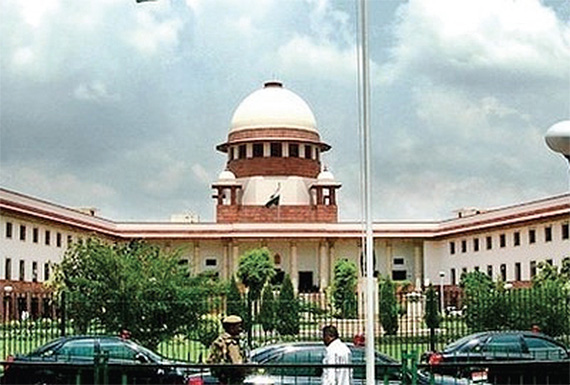
    The Supreme Court on August 29 set aside the Gujarat High Court’s 2012 verdict asking the state government to grant compensation for restoration of religious places damaged during the 2002 post-Godhra riots.

    The court accepted the scheme formulated by the state government to provide “ex gratia assistance” of up to Rs 50,000 to all religious places, including mosques and temples, which were damaged or destroyed during the communal riots, on par with the relief granted for destruction of houses.

  • No confirmed ‘Love Jihad’ incidents in Kerala: DGP as Supreme Court asks to probe “love jihad”

    The Supreme Court has asked the National Investigation Agency to probe what has come to be dubbed “love jihad.”

    This was done after the top probe agency told the apex court on August 16 that there was evidence to suggest that some extremist outfits linked to a banned group were involved in converting Hindu girls to Islam and their gradual radicalization toward the Islamic State’s ideology.

    The bench of Chief Justice J.S. Khehar and Justice D.Y. Chandrachud took on record a sealed report of the central agency’s preliminary findings, reports telegraphindia.com.

    State police chief Loknath Behera has said that there is no confirmed case of ‘Love Jihad’ reported in Kerala.

    The report, which appeared in a section of the media saying the state police chief has confirmed that ‘Love Jihad’ is there in state, is wrong, the DGP said in a statement issued on August 26, 2017.

    “I only said that we are keeping an eye on the allegations from various quarters that there is radicalization through conversion using various means taking place in Kerala. The Supreme Court has ordered an inquiry into such an allegation in one case (Hadiya case). So it is our duty to find out whether that is correct or not,” he said.

  • Jharkhand, new anti-conversion law Cardinal Toppo: There are no forced conversions

    Jharkhand, new anti-conversion law Cardinal Toppo: There are no forced conversions

    The government of Jharkhand (in the northeast of the country) last night approved a law prohibiting conversions brought about by force or coercion. The government spokesman explained that “anyone who violates this law may be sentenced to three years in prison and 50,000 rupees [over 600 euros] fine, or both.”

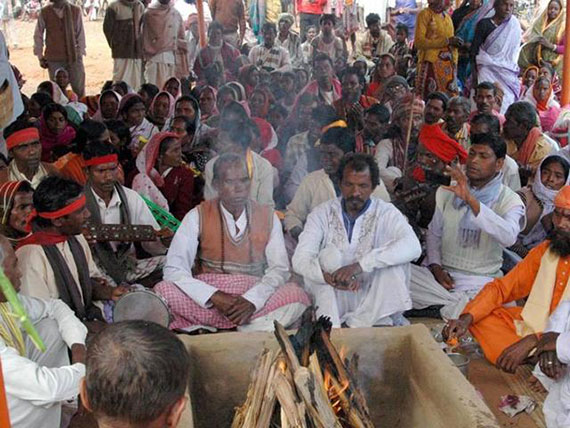
    The law provides for more severe penalties for forced conversion of underage girls and tribal women (scheduled tribes). In this case, the culprit can be sentenced to four years in jail and /or a fine of 100,000 rupees. The law, approved by the govern-ment, has to be approved by the local parliament, on August 8. If it passes, Jharkhand will be the seventh state in India with a law against forced or coerced conversions. Such laws already exist in Madhya Pradesh, Chhattisgarh, Odisha, Gujarat, Maharashtra, and Himachal Pradesh. Speaking to AsiaNews, Card. Telesphore Toppo, Archbishop of Ranchi and of tribal ethnicity, states: “This law is not to prohibit conversions, but it is against forced conversions. Forced conversions do not exist. We are free people with a free will and a free conscience and intelligence. No one can force another to convert.”

    Commenting earlier to journalists, he had expressed sadness at the government’s decision. “For decades, we have held many schools and colleges, clinics and hospitals across the state, serving the poor, the oppressed, and the abandoned. None of the millions of people we have ever served have been converted to Christianity.”

    Although the law only wants to prevent forced conversions or illicit conversions, Hindu nationalists fear of any kind of conversion. According to the Times of India, the Jharkhand government’s decision came after the census data was presented in 2011. On a total population of 35 million, 27% is tribal; Christians are 4.3% and Muslims 14.53. Data show that over the past 10 years, the Hindu population has grown by 21%; Christians of 29.7%, Muslims by 28.4%.

  • Indian nun wins global HIV/AIDS nursing award

    Indian nun wins global HIV/AIDS nursing award

    A Catholic nun from India has won a prestigious global award in HIV nursing from an international association.

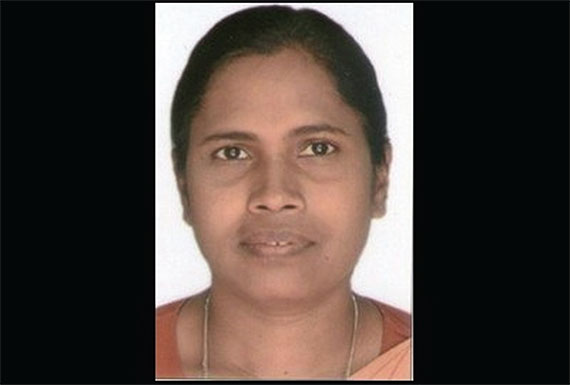
    The Association of Nurses in AIDS Care (ANAC) selected Sr Lourdu Mary Nagothu for developing and implementing the world’s first masters’ curriculum in HIV/AIDS.

    The member of the Bangalore province of the Sisters of Jesus, Mary and Joseph will receive the award at a ceremony on Nove-mber 4, the final night of ANAC’s annual conference at Dallas, Texas in the United States. “We are pleased to congratulate you on being selected as the recipient of ANAC’s Excellence in Global HIV Nursing Award,” says an August 2 letter from the association.

    Sr Nagothu is the director of Nursing at Bel-Air Hospital as well as principal of its College of Nursing at Panch-gani, a famous hill station in the Satara district of Mahara-shtra State in western India.

    The hospital and the college of nursing is an Indian Red Cross Society project managed by Missionary Congregation of the Blessed Sacrament priests and JMJ sisters.

  • Lead with transparency, Alencherry tells priests

    Lead with transparency, Alencherry tells priests

    If Christianity is being criticised and misunderstood today, it is due to shortcomings from the clergy commu-nity, said Cardinal George Alencherry. He was speaking at Priests’ Grand Conference on August 2 at the Sehion Retreat centre in Attapady near Palakkad.

    Siting the example of Jesus Christ, the cardinal urged the congregation to never preach for publicity. He reminded priests to lead the community in a transparent and innocent manner and to not exercise undue authority .

    The Cardinal expressed grief at the fact that Chri-stianity seems to be in a state of decline in some countries, and some of the services of the Church have become merely symbolic.

    More than 15 bishops and around 1360 priests, including world renowned evange-lists are attending the six-day reside-ntial conference at the Sehion Retreat center in Attapady near
    The program is led by Fr Xavier Khan Vattayil , founder-director of Sehion Ministries and world renowned charismatic preacher.

  • Malankara Church gets a new eparchy, bishops

    Malankara Church gets a new eparchy, bishops

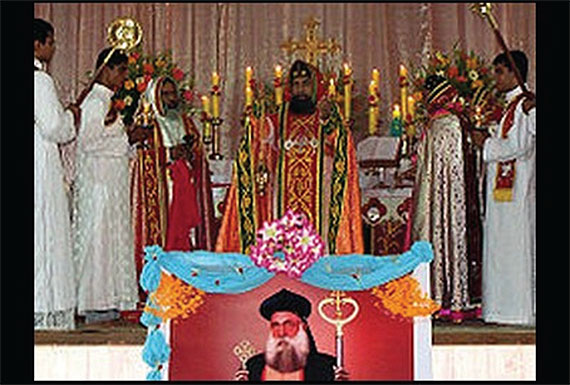
    The Syro-Malankara Catho-lic Church has established a new eparchy based in Parassala in Kerala, and named Bishop Tho-mas Mar Eusebios Naickam-parambil as its bishop.

    The Aug. 5 announcement made in the Vactian and Church’s headquarters in State capital Trivandrum also said the Pope has named three new bishops and an apostolic visitor for the Church. Bp Naickam-parambil was previously in charge of the Eparchy of Our Lady Queen of Peace for Syro-Malankara faithful in the United States and Canada, Catholic News Agency reported.

    Taking his place will be Bishop Stephanos Thottathil, who until now has served as auxiliary bishop of Tiruvalla, in India’s southern State of Kerala, which is predominantly Christian. In addition to the establishment of the Parassala eparchy and the nomination of its bishop, Pope Francis named Fr George Kalayil as Bishop of the Eparchy of Puthur, also in Kerala. He had previously served as a priest in the same eparchy.

    The Pope also named Fr John Kuchuthundil as a Curial Bishop and Apostolic Visitor to the Syro-Malankara Church in Europe and Oceania, although no specific reason for the visitation was given.

  • Bishop stresses prayers, discernment for peaceful Naga solution

    Bishop stresses prayers, discernment for peaceful Naga solution

    The head of the Catholic Church in Nagaland has sought prayers as the northeastern Indian state faces what he says are “moments of darkness and uncertainty” in finding peaceful solution to the Naga problem.

    The peace process has entered a critical juncture after the federal government and Naga national leaders signed a “framework agreement,” says Bishop James Thoppil of Kohima in a letter addressed to Bishop Theodore Mascarenhas, secretary general of the Catholic Bishops’ Conference of India (CBCI).

    Bishop Mascarenhas shared with media the August 8 letter that notes certain confusion over future as people are not sure “where to turn, what to believe, whom to trust, what to expect, how to be involved.”

    Such uncertainty and “moments of darkness” can be overcome only through God’s enlightenment, guidance and inspiration, says Bishop Thoppil. “These can be obtained only by being alert and docile to the Spirit, which come only by prayer,” asserted the 58-year-old prelate who took over the diocese’s administration six years ago.

    He urged the CBCI to join the Naga people, who have set apart August 15 as a special day of prayer.