Category Archives: From The States

Row over Indian nuns applying for state pensions

Ten elderly Catholic nuns applied for a state pension in the Indian State of Kerala leading to accusations that the church is not supporting them adequately. The nuns all applied for a monthly pension of 1,100 rupees (US$16) available to elderly unmarried women in Kerala State. They belong to the Congregation of the Sisters of St Anne of Trichy based in the Trivandrum Latin-rite Arch-diocese and are from St Anne’s convent there. The nuns are all aged over 60 years, said the convent superior, who did not want to reveal her name.

Local media reported that their application revealed a neglect of elderly nuns in convents.

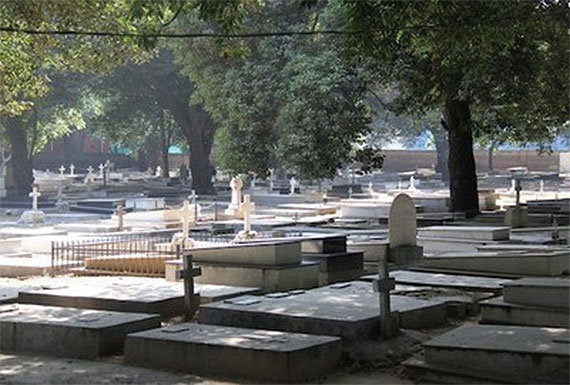
Protest over demolition of houses on Hyderabad church land

Locals along with members of St John’s church in Secu-nderabad held a protest on Mar 28 against demolition of houses on church land by district authorities. The protesters demanded that the victims be relocated in new houses.

As many as 16 people were rendered homeless after the revenue department demolished their homes behind the Civil Court in Secunderabad the previous day.

The affected residents claimed that the land belonged to the Marredpally church, built in 1813, and they had been living there with permission from the Anglican church.

“We are completely helpless. We have small children, where does the government expect us to go?” said Mathilda, a beautician who was ousted from her house. According to her, the authorities did not issue any prior notice before the demolition drive.

Another resident, Assunkossu, said, “I not only have an ailing father-in-law but also two children to take care of. Without a roof over my head, where do I go now?” The homeless had to turn to their neighbours for shelter for their children. The adults spent the night in the open. Most of those evicted deliver newspapers to run their household.

Grave Concerns Over ‘Integrity and Mission of the Indian Church’ Following Kerala Abuse Scandal Cover-Up

Members of the Indian Women Theologians Forum (IWTF), the Conference of Religious India (CRI) Women’s Section, and “other individuals who are deeply concerned about the integrity and mission of the Indian Church” have written to Cardinal Baselios Cleemis, President of the Catholic Bishops’ Conference of India in the context of a recent scandal involving a parish priest in Kerala who sexually abused a girl, leading to her pregnancy. The case is being brought to court.

“The episode highlights an issue that is unique to the ecclesial context, one which women have been struggling to bring to the attention of the bishops for the past four years, namely, that the violation of the fiduciary trust inherent in the priest-parishioner relationship has an additional dimension of damage, because we are taught to believe that the priest is ‘another Christ’,” the letter says.

Christha Purana’ and ‘Goenchem Savasarikikan’ released

Educationist and writer Suresh Amonkar’s two Konkani books—‘Christha Purana’ and ‘Goenchem Savasarikikan’ were released recently by art and culture secretary, Daulat Hawaldar.
The dignitaries present included Goa University vice-chancellor Varun Sahni, Fr Francis de Britto of Shirlai (Vasai) Church, writer and environ-mentalist, director of Art and Culture Department Prasad Lolayekar and Kiran Budkule, former HoD of English department, Goa University at Insti-tute Menezes Braganza, Panaji. The book ‘Christha Purana’ was originally written by Fr Thomas Stephen S J around 400 years ago in Romi Marathi and it has now been translated in Devnagri Konkani by Amonkar.

HC orders FIR in activist Catholic priest’s death case 

The Bombay High Court bench in Panaji on April 11 directed the Crime Branch of Goa Police to file an FIR in connection with the mysterious death of a former Roman Catholic priest Bismarque Dias.

The Crime Branch has also been asked to submit a status report of the investigation every three months to the court. Dias, who was protesting against rampant and reportedly illegal real estate development near his village of St Estevam, 15 km from Panaji, was found dead in a water body near the Mandovi river in November 2015.

Eye donation stressed at Delhi’s traditional Way of Cross 

Archbishop Anil J Couto of Delhi on April 9 led more than 1,200 people in a traditional Way of the Cross that links the old and new sections of the national capital. The ritual commemorates Jesus carrying the cross from the Palace of Pilot to Calvary where He was crucified on Good Friday.

The archdiocese started the Way of the Cross on Palm Sunday in the Year of Faith that the Universal Church observed from October 11, 2012 to November 23, 2013.

“Since then, we have continued it with tremendous impact on the bystanders,” Father Stanley Kozhichira, editor of The Voice of Delhi, the archdiocesan monthly magazine, told Matters India.

This year the Way of the Cross on Palm Sunday began at 3 pm from St Mary’s Church in Old Delhi and ended at Sacred Heart Cathedral in New Delhi, a distance of 9 kilometers. It passed through crowded streets of Chandni Chauwk and Khari Baoli in Old Delhi and Civic Centre, Connaught Place and Gole Dakhkhana, the iconic circular post office, in New Delhi.

Archbishop Moras to flag-off inter-denomination ‘Salvation Run’

The Salvation Run, an all Bengaluru inter-church sporting initiative conceptualized for Christian believers, will be held on April 8 when participants will run five kilometres and walk three. The event will be flagged-off at 6 am by Archbishop Bernard Moras of Bengaluru, along with leaders from the community and well known Sports celebrities at the St Francis Xavier’s Cathedral in Frazer town.

Over 1000 participants for the event including religious heads from all denominations and churches have already registered. The event has been conceptualized with a motive to get together Christian believers from all denominations and empower their lives through the sport of running, disciplining oneself with a healthy lifestyle and a purposeful living.

Sport occupies a legitimate place in the created world and thus helps in expressing emotions, integrity, character and values by taking ownership to understand and respect one another and help in developing the welfare and eco system of the society emphasizing on health and wellness, promoting a sporting culture bringing hope among children, youth and the community at large.

Washing women’s feet can give healing touch: Bishops told

An ecumenical women’s forum says the inclusion of women for the feet washing ritual will help the Indian Church offer a healing touching amid clergy abuse cases.
A symbolic representation of “inclusion liturgy” celebrated in parishes and Mass centres across India “will have a healing effect especially in the light of the recent instances of the scandal of sexual abuse in the Church,” asserts the Indian Christian Women’s Movement (ICWM).

The movement comprising members from all Christian denominations has expressed dismay over the decision of India’s Oriental Catholic Churches to keep women out of on Holy Thursday.
Emulate Pope Francis and make the Church inclusive, the movement urged Catholic bishops of all three Catholic rites in India through a letter dated March 31.

The moment hailed Pope Francis’ initiative to include “all people of God” in the ceremony of the washing of the feet on Holy Thursday as one of the most encouraging signs of inclusiveness and equality in the Church.

The letter was drafted after the Syro-Malabar and Syro-Malankara Churches, the Oriental Catholic rites in India, decided to stick to their tradition of washing the feet of only men or boys on Holy Thursday. The ritual that falls on April 13 this year commemorates Jesus washing the feet of His disciples during the Last Supper.

The women’s movement says including women for the ritual will help the Church present a different face. At least three Catholic priests were arrested in the past year for sexually abusing minors in Kerala, where the two Oriental rites are based.

No women for foot-washing ritual: Syro-Malabar church

The Syro-Malabar Catholic Church will stick to the traditional practice of performing foot-washing on Maundy Thursday on men only with the Vatican exempting it from its decree allowing participation of women in the ritual.
Head of the Syro-Malabar Church Cardinal George Alencherry has issued a circular stating that the Church wished to keep the Eastern tradition and the ritual will be performed only on men.
The ritual is said to have been performed by Jesus as one of His last acts on Earth to His disciples before He was crucified to signify an act of humility.
Last year, Pope Francis had issued a decree changing the way that the Maundy Thursday foot-washing was performed in the Church and said it should no longer be limited to men.
The Vatican decree did not go down well with the Syro-Malabar Catholic Church, which comes under the Eastern rites. It sought clarification from the congregation for the Eastern churches in Vatican when the issue came up for a debate. “It was clarified that the decree is meant for the Latin Church only. Both the Decree and the letter of the Holy Father, which prompted it, mention specifically only ‘Roman Missal’.”
“Thus, this change does not concern the liturgical practices in the Eastern Churches,” the circular said.
The Synod of Bishops in the Syro-Malabar Church has decided that the church will wash the feet of only 12 men following the age-old liturgical tradition as the Vatican has exempted Eastern churches, it said. Last year, the Syro-Malabar Church did not follow the Papal decree that women should be included in the foot-washing ceremony.

VATICAN KEEN TO CANONIZE KANDHAMAL MARTYRS: CARDINAL GRACIAS

The Vatican is keen to consider the canonization of 100 Kandhamal martyrs, says Cardinal Oswald Gracias, archbishop of Mumbai and president of the Federation of Asian Bishops’ Conferences (FABC).

“I have personally spoken to Cardinal Fernando Filoni, Prefect of the Congregation for the Evangelization of Peoples in the Roman Curia regarding the canonization process of 100 Kandhamal antiChristian persecution and the Vatican is showing greater interest in it,” Cardinal Gracias told Matters in India on Jan. 18.

Now the documentation process and collection of evidences of those killed during the Kandhamal violence would be
strengthened with a formal procedure in the Archdiocese of Cuttack-Bhubaneswar, Odisha, eastern India, the prelate said.

The cardinal is one of the nine key members of the team that advises Pope Francis on various church matters. He is also the president of Conference of Catholic Bishops of  India-Latin Rite (CCBI). He said he has already requested the head of the Church in Odisha, Divine Word Archbishop John Barwa of Cuttack Bhubaneswar, to initiate the process.

The outbreak of anti-Christian violence in 2008 followed the killing of a radical Hindu leader in August 2008 by Maoist rebels. Even though Communists claimed responsibility for the assassination, Hindu groups blamed Christians instead. Christians deny the charge.

The Kandhamal violence that lasted for nearly four months in 2008 claimed more than 100 lives and rendered more than 56,000 people homeless.