

At least 32 people, mostly Hindu pilgrims on their way to a famed mountainous temple, were killed and 20 sustained injuries following a massive landslide triggered by four days of torrential rain in India’s northern Jammu-Kashmir region. Government officials warned the death toll may rise as many, mostly Hindu pilgrims to Mata Vaishno Devi temple in Jammu, are feared to be trapped under the debris. The disaster site was located near Ardhkunwari, a midway cave temple situated on the steep climb to the Vaishno Devi shrine, one of the holiest destinations for Hindus in India. The landslide struck near a restaurant, along the mountain path carved into the Trikuta Hills in Jammu. Authorities immediately suspended the pilgrimage and rushed army units, disaster response teams and local officials to the site. Continuous rainfall and the unstable slopes of the mountains, however, have slowed the rescue effort. Millions of pilgrims trek to the Vaishno Devi shrine annually, walking 12 kilometers uphill, and the route is usually thronged with devotees chanting hymns and carrying offerings. The pilgrimage route is now full of heavy machinery and soldiers frantically searching for survivors.
Category Archives: From The States
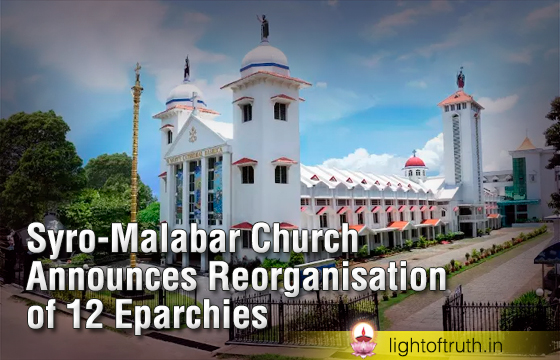
Syro-Malabar Church Announces Reorganisation of 12 Eparchies
His Beatitude Mar Raphael Thattil, the Major Archbishop of the Syro-Malabar Church, announced the reorganisation of the territories of twelve eparchies outside Kerala on 28 August, during a public meeting at the Major Archiepiscopal Curia at Mount St. Thomas, Kakkanad, in the presence of the Synod Fathers.
The Syro-Malabar Church obtained all-India jurisdiction with the erection of the Eparchy of Shamshabad on 9 October 2017. At that time, all territories in India not yet assigned to any Syro-Malabar eparchy were made part of the newly erected Eparchy by Pope Francis. Spread across twenty-three states, four union territories, and two islands, this vast jurisdiction required further administrative decisions in subsequent Synodal sessions to ensure effective pastoral care. As a result, the Synod decided to reorganize the territories of eleven eparchies by redistributing certain areas of the Shamshabad Eparchy. With the approval of the Apostolic See, the Major Archbishop has issued decrees redefining the territories of the following eparchies: Adilabad, Bijnor, Chanda, Gorakhpur, Kalyan, Jagdalpur, Rajkot, Sagar, Satna, Shamshabad, and Ujjain.

Chhattisgarh’s proposed law sparks debate on tribal identity and religious freedom
The Chhattisgarh government’s recent announcement to bar tribals who convert to another religion from accessing Scheduled Tribe (ST) welfare schemes has stirred intense debate across political, legal, and faith-based communities. The proposed legislation, expected to be introduced in the winter session, seeks to replace the existing Chhattisgarh Dharma Swatantrata Adhiniyam, 1968, with a more stringent framework. It mandates a 60-day advance notice to district authorities before any religious conversion and imposes prison terms of up to 10 years for violations. The bill also broadens the definition of inducement, including promises of education, healthcare, or employment.
Chief Minister Vishnu Deo Sai has voiced support for “delisting” converted tribals from the ST category, citing concerns over cultural erosion and dual entitlements. “India is secular, but tribal identity must be preserved,” he said, echoing calls from tribal groups in Bastar and Surguja. Faith leaders and civil society activists have expressed alarm over the implications for religious freedom and minority rights. “This move risks criminalizing personal faith journeys and deepening social divides,” said a spokesperson from the Chhattisgarh Christian Forum.
Former Chief Minister Bhupesh Baghel criticized the proposal as politically motivated. “Existing laws are sufficient. What we need is enforcement, not exclusion,” he said. However, tribal organizations like the Sarva Adivasi Samaj have welcomed the initiative, arguing that conversion often leads to cultural alienation and loss of traditional practices. “This is about safeguarding our heritage,” said Arvind Netam, a senior tribal leader. Legal experts caution that any attempt to redefine ST eligibility based on religion must align with constitutional protections and national jurisprudence. The state government has indicated plans to consult the Centre to ensure broader applicability.
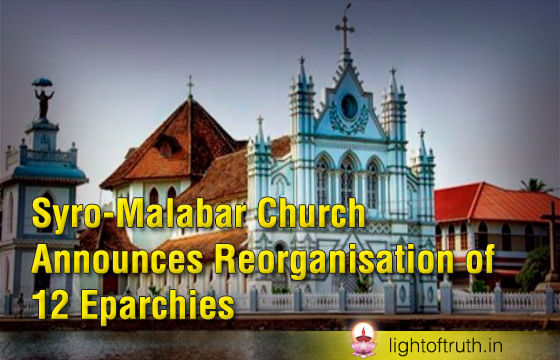
Syro-Malabar Church Announces Reorganisation of 12 Eparchies
His Beatitude Mar Raphael Thattil, the Major Archbishop of the Syro-Malabar Church, announced the reorganisation of the territories of twelve eparchies outside Kerala on 28 August, during a public meeting at the Major Archiepiscopal Curia at Mount St. Thomas, Kakkanad, in the presence of the Synod Fathers.
The Syro-Malabar Church obtained all-India jurisdiction with the erection of the Eparchy of Shamshabad on 9 October 2017. At that time, all territories in India not yet assigned to any Syro-Malabar eparchy were made part of the newly erected Eparchy by Pope Francis. Spread across twenty-three states, four union territories, and two islands, this vast jurisdiction required further administrative decisions in subsequent Synodal sessions to ensure effective pastoral care. As a result, the Synod decided to reorganize the territories of eleven eparchies by redistributing certain areas of the Shamshabad Eparchy. With the approval of the Apostolic See, the Major Archbishop has issued decrees redefining the territories of the following eparchies: Adilabad, Bijnor, Chanda, Gorakhpur, Kalyan, Jagdalpur, Rajkot, Sagar, Satna, Shamshabad, and Ujjain.
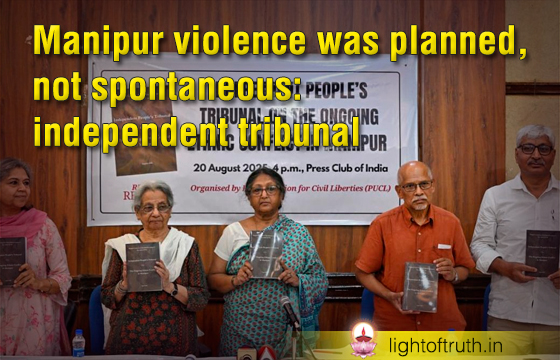
Manipur violence was planned, not spontaneous: independent tribunal
A high-level independent tribunal has concluded that the ethnic violence that engulfed Manipur from May 3, 2023, was a planned attack rather than spontaneous unrest, indicting both state and central governments for enabling the crisis through institutional breakdown. The 694-page report, released by the People’s Union for Civil Liberties (PUCL) at the Press Club of India, represents the most comprehensive independent investigation into the conflict that has displaced over 60,000 people and left them languishing in relief camps for 27 months.
“The violence which erupted on May 3, 2023, was not spontaneous but planned, ethnically targeted, and facilitated by state failures,” concluded the Independent People’s Tribunal chaired by former Supreme Court judge Justice Kurian Joseph. The tribunal, comprising 14 jury members and three experts deliberately chosen from outside Manipur, recorded testimonies from more than 150 survivors who painted what the report called “a picture of systemic impunity and targeted brutality.”
The report has drawn fierce criticism from Manipur’s Rajya Sabha MP Sanajaoba Leishemba, who dismissed it as “biased, one-sided and unprofound” during a public event Sunday. Leishemba, who founded the Arambai Tenggol group mentioned in the report, demanded “a strong probe against this PUCL” and warned the findings could mislead the Meitei community. The tribunal has recommended establishing a permanent High Court bench in hill districts, creating independent Special Investigation Teams monitored by the Supreme Court, and prosecuting those responsible for hate speech and propaganda.
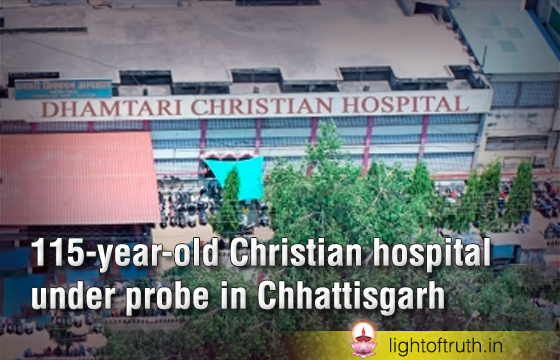
115-year-old Christian hospital under probe in Chhattisgarh
District administration in Chhattis-garh’s Dhamtari has ordered an inve-stigation into a 115-year-old Christian hospital following complaints from Bajrang Dal, Vishva Hindu Parishad (VHP) and other Hindutva organisa-tions. The groups have accused the Bathena Christian Hospital of medical negligence and forced religious con-version. The hospital was established in 1910 by American Mennonite missionaries and is recognised as the oldest hospital in Chhattisgarh.
The probe comes after Hindu organisation members specifically targeted the hospital premises on July 27, vandalising property, damaging equipment and misbehaving with doctors during their protest. Despite the targeted attack, no action has been taken against the perpetrators. Instead, authorities launched an investigation into the hospital itself, effectively legitimising the methods used by the groups. The hospital, known for providing affordable medical care, has faced repeated targeting by Hindu groups in recent months. This was not the first such incident; on June 28, VHP workers had created a ruckus for about three hours, forcibly entering the hospital, putting up flags, smearing the ground with cow dung, and damaging wheelchairs and CCTV cameras. The hospital filed police complaints about both incidents of vandalism, but authorities remained inactive against the perpetrators.
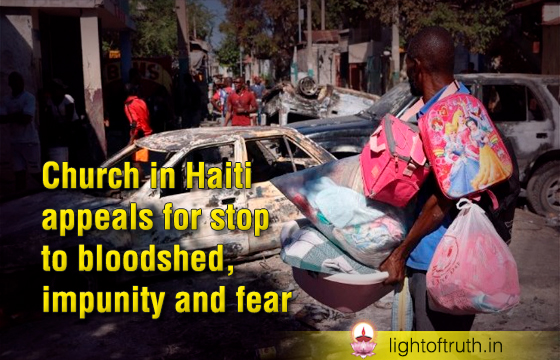
Church in Haiti appeals for stop to bloodshed, impunity and fear
The kidnapping of nine individuals, including an Irish missionary and a child with disabilities, is being described as “a new act of barbarity,” a “shameful act,” and an expression of a “moral collapse” engulfing all of Haitian society. This is the denunciation issued by the Archdiocese of Port-au-Prince in a statement condemning what took place on Sunday, August 3rd, at the Sainte-Hélène Orphanage in Kenscoff, southeast of the capital. The Church is therefore appealing both to the faithful, called to respond with prayer and concrete humanitarian help, and to the institutions to ensure order, security, and justice.
The Archdiocese describes the kidnapping as “an attack on the noblest aspects of society”: selfless care for others, protection of childhood innocence, and faith embodied in works of mercy. For the Church in the capital, this violence affects not only the victims directly involved, but also undermines the very foundations of civil coexistence and human dignity.
The statement expresses “deep sadness” and “great indignation,” emphasizing how such crimes reveal “the failure of the State and of a society that is losing its sensitivity to life.” It is a cry of alarm at the worsening climate of impunity, where “the unimaginable becomes routine,” and “places dedicated to care, education, refuge, and hope are becoming targets.”
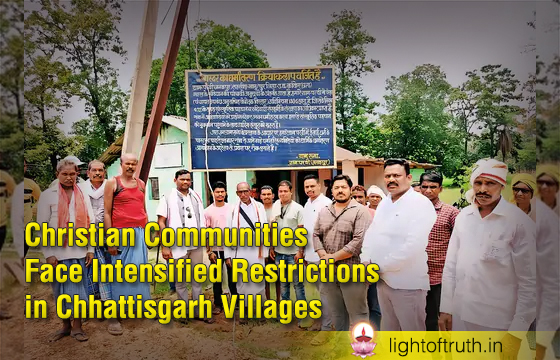
Christian Communities Face Intensified Restrictions in Chhattisgarh Villages
Hindu right-wing groups in Chhattisgarh’s Kanker district have escalated their campaign against Christians, with two tribal villages—Kudal and Junwani—banning the entry of pastors and priests. On August 5, the Sanatan Samaj organized a protest in Bhanupratappur, leading to a complete shutdown of local businesses. Demonstrators submitted an 11-point memorandum demanding government action to curb Christian religious activities, effectively challenging constitutional rights to religious freedom and movement.
Village councils in Kudal and Junwani passed resolutions prohibiting Christian from entering. Warning signs posted at village borders cite the Fifth Schedule and the Panchayats (Extension to Scheduled Areas) Act, 1996, as justification for the ban. Local leader Rajendra Komra accused Christian pastors of persuading tribal villagers to convert, claiming they exploit the simplicity of rural communities. These restrictions, however, violate constitutional guarantees of religious expression and mobility. Media reports indicate that 18 families in these villages had embraced Christianity in recent years, though five later reverted under community pressure.
Allegations suggest conversions were encouraged through access to education, healthcare, and financial aid—yet no evidence was presented to support these claims.
During the protest, speakers made sweeping accusations against Christian missionaries, alleging foreign funding was being used to promote conversions through social services. Municipal council president Nikhil Singh Rathore called religious conversion a “sensitive issue,” urging Hindu unity. Deputy Chief Minister Vijay Sharma announced plans to strengthen the Chhattisgarh Freedom of Religion Act, 1968, following consultations across 52 meetings. This move signals potential legal tightening amid growing hostility toward Christian communities, who are already facing systemic exclusion and threats to their constitutional rights.

Nun-lawyer slams habit-linked attacks, urges church to defend missionaries
Sister Sujata Jena, a lawyer and member of the Congregation of the Sacred Hearts of Jesus and Mary, has denounced recent allegations of religious conversion by nuns in tribal areas as “unfounded and politically motivated.”
In an interview with Matters India, Sr. Jena, who serves in Odisha, issued a pointed challenge to Church authorities: “If you’re going to insist that we wear habits everywhere, then be ready to defend us when we’re attacked on the streets.”
Her remarks follow a disturbing incident in her state Odhisha which occurred at Khordha Road Railway Station on the night of May 31, when Sister Rachana Nayak of the Holy Family Congregation was detained for nearly 18 hours along with four girls and her younger brother. The group was forcibly removed from the Rourkela Rajarani Express by Bajrang Dal activists, who falsely accused them of trafficking and religious conversion. Despite the girls affirming their Catholic faith and voluntary travel, the group was held until human rights lawyers intervened and officials confirmed the allegations were baseless.
Speaking to Matters India, Sr. Jena noted that all three major attacks on nuns in less than three months this year involved Sisters wearing habits. “To those who insist on habits during travel—and to congregations unwilling to reflect or adapt—I say: be prepared to defend these Sisters when they’re attacked,” she asserted.
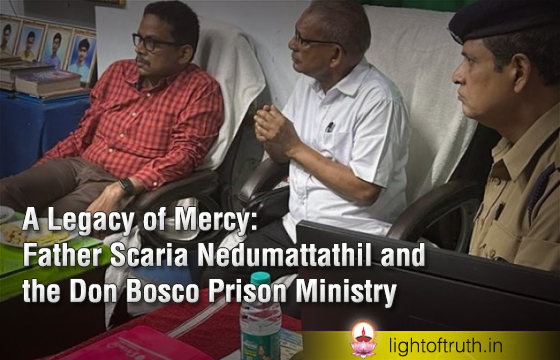
A Legacy of Mercy: Father Scaria Nedumattathil and the Don Bosco Prison Ministry
On August 10, Prison Ministry Day, we honour the remarkable journey of Father Scaria Nedumattathil, a Salesian priest from Kolkata province, who founded the Don Bosco Prison Ministry (DBPM) after a compassionate visit to Berhampore Central Correctional Home in 1995. What began as a simple act of kindness has grown into a nationwide mission of hope and transformation. For three decades, Father Scaria’s vision has remained steadfast: to restore dignity, freedom, and honour to those behind bars. His guiding principles—Reform, Release, Rehabilitate, and Reintegrate—have shaped DBPM’s outreach, impacting over 25,000 inmates and 45,000 family members. The ministry offers legal aid, counseling, vocational training, and cultural programs, helping prisoners rebuild their lives.
On August 10, Prison Ministry Day, we honour the remarkable journey of Father Scaria Nedumattathil, a Salesian priest from Kolkata province, who founded the Don Bosco Prison Ministry (DBPM) after a compassionate visit to Berhampore Central Correctional Home in 1995. What began as a simple act of kindness has grown into a nationwide mission of hope and transformation. For three decades, Father Scaria’s vision has remained steadfast: to restore dignity, freedom, and honour to those behind bars. His guiding principles—Reform, Release, Rehabilitate, and Reintegrate—have shaped DBPM’s outreach, impacting over 25,000 inmates and 45,000 family members. The ministry offers legal aid, counseling, vocational training, and cultural programs, helping prisoners rebuild their lives.
Prison officials praise DBPM’s impact. Superintendent S. Chatterjee notes improved inmate behaviour and reduced conflict, while the Inspector General of Correctional Services calls the ministry a model for reform. Father Scaria’s mission was shaped by collaborators like Father T.L. Francis and supported by the Salesian Provincial Team, including late Fathers C.J. Jacob and Thomas Panakezham. Lay leaders like Anupam Choudhury and partners like DB Tech India and Schneider Project have strengthened the ministry’s reach. Honoured with the Rector Major Paschual Chavez Award and recognized during Azadi ka Amrit Mahotsav, Father Scaria continues his work at the Human Resource Development Centre in Dhobasole, West Midnapore. His legacy lives on through Prison Ministry India, a national movement dedicated to restoring dignity and hope to society’s forgotten.