Category Archives: From The States

DON’T SELL JESUS, BAPTIST LEADER ASKS NAGA POLITICIANS

The leader of Baptists in Nagaland has urged politicians in the Christian-majority state not to betray their faith for money and power. “Do not surrender your Christian principles and above all your faith for the sake of money and development,” says Reverend Aelhou Keyho, general secretary of the Nagaland Baptist Churches Council (NBCC) in a letter addressed to leaders of all political parties, mostly Christians, in the northeastern Indian state. Nagaland is scheduled to elect its legislative assembly on February 27.

Reverend Keyho urged the state’s politicians not to fall into “the hands” of those using development as a ploy to “pierce the heart of Jesus Christ” and “allow God to weep.” This was in an apparent reference to the attempts by the Bharatiya Janata Party (BJP) to forge electoral alliance and capture power in Nagaland.

NO PARTY OFFERED ANY ‘MONEY OR SOPS’: MEGHALAYA CHURCH

The Baptist Church in Meghalaya on February 24 said that no political party has offered it any “money or sops” ahead of February 27 assembly polls to influence its members.

The statement comes a day after Union Tourism Minister K.J. Alphons rubbished the contention of Congress Presi- dent Rahul Gandhi that the Bharatiya Janata Party (BJP) was trying to buy the churches in this poll-bound state.

“No political party has offered any money or sops to the apex Baptist Church organisation with a view to influencing our members.

Separation of Church and State is one of the distinctive (features) of the Baptist Church polity,” said Rev.J.R.Sang- ma, the general secretary of the Garo Baptist Convention, in a statement.

“The Garo Baptist Church is apolitical and neutral in its political dealings.” Sangma said.

RELIGIOUS NATIONALISM IN INDIA SELF-ANNIHILATION: BISHOPS

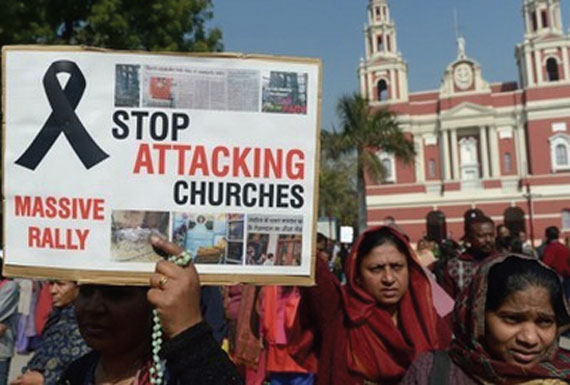
Promotion of nationalism based on religion threatened India with annihilation, the nation’s Catholic bishops warned at the conclusion of a biennial meeting. The alarm was sounded following a series of hard-line Hindu attacks on Christian and other religious minorities.

This included attempts by mobs of young Hindus to conduct avowedly patriotic rituals in the grounds of Catholic colleges, notably involving the personification of ‘Mother India.’

It was dangerous to promote nationalism based on any particular culture or religion, the Feb. 2-9 gathering of some 200 bishops from 174 dioceses warned. “Such misconceived efforts can only lead our nation on the path of self-annihilation,” they said.

The bishops met in the southern city of Bangalore for discussions under the theme ‘United in diversity for a mission of mercy and witness.’

They agreed that enhancing of India’s rich cultural and religious diversity was needed to achieve peace and progress.
Militant Hindu groups have stepped up violence against minorities since the Bharatiya Janata Party (BJP) came to power nationally four years ago, critics say.

In 2017, India witnessed 736 incidents of violence against Christians, according to a report of the ecumenical forum ‘Persecution Relief.’ Some hard-line Hindu groups portray Christians and Muslims as being loyal to foreign powers.

TAMIL NADU TOPS IN HATE CRIMES AGAINST CHRISTIANS

Tamil Nadu State in southern India recorded the highest incidents of anti- Christian violence during 2017, according to a study by the Evangelical Fellowship of India (EFI).

The national alliance of evangelical Christians on February 16 released its annual report on hate crimes against Christians in India for 2017.

The fellowship’s Religious Liberty Commission documented at least 351 cases of violence last year, which it says is not exhaustive. “Most cases go unreported either because the victim is terrified or the police, especially in the northern states, just turn a blind eye and refuse to record the mandatory First Information Report,” the report regrets.

The fellowship has urged the Indian government to uphold the rule of law and to punish those engaged in spreading hatred against religious minorities in the country.

EFI says although violence was “evenly spread across the months of the year,” it peaked during Lent and Christmas that draws larger participation of people. April, the month lent, saw 54 cases and December, the Christmas month, 40.

According to the report, 2017 was among the most trauma- tic periods for Christians in India since the mass targeted violence in the Kandhamal district of Odisha in 2007 and 2008.

“The confidence of the community in the government needs to be restored,” the report asserts.

Among the Indian states, Tamil Nadu recorded 52 cases, followed by Uttar Pradesh in northern India with 50. Chhattisgarh and Madhya Pradesh States in central India recorded 43 and 36 cases.

JESUIT PRIEST (IRUDAYA JOTHI) BAGS ‘SOCIAL ACTIVIST AWARD’

Jesuit Father Irudya Jothi, director of Udayani (awakening), bagged the “Social Activist Award” at a function in Mumbai, western India. “I am extremely happy to receive an award called Modi Making Of Developed India from the Economic Times Now group along with World Corporate Social Responsibility groups at Taj Land Mumbai,” Father Jothi told Matters India after receiving the award on February 17. “The award was in the Individual category as social activist,” he added.

CHURCH ASSETS NOT PUBLIC PROPERTY, ASSERTS CARDINAL ALENCHERRY

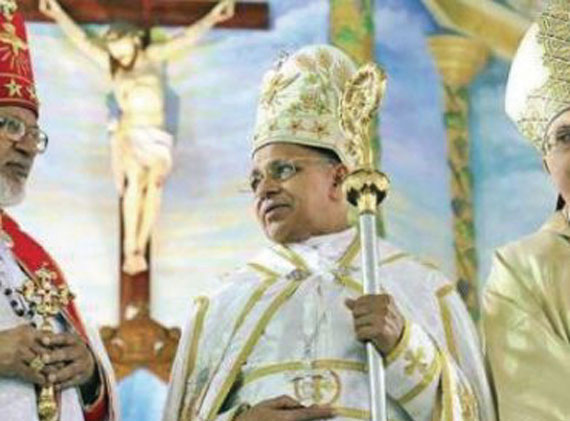
Cardinal George Alencherry, head of the Syro-Malabar Church, says the Church assets cannot be considered as public property. The cardinal made this assertion on February 19 in the Kerala High Court. The court has sought the prelate’s explanation on a petition filed by a layman seeking a police probe into the controversial land deal in Ernakulam-Angamaly arch- diocese. In his statement, Cardinal Alencherry pointed out that the Church is not a trust. A third person cannot intervene even if there is loss in the land deal, the cardinal clarified.

RELIGIOUS MINORITIES UNHAPPY WITH INDIA’S FEDERAL BUDGET

The annual federal budget of India’s pro-Hindu government has disappointed religious minorities as much of it was mere juggling of words, according to civil society groups and opposition  political parties.

Finance Minister Arun Jaitley said the US$719 million allocated to the Ministry of Minority Affairs is a 62% increase, but critics say funding for minority development schemes has come down.

“The fact is that the allocation for minority development schemes has been sharply reduced” to one fourth from US$634 million to US$158 million, said Mamata Banerjee, the chief minister of West Bengal State who leads the Trinamool (grassroots) Congress, an opposition party.

“It is a budget which is neither here nor there. There is nothing new.” However, Minister for Minority Affairs Mukhtar Abbas Naqvi told reporters that the major chunk of the funding will go toward the education of Muslim women and their empowerment.

Rights activist Bezwada Wilson told that the budget carries no hope for marginalized groups such as the Dalits, ethnic minority groups and indigenous people.

“From that perspective, it is a big disappointment for the country’s poor people,” he said.

Wilson said government claims of increasing funding do not mean anything for the people.

“The issue is how the government will implement the schemes that it says are meant for minorities. It is well apprehended that tomorrow it [money] will be used to build a park, and it will be said that minorities can also can jog in it. This is the way things are going in this country,” he said.

INDIA’S NOTED NUN PAINTER DIES

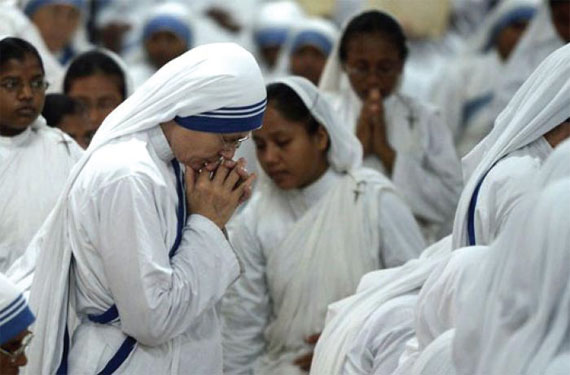
Renowned Christian artist, Salesian Missionaries of Mary Immaculate Sister Claire died on February 11 in Bengaluru. She was 82. The Hindu convert to Catholicism was unwell for the last few days.

The sister, who always wanted to be known as Sr Claire SMMI, had created more than 2,000 Christian paintings using water colour, enamel paints, posture colours and colour pens. She also drew more than 1,000 Christian and Easter greeting cards. The main focus of her paintings was Christian imagery rooted in the Indian soil. She drew inspiration to paint from the day-to-day life of the common people in India, she said in an interview last year.

The artist nun was born in a high caste Hindu family in Tirupati, a Hindu pilgrim centre in the southern Indian State of Andhra Pradesh. Her parents named her Meera, a Hindu mystic poet and a devotee of Lord Krishna. As a young girl, Meera sought spirituality.

COURT RULES AGAINST BAPTIST VILLAGE EXPELLING FOR FAITH DIFFERENCE

The Manipur High Court has struck down a village law of Sharkaphung/Leingangching that prevented inhabitants from any activity construed as ‘detrimental’ to Baptist Christianity.

Delivering a judgment on a plea by four residents expelled in 2009 for adopting Roman Catholicism, the high court ruled that the village authority’s action was illegal and unconstitutional. The village authority did not have power to order banishment/expulsion of any villager, ruled acting Chief Justice N.Kotiswar Singh.

“The villagers of Leingangching have every right to follow the Baptist Christianity and accordingly, also manage their affairs in tune with the Baptist principles and practices. However, it cannot come in the way of the petitioners professing a different religious denomination of Catholic faith as they have also similar Fundamental Right to profess and practise Catholic Christianity as guaranteed under Article 25 of the Constitution of India,” the High Court ruled.