Moscow, April 13, Interfax – A prompt decision needs to be made on the burial of the remains of Soviet leader Vladimir Lenin and on the transfer of the remains of Joseph Stalin to Georgia, Ramzan Kadyrov, the head of Chechnya, said. “If I was asked, I would make this decision today, without waiting until tomorrow. Why torture Lenin’s dead body, clean it constantly, keep this mummy? Who needs it? He is not a holy person.”
Category Archives: From The States
WORLD ASSEMBLY OF RELIGIOUS CONCLUDES IN BENGALURU
The 13th World Fellowship of World Religious Councils (WIFRC) concluded on April 21 with delegates from various religions celebrating the diversity of faiths and religious traditions.
Around 200 people from all over India representing Bahai, Buddhisht, Christian, Hindu, Jain, Muslim, Sikh, faiths conducted a series of symposiums and panel discussions on the theme “Accept, respect and celebrate diversity” during the three-day assembly at Dharmaram Vidya Kshetram in Bengaluru, southern India.
The assembly ended with a resolution to start Harmony Clubs in various schools to give peace education to children and to promote celebration of diversities.
WFIRC president Swami Sadashivananda from Coimbatore, in his presidential address, said that the delegates believed in the element of innate goodness existing in all human beings. “It flourishes when people of all religions, castes and creeds come together to celebrate each other’s faith and festivals,” he added.
WFIRC general secretary, Carmelite Father Roby Kannanchira welcomed the delegates saying the assembly’s focus was to take a personal and collective resolution to celebrate the faith of the other without losing one’s won, uphold one’s religion without hurting others and appreciate the differences without giving one’s uniqueness. Dr K.P.Fabian, who was former ambassador in various countries, narrated from his experience of living with people of diverse religious backgrounds.
INDIAN NUNS HELP INDIGENOUS WOMEN BREAK FREE OF SHACKLES
Sister Lizy Thomas from the Uday (Dawn) Social Development Society is pictured with her co-workers as they attend a media conference organized by indigenous women in Jhabua district of India’s Madhya Pradesh State – hoping to enlist the media’s help in their crusade against alcoholism.
For Shanti Devada, the mud walls of her home in Badi Damini village of Jhabua district in the central Indian State of Madhya Pradesh were more like a prison than a shelter or a place of refuge.
She lived a closeted life, not daring to speak to men outside of her family or step outside her village without a chaperon. In fact, the traditions and customs of the indigenous group to which she belongs are so strict, she even had to cover her face with a sari when speaking to male relatives.
However that all changed about eight years ago when Devada, who is now 50, began to defy these conservatives, even archaic customs and became a self-style “crusader” fighting for the greater empo- werment of women.
ANTI-HUMAN TRAFFICKING LIFE-THREATEN- ING CHALLENGE: FRANCISCAN NUN
Working against human trafficking is a huge challenge, says a member of the Franciscan Missionaries of Mary (FMM) congregation working in Chhattisgarh State, central India. “Working against the human trafficking in India is the most challenging task. It is a road less-travelled. It is a life-threatening apostolate, yet for the love of those women, we have to rescue, save and rehabilitate those victims of slave industry,” Sr Anne Jesus Mary, director of Jeevan Jharna Vikas Sansthan (JJVS, institute
for the development of life stream), Jashpur, told Matters India. On April 22, Sr Anne addressed on human trafficking conditions in the State of Chhattisgarh to a group of 50 priests and nuns who held a day- long CRI (Conference of Reli- gious India) regional meeting in Jashpur.
She spoke about the South Asian network of sisters working against trafficking, AMRAT, that comprises trained social workers, counselors, lawyers and many other professionals committed to confronting modern slavery. AMRAT members in India number about 600. Sr Anne is one of them.
BIHAR WOMEN RISE UP FOR INDIAN DAUGHTERS’ SAFETY
Catholic religious women joined more than 25,000 people of Bihar to undertake 72 hours of fast to demand security for the daughters of India.
Nine women and men fasted continuously during April 18- 20 while others joined them in relay fast, Rupesh, (goes by one name) of the Bihar forum of ‘Right to Food,’ one of the organizers of the program, told Matters India.
The program was held at Gandhi Maidan in Patna, a historic ground near the Ganges River in Patna, the state capital.
Politicians from different parties and the administration also attended the program, which, Rupesh claimed, has helped awaken the people of Bihar in many ways. “Our hope is that the government also wakes up to bring law and order in our nation,” he added.
Rupesh said the Bihar Women’s Network and the members of ‘Right to Food’ forum are organizing protests at various parts of Bihar dema- nding accountability from the government machinery and the people’s elected representative.
Neelu Devi, convener of Bihar Women Network, another NGO, termed as irony that the government on one hand coins slogans such as ‘save daughters, teach daughters,’ while on the other protects the perpetrators of crime against the same daughters.”
MALAYATTOOR FOLLOWS GREEN PROTOCOL, CUTS DOWN PLASTIC
In a classic example of how a joint effort can usher in change, the incessant efforts of a small group of people has ensured that the recently concluded Malayattoor pilgrimage followed the green protocol. This effort, in association with the district Suchithwa Mission and the Forest Department, could see the drastic reduction in plastic waste.
A team of four friends, Shine Varghese, Gopu Kesavan, Biju P and Dr Manoj, a researcher in waste management, who persuaded state authorities to implement the green protocol at the National Games in 2015, are behind this step as well.
In 2015 itself, they met the priests of the Syro Malabar Church, to which the pilgrimage is associated.
“In the initial period, when we first met them in 2015, they were not convinced at all. In 2017, we presented a letter from K Vasuki, the former director of the State Suchitwa Mission, who was instrumental in implementing the green protocol at the National Games. The priests then began supporting the idea. What more, the church spent Rs 30 lakh to make drinking water available on top of the hill, so that plastic bottles can be avoided,” Shine Varghese says.
THOUSANDS MOURN LOSS OF INDIAN MISSIONARY ABP
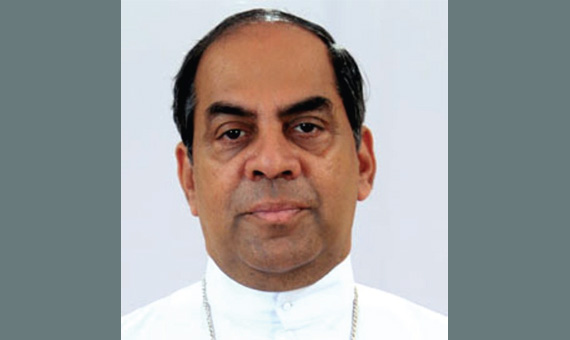
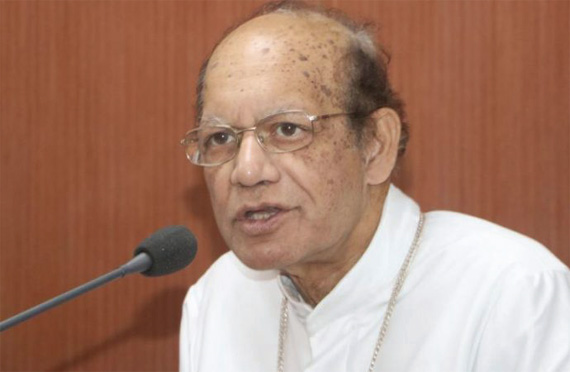
Thousands of people attended the April 23 funeral service of an arch- bishop highly regarded for his work among indigenous communities in central India.
At least 5,000 people attended the funeral for Archbishop Abraham Viruthakulangara of Nagpur at Francis de Sales Cathedral in the city of Nagpur in western Maharashtra State on April 23. Abp Viruthakulangara died of a cardiac arrest while asleep on April 19. He was in New Delhi at the time to attend a meeting of regional bishops. He was 74 years of age.
FOR PROTESTANT LEADER, THE GOVERNMENT THREATENS POOR AND MINORITIES
India’s central government is a threat to the poor and minorities, this according to Mgr Thomas K. Oommen, moderator of the (Protestant) Church of South India.
Msgr Thomas K. Oommen is the moderator of the Church of South India. With 4.5 million members, it is the second largest Christian denomination in the country. For him, “the current government [. . .] follows the Hindutva supremacist ideology,” and the federal administration is “pro-corporate and unkind to the poor.”
The Anglican bishop wrote an open letter addressed to all citizens dated 6 April, anniversary of the Salt March, the non-violent demonstration led by Mahatma Gandhi in 1930 against the British colonial government.
According to Msgr Oommen, living in India in the last four years, since the Hindu nationalist government of the Bharatiya Janata Party led by premier Narendra Modi took office, “has become a nightmare to the poor and the minorities in India.”
He wants to share his fears “As an Indian Citizen and the head of the second largest Church in India, with more than 4.5 million members, most of them being Dalits, Adivasis, poor farmers and fisherfolks.”
“It is true and sad fact that the current government that follows the Hindutva supremacist ideology seems to have consciously discounted what is stated in the Preamble of our Indian Constitution that declares liberty, equality, and fraternity as its ideals and assures social, economic and political justice to the citizens of India.” Hindutva promoters want to turn India into a Hindu state.
According to the bishop, the government has proven “to be pro-corporate and unkind to the poor by waiving [. . .] loans of rich people and corporate [interests] while not waiving [. . .] the loans of the poor farmers, not giving Minimum Support Price (MSP) to them, not addressing the issues of economic distress, joblessness, price rise by forcefully implementing policies like ’demonetisation’ and GST,” the Goods and Service Tax. “In fact, corruption and scams/scandals have become a hallmark of this government.”
HINDU PRAYERS REVERBERATE IN GOA CATHEDRAL ON GOOD FRIDAY
Nine Hindus converged on the 17th century Se Cathedral in Old Goa and recited prayers from ancient Hindu scriptures to pay their respects to Jesus Christ on Good Friday, when Catholics commemorate his death on the cross.
The five women and four men sang verses from an ancient Narayana Upanishad text of Hindu scriptures acknowledging the superiority of God. The text stresses the unity of all gods and teachings as a way of attaining salvation.
The nine are members of the Swadhyay Parivar (self- study family) group that was founded in 1954 by Pandurang Sashtri Athavale (1920–2003), a social revolutionary and philosopher. The group has been associated with peace movements. Inside the cathedral, they quietly paid obeisance to the suffering Christ, away from the attention of the Catholic faithful sitting in the pews.
Following the five-minute recital at the rear of the cathedral, a group member read out a brief message from the pulpit through the sound system a few minutes before the start of the pious ritual.
DON’T EXPLOIT RELIGION, SAY FAITH LEADERS
Leaders of six major reli- gions in India have made a joint call to end branding people as patriotic or unpatriotic based on religion amid increasing attempts to exploit religious sentiments for political purposes ahead of a crucial election.
Leaders of Buddhist, Christian, Hindu, Jain, Muslim and Sikh communities gathered on April 5 in the western state of Goa to express their distress at communal tension in several areas of the country.
“We strongly object to anyone taking control of individual decisions. No one is to be categorized as anti- national or non-patriotic based on his religion, region or community,” said a statement issued at the end of a meeting initiated by Catholic priests in collaboration with the Indian bishops’ conference.
Every Indian has dignity, respect and the right to decide what to eat, who to marry and their faith, the statement said, alluding to pro-Hindu groups imposing restrictions on Christians, Muslims and socially poor Dalit groups.
India is preparing for a national election next year as reports emerge of religion- based tensions in the major states of West Bengal, Bihar and Rajasthan.