Category: From The States

  • Catholic lay body concerns at polarization on eve of elections

    The All India Catholic Union (AICU), Asia’s oldest Laity organization, has expressed deep concern at the communal polarization that is peaking on the eve of the general elections in the country in April and May, AICU president Lancy D’Cunha and spokes-man Dr John Dayal said in a statement here on March 24.

    The AICU leadership said many communities including Muslims and Dalits (formerly untouchables) are victims of targeted violence. Of particular concern is the sudden and sustained violence against the Christian community in the Jaunpur district of Uttar Pradesh, ruled by the Bharatiya Janata Party Chief Minister Yogi Adityanath.

    Christian leaders from Jaunpur gave a graphic account of the situation when they addressed the working committee of the AICU at Navsadhana, the noted Catholic mass media centre in Varanasi.

    Uttar Pradesh had, in the brief period between September and December 2018, seen as many as 109 cases of violence against Christian pastors, small house churches, and women and men faithful at worship in small towns and villages. This was the highest in the country. More than 40 cases had taken place in Jaunpur alone. In the first months of 2019, the region recorded 15 more cases.

    The AICU noted with concern the continuing targeted violence by hard core activists of the Sangh Parivar (right wing Hindu nationalists) in any parts of the country. In most cases, the police was either complicit, or stood by watching. The state impunity had further encouraged mobs taking the law in their own hands.
  • Parties urged to include Dalit reservation in manifesto

    Parties urged to include Dalit reservation in manifesto

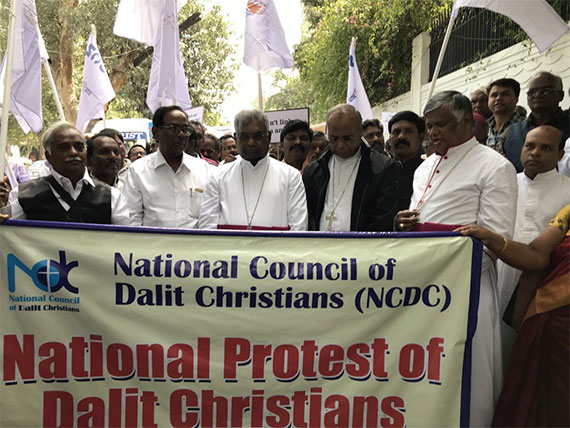
    A national rally in New Delhi on March 12 urged political parties to include in their election manifestos the reservation for Dalit Christians and Muslims.

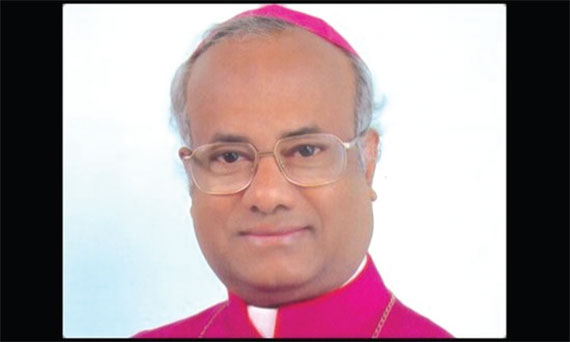
    “We have to see that our rights are rightly accepted. We should not lose our fight,” said Archbishop George Antony-samy of Madras Mylapore while address-ing the rally.

    The National Council of Dalit Christians (NCDC) organized the rally with support from the Catholic Bishops’ Conference of India and the National Council of Churches in India.

    The rally started at 10 am from Janpath ended at Jantar Mantar, both close to the Indian parliament building.

    Besides Archbishop Antonysamy, three bishops from Tamil Nadu joined the rally. Monsignor Susai Sebastian, vicar general of the Archdiocese of Delhi, and Danam, a retired civil service officer and NCDC president led the rally. Dhanam said the main purpose of the rally was to demand from the government Scheduled Caste status for Christians and Muslims of Dalit origin. These groups are as socially, economically, and politically weak as their counterparts in Hindu, Buddhist and Muslim religions. Yet they are discriminated on the basis of religion, Dhanam regretted..

    The rally demanded deletion of paragraph 3 of the Constitution Scheduled Caste Order 1950 that made reservation on the basis of religion.

    Dalit Christians and Muslims have appealed to national and regional political parties to include in their election manifesto a promise to grant the Scheduled Caste Status to them.

  • Idukki bishop asks priests  stay away from the electioneering

    Idukki bishop asks priests stay away from the electioneering

    Bishop John Nellikunnel of Idukki has written to his priests explicitly telling them not to take any position favouring any political party or ideology. The Bishop’s March 9 circular to priests assumes importance as Kerala’s more than 18% Christian population has significant sway in certain key pockets of central Kerala.

    The state is scheduled to go to poll on April 23. The Idukki bishop has cautioned his priests from engaging in election meetings and taking sides in political debates lest their actions harm the community. “We are called to be shepherds with the smell of the sheep. As spiritual leaders of our people, we should not take any position favouring any sides. Our people do not want us to be actively involved in electoral politics in the present context. Our people are intelligent enough to decide in elections,” Bishop Nellikunnel wrote.

    He also reminded the priest their duty before God to become symbols of charity and unity.

    “Therefore I appeal to all of you to abstain from election-related propagandas, statements and meetings. By our words and activities, we should not give any scandals to the faithful and to the public.”

  • Tamil Nadu bishops seek poll date change

    Tamil Nadu bishops seek poll date change

    The Tamil Nadu Bishops’ Council has sought change in the poll date for the southern Indian state. The state’s 39 parliamentary and 18 assembly seats will go to poll on April 18, which coincides with Maundy Thursday, an important observance for Christians across denominations.

    On March 11, Abp. Antony Pappusamy of Madurai and president of the council, requested the Election Commission of India (ECI) to change the polling date. The letter stated that polling date on Maundy Thursday would not be conducive for the Christians as it was in the middle of the Holy Week observance (April 14 to 21).

    The archbishop said that Christians working as government school teachers and officials engaged in election duty will not be able to attend Mass on Maunday Thursday when Christians observe the commemoration of the final meal – Last Supper – that He had with His disciples a day before His crucifixion and death on the cross. The council cited another concern that many schools run by dioceses are located inside the campus of churches and many across the state are polling stations.

  • Toxic bootleg liquor destroys lives in India’s northeast

    Toxic bootleg liquor destroys lives in India’s northeast

    When Sunil Kiro enjoyed some moonshine to unwind after a hard day’s work at a tea estate in India’s northeastern Assam State, he had no idea he would never be able to see again.

    He was among an estimated 500 victims of a tragedy that swept the region on Feb. 20 when 160 people died and others were left per-manently blind, or with other serious health issues such as damaged kidneys or livers, as a result of locally brewed alcohol that proved toxic to their systems.

    “Now I am surrounded by darkness. I have to identify people from their voice,” said the 38-year-old, who lives in Jorhat district under Dibrugarh Diocese. The deaths in Assam occurred few days back after 100 people died from drinking illegal liquor made with house-hold disinfectants and anti-freeze in two other Indian states.

    There are about six million people working the tea gardens of Assam, making up 17% of the state’s 31 million population, according to Catholic leaders in the region.

  • French missionaries remembered on Tibetan National Uprising Day

    French missionaries remembered on Tibetan National Uprising Day

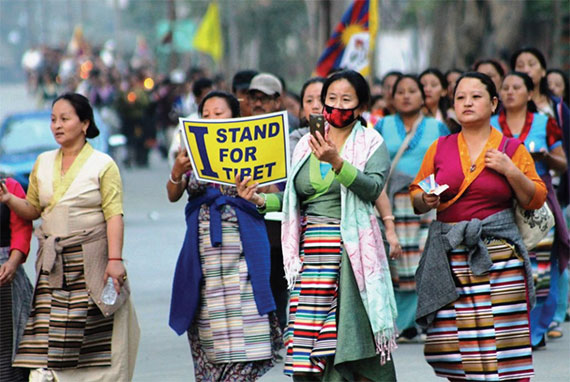
    Two French missionaries were remembered at the 60th Tibetan National Uprising Day commemoration in Miao town in Arunachal Pradesh.

    “Tibet and Christianity in Arunachal Pradesh have an age-old connection,” said Likro Mossang, women president of Miao Diocese in east Arunachal Pradesh.

    “French missionaries Nicolas Krick and Augustine Bourry were killed on their way to Tibet in 1854. They sowed the first seeds of Christianity in Arunachal Pradesh 165 years ago before they were killed on August 2 the same year at the Tibet-Arunachal border region by a Mishmi Tribe chieftain.”

    Tibetans all over the world gather together every year on March 10 to pay homage to the thousands of heroes who laid their lives, resisting brutal suppression of the Chinese Communist occupation forces in 1959.

    “Although Fathers Krick and Bourry could not enter Tibet, my presence with you as a guest on the 60th Anniversary of the Tibetan National Uprising Day is like fulfilling their dream,” Mossang said addressing some 500 Tibetan women from the Miao Tibetan Settlement. With 500 families of more than 3,000 people Miao has the largest Tibetan settlement in north-eastern India.

  • BJP moves to woo minorities with manifesto

    India’s pro-Hindu Bharatiya Janata Party (BJP) has invited suggestions from minorities on how to adapt its election manifesto to making the nation more inclusive. Representatives of religious minorities, including Catholics, presented their suggestions at a March 7 meeting in the capital, New Delhi. The gathering was convened by federal Minority Affairs Mini-ster Mukhtar Abbas Naqvi and Social Justice and Empower-ment Minister Thaawar Chand Gehlot ahead of national elections in May. “We told the ministers that the minorities feel insecure in the country and need to be protected and that constitutional values need to be upheld,” said Father Joseph Manipadam, who led the Catholic representation at the meeting.

  • Pakistani bishop appeals against risk of Pakistan-India war

    Pakistani bishop appeals against risk of Pakistan-India war

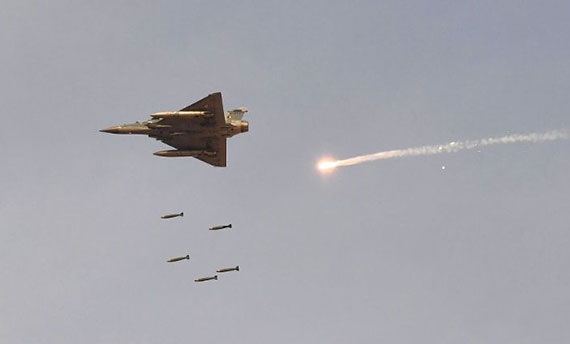
    With the risk of war escalating between India and Pakistan following an Indian airstrike inside Pakistan on Feb 26, a Pakistani bishop has appealed for peace talks. The Indian government claimed it carried out air raids against an Islamist militant training camp of Jaish-e-Mohammed, killing “a very large number” of fighters, raising the risk of a war between the nuclear-armed neighbours.

    Pakistan denied there had been any casualties but condemned the Indian action and vowed it would respond.

    The airstrike near the town of Balakot, some 50 kilometres from the IndoPakistani border was the deepest crossborder raid launched by India since the last of its three wars with Pakistan in 1971. Tensions between the south-Asian neighbours have escalated dramatically since a suicide car bomb attack on Feb. 14 that killed at least 40 Indian paramilitary police in Kashmir.

    The Pakistan-based Islamist Jaish group claimed responsibility for the attack.

    “We condemn the terrorist attacks in Kashmir, but also any armed reaction: we ask God to change the hearts of men to stop any act that may lead to war,” said Pakistani Bishop Samson Shukardin of Hyderabad. “Let us pray for the victims and pray for peace between India and Pakistan,” he told the Vatican’s Fides news agency.

    In December 2001, Jaish fighters, along with members of another Pakistanbased militant group, Lashkar-e-Taiba, launched an attack on India’s parliament, which almost led to a fourth war.

  • Indian nun welcomes Oscar for film on menstruation taboo

    Indian nun welcomes Oscar for film on menstruation taboo

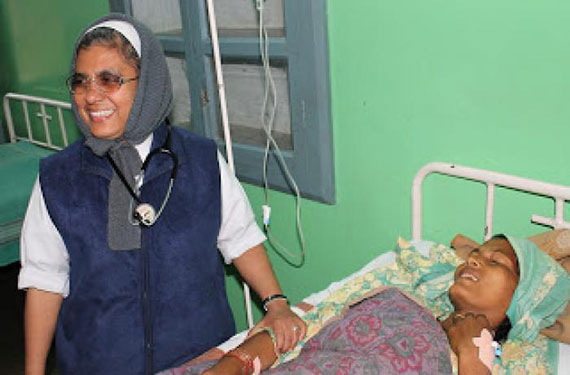
    A Catholic nun, who has promoted women’s hygiene in Indian villages for years, on February 26 expressed happiness that a documentary on menstruation has won an Oscar award. “We are very happy,” Sister Liza Ignatius, gynecologist at Our Lady of Graces Hospital in Sardhana, in the northern Indian State of Uttar Pradesh.

    The documentary film “Period – End of Sentence,” available on Netflix, on February 25 won the Best Documentary category at the 91st Academy Awards.

    The documentary by American-Iranian director Rayka Zehtabchi tells the difficulties of seven Indian women working in a small sanitary towel factory, since their use is considered unacceptable.

    According to Sister Ignatius, the award “is good news for us who serve poor women in rural areas. This will help us to improve our initiatives in favour of women’s hygiene.”

    “My patients are very poor and come from rural villages. We regularly organize programs and courses on women’s issues, such as menstrual hygiene. The hospital is at the service of the poorest of the poor,” Sister Ignatius says.

  • Salesian nuns’ centre in Mumbai bags award

    Salesian nuns’ centre in Mumbai bags award

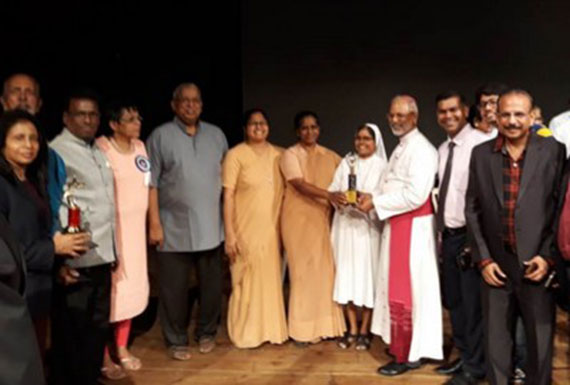
    A Salesian social development agency has been awarded the first Father Edward D’souza Memorial award meant to honour services rendered to the poor and under privileged.

    The Sahayini Social Development Society Vocational Training Centre was given the award on Feb. 23 at a function in Mumbai.

    Sister Rosaline Pereira, in charge of Sahayini received the award from Auxiliary Bishop Savio Dominic Fernandes of Bombay archdiocese.

    Sahayini has trained and placed 500 marginalized youth and contributed social advancement of the poor.

    Adrian Rosario, a member of Bombay catholic Sabha and in-charge of the award selection team said the Sabha instituted the award to perpetuate the memory of Father Edward D’souza, the Sabha’s chaplain who passed away four years ago.

    Sahayini Social Development was created to provide programs and services to the poorer and needy children, adolescent girls, women through the community centres established in various locations of Maharashtra, Gujarat, Karnataka and Goa.