Category: From The States

  • India’s secular nature ‘will die forever’ if BJP wins poll

    India’s secular nature ‘will die forever’ if BJP wins poll

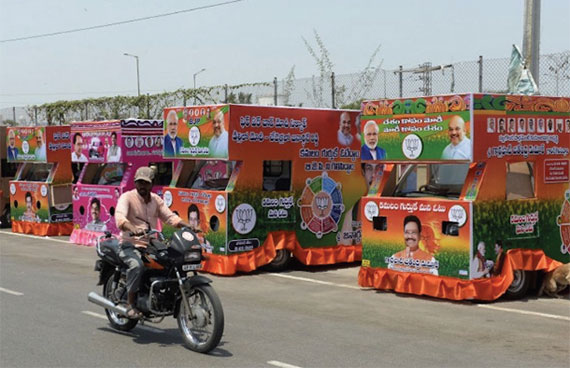
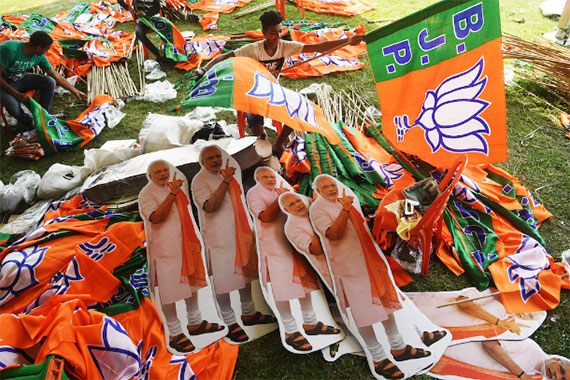
    Fears of India evolving into a Hindu theocratic nation loom large as the pro-Hindu Bharatiya Janata Party (BJP) seeks a second term by placating Hindu sentiment ahead of the April-May parliamentary election.

    Secular and liberal political groups say the poll will be crucial in forging the future identity of the country, which defined itself as a secular-democratic nation after British rule ended in 1947.

    “Hindu pride is the plat-form on which voters are being courted, which is a big concern,” said Alok Verma, a rights activist in the Northern State of Jammu and Kashmir.

    The April 11 to May 19 elections will see 900 million eligible voters select 543 parliamentarians. The party with the most seats will govern the country for the next five years. The BJP, in office since 2014, again finds itself pitted against the Congress party, its nemes is. But critics like Verma worry it is stoking religious intolerance and hate as a ploy to win over more Hindus.

  • Political participation is also Christian mission: Telugu Churches

    Political participation is also Christian mission: Telugu Churches

    The Federation of Telugu Churches has urged Christians in Andhra Pradesh and Telangana to vote for candidates who promote India’s secular and pluralistic character and foster communal harmony and peace.

    Vote for those “who strive for social justice and equality of the marginalized like the Adivasis/Tribals and Dalits, especially for equal status for the Dalit Christians and Dalit Muslims, and who protect and promote the rights of the minorities,” says a pastoral letter from the federation, the apex forum of various Churches in the two Southern Indian States that use Telugu as their common language.

    The April 1 statement says the Church’s political service and political apostolate are the need of the hour.

    “Hence, as bishops/Heads of Churches we encourage our members to opt for political vocation and to take up political service. FTC urges Christians, especially the youth, to take up leadership roles in public and political life,” the pastoral letter says.

  • Former street children mourn For their father

    Former street children mourn For their father

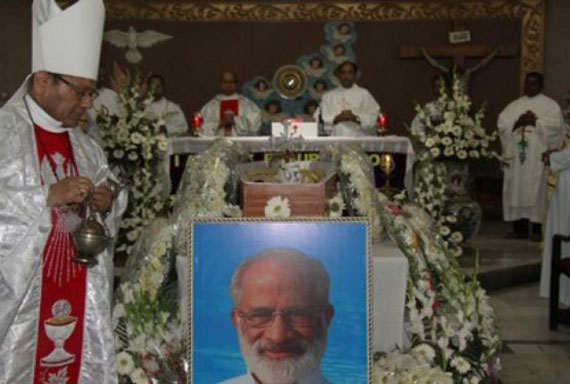
    Bimal Das is no more a street child, nor is he Christian. But the 30-year-old stood inside a New Delhi church and wept as he joined funeral prayers for Salesian Father Antony Thaiparambil.

    Das flew in from Kolkata to attend the funeral of Father Thaiparambil, who rescued him from a street in the eastern Indian city when he was barely six years old.

    “I have not seen God, nor have I seen my parents. But if God is there, I am sure he looks like this man,” he said after the ceremony.

    The priest helped at least 80,000 children like Das to leave the streets and secure a decent life, Salesian officials said.

    Father Thaiparambil began his work with street children in Kolkata, three decades ago in 1985. Das was one of the initial beneficiaries of his mission.

    The 84-year-old priest died in New Delhi of an age-related illness on March 19. About 500 people including former street children attended his funeral officiated by Arch-bishop Anil Couto of Delhi and retired Archbishop Vincent Cocessao of Delhi.

  • Veteran Catholic politician K.M. Mani dead

    Veteran Catholic politician K.M. Mani dead

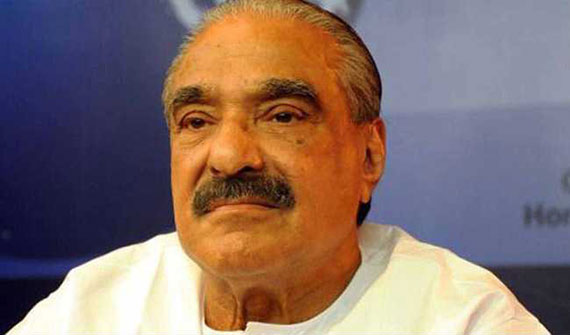
    Veteran Kerala politician and Catholic K.M. Mani, who never lost any Assembly election since 1967, died on April 9 evening at a private hospital here, doctors said. The 86-year-old was undergoing treatment for a lung ailment— Chronic Obstructive Airway Disease.

    He was admitted to Lakeshore Hospital in Ernakulam. The end came on April 9 evening. Mani’s party is the biggest ally of the Congress in the United Democratic Front.

  • Indian Christians look to Supreme Court for religious freedom

    Christian leaders and activists in India are pinning hopes on the Supreme Court to set aside guidelines made by a state court on individuals changing religion. India’s top court on April 5 postponed hearing a petition of Christian leaders that challenged the guidelines of Rajasthan high court, saying the directions violate religious freedom guaranteed in the constitution. The court postponed the hearing after the federal government said it needed more time to offer a response to the petition.

    Christian leaders took up the case after the Rajasthan court on Dec. 14 last year passed general guidelines in restricting conversions. The court was hearing a habeas corpus petition regarding a Hindu girl who married a Muslim, presumably after changing her religion to Islam.

  • Indian voters must ‘avoid terror of pseudo-nationalism’

    Indian voters must ‘avoid terror of pseudo-nationalism’

    Ahead of the general elections in India in April, Church officials have issued pastoral guidelines asking Catholics to reject candidates who espouse certain ideologies and vote for guardians of secularism and democracy.

    Cardinal Oswald Gracias, president of the Catholic Bishops’ Conference of India, joined other regional bishops in issuing a set of guidelines. The latest comes from the Kerala Catholic Bishops’ Council, a regional forum of bishops in southern India, favouring candidates who respect the country’s secular constitution and related institutions.

    It is due to be read out in all Catholic parishes in Kerala on March 31. While it offers guidance and advice, it also stresses that the Church does not favour any specific political party or ideology.

    The circular, printed in the local Malayalam language, entreats parishioners to support candidates who are committed “to the values of secularism and democracy” and who will work for the “integral development and unity of the nation.”

    The message comes as Prime Minister Narendra Modi’s pro-Hindu Bharatiya Janata Party (BJP), is seeking a second term by placating Hindu voters and sensibilities.

    Critics say the BJP leaders plan to amend India’s secular constitution to align it with Hindu nationalism and create a Hindu nation if voted into power, even though the party fielded two former Christian pastors for the state elections in November.

  • Odisha’s Marian shrine celebrates silver Jubilee

    Odisha’s Marian shrine celebrates silver Jubilee

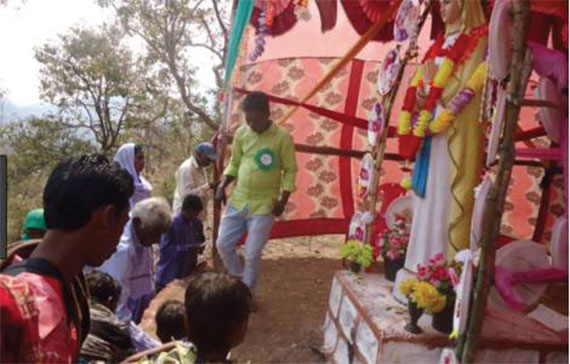
    More than 45,000 people have attended the jubilee of a Marian apparition in Odisha, eastern India.

    “Where there is Mother Mary there is Jesus and where there is Jesus there is satisfaction and fulfilment. Mother Mary is not only Mother of God but Mother of everyone who seeks her constant intercession,” said Arch-bishop John Barwa of Cuttack-Bhubaneswar, the main celebrant for the 25 years of spiritual journey of persecuted Christians.

  • Catholic Church is against forced conversions, says Bishop Mascarenhas

    Catholic Church is against forced conversions, says Bishop Mascarenhas

    The Catholic Church “is against all conversions done by force or deception. At the same time, it defends the right of everyone to profess and spread their faith,” said Mgr Theodore Mascarenhas, secretary general of the Catholic Bishops’ Conference of India (CBCI).

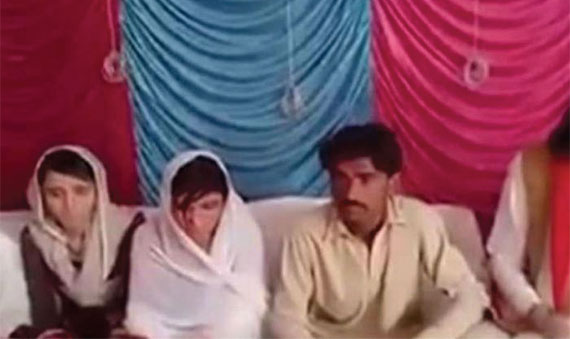
    The prelate’s statement comes in the wake of the alleged abduction of two Hindu girls in the Pakistani province of Sindh, who were later forced to convert to Islam and marry two Muslim men. The issue has revived India-Pakistan tensions.

    For Archbishop Mascarenhasm “freedom of religion is sacred.” The incident involving the two girls has widened the rift between the two neighbours, already defined by religious differences – Hindu India vs Muslim Pakistan – which was the basis of the violent partition of the British Raj in 1947.

  • Agnivesh asks pope to help nuns in rape case

    Agnivesh asks pope to help nuns in rape case

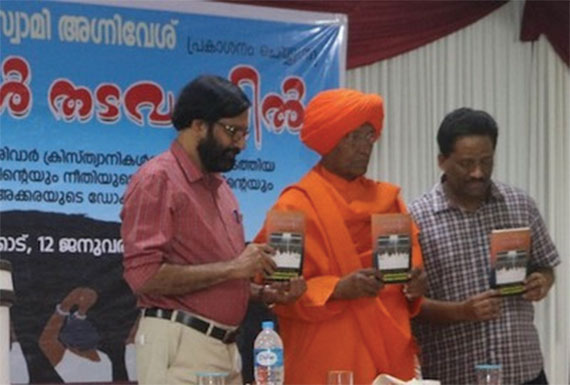
    Prominent Indian social activist Swami Agnivesh has sought the intervention of Pope Francis to help five nuns who are facing a church backlash after holding a public protest demanding action against a bishop accused of raping a nun.

    Agnivesh, who on Jan. 23 released his detailed letter to the Pope, told ucanews.com that the church’s moves against the nuns were “in effect a punishment given to them for speaking the truth.”

    The leader of the Arya Samaj Hindu sect was referring to a case involving Missionaries of Jesus nuns in the southern state of Kerala.

    Four nuns, all Kerala natives, came from different parts of India to support their former superior, who filed a police complaint in June 2018 accusing Bishop Franco Mulakkal of Jalandhar of raping her multiple times between 2014 to 2016. In September, the four joined another nuns from the congregation’s Kerala convent and held a two-week street protest that ended on Sept. 22, a day after the bishop was arrested. They have been staying in Kerala ever since.

    The congregation’s current superior recently asked the four nuns to return to their respective convents. The nuns alleged it was a tactic to break their unity and weaken the case against the 54-year-old bishop. The other nun, Sister Neena Rose, has been asked to report to the congregation’s headquarters in Jalandhar and meet superior general Regina Kandamthottu on Jan. 26.

    Agnivesh, a 79-year-old Hindu scholar known for his stand against India’s governing pro-Hindu Bharatiya Janata Party and Prime Minister Narendra Modi, said the nuns were being harassed for their stand for justice.

    Expressing confidence in Pope Francis’ “robust sense of justice,” he said he wanted the Pope’s intervention to end the harassment.
    His letter said it was “indeed shocking that, while the concerned diocese and its religious orders go easy on the alleged rapist, it is targeting those who stood and struggled for justice for the victim.”
  • National council of churches prays for new government

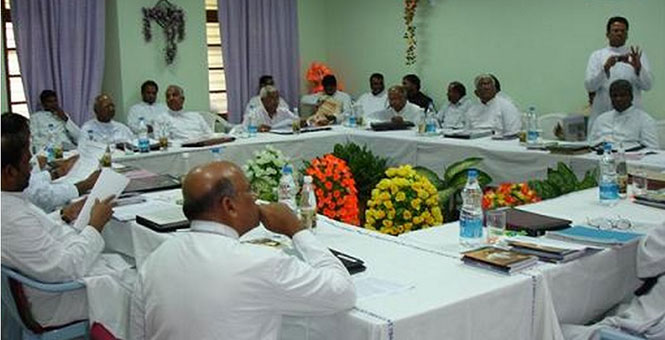
    India’s largest forum for Protestant and Orthodox Churches on March 24 launched weeklong prayers for a new government. “Constitutionally, the Indian state cannot have any appeasement to any religion whether majority or minority. The contemporary tendency to polarize people in the name of religion, for political gain, has to be countered,” says a statement from the Policy Governess and Public Witness of the National Council of Churches in India (NCCI).

    About 80% of the Indian population is Hindu. Muslims make up almost 15% and Christians are 2.3%.

    The Indian Constitution upholds the country as a sovereign socialist secular democratic republic that does not discriminate people on the basis of religion, caste, language, gender or ethnicity. “Indian secularism is not the same as that which we see in the Western countries. Our secularism is neither antagonistic nor religiously charged. It is neutral to all religions but respects all religions and non-religious ideas,” the NCCI statement explains.