Category Archives: From The States

“India known for peaceful co-existence of all religions”: Vice President

Vice President M Venkaiah Naidu on Feb 16 said India is known for unity in diversity, pluralistic ethos and peaceful co-existence of all religions.

This ethos should be nurtured and there should be no discrimination based on gender or differences between people, he said at an event in Kolkata.

Naidu said India wants good relations with all its neighbors and advocates for a climate of peace and progress. He said the world community should take a pledge to fight against any force that promotes terrorism. “We want to have good relations with all our neighbours. Let us take a stand… we must all seek to create an atmosphere where peace can flourish,” Naidu said.

In an apparent reference to Pakistan, Naidu said that “you can change your friends, but cannot change your neighbours.” “Peace is the prerequisite for progress. India has always believed in the concept of “Vasudaiva Kutumbakam” (the world is a family),” he added.

Spiritual leaders hold prayer rally in Delhi

Leaders of various religions came together on February 26 evening to pray for peace in the national capital where sectarian violence has claimed at least 28 lives in four days.

The leaders met at Sacred Heart Cathedral of the Catholic Archdiocese. They appealed to the citizens for peace and non-violence and follow the path of loving each other.

One-minute silence was observed for those who lost their lives in clashes in Delhi’s north-eastern areas, bordering Uttar Pradesh State.

Spiritual leader present included chief Imam Umer Ahmed Ilyasi of Islam, chairman of Gurudwara Bangla Sahib Parmajit Singh Chandok, Jain guru Acharya Lokesh Muni, Swami Parmanand and Delhi Abp Anil J. Couto.

The gathering was informed that Sikh gurudwaras and churches are open round the clock for all the riot victims. “Anybody can come and take shelter in the house of God,” the organizers said.

Gurudwara Bangla Sahib near the cathedral has been sending ‘Langars’ (community kitchen serving free meals), ambulance facilities and relief materials to the riot-affected areas.

“This is the spirit of India and no amount of hatred can alter the spirit,” a participant remarked.

Implement child protection policy without delay, nun asks bishops

A member of the Pontifical Commission for the Protection of Minors and Vulnerable Adults has urged the Catholic bishops in India to make child protection policy mandatory in all institutions under their care.

Sister Arina Gonsalves of the Congregation of the Religious of Jesus and Mary also wants the prelates to set up a system to make all diocesan priests and the religious in the country comply with the policy.

“The importance of human formation for the seminarians and candidates for the religious life in the formation houses must be given to prevent pornography in presbytery, seminary and religious houses,” said the Indian nun who joined the Vatican commission two years ago.

Sister Gonsalves, who addressed the 34th plenary assembly of the Catholic Bishops’ Conference of India (CBCI) on February 17, narrated some case studies that would bear the long-term effects on sexual abuse victims. She listed them as emotional and behavioural problems, abnormal sexual behaviour, psychiatric disorders, suicide tendency, drug abuse and traumatic stress disorder.

Cardinal Gracias re-elected bishops’ conference president

Card. Oswald Gracias, Archbishop of Bombay, on February 17 reelected president of the Catholic Bishops’ Conference of India for a second term. The election took place on the fifth day of the conferences’ 34 plenary assembly at St John’s Medical College in Bengaluru, capital of Karnataka. The 75-year-old cardinal is among the six advisers of Pope Francis. The Pope had extended Cardinal Gracias’ term as the Bombay archbishop last December. The Indian prelate had submitted his resignation in November as he was about to cross 75, the mandatory year of retirement.

India’s ‘Singing Bishop’ dies

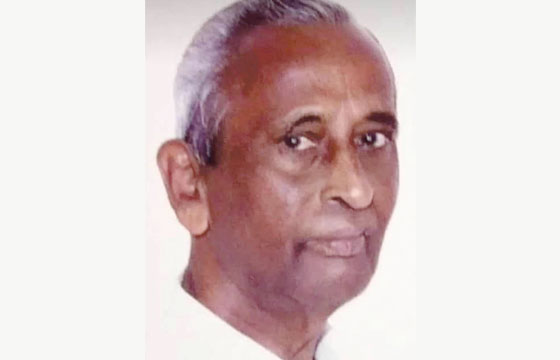
Retired Bishop Valerian D’Souza of Poona, who was known as the singing prelate of India, died on Feb 25. He was 86. The funeral was held at 11:30 am on February 27 at St Patrick’s Cathedral, Pune. Bishop D’Souza was born in Pune on October 3, 1933. He completed his Bachelor of Science course in Physics, Chemistry and Mathematics before commencing his studies for priesthood.

Indian Franciscans respond to the current challenges with their historical roots

The Indian Franciscan Major Superiors, 97 of them from all over India gathered together in the Orlong Hada hill area in Meghalaya in North Eastern India to spend four days (from Feb 17 to 20) of deep personal and collective reflection on their lives and their various apostolates to society, especially to the least and the last. Their spirituality, based on Francis of Assisi’s listening to God’s call, preaching the good news and serving the poorest. The Congregation of the Missionaries of St Francis (CMSF) popularly known as Borivily Brothers, has developed people of North East by their Socio-pastoral and educational apostolates.

Dialogue only way forward for social harmony: Cardinal Gracias

Cardinal Oswald Gracias, president of the Catholic Bishops’ Conference of India, says consistent dialogue with all sections of people is important and necessary to maintain unity and harmony in society.

“Dialogue is the tapestry of different cultures, languages and ethnic diversity and the Church has always stood for service of society,” the cardinal, who is also the Archbishop of Bombay, told a press conference on February 12, the eve of the bishops’ conference’s 34th biennial plenary session.

The February 13-19 meet at the St John’s Academy of Medical Sciences has chosen the theme “Dialogue: The Path to Truth and Charity.”

Cardinal Gracias called for a variety of dialogues, particularly cultural dialogue for the whole country.

As a new decade begins, the Catholic Church in India will move forward to dialogue with all groups in society. This could include civic bodies, government and non-governmental organizations so as to create a peaceful and a harmonious environment for all to live as true citizens of the rich land, India, the cardinal said.

The cardinal, one of the six consultants of Pope Francis, assured all Indian citizens that the Church in India would continue to live the gospel values of peace, joy and harmony and always work for the whole humanity.

“I place into the Lord’s hands this plenary assembly and pray that the fruits of the week-long deliberations may inspire us to continue to build bridges, first by under-standing the other person and then walking along with him/her, irrespective of his caste, creed and colour.”

Asked about the novelty of the theme, the cardinal said the plenary had the same theme 20 years ago and it might come up again. The Church wants to give an impetus and vitality to this theme with more networks to improve the dialogue, he said added that the Church looked forward in dialoguing for anybody having anxiety as the Church is second to none for many services.

Church leaders wary of Kerala’s burial rights bill

Catholic Church leaders in Kerala have expressed apprehension about the state’s communistled government proposing a new law on the burial rights of Christians.

The proposed law has several aspects that need clarification to ensure that it does not end up obscuring the rights and freedom Christians currently enjoy, Cardinal George Alencherry, major archbishop of the Syro-Malabar Catholic Church, said in a statement.

The head of the Eastern-rite Church was responding to the draft Kerala Christian Cemeteries (Right to Burial of Corpse) Bill, 2020, that the government presented in the state legislature on Feb. 6.

The law primarily aims to address the burial rights that Christians of two warring factions — Orthodox and Jacobite. Their century-old quarrel over ownership of land and churches has often resulted in each faction denying access to the other, even to cemeteries to bury their dead.

The dispute has intensified since 2017 when the Supreme Court gave ownership to the Orthodox faction. Since then, the Orthodox faction has denied Jacobites access to cemeteries where the ancestors of both factions are buried.