
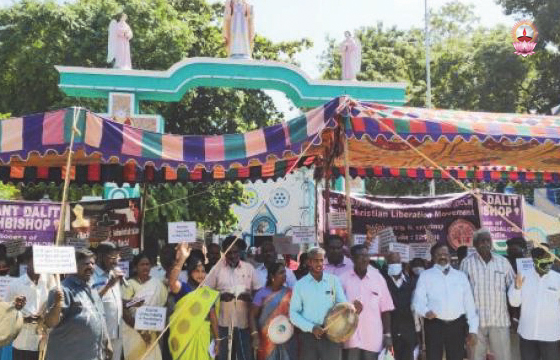
Dalit Catholics in the Archdiocese of Pondicherry-Cuddalore, southern India, and Catholics in the dioceses of Tamil Nadu are calling for the appointment of a Dalit bishop.
Dalit Catholics raised the issue of caste discrimination in a protest on 29 December 2020. Last Saturday they organised another protest in Villupuram, Tamil Nadu, calling for the appointment of a Dalit archbishop to the Archdiocese of Pondicherry-Cuddalore.
Category Archives: From The States
Priest who assaulted bishop suspended
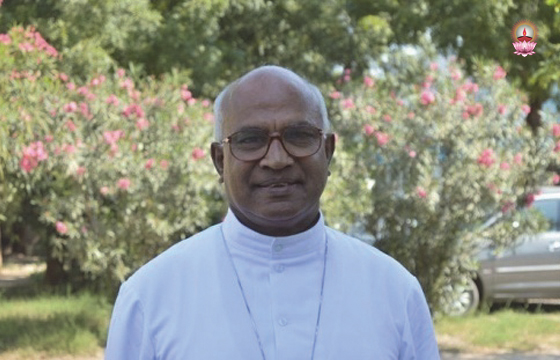
A Catholic priest, who recently assaulted his bishop, has been sus-pended, according to a letter from the victim prelate. In a letter to Father Varghese Palappallil, Bishop Pius Thomas D’Souza of Ajmer cited the second section of Canon law 1370 to inform his priest assaulter that his action has incurred “Latae Sententiae Interdict and suspension” from all priestly duties and priestly ministry.
Father Varghese Peter Palappallil has denied that he has assaulted his superior, Bishop Pius Thomas D’Souza of Ajmer, and accused the vicar general of spreading “baseless and motivated lies” and “imaginary stories.”
Catholics want Holy Week spared as Indian polls approach
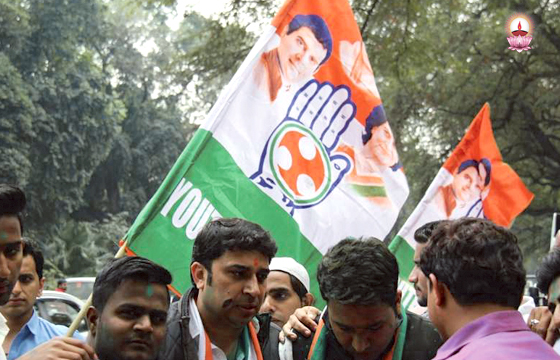
The laity council of the Indian bishops’ conference has urged the country’s election commission not to hold state assembly elections in several states during Holy Week. Elections are due to take place in April in federal-ruled Pondicherry and in Assam, Kerala, Tamil Nadu and West Bengal states.
“Holy Week begins this year on March 28 starting with Palm Sunday and goes through Maundy Thursday, Good Friday, Holy Saturday and Easter Sunday on April 4. The entire week is of great significance to Christians all over the world,” laity council secretary V.C. Sebastian said in a statement on Feb. 16.
Sebastian said he submitted a letter a day earlier to Sunil Arora, the chief election commissioner, calling for Holy Week to be spared when finalizing dates for the state elections and suggested an alternative date after April 15.
Many Christian institutions and facilities are often used as polling stations, especially in rural areas, while Christians themselves are assigned election duties, which would be awkward if polls are held during Holy Week, he added.
“Assembly elections in Karnataka state last year were held at a time which meant observance of Holy Week became difficult,” he claimed. “Such factors should be considered while finalizing the election dates.”
Cardinal George Alencherry, the major archbishop of the Syro-Malabar Church, also wrote to the election commissioner asking him to take Holy Week into consideration when deciding the dates for the state election in Kerala.
“Since Christian officials will have to discharge their election duties, the date should be on a day that will not clash with Holy Week services,” the cardinal said in the letter dated Feb. 16.
A decision taken in this regard would be favorable and show consideration for the religious interests of Christian voters, election officials and politicians, he said.

Catholics ask Indian state to scrap fishing project
Catholic leaders are among those opposing a multimillion-dollar overseas deep-sea fish-ing project in Kerala that they say threatens the livelihood of ordinary fisher people in the southern Indian coastal state.
Following criticism from opposition leaders and rights groups, the communist-led state government withdrew two memoranda of understanding it signed with a US-based firm that allegedly violated the state’s fishing policy and the rights of poor fisher people.
The government on Feb. 24 withdrew from the MoU signed with EMCC International India Pvt Limited, a US-based firm, for a US$680 million project that purportedly aims to revamp and modernize the state’s fishing industry.
The government also canceled another MoU with the same firm for manufacturing 400 deep-sea fishing vessels and developing the state’s fishing harbors at a cost of some $400 million.
“But still we are not sure if it has scrapped the entire project. We want an assurance from the government that it will not move ahead with the project,” said Father Jacob G. Palackappilly, deputy secretary-general of the Kerala Catholic Bishops’ Council.
Many suspect the government quickly pulled out of the MoU a week after criticism began to surface in the media in the state, where elections are due in April-May.
Farmer organizations condemn exam paper with loaded comments
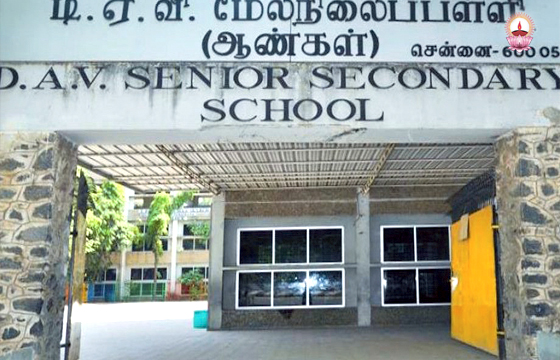
Farmers organizations have condemned a Chennai’s school’s examination paper that disparages their agitation against new farm laws.
An English language examination paper of Dayanand Arya Vidyalaya Boys’ school in Chennai’s Gopalapuram has labeled the protesting farmers as “violent maniacs” acting under “external instigations.”
During a written English exam on February 11, the renowned school asked its tenth graders to write a 100-to-200-word letter to a daily news-paper editor condemning farm law protesters for the Republic Day violence and for failing to “realize that country comes be-fore personal needs and gain.”
Responding to the wording of this question, All India Kisan Sabha (farmers’ council) General Secretary Hannan Mollah wrote to the Principal, “The AIKS strongly feels that the way in which the question is framed is extremely prejudiced against the just, legitimate and peaceful farmers’ struggle that has been going on at Delhi borders for the last three months.”
He told the school that the question’s general tone is loaded against protesting farmers and will poison young minds against the on-going farmers’ struggle across India. The school is managed by the Arya Samaj Educational Trust.
“We demand that this question be either dropped or it be re-drafted in an objective manner,” he said.
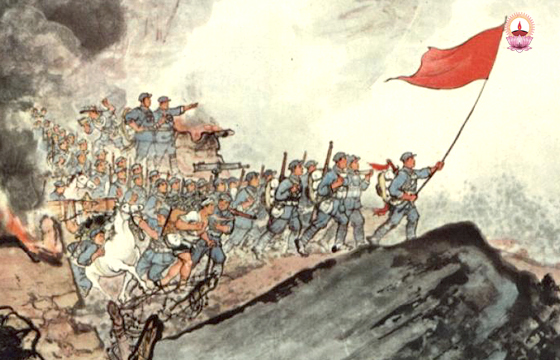
Church in China: 2021 dominated by the 100th anniversary of the Chinese Communist Party
July 23, 1921 is the date of the founding of the Chinese Communist Party. The event occured in Shanghai in what was once the French Concession. One hundred years after that date, in 2021, the Catholics of China will hold a symposium “in memory of the centenary of the founding of the Chinese Communist Party” and will deepen their understanding of “the moving events during the period of the Long March,” which laid the foundations for the definitive victory of Mao Zedong over Chiang Kai Shek.
The information is reported in an article published in the state-Catholic magazine “The Church in China”, by a certain Hui Jing, citing a preparatory meeting between the Chinese bishops and the leaders of the Patriotic Association, held in early February.
The symposium and the study of the Long March are just some of the events that will characterize the program of ecclesial commitments drawn up by the Council of Bishops and the PA for this year.
The article lists “formation courses in collaboration with the Central Institute of Socialism;” preparatory courses for the national gathering of the “Chinese People’s Political Consultative Conference” (held in March); the “construction of the Patriotic Association,” and much more.
Naturally, Catholics are firstly required to deepen “the guidelines of the 19th National Congress of the Chinese Communist Party and the 5th Plenary Session of the 19th National Congress,” as well as assimilate “Xi Jinping’s thinking on socialism with Chinese characteristics for a new era,” strengthening “our awareness of the need to maintain political integrity, to think in general terms, to follow the heart of the leadership and keep in line with the central Party leadership.”
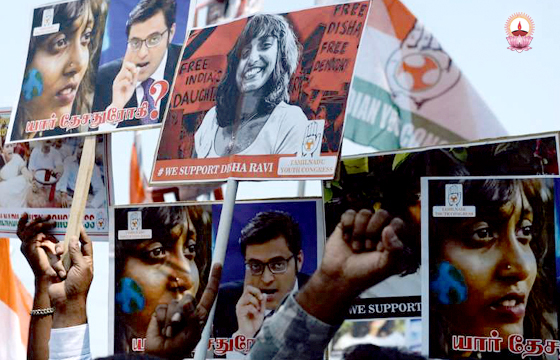
Catholics fearful over ‘hounding’ of young Indian activists
A Catholic forum has joined activists, lawyers and political leaders to condemn the arrest of young climate change and environmental activists in India.
It followed the arrest of environmentalist Disha Ravi for her alleged involvement with the “toolkit” case being investigated by the federal government in relation to the Jan. 26 tractor rally violence in New Delhi.
The 22-year-old was apprehended from her residence in Bengaluru on Feb. 14 by Delhi police.
“The All India Catholic Union is deeply distressed and extremely worried by the hounding of young climate change and environment activists in the country,” AICU national president Lancy D. Cunha said a Feb. 18 statement.
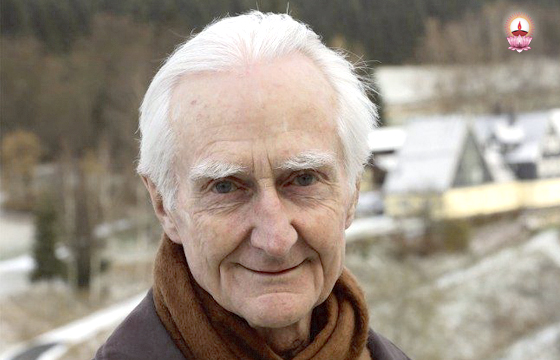
Hungary mourns Jesuit priest who taught Pope Francis
Hungary is mourning Jesuit Fr Ferenc Jálics, who years ago counted Pope Francis among his students. He died in Budapest on Feb 13 at the age of 94. The Hungarian Society of Jesus confirmed that Jesuit Fr Jálics passed away following a turbulent but spiritually fulfilling life. He authored numerous books on Christian spirituality, and became the founder of a school of contemplative prayer.
Born in Budapest in 1927, he saw the impact of conflict when he was sent to Nuremberg at the end of World War Two, after attending military school.
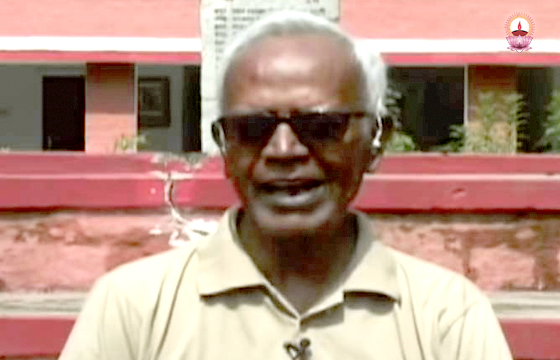
Elderly Indian Jesuit’s bail postponed amid concerns
A special court is set to pronounce its verdict on the bail application of an elderly Indian Jesuit activist five months after his arrest and detention on charges of sedition.
The special court of the National Investigation Agency (NIA), the federal anti-terror agency, has set March 2 to announce the result of the bail application of 84-year-old Father Stan Swamy.
“We are happy that finally the court has fixed a date for announcing its order on the bail application,” said Father A. Santhanam, a Jesuit lawyer based in Tamil Nadu state who is following the case.
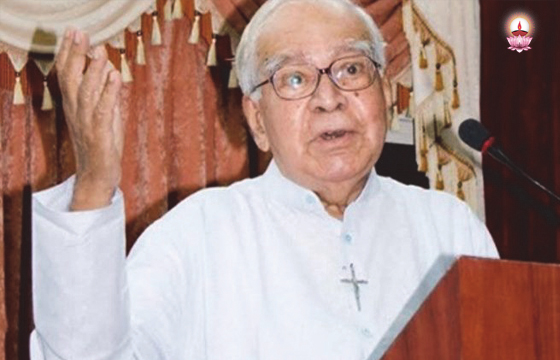
Jesuit crusader of Konkani language dies
Jesuit Father Vasco do Rego, a noted Goan crusader and Konkani stalwart, died. The death occurred at 9:45 pm on February 17 in Pune, Maharashtra. He was 95.
The funeral will be held on February 19 at St Xavier’s Church in Pune. Father Rego was widely acknowledged for contributing to the Church in Goa in the fields of liturgy in Konkani and translation and editing work of the Konkani Bible.