
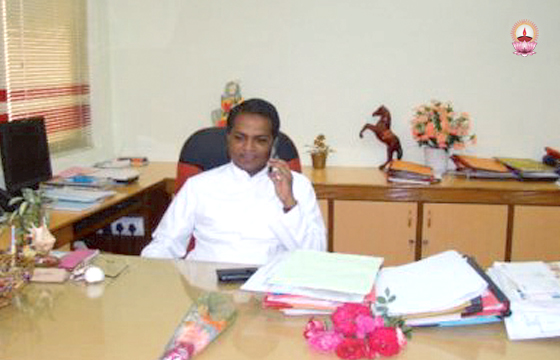
A Catholic priest on April 7 received the Pride of Gujarat Award from the state chief minister Nitin Patel.
Father Jomon Thommana is currently the director of Christ Campus in Rajkot, a major city in the western Indian state of Gujarat. He was the founder director of Christ Educational Foundation and director of Rajkot’s Christ Hospital.
Christ Hospital was the first Covid-19 healthcare institution in Gujarat. It has developed the best medical care facility in Rajkot with the pandemic.
The award recognizes individuals, institutions and companies for their exemplary achievements and contributions towards economic and industrial growth, society, state and nation building.
Category Archives: From The States
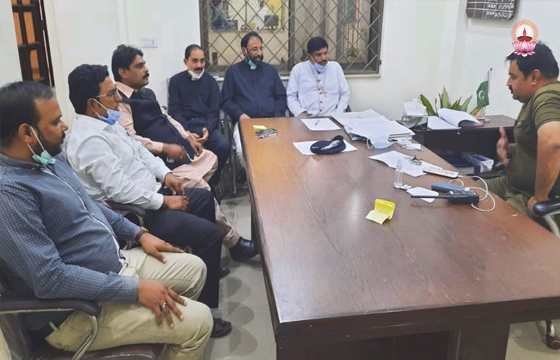
Christian nurses saved from mob after blasphemy claim in Pakistan
Two Christian nurses were rescued by police-men from an enraged mob after being accused of blasphemy by their hospital’s staff in Pakistan.
Staff nurse Mariam Lal and student nurse Newish Urooj were detained by police after a first information report (FIR) under section 295-B of the blasphemy law was made by Dr. Mirza Muhammad Ali of Civil Hospital, Faisalabad.
“Labbayk ya Rasool-Allah [Here I am at your service, O Messenger of Allah]” and “Be-heading the only punishment for blasphemer” chanted protesters gathered on April 9 in the emergency department of Civil Hospital. One of them kicked Lal as she entered a police van.
Muhammad Waqas, a ward boy in the hospital, confessed to wounding Lal in a knife attack.
“That filthy daughter of a bitch, a Christian staff, tore away a sticker inscribed with Durood Shareef [a salutation for Prophet Muhammad] from the cupboard,” he said during a meeting with hospital officials.
“I asked her why she did it. A Muslim can’t keep quiet against blasphemy to his prophet. You are all Muslims. I attacked her with a knife, wounding her arm. I would have killed her. My life is to serve.”
Section 295-B of the blasphemy law stipulates that defiling a copy of the Quran is punishable by life imprisonment.
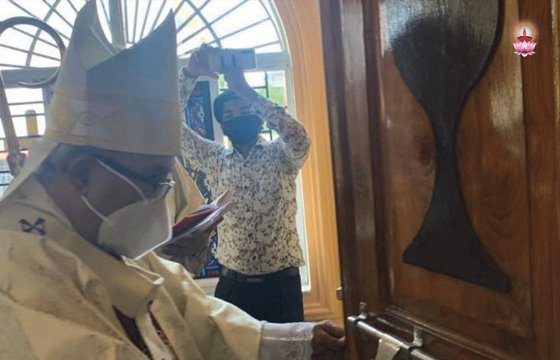
St. Teresa of Kolkata church blessed at Dumdum
A church dedicated to Saint Teresa of Calcutta was blessed on April 10 at the outskirts of north Kolkata amid pandemic restrictions. Archbishop Thomas D’Souza of Calcutta, who blessed the church, expressed his joy at the completion of the church building. Vicar general Father Dominic Gomes and Father Anthony Rodricks, dean of North 24 Parganas were among the priests who concelebrated.
Educationist arrested for blog on ideals of Vedas, Jesus
The Madhya Pradesh police have arrested an educationist for writing a blog on the ideals of secularism with a blend of spirituality in context of Vedas and Lord Jesus.
The FIR was registered at Narayangarh Police station against Rajendra Prasad Dwi-vedi, a resident of Bhopal and a former District Education Officer, in November 2020 on the complaint of Suresh Sahu, a lawyer and Rashtriya Swaya-msevak Sangh (RSS) activist.
Sahu, a resident of Nara-yangarh of Mandsaur district in his police complaint alleged that Dwivedi has outraged his religious feelings by showing Hinduism in poor light in his blog. Police on April 4 booked Dwivedi under several sections of the Indian Penal Code and sent him to judicial custody.
Sahu further alleged that Dwivedi’s blog ‘Pragyapra-vaah.in’ is in resemblance of RSS’s Prajnapravah.com, a portal that propagates the ideas of Hinduism and nationalism, and he has been publishing articles that propagates the ideas of Christianity.

Eight Indian Christians hospitalized after attack by Hindu mob
Eight Christians were injured and hospitalized when Hindu radicals attacked them and accused them of religious conversion in the central Indian state of Chhattisgarh.
More than 150 Christians were praying in a house church on March 8 in Dantewada district when the Hindus attacked them with axes, stones and wooden clubs, injuring several of them, local media reported.
“We heard on March 9 about the attack on Christians who belong to the Pentecostal church in Dantewada district. As of now the police have not filed a first information report because most of the time they try to solve the problem amicably,” Bishop Joseph Kollamparampil of Jagdalpur told.
“This is a communally sensitive area, so the administration tries to handle the situation carefully and avoid creating any communal tension in the area.
“There are several reasons Christians are attacked in that particular area and one of the main reasons is both the parties try to provoke each other. Both Christians and Hindus should respect each other to avoid the unnecessary situation.
“There are more than 70 denomination churches in the area and we have no control over them. We have a united Christian forum, a platform where all Christian leaders come and share their views and discuss things, and I hope this will help us clear our differences.”
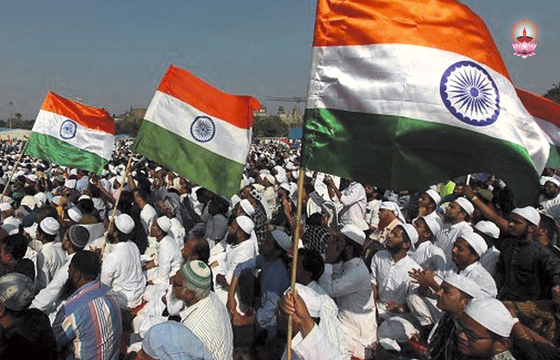
Experts express concern over India’s downgrading in freedom rating
Experts have expressed serious concerns over the downgrading of India’s status from ‘the world’s largest democracy to an ‘electoral autocracy’ and from a “Free Country” to a “Partly Free Country” in the international reports.
They expressed their views in a group discussion held by Jamaat-e-Islami Hind (JIH) here on the topic of the impact of the upcoming Assembly Elections in five states and the responsibilities of voters.
Initiating the discussion on the topic, JIH Secretary Malik Motasim Khan has said that elections are very important to a democracy. “Through the elections, people can show their power by choosing their favourite representatives and rejecting the undesirable ones. The people use their voting power to correct their past mistakes and throw out incompetent representatives and this is a great opportunity for them,” he added. Pointing out that elections are now using as a tool to divide the people rather than unite them, the JIH Secretary talked about the present atmosphere where sedition charges are being slapped on trivial matters, students and journalists are being put behind bars, people are facing troubles only for speaking out on the issues and even questions are being raised on the judiciary.
Malik Motasim said, “the atmosphere created by some political parties in recent years, seems that attempts are being made to disintegrate the people and the country under the guise of elections. This is very harmful to our country. Therefore, recent international reports have branded India as partly free which is heading toward the democratic autocracy.” He was referring to the annual report of Sweden’s V-Dem Institute, which has downgraded India from ‘the world’s largest democracy to an ‘electoral autocracy’ while just days before the US watchdog Freedom House’s report graded it from a “Free Country” to a “Partly Free Country”.
Expressing serious concerns over the international reports related to India, senior journalist Prashant Tandon said, “we can neither deny them nor call them biased reports as the gravity of the situation of the country is obvious. Democracy is an institution that runs based on public opinion. Raising issues before voting is very important in forming a government. Instead of voting on the issues like education, health, cleanliness, employment, human rights, development and industry, we vote in the name of religion and caste. Now the politics of polarization has emerged based on hatred for some years. This is not good for a democratic country. In such a situation, this is the prime responsibility of the citizens to be alert while voting, keeping in view the interest and development of the country and elect only honest representatives.”
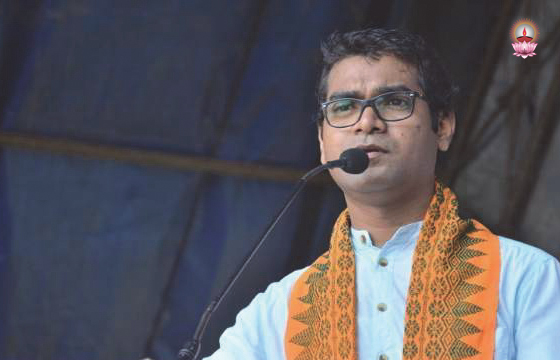
UN selects Indian Catholic to represent Asia’s indigenous languages
United Nations has nominated a Catholic activist and educationist from the eastern Indian Jharkhand state as the indigenous languages’ representative for Asia.
Anabel Benjamin Bara was selected on March 19 from Asia by UNESCO for the Global Task Force of International Decades of Indigenous Languages (IDIL) 2022-2032.
The appointment letter signed by Xing Qu, UN Deputy Director-General for Communication and Information, said “members were nominated by the respective electoral groups of UNESCO’s member states, indigenous peoples and indigenous peoples’ organizations from each socio-cultural region.”
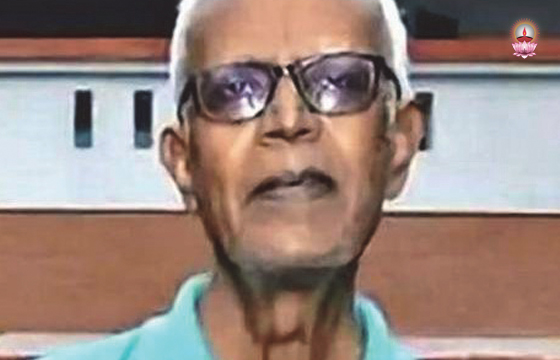
Denial of bail to Stan Swamy evokes criticism, anguish
The denial of bail to Father Stan Swamy continues to evoke condem-nation even as the court claimed it has found evidence to prove the 83-year-old Jesuit tribal activist had conspired to overthrow the government.
Special judge D E Kothalikar of the National Investigation Agency (NIA) court rejected Father Swamy’s bail plea on March 22 but his order was made available a day later.
The order says the bail was refused based on the material on record that indicated Father Swamy was a member of the banned Maoist organization that had hatched a “serious conspiracy” to create unrest in the country and to overthrow the government.
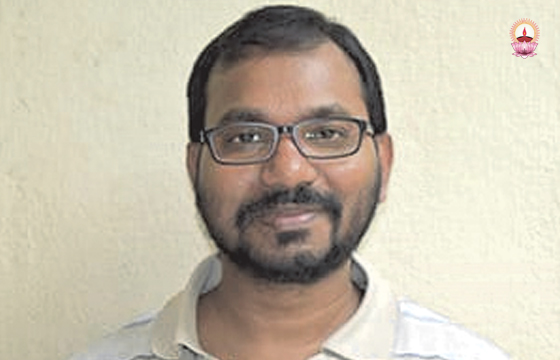
Priest dies after fall from seminary terrace
A Catholic priest died March 26 after falling from the terrace of a major seminary near Chennai where he was teaching for the past several years. According to a message from Monsignor L John Robert, administrator of Vellore diocese, Father Velanganni Vinothraj died because of a fall from the terrace of Sacred Heart Seminary at Poonamallee. He was 46.
India’s Christian-dominated states feel the dead hand of corruption
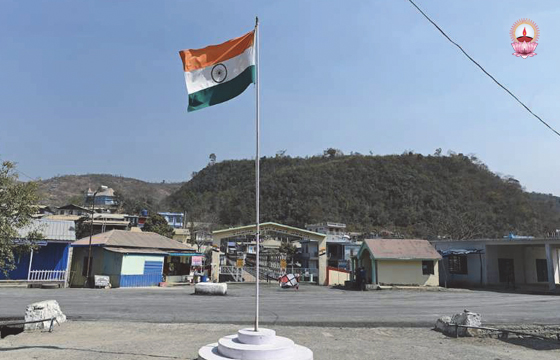
Life in India’s Christian-majority northeastern states is often full of individual idio-syncrasies — and the focus keeps shifting between the pro-tagonists, particularly when politics seeks shelter under the shadow of church communities. Former Nagaland chief minister Vamuzo (he uses only one name) has said the Church in his Christian-majority state “is often like the air we breathe. It is everywhere but mostly nowhere.”
Such statements come into focus for Mizoram, another Christian-majority state, where a prominent Congress party leader recently apologized for opening alcohol outlets when his party ran the government between 2008 and 2018.
“We opened shops and issued alcohol permits against the interests of churches and NGOs, which was the main reason for our defeat” in the state polls in 2018, Congress leader Lal Thanzara has said. It shows the political clout the Christian community wields in Mizoram, where they form 87% of the state’s 1.1 million people. The majority of them are Presbyterians and Baptists.