Category Archives: Asian

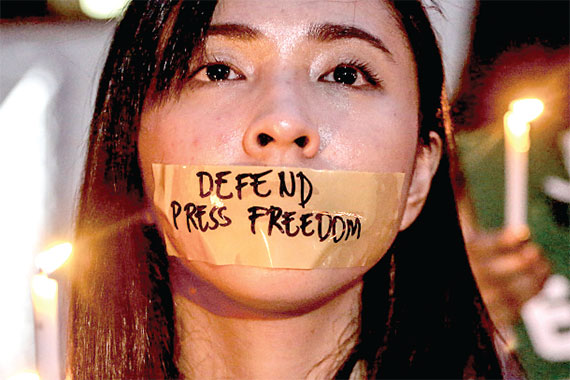
Beijing, raid on Christian churches: ‘Our rights are being violated, enough!’

A group of Protestant congregations writes a courageous appeal to the government: “You consider us a threat, an error to be corrected. But wrong, we want to contribute to the well-being of the nation like everyone else.” The capital orders a catalog of unregistered places of worship. Among the churches affected, one is Catholic.

Chinese Christians “are not a force in disagreement, an error to be managed or rectified, the chosen objective of veiled or direct attacks. Thinking this way is wrong, it’s a fundamental mistake. The Christian churches, even the domestic ones, are animated by the desire for dialogue to achieve the best possible relations with the government of this new era, to achieve socialism with Chinese characteristics “of which President Xi Jinping speaks. This is the courageous appeal launched by dozens of domestic Protestant churches, struck by yet another round of restrictions on their religious freedom.

The text, signed by 34 unofficial churches, underlines how recent revisions to religious regulations adopted by the government have broken the rights of the faithful: “The normal life of a believer has been violated and hindered, and this has caused enormous emotional damage. The sense of patriotism that animates Christians has also been affected, opening the possibility to social conflicts. The situation seems to worsen day by day.”

To overcome this impasse, Christian leaders write, “the authorities must respect the religious freedom protected by the Constitution of China. That text contains many rights that in reality the single-party state does not respect. The churches have a real desire for dialogue.”

The Chinese State Council approved in 2016 a new package of regulations on religious activity termed as “draconian.” The declared aim is to eliminate the unregistered Christian cult, that of the so-called “domestic churches.” The new rules came into force on 7 October 2016, effectively prohibiting religious preaching or Christian events online or in schools.

Cardinal Tagle laments deaths of innocent people

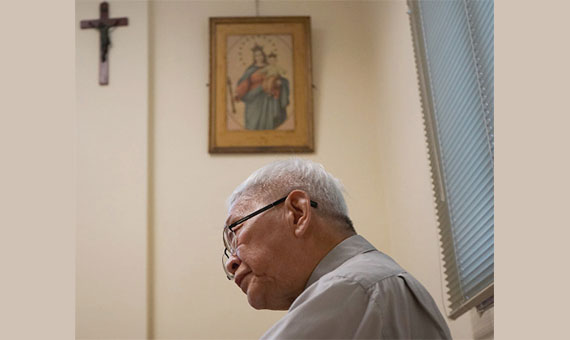
A teary-eyed Cardinal Luis Antonio Tagle of Manila has lamented the deaths of innocent people killed since Philippine President Rodrigo Duterte’s assumed office during the last day of a summit on new evangelization on July 22.

Addressing a crowd of priests, nuns, religious and lay people, the prelate asked if people were happy with all the deaths around them.

“Do you rejoice at the deaths of the innocent?” Cardinal Tagle asked in the wake of a statement released by the country’s Catholic bishops condemning a wave of killings across the country.
In his prayer, the Manila archbishop spoke to God about many innocent people dying.

“We want to believe that you do not rejoice in their death. But there are so many of them,” said the prelate. Police have reported more than 23,000 killings over the past two years, which human rights groups said were likely linked to the government’s war against narcotics.

The cardinal included in his prayer a 36-year-old migrant worker who was killed in Slovakia for defending two women from being attacked.

“Where do we see your face? Where do we hear your word? Some people are asking, where are you?” asked the cardinal.

The cardinal told about 8,000 participants at the Fifth Philippine Conference on New Evangelization to become “bread” for others amid the hunger in the world.

Philippine President apologizes for calling God ‘stupid’

Philippine President Rodrigo Duterte apologized to the “all forgiving God” after being heavily criticized for calling God “stupid” in a controversial televised speech last month. Duterte, 73, made the apology during a two-hour meeting with religious leaders at the Malago Clubhouse, but clarified that he was not saying sorry to any church or religious leader.

“I only apologize to God and nobody else,” he told Jesus Is Lord founder Eduardo Villanueva in a video posted on Facebook. “If I wronged God, then he would be happy to listen to my apology. Why? Because my God is all-forgiving. He does not remember past hurts. Why? Because God created me to be good, not bad.”

The Filipino leader reminded the religious leaders about the separation of church and state, saying they should not use God’s name to attack him or his administration.

“Remember that there is a division between church and state. You can criticize anything at all— from the garbage collector to generals and even to vice president and senator,” Duterte said. “But never, never use the name of God as a front to attack government because that is not the proper way to do it. There is a separation of state and church. Do not use God to attack me. That is not proper and I’m sure that is not what God wants.”

Duterte met with the religious leaders to improve his strained relations with Asia’s largest Catholic Church after Philippine Catholic bishops called for fasting and prayer.

Philippine clergy, advocates say human rights dying under Duterte

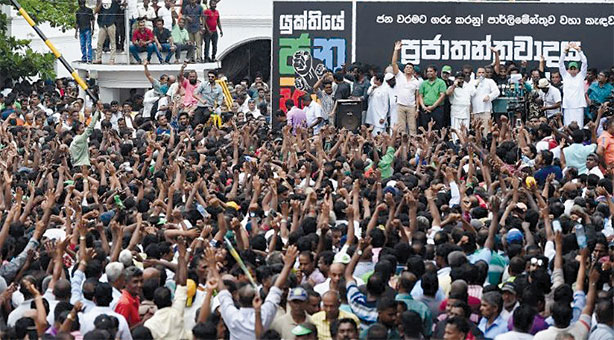
Philippine President Rodrigo Duterte warned the public during his third State of the Nation address July 23 that his two-year war on drugs would become even “more chilling” in the coming days. Earlier that day, a group of human rights advocates attended Mass before taking to the streets of Manila armed with banners and placards calling for an end to extrajudicial killings, rallying for “democracy, justice, and freedom,” and demanding Duterte step down from office.

During the Mass, the bishop who delivered the homily reminded parishioners that some 23,000 people have been slain as part of Duterte’s brutal campaign against narcotics pushers and users, ucanews.com reported.

Some didn’t need reminding; they already had lost family members to what critics see as a campaign of state-sanctioned murder, with many suspects gunned down before being able to defend themselves in court.

Nanet Castillo is a case in point. Her son was killed during the first wave of the war on drugs in 2016. “We continue to seek and wait for justice to be served,” she said. Father Gilbert Villena, a member of Rise Up, a group formed by the relatives of those killed by security forces, said it was time to demand that Duterte fulfill his promises of “change for the greater good.”

Human rights groups have described the past two years as the “worst years for human rights” in the Philippines since the declaration of martial law in September 1972.

Armed man killed in shootout outside residence of Filipino archbishop

An armed man was killed in a shootout with police outside the residence of the Archbishop of Cebu in the Philippines on July 10 morning.

The man, who arrived on a motorbike and was wearing a facemask and helmet, entered the residence and said he was looking for Archbishop Jose Palma, who was in Manila at the time.

“The man appeared to be disturbed because he wasn’t clear on what he was saying. One of the secretaries of the archbishop noticed what seemed to be a firearm tucked in the man’s waist, prompting him to call the police,” Police Chief Superintendent Debold Sinas said, according to the Inquirer, a Philippines newspaper.

“When we arrived in the area, the man was on board his motorcycle. Our operatives tried to approach him, but he said ‘Don’t touch me’ before he fired at us,” a police officer on the scene told the Inquirer.

Palma has been an outspoken critic of the growing violence surrounding the administration of President Rodrigo Duterte, who has led a war against drugs that has been marked by extra-judicial killings of drug dealers and others.

The archbishop was in Manila for the Plenary Assembly of the Catholic Bishops’ Conference of the Philippines, which issued a strong statement aimed at the regime.

The Church has been a constant target of Duterte, who has warned against the bishops’ “creeping influence” in the country. Since December, three priests have been gunned down in the country.
Father Joseph Tan, the archdiocese’s press officer, issued a statement saying that there was “no known prior threat” to Palma.

China orders register of poor Catholics in Henan

A priest in China’s Henan province claims to have received a notice from municipal authori-ties requesting churches in the province gather statistics on the backgrounds of their congrega-tions, especially those from poor families.

But he is refusing to cooperate out of fear that anyone named in the register could be barred from receiving state subsidies as punishment for practicing their faith.

“This is totally unreasonable. I suspect their hidden agenda may be to cancel people’s low-income subsidies,” said the man, who declined to give his name for fear of reprisals from the state.

China has forged an uneasy truce with the Vatican in recent years despite the Communist country being officially atheist. Pew Institute figures suggest it now has a population of 10 million Catholics with 10% concentrated in Henan, consider-ed the cradle of Chinese civilization.

“Now we just have to wait for the inspection team to come and see what they say before we determine our next move,” added the clergyman, an open-church priest who serves in Luoyang Diocese of Sanmenxia City.

Lists of clergy must also be hung up at parishes so that officials can confirm they have the necessary permits to preach from the pulpit, the notice said.

Duterte promises to resign if anyone can prove God exists with a selfie

‘If any one can go to heaven, talk to God, and take a selfie – I will resign.’

President of the Philippines Rodrigo Duterte has offered to resign if anyone can take a selfie with God to prove he exists. His comments came just days after he called God “stupid.”

The latest outburst shows Duterte, aged 73, increasingly at odds with the Church in which he was raised and to which most Filipinos belong.

In the last few days, Duterte has also said he does not like the “creeping influence” of the Catholic Church. In addition, his presidential spokesman has accused the Church of working with Communist rebels to overthrow the government in the Philippines. The spokesman said the Church “sometimes runs counter to what the government believes to be good for the people, at least in this temporal life.”

In his latest speech on June 30 at the inauguration of the Malayan colleges in Mindanao, Duterte invited everyone “to become agents of hope and catalysts of progress.”

After describing his own progress through the education system and then his career in law and politics, he said he believed in God, but did not believe in a God who intervenes in the world. “Otherwise there would be no widespread injustice: hunger, killings, and all.” The president said in his latest address: “Every Filipino is entitled to criticise me as a matter of right. A general, a school dean, the academe, the students.” Catholic bishops in the Philippines, concerned about an increase in violence and police reaction to crime, announced a day of prayer and penance on July 16 and three days of fasting, prayer and penance on July 17-19. The bishops said they wanted to “invoke God’s mercy and justice on those who have blasphemed God’s Holy Name, those who slander and bear false witness, and those who commit murder or justify murder as a means for fighting criminality in our country.”

Pope: in Bari Christians united in prayer for peace in the Middle East

Pope Francis’ ecumenical meeting next Saturday, July 7th, in Bari with the heads of the Churches and of the Christian communities of the Middle East will be “a strong gesture in its essentiality” to strengthen the path of unity among Christians and to reiterate that there cannot be a Middle East without Christians.

The meeting, which will have the title “Peace be with you! Christians together for the Middle East,” was presented today in the Vatican by Card. Leonardo Sandri, prefect of the Congregation for the Oriental Churches and Card. Kurt Koch, resident of the Pontifical Council for the Promotion of Christian Unity.

The Middle East, said Card. Koch, is the land of origin of Christianity and “it is therefore not by chance that the event that marked the beginning of the “dialogue of charity” between Catholics and Orthodox took place in Jerusalem” with the embrace of Paul VI and Patriarch Athenagoras of January 6, 1964.

“The Middle East, the land of its origins, is also one of the regions of the world where the situation of Christians is most pre-carious. Because of wars and persecution, many families abandon their historical homeland in search of security and a better future. The percentage of Christians in the Middle East has fallen dramatically over the course of a century: while they represented 20% of the population of the Middle East before the First World War, now they are only 4%. The martyred region, the Middle East is also a place where ecumenical relations are stronger and more promising, especially between Orthodox and Catholics.”

Young Catholics from 100 countries gather in Manila

Young Catholics from around 100 countries are gathered in Manila for the July 6 start of an international youth festival organized by the global Focolare Movement. The 11th edition of Genfest, which is being held for the first time outside Europe, carries the theme “Beyond All Borders.” The three-day event aims to facilitate the “sharing of experiences” among young people, especially on culture and sustainable environment.

Gio Francisco, facilitator of the event, said workshops would be held simultaneously to encourage young people “to go beyond borders.” Other activities have already taken participants to the peripheries, including a trip to the island of Boracay to immerse with the Ati tribe. “In this globalized world … we are invited not to be afraid of the differences of the other and their cultures to contribute to a world that is more united and fraternal,” said Father Emmanuel Mijares, convenor of the group Youth for a United World International.

Pope talks to Reuters about the ‘dialogue with China’

Pope Francis was interviewed by Philip Pullella of Reuters. In the tête-à-tête, the pontiff said that with respect to the dialogue with China, “We are at a good point.” In addition to diplomatic channels there are friendships and cultural exchanges. The Chinese people are “very wise” and know how to wait.

Q: How is the rapprochement with China?
We are at a good point, but relations with China follow three different paths. First of all, there is the official one. The Chinese delegation comes here, takes part in meetings, and then the Vatican delegation goes to China. Relations are good and we have managed to do good things. This is the official dialogue.

Then there is a second dialogue, of everyone and with everyone. “I am a cousin of the minister so and so who sent me to say that….” There is always an answer. “Yes, all right, let’s go forward.” These side channels are open, let’s say, at a human level, and we do not want to burn them. We can see goodwill, both from the Holy See and the Chinese government.

The third path, which for me is the most important in the rapprochement with China, is cultural. Some priests work at Chinese universities. Then there is also culture, like the exhibit that was put on in the Vatican and in China. This is the traditional path, like those of the great ones, like Matteo Ricci.

I like to think about relations with China as, multifaceted, based not only the official diplomatic one, because the other two are very enriching. I think things are going well. In your question, you mentioned two steps forward and one step backward. I think the Chinese deserve the Nobel Prize for patience, because they are good, they know how to wait, time is theirs and they have centuries of culture…. They are a wise people, very wise. I respect China a lot.

Q: How do you respond to concerns such as those of Cardinal Zen?
Cardinal Zen taught theology in patriotic seminaries. I think he’s a little scared. Perhaps age might have some influence. He is a good man. He came to talk to me. I received him, but he’s a bit scared. Dialogue is a risk, but I prefer the risk to the sure defeat of not talking. With respect to time, someone mentioned Chinese time. I think it is God’s time, forward, calm.