Category Archives: Asian

Third church demolished in China’s Jinan Diocese

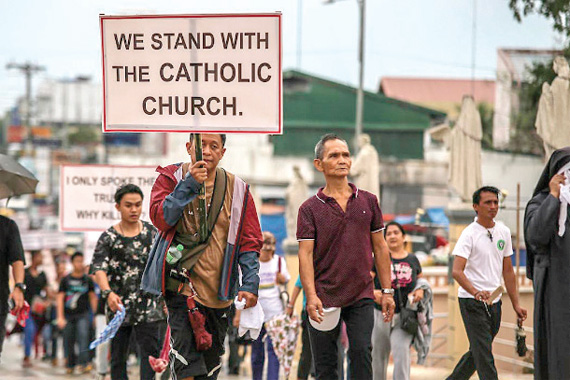
Qianwang Catholic Church in China’s Shandong province has become the third church in Jinan Diocese to be demolished by local authorities this year.

Liangwang Catholic Church was bulldozed on July 17 following the demolition of Shilihe Catholic Church, but a Catholic source told ucanews. com that the latter church would be rebuilt in another place.

More than 170 officials demolished Qianwang Church in Huashan town of Jinan city’s Licheng district on Aug. 13, according to a source.

He said authorities “had no explanation or solution and then forcibly demolished it.” A Marian statue and a statue of Jesus were destroyed, while the church’s alms box disappeared.

The source accused officials of ignoring the law, regulations on religious beliefs and the basic demands of the faithful. Such a barbaric demolition of the church had seriously hurt the trust of the faithful in the local authority, he said.

Nepal’s new law puts squeeze on Christians

The enactment of new legislation criminalizing religious conversion in Nepal has sparked a heightened sense of fear and insecurity among Christian minorities.

The Civil and Criminal Codes, which came into effect on Aug. 17 to replace the General Code that was in place for 165 years, comprise a set of laws guiding civil and legal proceedings including restrictions on religious conversion, in the Hindu-majority nation. One new law states that anybody who encourages or is involved in religious conversion using any means will be booked under a criminal offense and will face a jail term of five years and a fine of 50,000 Nepalese rupees (US$445). Any foreigner found guilty of encouraging or promoting religious conversions will be deported within a week.

Christian leaders believe the move is targeted at Christians, who have been accused of forceful proselytizing of Nepalis, particularly those from vulnerable and lower castes. They fear the law will be used as a tool to harass and persecute Christian minorities for practicing their religion.

“The Christian community is alarmed about this new law. This is like a saw that is always hanging on top of us and can be used any time against us,” said Father Silas Bogati, vicar general of the Apostolic Vicariate of Nepal.

It is a basic fundamental right of an individual to accept or practice any religion or any belief, he said. “With the new law implemented, we feel that our freedom of religion has been hampered and it looks like we will not be able to even practice our own religion in a fair manner,” Father Bogati added. The Federation of National Christian Nepal, believes the move is a regressive step that hurts the sentiments of Christian minorities who had earlier welcomed Nepal’s decision to adopt secularism.

The law goes against the principles of secularism, democracy and human rights and aims to restrict the freedom of religion of more than three million Christians who are associated with nearly 12,000 churches in Nepal, said federation chairman C.B. Gahatraj.

Tamil Catholics dig deep for Myanmar church

Visitors to a Tamil Catholic village in Myanmar are greeted by the Holy Cross at its entrance and can see St Anthony’s Church even before they arrive in the centre.

Yaw Han, 24, is proud of being a Catholic in Hton-Bo-Quay in Kayin State after a community effort helped fund construction of a new church building in 2016-17.

His family donated 2 million kyats (US$1,380) to the project, helped by his two elder brothers saving money from their salaries in Malaysia.

“We willingly made donations and did not feel it was a burden despite most villagers struggling for their daily survival with traditional agriculture work,” Yaw Han told ucanews. com.

He helps his family to grow rice when he is not taking part in activities as the village’s youth leader. His youth group contributed 300,000 kyats to the church project while other organizations including a mothers’ group, pastoral council and women’s group donated a total of 16 million kyats.

About 100 young men and women from the village who are working in Malaysia, Singapore and the United States contributed about 38 million kyats of the overall project cost of 170 million kyats (US$117,300).

Chinese authorities bulldoze church in Jinan province

A second church has been demolished by authorities in China’s Jinan province — and a third church is expected to suffer the same fate soon.

After Liangwang Catholic Church was demolished on July 17, local Catholics prayed at the site and protested the unreasonable behaviour of authorities.

Shilihe Catholic Church was demolished earlier this year and sources expect Wangcun Catholic Church to soon be reduced to rubble.

All three churches were in normal use and legal churches officially registered with the religious administration, according to a source in Jinan.

Liangwang Church was built in 1920. During the Cultural Revolution, it was classified as a private house. After lengthy legal procedures, the church was rebuilt in 2006.

At noon on July 17, three female church members were on duty at the church when more than 40 people forced their way in, searched the members, took their mobile phones and made them leave the church.

Another 30 people later arrived to help with the demolition, which went ahead despite the church still containing many items.

The church was built on land that was distributed by Liangwang village and had been granted a permit for legal activities. It was demolished because its area in Pian district is to be developed with new buildings and infrastructure. After the demolition, the parish priest and president complained to authorities but have not received any reply.

“The stools, altars and dedication boxes were all pressed into the ruins. The ruins later became a fire and all the items were burned out,” said a church member.

Education still main focus for Sri Lankan archbishop

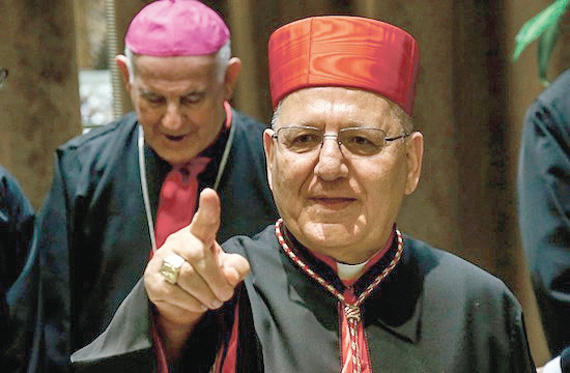
The now retired Archbishop Oswald Gomis of Colombo faced huge challenges during the takeover of Sri Lanka’s Catholic-run schools by the state in the 1960s. The government policy was “certainly not a good thing” and was intended to hit Catholics, said the 85-year-old archbishop, who was honoured by President Maithripala Sirisena for his outstanding religious and social service at a celebration in Colombo on July 22.

Celebrating 50 years of his episcopate, Archbishop Gomis believes the government should not have taken over church-run schools at that time.

“The government thought they [the schools] were avenues for conversion. But because of that, today all other religions have got whacked,” he said. “I have always believed the Catholic Church has a very important mission in Sri Lanka, and that is education.”

Catholic schools were meant to instil Catholic values in their communities and to encourage their practice through teachings of the religion daily.

Archbishop Gomis founded 15 affiliated schools as branches of established schools during his tenure as archbishop.

Ethnic Khasia Christians fight to keep land in Bangladesh

After nearly a decade resisting eviction from ancestral land, ethnic Khasia Christians in Bangladesh are still uncertain whether the land they have lived on for generations will become their own.

About 700 ethnic Khasia from 86 families in two villages have been battling to resist eviction by Nahar Tea Estate in Moulvi-bazar district since 2010.

Most of those affected are Catholics belonging to St Joseph’s Catholic Church, under the predominantly indigenous Sylhet Catholic Diocese in north-east Bangladesh. “The Khasia are peaceful people and they have the right to live in their ancestral land like every citizen of Bangladesh,” Quazi Rosy, a ruling Awami League lawmaker, told ucanews.com.

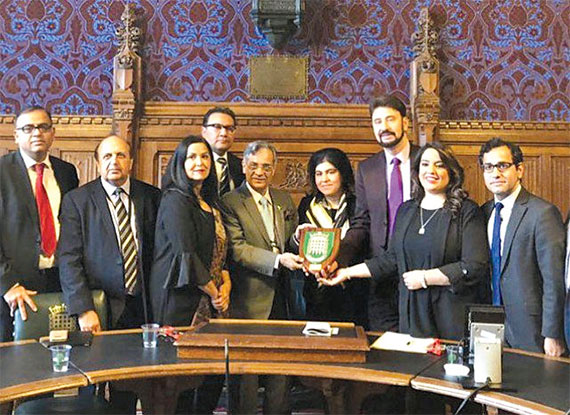
Rosy was part of a delegation from the Parliamentary Caucus on Indigenous Peoples that visited Nahar 1 and Nahar 2 punjis (forested villages with clustered houses) on July 22. Research and Development Collective (RDC) activists were also part of the delegation to lend their support to the Khasia.

Interfaith charity run aims to build churches in Indonesia

Over 3,500 people, mostly Catholics, joined a charity run organized by Indonesia’s Jakarta Archdiocese to raise money to build churches in various parts of the country.
Jakarta has declared 2018 the “Year of Unity.”

The “Run4U” campaign on July 29, one of a number of Church-led fund-raising runs in recent years, offered people the chance to test themselves with a 2.5-kilometre walk or a more gruelling 5k run in Tangerang, a city in Banten province some 25km from Jakarta.

Participants included priests, nuns, seminarians, elderly and young and people from other religions. “Our main purpose is to raise money to help out with the construction of several churches [that are in need of financial support],” Paskah Widarani, one of the organizers, told ucanews.com.

“Those parishes were chosen as they really need our help right now,” said Widarani.

A priest’s pain: Crosses destroyed, ban on catechism, the vaccine scandal

The Chinese authorities have been eliminating visible Christian signs, crosses and engravings for several months due to a campaign of “synicization.” This adds to the ban on meetings even in summer, with young people under the age of 18, who are also forbidden to attend mass. At the same time, the scandal of ineffective vaccines for new-borns has spread throughout the country. This scandal is caused by widespread corruption, by the little control exercised by the authorities; by protectionism for Chinese firms. The priest-blogger Shan Ren Shen Fu (“the hermit priest”), shares his reflection on these events with our readers. In particular, he points out that if more faith and values were spread in Chinese society, there would be less corruption and more effective vaccines. Furthermore, his regret is that in China there is a concern to vaccinate children in the body, but it is forbidden to vaccinate them in the spirit, excluding them from the cate-chism. In this way the lack of honesty and healthy conscience in society is perpetuated.

On August 6, a brother priest of mine told me on WeChat: “Brother, our bishop called me saying to remove the cross and the inscription ‘Catholic Church’.” In the last two years this confrere has worked with great difficulty. There was no church in the area, and the diocese bought a two-storey shop and turned it into a place of prayer for the local faithful, since then the priest immediately organized the people to clean up and decorate the place.

Vietnamese court imprisons peaceful demonstrators

A court in southern Vietnam has jailed 15 protesters includ-ing Catholics who joined nat-ionwide protests against a new cybersecurity law and a draft law on special economic zones.

On July 30, the People’s Court in Bien Hoa city sentenced Tran Nguyen Duy Quang, 35, and Pham Ngoc Hanh, a 45-year-old Catholic mother of five, to 18 months and 16 months in prison respectively, Dong Nai newspaper reported.

The newspaper said 13 other defendants were jailed for 8-10 months, while five others were given 12-14 months’ probation as they need to take care of their children. Many of the defendants are Catholics from Xuan Loc, the country’s largest diocese in terms of population. The court also confiscated 10 motorbikes belonging to defendants.

All defendants were convicted of causing public disorder, holding up banners, shouting slogans, inciting others to protest and blocking traffic for hours on June 10 at the protest in Bien Hoa, the capital of Dong Nai province.

Spanish priest a good shepherd for ex-Khmer Rouge

Within weeks of the collapse of the final remnants of the Khmer Rouge in late 1998, Father Enri-que Figaredo, also known as “Kike” or “The Bishop of the Wheelchair,” went to visit some of the movement’s last-standing cadres after hearing they needed assistance.

During the decades-long civil war, many had lost limbs to land-mines and were struggling after the group’s ultra-Communist leadership had defected, died or been arrested.

While many people would have been apprehensive to say the least about entering an area that until recently had been controlled by one of the most feared revolutionary movements of the 20th century, Father Figaredo saw it as his calling. “I remember going to one of the furthest corners of Cambodia,” he said from within the grounds of Battambang Catholic Church, or Pet Yiey Chee as it is known by locals.

“They asked for my support. I went to see them and gave them chickens so they could have eggs and meat. I also gave them small loans,” most of which are still being put to use today, he said.