Category Archives: Asian

Supreme Court of the Philippines rejects petition to legalize same-sex marriage

The Supreme Court of the Philippines has reiterated its dismissal of a petition to redefine marriage in the country to include same-sex couples.

The court had initially dismissed the petition in September 2019, on the grounds that the applicant lacked standing because he did not have a partner, nor was he seeking a same-sex marriage.

In a Jan. 6 order, the Philippine News Agency reported, the Supreme Court said the motion for reconsideration was “denied with finality,” adding, “No further pleadings or motions will be entertained.”

The court said that “no substantial arguments were presented to warrant the reversal of the questioned decision.”

The petition had been filed in 2015 by 33-year-old lawyer and radio show host Jesus Nicardo M. Falcis III and the LGBTS Christian Church Inc. Falcis sought to challenge provisions in the country’s Family Code that defined marriage as a “permanent union between a man and a woman.” He also challenged clauses declaring homosexuality as grounds for legal separation and declaring concealment of homosexuality at the time of marriage as an act of fraud that constitutes grounds for annulment.

According to CNN, Falcis said he “decided to use the tool of litigation, because it has been successful in other countries — such as the United States — to have gay marriage legalized.”

However, the Supreme Court unanimously rejected the petition in September, saying he lacked legal standing and had failed “to raise an actual, justiciable controversy.”

President of Asia’s bishops’ confederation calls for end of police brutality in Hong Kong

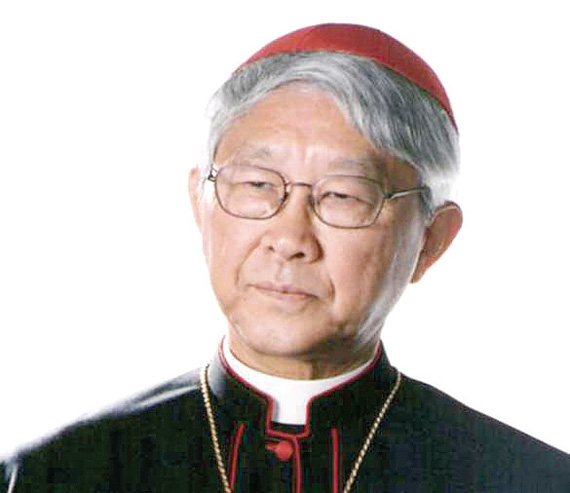
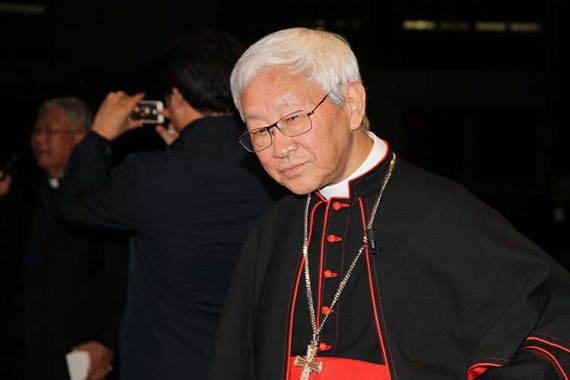
Asia’s leading cardinal was among the dozens of people to sign an open letter to the Hong Kong government to complain about “police brutality” over the Christmas period in the self-governing Chinese city. Major protests began in the former British colony in June, after the Hong Kong government attempted to push through legislation which would have allowed residents to be extradited to mainland China. Marches and demonstrations have continued regularly since then, with some drawing more than a million participants.

Foreigners vacate Brunei, where Christmas is banned

Foreign workers are gathering their families, packing their bags and leaving Brunei, where a ban on celebrating Christmas has been enforced since 2014 by an authoritarian regime happy to impose stiff penalties for any breaches of the law.

Fearing Muslims would be led astray and convert to Christianity, the sultan of Brunei imposed full Sharia law in April, a culmination of an all-imposing Islamic legal system that was introduced step by step over the last six years.

In a move that bears striking similarities to Biblical stories from the Roman occupation of the Holy Land, Christians are only allowed to celebrate Christmas within the privacy of their own homes and only after they have notified authorities.

Any breaches can result in jail terms of up to five years and fines of up to US$20,000, or both, following the growing influence of Wahhabism, a harsh brand of Islam followed by the likes of former al-Qaeda leader Osama bin Laden that has its roots in Saudi Arabia.

“The people in Muslim-dominated Brunei are quite tolerant and very easy to get along with, but the government is fearful of outside religions,” said one Western expatriate who fears Brunei’s harsh defamation laws and declined to give his name.

Increasingly, foreign Christians working in Brunei spend Christmas time outside the Islamic country and return only in the new year, the expatriate said.

“Leaders here don’t have the oil money they once did and are trying to impress and win foreign aid dollars from Saudi Arabia. The only way to enjoy the festive season is to get out for a vacation.”

Malaysian state declares extra holiday for Christmas

The Muslim chief minister of Sabah in Malaysia has ramped up the celebratory mood among Christians in the state by adding Dec. 24 or Christmas Eve as a new public holiday.

The neighbouring state of Sarawak is also thinking of declaring Christmas Eve a holiday, local reports said.

“The additional public holiday will enable those celebrating Christmas to return home earlier,” Sabha Cheif Minister MohdShafieApdal said when launching the five-day Kota Kinabalu Christmas Carnival in the state capital on Dec. 11.

The state is the first in Malaysia to add the Christian celebration to the list of two-day public holidays accorded to significant festivals in the country after Eid al-Fitr and Chinese New Year.

For many Christians in Malaysia, Christmas celebrations can be a minefield. Decades of Islamization and the steady rise of Islamic conservatism in the South-East Asian nation has led to anti-Christian rhetoric forcing restraint when observing such religious events.

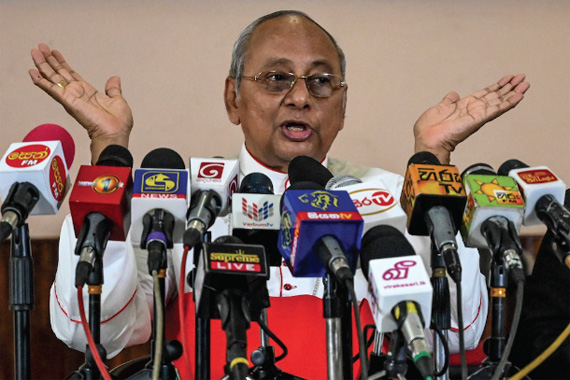
Sri Lanka dragged into global conflict with Islamic extremism

The sudden deterioration of the security situation in Sri Lanka has come as a shock to its people. Five days after a series of suicide bombings on Easter Sunday killed more than 250 people, injured over 500, wrecked three Christian churches and caused substantial damage to three five-star hotels, Sri Lanka continues to be in a state of siege. A night-time curfew has been declared and there is vastly reduced traffic on the usually packed Colombo roads.

Rumours of further attacks are spread wildly and widely, forcing the government to ask people only to listen to official police warnings. The little-known National Thowheeth Jama’ath (NTJ), which has been identified as the source of the suicide bombers, has about 150 members. It is feared that many of them might be potential bombers. There is a high-priority security search for them. Until they are all found, the danger of another suicide bombing will remain.

Funding restrictions cripple Church agencies in Pakistan

Christian groups in Pakistan are trying to stop the government closing their bank accounts as part of a process it says is in-tended to throttle foreign funding to terrorist organizations.

The government has revoked the licenses of thousands of non-governmental agencies and thus prevented them receiving foreign funding, including from Christian non-governmental agencies.

“The future of our workers is at stake. We are still being accused of working on a Western agenda and labelled as anti-national groups,” said Cecil Chaudhry, who heads the Catholic Church’s National Commission for Justice and Peace.

He was speaking at a Dec. 16 meeting of right civil groups at the Lahore Press Club organized by the Joint Action Committee for People’s Rights (JAC), a form of human rights groups and journalists union. Speakers expressed concern over the military’s increasing involvement in governance, attacks on liberal news agencies and closure of non-governmental agencies.

Chaudhary told the meeting that commercial bank accounts in three of the country’s seven dioceses had been closed.

The Church’s human rights organization employs 40 Christian activists and they were now struggling to pay staff salaries, he added.

The secret lives of Vietnam’s Catholic mothers

Mary Nguyen closes the door carefully and says evening prayers with her two children in her room whenever her husband comes home late from work.

And Nguyen, who lives in the house of her Buddhist parents-in-law, quietly takes them to weekend Masses once or twice a month at a church near her own parents’ home in Vietnam’s southern Ho Chi Minh City.

“I have to pretend to her parents-in-law that I take the children to visit my parents so that we can go to church,” the mother said in a low, strained voice.

Her husband and parents-in-law do not want them to embrace Catholicism before they turn 18, when they say the children can decide for themselves what religion to follow. They have threatened to turn her out of their home if she takes the children to church.

Nguyen said they do not know their grandchildren are Catholics as she had them — a girl and a boy — baptized while she was living for months at her parents’ home after she gave birth to them.

She tries to help instill faith in Catholicism while their grandmother regularly takes them to Buddhist temples.

Nguyen, who works for a local printing company, said her husband, a Communist Party member, converted to Catholicism when he married her. However, he subsequently jettisoned the Catholic faith and often checks on whether the children have secretly gone to church.

“I forgive him and try to be a good Catholic so that I can bear witness to the Good News,” said Nguyen, who regularly joins Catholic friends and family members in attending church services and feasts.

Thai police round up dozens of Christian Pakistani refugees

A group of Pakistani Christian asylum seekers were arrested Dec. 19 by Thai immigration authorities in an early morning raid on a low-rise condominium in eastern Bangkok. An estimated 36 people, including around 12 women and an equal number of children, were detained after immigration officials showed up at the doors of several low-rent units of asylum seekers.

The immigration officers “came knocking on doors and when the people inside didn’t open up, the officers broke the doors down,” said Joseph, a Pakistani Christian refugee from Karachi, who learned of the details by communicating with arrestees via social media. One 20-year-old Christian man who sought to escape being arrested by jumping out of a window ended up with a broken leg. “The authorities took them all — even the kids and women,” Joseph (not his real name) said.

The Filipino fighting for a Japanese samurai’s sainthood

Historian Ernesto De Pedro with statues of Dom Justo UkonTakayama who was beatified in early 2017.

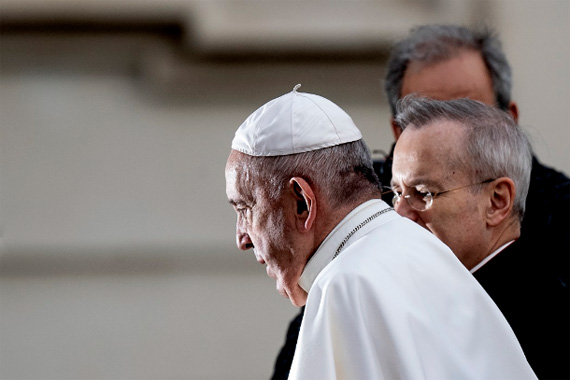
As Pope Francis visits Japan, an 83-year-old Filipino historian is hoping the pontiff will recognize a Japanese samurai who once offered his life for the faith.

Dom Justo UkonTakayama, or “Justus Ucondono” as missionaries fondly called him, was a warrior who fought under the banner of the cross in the land of the rising sun.

He was an eminent Japanese feudal governor who served under Japan’s three hegemons — Oda, Hideyoshi, and Toshiie — who unified Japan.

In 1587, Chancellor Toyotomi Hideyoshi took drastic steps against Takayama, who declined to obey the chancellor’s order to renounce the faith.

Takayama was baptized a Christian in Sawa Castle on June 1, 1563, when he was 11 years old.

For refusing to renounce his Christian faith, Takayama was sent to Manila as an exile on Dec. 21,1614. Months after his arrival, he died on Feb. 3, 1615 in the old walled city of Intramuros.

The faithful of Manila promptly presented the Japanese warrior’s case to the Vatican for beatification. But after centuries passed, Takayama seemed to have been forgotten.

In 1963, Cardinal Rufino Santos of Manila endorsed the cause of the samurai to the Church in Japan. But there were no updates as church officials came and went.

Then one day, a Filipino history enthusiast passed by a statue of a Japanese man in the Plaza Dilao in the old city of Manila where the samurai supposedly baptized Japanese converts.

Historian Ernesto De Pedro wondered why a Japanese figure would standing as such in the Philippines. He did not give it much attention until a group of Japanese Protestant pastors came to inquire.

The Protestants were researching about a certain Takayama whose statue stands in the middle of Manila. They found nothing.

De Pedro wondered. “Why nothing?” he asked. He did his own research. He found out later that in Manila Takayama “Dom Justo Ukon Don.” In the papal archives, he was identified as “Ukon Don.”

Tamil remember their civil war dead despite government opposition

Thousands of Tamil in northern and eastern Sri Lanka have commemorated their relatives who died during and after the country’s civil war, which lasted more than a quarter century.

The main ceremonies were held last Wednesday, Maaveerar Naal (Great Heroes’ Day), as Tamils remembered those who died or went in missing in battle.

The Sri Lankan government has always opposed the remembrance. Under former President Mahinda Rajapaksa, brother of the current president, memorial ceremonies were banned as an apology for Tamil independence ideology.

For their part, Tamil com-plain that under the first Rajapaksa the graves of thousands of Tamils were destroyed, whilst war monuments, luxury buildings and other structures were built on top “in an attempt to erase our memory and control us.” “The graves of our children were in a row in the cemetery of Kopai,” some Tamil told Asia-News. “At least 2,000 people were buried there, but in March 2011 soldiers arrived and demolished everything.”