Category Archives: Asian

Pakistan’s Asia Bibi Asks France For Political Asylum

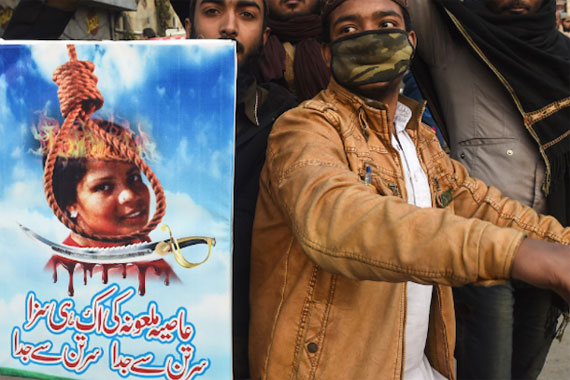
Asia Bibi, the Pakistani Christian woman who spent years on death row after a 2010 conviction of blasphemy, said on February 24 that she was seeking political asylum from the French government.

“My great desire is to live in France,” Bibi said in an interview with RTL radio, her first trip to France since fleeing with her family to Canada in 2018.

Her visit comes a few weeks after the publication of her book “Enfin Libre!” (Finally Free) in French last month, with an English version due in September.

“France is the country from where I received my new life… Anne-Isabelle is an angel for me,” she said, referring to the French journalist Anne-Isabelle Tollet, who waged a long campaign for her release and later co-wrote Bibi’s book.

Paris Mayor Anne Hidalgo is to bestow an honorary citizen-ship certificate granted to Bibi by the city in 2014, when she was still behind bars.

Let religious people vote too, says Myanmar cardinal

Cardinal Charles Maung Bo of Yangon has appealed to Myanmar’s government to scrap the constitutional provision which prohibits members of religious orders from voting in elections.

He is concerned that Article 392 (a) of the constitution bars Buddhist monks and nuns, Catholic priests, nuns and religious, other Christian clergy, Muslim clerics and others from the right to vote.

“As cardinal I can make statements and speeches and encourage citizens to vote, but I am myself barred from voting. This is an extremely unusual arrangement. I am not aware of any other democracy in which this is a requirement,” he said.

In a written appeal released on Feb. 6, Cardinal Bo said it was not his duty as a religious leader to identify parties or leaders to support. “But as a country soaked in a great religious tradition and where religious leaders serve as moral guides, it is the duty of every religious leader to encourage all citizens to vote for the leader and party of their choice based on values,” he asserted.

Christians in Pakistan Celebrate Court Ruling

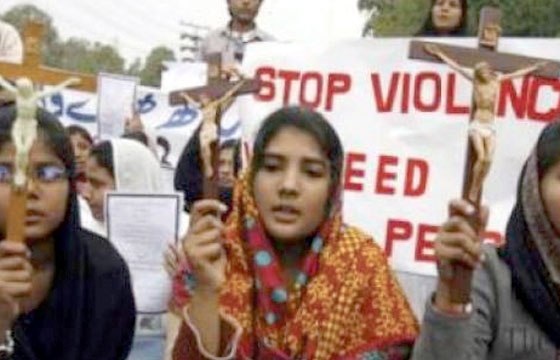
Christians across Pakistan are rejoicing after a court on 29th January acquitted 40 men jailed for alleged involvement in the lynching of two people in a district outside Lahore.

The 40 individuals, almost all of them Christians, shouted “Alleluia, Praise God” as the anti-terrorism court in Lahore ordered their release after nearly five years in custody.

More than 40 others, on bail after being accused of lesser offenses that took place at about the same time in Youhanabad district, were also acquitted.

They had all been arrested as police responded to riots in Youhanabad sparked by suicide bomb attacks on two churches one Sunday morning in March 2015, in which at least 15 people were killed and more than 70 were injured.

Speaking to Catholic charity Aid to the Church in Need (ACN) just hours after the acquittal verdict, Fr Emmanuel ‘Mani’ Yousaf described how emotion swept through the court as the accused began to absorb the court’s decision, citing insufficient evidence to prove the men’s guilt.

Reporting that the accused were now back home with their families, Father Yousaf said: “What we have seen is wonderful news for Pakistan. “Throughout Pakistan, people had been praying, every day praying that the court would rule in their favour. It is a big day for us all.

Asia Bibi breaks silence in new book

Asia Bibi, a Pakistani Christian woman who spent years on death row after being convicted of blasphemy, has published a book about her experiences and her new life. Ms Bibi released a memoir, Enfin Libre or Finally Free, written with French journalist Anne – Isabelle Tollet.

She was sentenced to death on blasphemy charges by a Pakistani court in 2010 but acquitted in 2018. She currently lives in an undisclosed location in Canada. Ms Bibi, 47, has always maintained her innocence in a highly sensitive case that polarised her home country of Pakistan and was closely followed around the world.

The Pakistan Supreme Court’s quashing of her sentence in October 2018 led to violent protests by religious hardliners who support strong blasphemy laws, while more liberal sections of society urged her release.

In the new book, she recounts her arrest, the conditions of her prison detention, and her eventual release. She also discusses the challenges of adjusting to her new life in Canada.

“You may know my story through the media, you may have tried to put yourself in my place in order to understand my suffering,” she writes in the book’s publicity materials. “But you are far from understanding my daily life in prison or my new life and that’s why, in this book, I will explain it all.”

In an excerpt released by the publishing house, she writes: “How could I ever imagine in 50 years that I would become a global symbol of the fight against religious extremism when I am but a simple, illiterate peasant?

“From my small windowless cell, I often wondered why Pakistan was targeting me.”

China tells some priests they can’t celebrate funerals in people’s homes

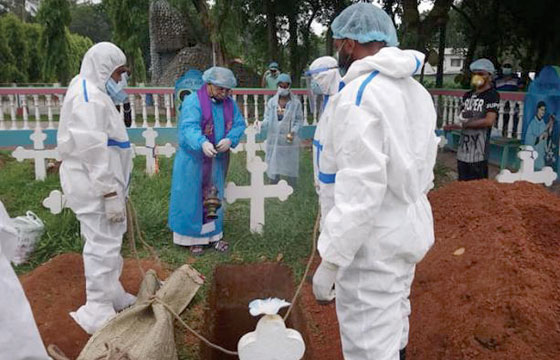
In the eastern province of Zhejiang, the government has put in force a set of regulations on centralized funeral arrangements, which bans priests from attending funeral prayers out-side a religious place, reported ucanews.com. The government claims the new rules aim to “get rid of bad funeral customs and establish a scientific, civilized and economical way of funerals.”

“Clerical personnel are not allowed to participate in funerals” at homes and “no more than 10 family members of the deceased are allowed to read Scriptures or sing hymns,” the rules state.

The new rules began to take effect recently, although enacted on Dec. 1, said a Catholic in Wenzhou Diocese in Zhejiang. The regulations strictly ban “religious activities outside religious places, so the priest will not be able to hold funeral prayers outside the church,” he told ucanews.com.

Huang Jian, also of Wenzhou, told ucanews.com priests could visit parishioners’ homes but could not conduct any religious ceremonies or prayers.

A priest identified only as Father Guo of Henan province said government officials have asked priests to strictly follow the new regulations on religious affairs. “Otherwise there would be penalties. The punishment could even be closing the church and canceling the priest’s priesthood certificate, letting the priest go home,” he said. But Father Peter Lee, a priest in eastern Shandong, told ucanews.com that government instructions had not come to him so far. “I still hold sacraments at the homes of dead parishioners. I sent a greeting to a church member from home to the cemetery. No one blocked it,” he said on Jan.30. “As a priest, we need to accompany church members to make them feel like everyone is a family. Particularly, baptisms and funerals are very important for families.”

Prosecutors drop sedition charges against Philippine bishops

Philippine prosecutors have exonerated four Catholic bishops charged with plotting to overthrow President Rodrigo Duterte and his administration.

The Justice Department dropped the charges, saying there was no evidence supporting police claims that the bishops intended to commit seditious acts.

The accused bishops were Archbishop Socrates Villegas, Bishop Pablo Virgilio David, Bishop Honesto Ongtioco and Bishop Teodoro Bacani, retired prelate of Novaliches. Charges against Father Robert Reyes and La Salle Brother Armin Luistro were also dismissed.

Charges were, however, filed against Jesuit priest Albert Alejo and Divine Word priest Flaviano Villanueva and nine others for their involvement in the alleged plot to oust the president.

Bishop David of Kalookan said he was “both happy and sad” about the decision.

He said that while he welcomed the dropping of charges against him and the other church leaders, he was sad that prosecutors “found probable cause to indict the two priests.”

“I still hope and pray that the charges against them will also be dismissed soon by the courts,” he said in a post on social media.

The bishops’ conference earlier described the charges against the four Catholic bishops the priests, and several government critics as “beyond belief.”

Father Reyes said the charges were “a desperate move to suppress dissent.”

“The move is obviously meant to scare the hell out of these churchmen and eventually silence them,” said Father Jerome Secillano, chairman of the public affairs office of the bishops’ conference.

The charges stem from the release of a video that went viral on several social media last year that linked Duterte and his family to the illegal drug trade.

Papal visit to Indonesia, Papua New Guinea, and East Timor possible in 2020

A visit from Pope Francis to Indonesia, Papua New Guinea, and East Timor may happen in September, according to an Indonesian Muslim leader who met with the pontiff mid January. Sheikh Yahya Cholil Staquf leads the 50 million member Nahdlatul Ulama movement, which calls for a reformed “humanitarian Islam” and has developed a theological framework for Islam that rejects the concepts of caliphate, Sharia law, and “kafir” (infidels).

Staquf met with the Pope, while in Rome for a meeting of the Abrahamic Faiths Initiative, which gathers Christians, Muslim and Jewish leaders to discuss the promotion of peace and fraternity. U.S. Ambassador-at-Large for International Religious Freedom Sam Brownback attended the meetings.

Pope Francis met with the group on Jan. 15. After that meeting, Staquf told CNA that the Pope said he plans to visit Indonesia, East Timor, and New Guinea in September.

The Vatican has not yet confirmed such a trip. Indonesia is home to the largest population of Muslims in the world. The country’s 229 million Muslims make up more than 12% of the global Muslim population. Nearly all of Indonesia’s Muslims are Sunni.

There are 24 million Christians living in Indonesia, 7 million of them are Catholic. Pope St Paul VI visited the country in 1970, and Pope St John Paul II traveled there in 1989.

East Timor is a small country on the island of Timor. It gained independence from Indonesia in 1999, following decades of bloody conflict as the region vied for national sovereignty.

The country’s second president, Jose Manuel Ramos-Horta, shared the 1996 Nobel Peace Prize with East Timorese Bishop Ximenes Bolo, for their efforts to reach a peaceful and just end to fighting in the country. Bishop Belo is now a missionary in Mozambique.

More than 1 million people live in East Timor; more than 98 percent Catholic. It is one of few majority Catholic countries in Southeast Asia. Pope St John Paul II visited East Timor in 1989.

Catholic population of S. Korea grows by 50% in 20 years

The Catholic Church in South Korea has steadily grown over the past two decades according to a study by the Catholic Pastoral Institute of Korea (CPIK) of the Catholic Bishops’ Conference of Korea (CBCK). 11.1% of South Korea’s population.

The number of Catholics has increased by 48.6 per cent, from 3.9 million in 1999 to 5.8 million in 2018 and today they make up 11.1% of South Korea’s some 51 million population.

A copy of the study report sent to the Vatican’s Fides news agency shows the Diocese of Suwon leading with an increase of 89.1 per cent. It is followed by Daejeon (79.6 per cent) and Uijeongbu (78.9 per cent).

However, the year-to-year growth rate in the Catholic population has gradually slowed to below 1 per cent. In 2000-2001, the Catholic population grew 3.2 per cent and 3.9 per cent, respectively, before falling to the 2 per cent range until 2009. The growth rate dropped to 1.7 per cent in 2010 and briefly rebounded to 2.2 per cent in 2014 due to Pope Francis’ visit to South Korea. It then levelled off at around 1% per year.

As for the ratio of Catholics in the nation’s population, it rose from 8.3 per cent to 11.1 per cent in the 1999-2018 period.

Declining church attendance However, Sunday Mass attendance, considered a key indicator of faith life, has declined by about 10 points, from 29.5% to 18.3% during the past 2 decades.

Taiwan president tells pope of China’s religious persecution

Taiwan’s President Tsai Ingwen has written to Pope Francis to complain about China’s persecution of religion, saying that Beijing aims to threaten its democracy and freedom.

Taiwan has been concerned by the Vatican’s moves to normalize ties with China, especially after a landmark on September 2018 provisional deal on appointing bishops.
Tsai won reelection by a landslide on January 11 after a campaign pledge to protect Taiwan’s sovereignty from Chinese control.

In her letter to the Pope, released by the Presidential Office on Jan. 21, she listed Chinese actions that she said constitute abuses of power, including violence toward Hong Kong protesters and persecution of religious believers seeking to follow their faith.

Responding to a message from Pope Francis for World Day of Peace on Jan. 1, Tsai wrote that Taiwan hopes for a peaceful resolution of its differences with China.

“However, at present dialogue across the Taiwan Strait is filled with difficulties,” she wrote. “The main sticking point is that China has so far been unwilling to let go of its desire to control Taiwan. It continues to threaten Taiwan’s democratic freedoms and human rights by threatening to use force against Taiwan, fake news, cyber attacks and diplomatic means.”