
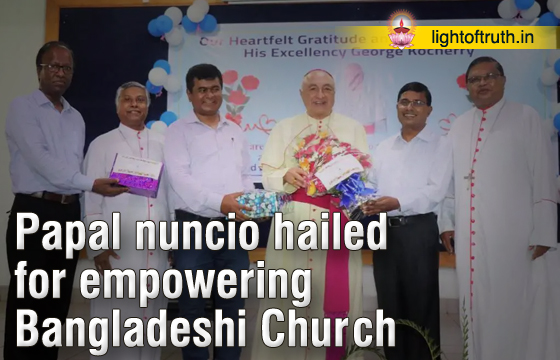
Catholics in Bangladesh have thanked the outgoing apostolic nuncio, Archbishop George Kocherry, for empowering the local Church and strengthening Church-state ties during his nearly ten years in the country.
“Today, all Catholic bishops express our heartfelt gratitude to you for your presence, accompaniment, and dedicated service. You are an experienced diplomat and pastor who built a very strong relationship between the government and the Church. Through your presence, the Catholic Church became more visible in Bangladesh,” said Oblate Archbishop Bejoy N. D’Cruze of Dhaka, president of the Catholic Bishops’ Conference of Bangladesh (CBCB)
Archbishop D’Cruze made the remark during a thanksgiving ceremony for Archbishop Kocherry arranged by the bishops at the CBCB centre in the capital Dhaka on Aug. 22.
Some 180 guests, including two arch-bishops, five bishops, vicar-generals, major superiors, and heads of Church-run organizations attended the event.
Archbishop D’Cruze also hailed the 77-year-old diplomat, who is scheduled to retire at the end of August, for his seminal efforts in realizing Pope Francis’s visit to Bangladesh in 2017 and guiding Catholic charity Caritas in supporting Rohingya refugees.
“During your time, the Church and Caritas Bangladesh came to the forefront. Especially, during the visit of Pope Francis and your loving care to the Rohingya, it is an extraordinary effort you have shown, a great sense of solidarity to Rohingya refugees,” the prelate added.
“He knew well how to maintain good relations with the government and people.”
Category Archives: Asian
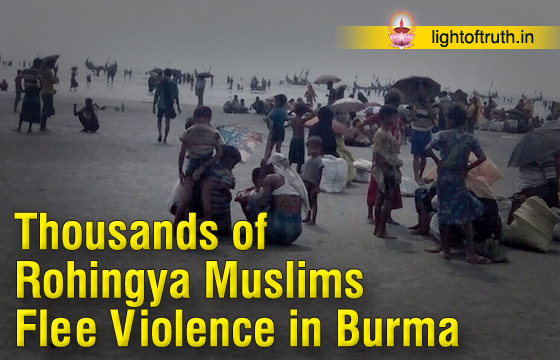
Thousands of Rohingya Muslims Flee Violence in Burma
The United Nations Refugee Agency reports that 123,000 people—mostly Rohingya Muslims—have fled into Bangladesh since August 25, escaping a new round of violence in Burma’s western Rakhine state. The refugees have walked for days, after a series of Rohingya insurgent attacks on Burmese police were met with a strong government response and the burning of thousands of homes. The Rohingya are a stateless Muslim minority living in parts of a hostile and overwhelmingly Buddhist Burma. U.N. officials say their relief camps are reaching full capacity as thousands of refugees continue to cross into Bangladesh.

Hong Kong’s Cardinal Joseph Zen to stand trial
The trial for the 90-year-old cardinal and four others detained under China’s national security law will take place Sept. 19-23
At a pre-trial hearing in Hong Kong, a judge set a five-day trial for Cardinal Joseph Zen Ze-kiun and four other defendants who face charges of failing to properly register a now-defunct fund to help anti-government protesters.
According to an Aug. 9 report by the Hong Kong Free Press news agency, Magi-strate Ada Yim announced that the trial will take place Sept. 19-23 after asking prosecutors and the defendants’ lawyers if five days would be sufficient for the court to hear the case. Both sides agreed.
The 90-year-old cardinal was detained May 11 under China’s national security law. However, he and the four others were charged with failing to properly register the 612 Humanitarian Relief Fund, set up to offer financial assistance to those involved in anti-government protests in 2019. It was disbanded last year after coming under scrutiny by authorities.
Lawyers for both sides will argue whether the 612 Humanitarian Relief Fund fell under Hong Kong’s Societies Ordinance, which regulates registered and exempted associations.
The Hong Kong Free Press reported that prosecutors and defines lawyers also will argue whether the defendants held any positions of authority within the relief fund.
The national security law made participating in or supporting the pro-democracy movement crimes of subversion and collusion with foreign organizations and allowed for those remanded to be extradited to mainland China. Punishment ranges between a minimum of three years and a maximum of life imprisonment.
All five defendants pleaded not guilty. If convicted of the improper registration, each defendant could incur a fine of about $1,300.

Misery and disease conquer Afghanistan
The heaving wards of a ramshackle clinic in southern Afghanistan are just one sign of the catastrophic humanitarian crisis that has gripped the war-ravaged country since the Taliban returned to power a year ago.
Last month, the Musa Qala District Hospital in Helmand province was forced to shut its doors to all except those suffering from suspected cholera.
The infirmary was soon jammed with listless patients, intravenous drips needled into their wrists as they recuperated on rusting gurneys.
Though the clinic lacks facilities to test for cholera, about 550 patients presented themselves within days, showing symptoms of a disease caused by a lack of basic sanitation needs: clean drinking water and an adequate sewerage system.
“It’s very difficult,” hospital chief Ehsa-nullah Rodi, run ragged on just five hours of sleep a night since the influx began, told.
“We didn’t see this from last year, or another year.” The United Nations says Afghanistan’s humanitarian crisis is the world’s worst.
Poverty in the country — felt most keenly in Afghanistan’s south — has been driven to desperate new levels, exacerbated by drought and inflation since Russia’s invasion of Ukraine.
“Since the Emirate (Taliban) came into power, we can’t even find cooking oil,” said one woman, perched on a hospital cot next to her malnourished six-month-old grandson in Lashkar Gah, Helmand’s provincial capital.
“Poor people are squashed under their feet,” the 35-year-old said.
The United States froze $7 billion in central bank assets, the formal banking sector collapsed, and foreign aid representing 45 percent of GDP stopped overnight. Over the past year, would-be donors have grappled with the conundrum of funnelling fresh funding to the ailing nation, which the Taliban rebranded the “Islamic Emirate” in line with their austere theocratic beliefs.
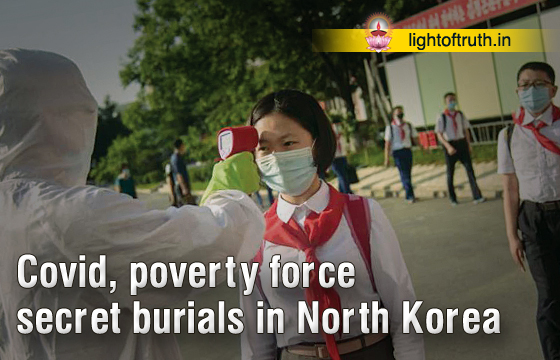
Covid, poverty force secret burials in North Korea
Extreme poverty intensified by the Covid-19 pandemic is forcing people in remote areas of communist North Korea to bury dead loved ones secretly in unmarked graves in forests at night to avoid high funeral costs, reports say.
North Korea recorded “zero” new infections over the previous 24 hours and the death toll remained at 74, the state-run Korean Central News Agency reported on July 30, citing officials. The total number of cases was put at 4.8 million out of a total population of 26 million people.
If true, the death rate of 0.0016 percent, is the lowest in the world.
The claims, however, are disputed by foreign experts who say the government is hiding the real infection figures and death toll to ensure North Korean leader Kim Jongun retains a firm grip on a nation facing a staggering economic situation, Associated Press reported.
Other outlets report that the pariah state is recording increasing deaths from the pandemic, prompting helpless Koreans to go for clandestine burials for family members — something very unusual as filial piety and reverence to ancestors are important in Korean culture.

Singapore should ban picking genetically best embryos
Genetic testing has recently attracted much interest in Singapore, with the Ministry of Health (MOH) issuing a public warning on the risks of consumer genetic testing, as well as announcing subsidies on IVF (in vitro fertilization) embryo genetic testing for some patients at risk of transmitting heritable genetic defects to their offspring.
In May 2021, the ministry placed a moratorium on genetic testing and insurance, which bans insurers from requiring their clients to provide predictive gene-tic test results for disease sus-ceptibility.
A more controversial development is the use of predictive genetic tests to select IVF embryos for good health and intelligence, in what is known as pre-implantation genetic testing for polygenic risks (PGT-P).
As good health and intelligence are complex traits deter-mined by the combination of multiple genes, polygenic risk scores (PRS) are used to estimate an individual embryo’s likelihood of developing an adult-onset, multi-factorial trait by analyzing the combination of specific gene-tic variants within its genome. The risk here is because there is no genetic modification, there are minimal risks involved, as it is basically a technique for picking the “winning ticket” in the “genetic lottery” for good health and intelligence.
It must however be noted that there is an important distinction between embryo testing and selection to avoid serious harm from known genetic defects and for so-called ‘enhancement’, like better health and greater intelligence.

Quo vadis? Pope revitalizes ancient theologian’s rules as a timely guide
When Pope Francis gave his first full-length interview after his election in 2013, he was asked about the importance of the church providing solid points of reference in a rapidly changing world. The new Pope pulled out his thumb-worn breviary and read out a Latin quote from a fifth-century French monk.
Highlighting the words of St. Vincent of Lérins, Pope Francis raised a curtain onto his pontificate: presenting a little-known but once highly influential theologian whose name and citations would soon appear in a number of papal speeches, documents and interviews over the next decade.
The Pope’s favorite quote? That Christian doctrine should follow the true and legitimate rule of progress, so doctrine may be “consolidated by years, enlarged by time, refined by age.”
It expresses how doctrine can develop and how there can be growth in the expression and awareness of the faith and in morals “while always remaining faithful to its roots,” He told re-porters on the plane to Rome from Morocco in 2019.
This is the point the Pope returned to again when speaking to reporters on his flight back to Rome from Canada July 29, when he said St. Vincent offered a “very clear and illuminating” rule for proper doctrinal development.
Like every one one of his predecessors, “Pope Francis has the difficult task of protecting the deposit of faith even while encouraging legitimate growth and progress,” U.S. Msgr. Tho-mas G. Guarino told on Aug. 3 in an email response to questions.
Tradition properly understood, he said, is “the root of inspiration for the church to go for-ward,” not backward.
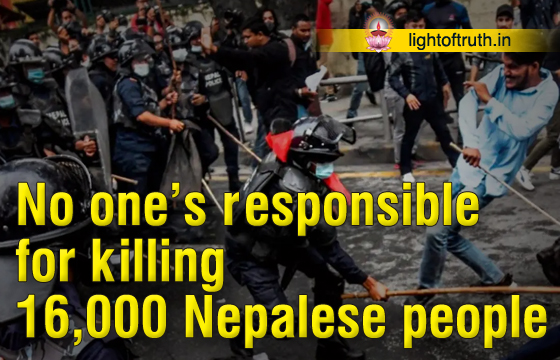
No one’s responsible for killing 16,000 Nepalese people
It still remains a Himalayan task for Nepal to achieve the transitional justice and reconciliation process to restore the social order that was ruptured because of mass atrocities during the protracted civil war from 1996 to 2006.
Sixteen years after the civil war left about 16,000 dead and 15,000 reported missing, repairing society after massive human rights violations has proved elusive in Nepal as the country does not possess the required political will.
The decade-long conflict was between the monarchy and Maoist rebels and as such transitional justice and reconciliation became tricky, which is even otherwise a balancing act. On the one hand, it upholds universal human rights norms to ensure justice for victims and, on the other, it respects the legitimacy of a political solution to a conflict.
King Gayanendra Shah, who ruled the nation of 30 million people at the time, subscribed to the divine right theory, which asked his subjects to treat him as an incarnation of the Hindu god, Vishnu. He took charge after the royal massacre in 2001 and reigned until 2008, when parliament declared Nepal a republic, ending the monarchy.
As chaotic politics and unstable governments continue, the bigger question asked is who will pin the responsibility for the atrocities, and on whom? Both security forces and rebels are accused of carrying out torture, killings, rapes and enforced disappearances.
The/ Comprehensive Peace Agreement, signed by rebel leaer Pushpa Kamal Dahal and the then prime minister. G.P. Koirala, pulled the curtain down on the 10-year conflict in the country.
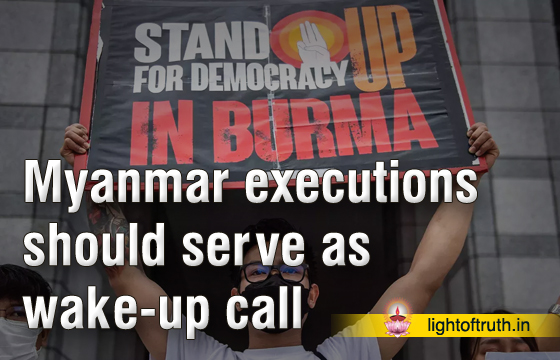
Myanmar executions should serve as wake-up call
The execution of four political prisoners by Myanmar’s military junta made headlines in international news media on July 25 and sparked outrage and shock among world leaders.
The executions, which made a comeback after more than three decades in the conflict-torn nation, are an attempt to instil fear among the people who are offering strong resistance to the military rule since the coup in February 2021.
The United Nations was joined by world leaders including the United States, Europe and Japan, besides global rights groups to vigorously condemn the barbaric act of executing political opponents. The junta accused the four over the weekend, after accusing them of committing terror acts.
The four include former MP Phyo Zeya Thaw and activist Kyaw Min Yu, better known as Ko Jimmy. Both were linked to democracy leader Aung San Suu Kyi’s National League for Democracy (NLD) party. The other two—Hla Myo Aung and Aung Thura Zaw—were accused of murdering a woman, which many believe was a trumped-up charge.
“The regime’s sham trials and these executions are blatant attempts to extinguish democracy; these actions will never suppress the spirit of the brave people of Burma,” US Secretary of State Anthony Blinken said.
Thomas Andrews, the UN special ra-pporteur on human rights in Myanmar, said: “These depraved acts must be a turning point for the international community.”
The junta continues to unleash terror and commit atrocities on its people as the world fails to take real action. World leaders have paid much attention to the Ukraine war while Myanmar has been completely forgotten.
Only when mass killings such as the Christmas eve massacre in Kayah state occur does the nation grab international media attention and the UN and world leaders rush to release statements that repeatedly express ‘deep concern’ over Myanmar’s crisis.

Save Myanmar from absolute hell
Myanmar has known many, many dark chapters in its history, especially over the past 18 months since the latest coup d’etat. But the execution of four pro-democracy activists — the first judicial executions in more than three decades — plunges the country into even greater darkness.
The news broke less than a week after the country marked its Martyrs Day — the anniversary of the assassination of founding father General Aung San and several members of his cabinet in 1947. Today, his daughter, democracy leader Aung San Suu Kyi, languishes in prison again, and Myanmar has four new martyrs to mourn.
I had the privilege of meeting two of the four: Kyaw Min Yu (aka Ko Jimmy) and Phyo Zeya Thaw. I did not know them intimately, but I met them a few times.
In the course of my human rights work throughout Asia over the past 25 years or more, I have known many friends and acquaintances who have been in jail or run the risk of imprisonment; quite a few have endured shocking torture; some who face death threats; two who have survived assassination attempts; and another two who have been assassinated.
“It shows the world the scale of the depravity, inhumanity, brutality, cruelty and criminality of the illegal military dictator-ship”
But this is the first time any-one I have met has been sentenced to death in cold blood by a dictatorship and the sentence has been carried out.
When the death sentence was imposed on these four earlier this year and upheld against their appeal last month, I was shocked.