
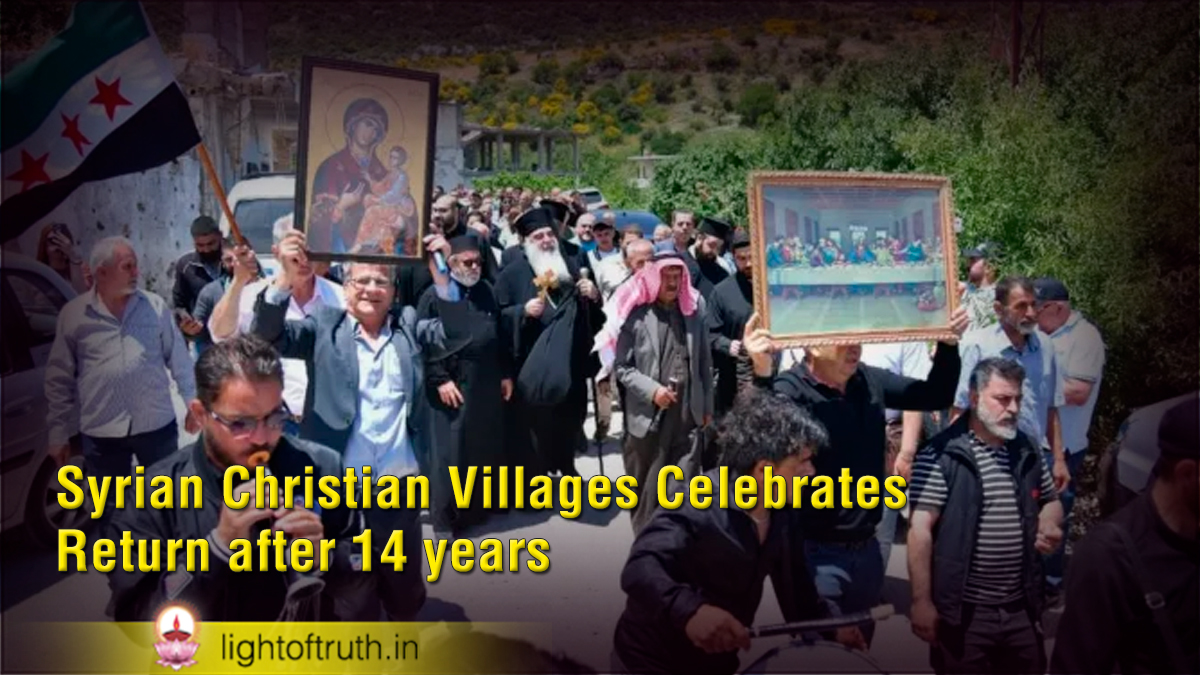
The people of Hallouz and Qastal al-Burj in Syria’s Idlib countryside marked a long-awaited return after 14 years of war and displacement, gathering with Greek Orthodox Metropolitan Athanasius Fahd of Latakia for a recent celebration that carried deep symbolic weight. Amid damaged homes and ruined churches, residents sang, danced, prayed, and raised crosses, icons, and the Syrian flag, expressing hope that permanent return will become possible once reconstruction support is available. In his remarks, Fahd said the villages are not merely places of residence but part of a centuries-old history rooted in the land, comparing the people’s attachment to their villages to the olive and oak trees planted by generations before them.
Category Archives: Asian
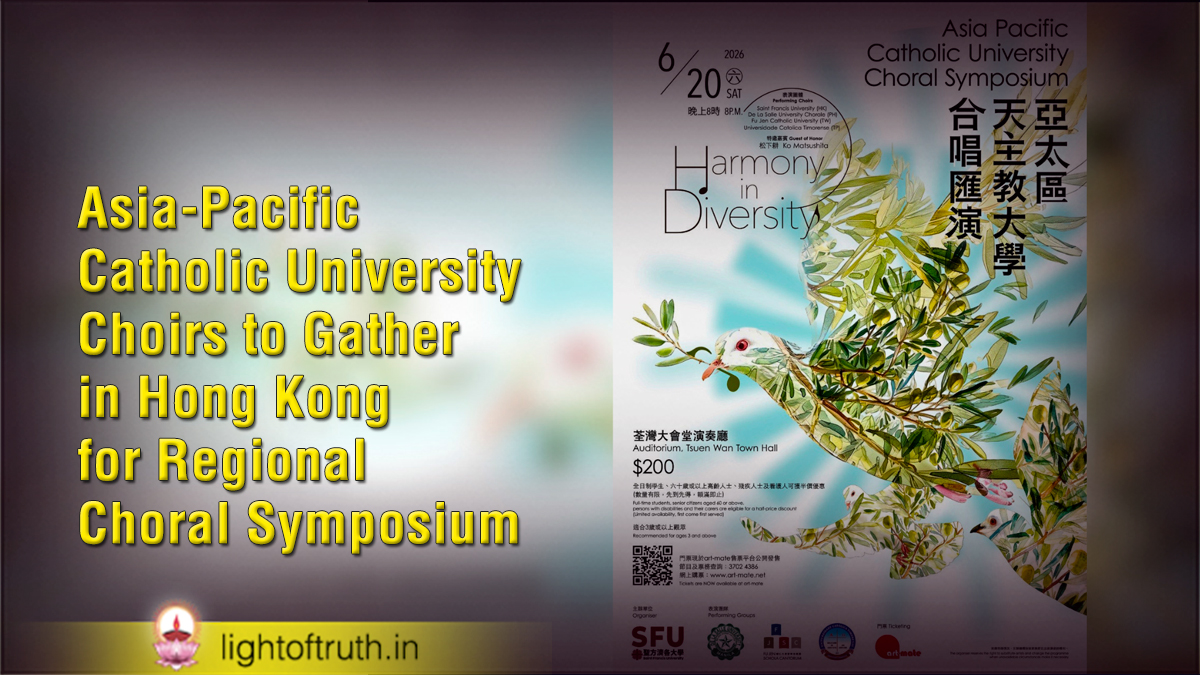
Asia-Pacific Catholic University Choirs to Gather in Hong Kong for Regional Choral Symposium
More than 150 student singers from Catholic universities across Asia and the Pacific are expected to gather in Hong Kong for the inaugural Asia Pacific Catholic Universities (APCU) Choral Symposium 2026. The five-day event, themed “Harmony in Diversity,” will be held from June 17 to 21 at St. Francis University in Hong Kong. It aims to strengthen musical excellence, intercultural dialogue, and faith formation among young people in Catholic higher education.
The symposium will open on June 17 with a liturgical concert at St. Andrew’s Church, followed by workshops, masterclasses, lectures, rehearsals, and collaborative performances on the university campus. Organizers said the gathering will provide a platform for students from different cultures and traditions to learn from one another while deepening their appreciation of sacred choral music.
Keynote sessions on June 18 will feature Msgr. Jose Luis Mariblanca, Head of the Holy See Study Mission in Hong Kong, and Felix Yeung, Director of Music at St. John’s Cathedral of the Anglican Diocese of Hong Kong. Msgr. Mariblanca will speak on “Harmony in Diversity,” while Yeung’s presentation, “The Spirituality of Choral Sacred Music,” will examine the role of sacred music in fostering unity, intercultural understanding, and shared spiritual experience.
Artistic leadership for the symposium will be provided by Ko Matsushita, a renowned Japanese composer and conductor who will serve as the event’s guest of honor. Under his direction, participating choirs will prepare a massed performance showcasing sacred and contemporary choral works from across the Asia-Pacific region.
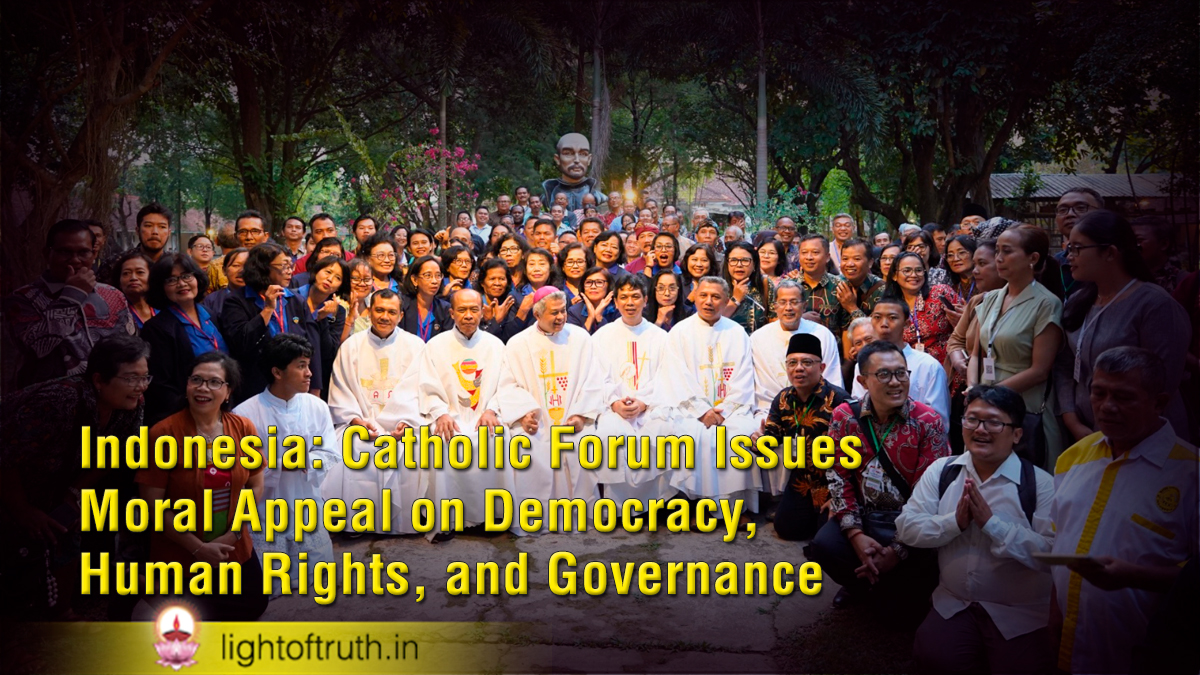
Indonesia: Catholic Forum Issues Moral Appeal on Democracy, Human Rights, and Governance
The Indonesian Catholic Community Forum (FMKI) has issued a Moral Appeal urging stronger protection of democracy, human rights, and social justice in Indonesia following its 13th National Meeting held in Klaten Regency, Central Java, from June 4 to 6.
The appeal was formally released on June 7 at the conclusion of the gathering, which brought together representatives from Catholic communities across Indonesia under the theme: “FMKI Rises and Moves: Safeguarding a Democracy Rooted in Pancasila Values.” Klaten is located in Central Java, between the cities of Yogyakarta and Semarang, in Indonesia’s main island of Java.
FMKI is a Catholic civil society forum representing lay communities from dioceses nationwide. The meeting included participation from Church leaders and officials, including Mgr. Antonius Subianto Bunjamin, OSC, chairman of the Indonesian Bishops’ Conference (KWI), and Mgr. Robertus Rubiyatmoko, Archbishop of Semarang. Delegates attended from across the archipelago, including Sumatra, Kalimantan, Sulawesi, Java, Bali, West Nusa Tenggara, East Nusa Tenggara, Maluku, and Papua.
The Moral Appeal draws on recent Church reflections, including the May 20, 2026 pastoral message of the Indonesian Bishops’ Conference and the outcomes of the 2025 Indonesian Catholic Church Grand Assembly (SAGKI). Both documents emphasized the protection of human dignity and social justice.
On legal and human rights issues, FMKI highlighted concerns over the rapid drafting of legislation with limited public consultation, reduced independence of law enforcement institutions, and the use of the Electronic Information and Transactions Law (UU ITE), which has been criticized for restricting freedom of expression.
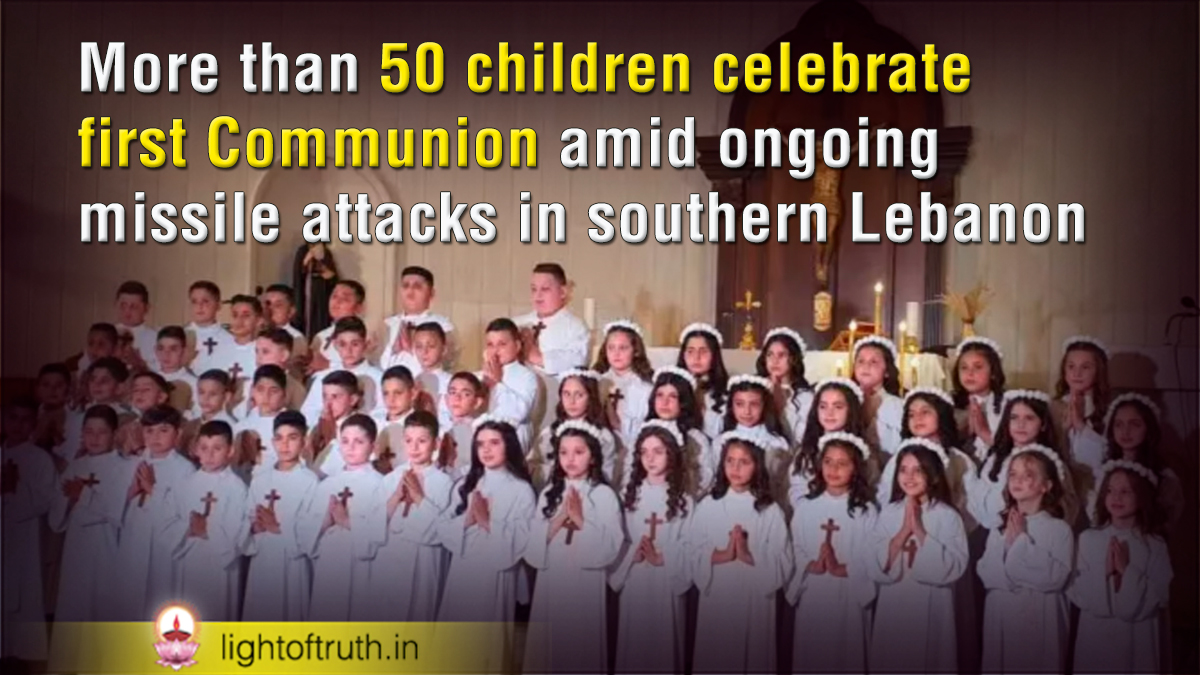
More than 50 children celebrate first Communion amid ongoing missile attacks in southern Lebanon
A resident of Rmeish whose daughter received her first Communion said villagers there have effectively been living in a state of war since Oct. 8, 2023.
Amid a rocket attack launched by Hezbollah on residential homes in the village of Rmeish in southern Lebanon, more than 50 children celebrated their first Communion in a testament to faith, resilience, and hope in the midst of war. In comments to local media, Rmeish Municipality Head Hanna Al-Amil said a missile fell between inhabited homes on Sunday morning and “narrowly avoided causing a major disaster.” Al-Amil stressed that the village contains no military forces, armed groups, or weapons, emphasizing that residents “simply want to live safely on their land, away from confrontation and escalation.” The people of Rmeish remain attached to their land and continue their lives “despite difficult circumstances,” he said, calling for the protection of civilians and for the village and its residents not to be placed at risk.
According to local reports, one rocket struck the Greek Orthodox Church of St. George, damaging parts of the church, while another landed within the grounds of the Sacred Hearts Secondary School, leaving extensive destruction to the building and its surroundings. “We have been living the reality of war,” Rmeish said, adding that the village has not experienced a genuine ceasefire at any point. “The children and their parents live in constant anxiety. We asked to postpone the first Communion to another time, but our parish priest refused and insisted that it take place.” Alam described the daily reality facing children in the village, saying they live without a sense of security or psychological stability. “My children pray and sing hymns all the time, and they live according to the news cycle. Some days schools are open, and other days they are not. Today the situation has become even worse because of the siege.”
In previous years, families would hold large celebrations for first Communion. This year, however, circumstances forced them to scale back their plans. “This year the celebration was limited to family homes, with no large festivities,” he said. “The number of children was also lower than in previous years because families are scattered. Some are in Beirut, while others have left the country.”
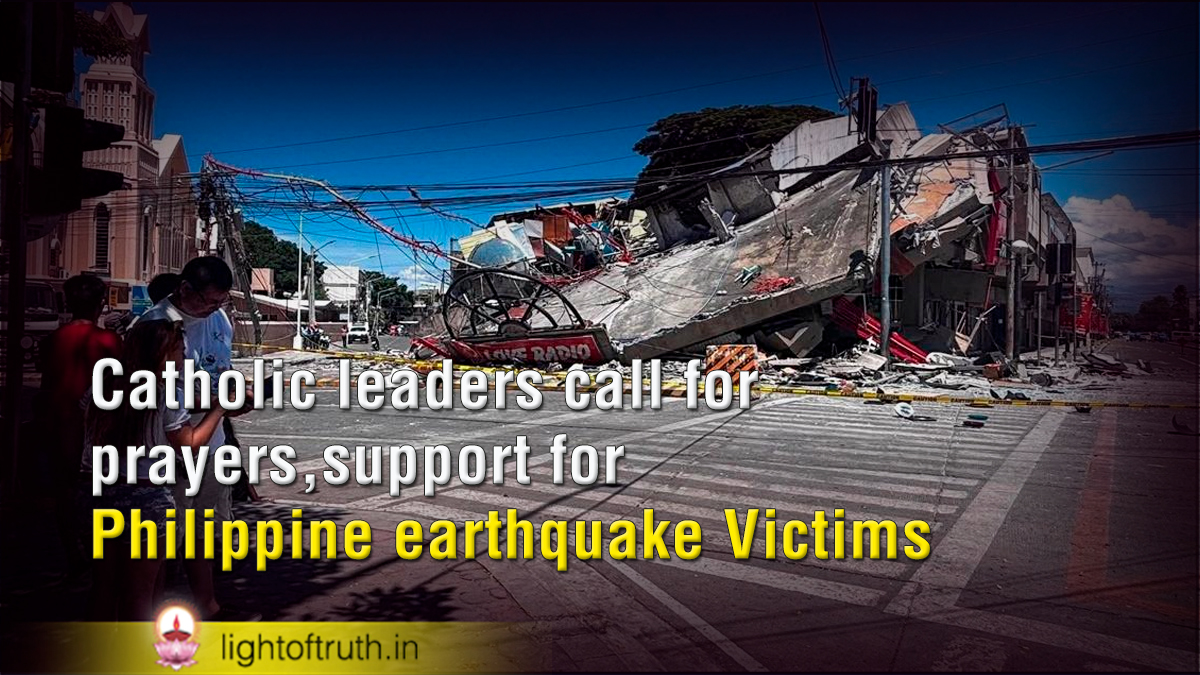
Catholic leaders call for prayers, support for Philippine earthquake Victims
Church leaders and aid groups are calling for assistance and prayers for victims after an offshore magnitude 7.8 earthquake struck Mindanao, southern Philippines, on June 8.
Catholic Church leaders, various religious congregations, and associations have called for prayers and support for all those affected by the powerful 7.8-magnitude earthquake that struck parts of Mindanao, southern Philippines, on June 8 leaving many communities in fear and uncertainty. The offshore earthquake severely impacting General Santos City on Mindanao, the Philippines’ main southern island. The tremor caused casualties and structural damage and triggered tsunami warnings. Philippine President Ferdinand Marcos suspended school classes in affected areas of Mindanao and urged people in coastal areas to evacuate immediately. He also assured citizens that the government will provide necessary aid to people in need.
Expressing his solidarity with victims and all those impacted, Cardinal Jose Advincula of Manila said: “With deep sorrow, I join our brothers and sisters in General Santos City and the surrounding communities who have been affected by the recent earthquake.” He appealed for help for survivors. “In these difficult moments, may we draw strength from our faith and from the solidarity of one another,” he said. “I also encourage all people of goodwill to extend whatever assistance they can to those in need.”
In addition, Bishop Leo Dalmao of the Prelature of Isabela de Basilan issued a pastoral letter calling for a second collection during Masses on Sunday, June 14. The collection will be sent to Caritas Philippines for relief assistance. The prelature joins the nation in prayer for the victims, the injured citizens, displaced families, and those people on the front line,” the prelate said. Catholic Relief Services (CRS), the international humanitarian agency of the Catholic Church in the United States, is coordinating with its partners to assess humanitarian aid in Mindanao.
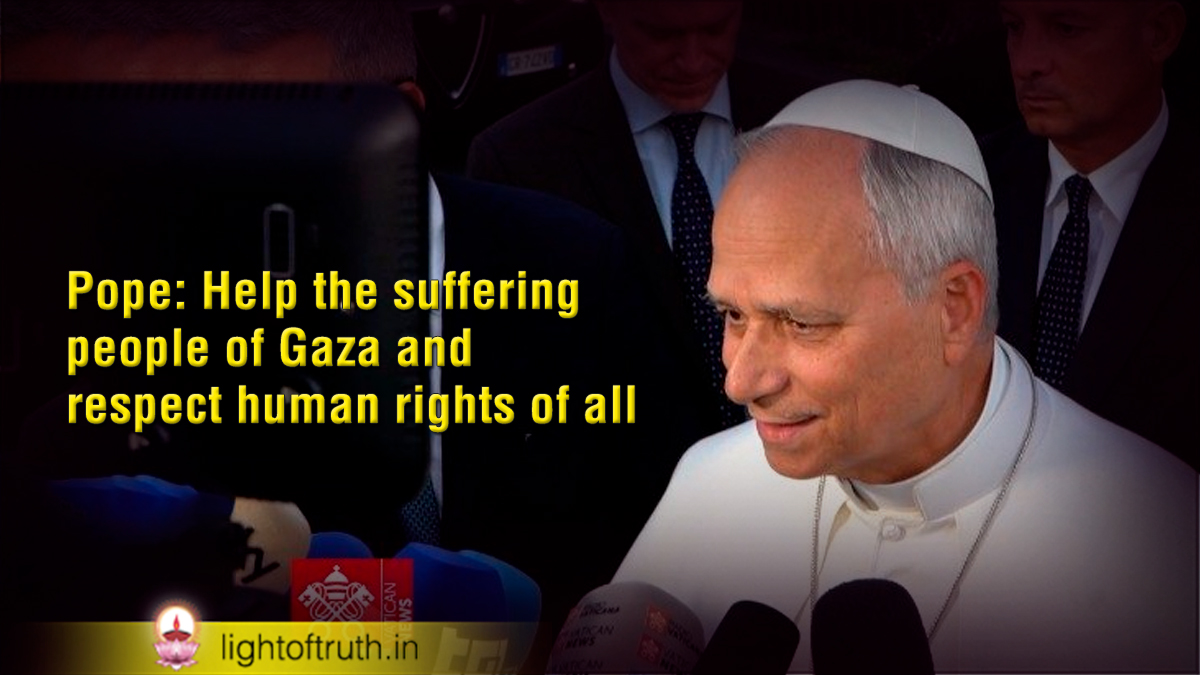
Pope: Help the suffering people of Gaza and respect human rights of all
Speaking to journalists outside Castel Gandolfo on Tuesday evening, Pope Leo renews his appeal for humanitarian assistance in Gaza, warns against the use of artificial intelligence in warfare that disregards human life, and highlights ongoing dialogue with AI Company Anthropic.
Speaking to journalists outside his residence in Castel Gandolfo on Tuesday evening, Pope Leo once again called on the international community to assist the people of Gaza, insisting that human rights must be respected “for everyone”.
Responding to a question about activists involved in the Gaza-bound Global Sumud Flotilla, following reports that some had been handcuffed and blindfolded., the Pope said that “we must renew our appeal for the respect of the human rights” of every person.
He went on to lament the continued suffering of civilians in Gaza, noting that “unfortunately, the people of Gaza are still not receiving humanitarian aid”. The Pope explained that this situation “is provoking protests” and with them complications, including those who were involved in the Flotilla.
“I would also like to renew this not only as an invitation, but truly as an appeal”, he continued, urging “all authorities to assist and accompany the people of Gaza, and to help begin reconstruction”. “The people are truly suffering”, the Pope said, adding that they “continue to suffer greatly”.
Asked what it means when unarmed peace activists are met with violence, Pope Leo warned of the danger of fuelling further hatred. “We are provoking more and more hatred,” he said, adding that “violence does not help. From any side”. Instead, the Pope stressed the need “to return to negotiations” and “to seek, through dialogue, to resolve problems”, always “respecting the human rights of everyone”.
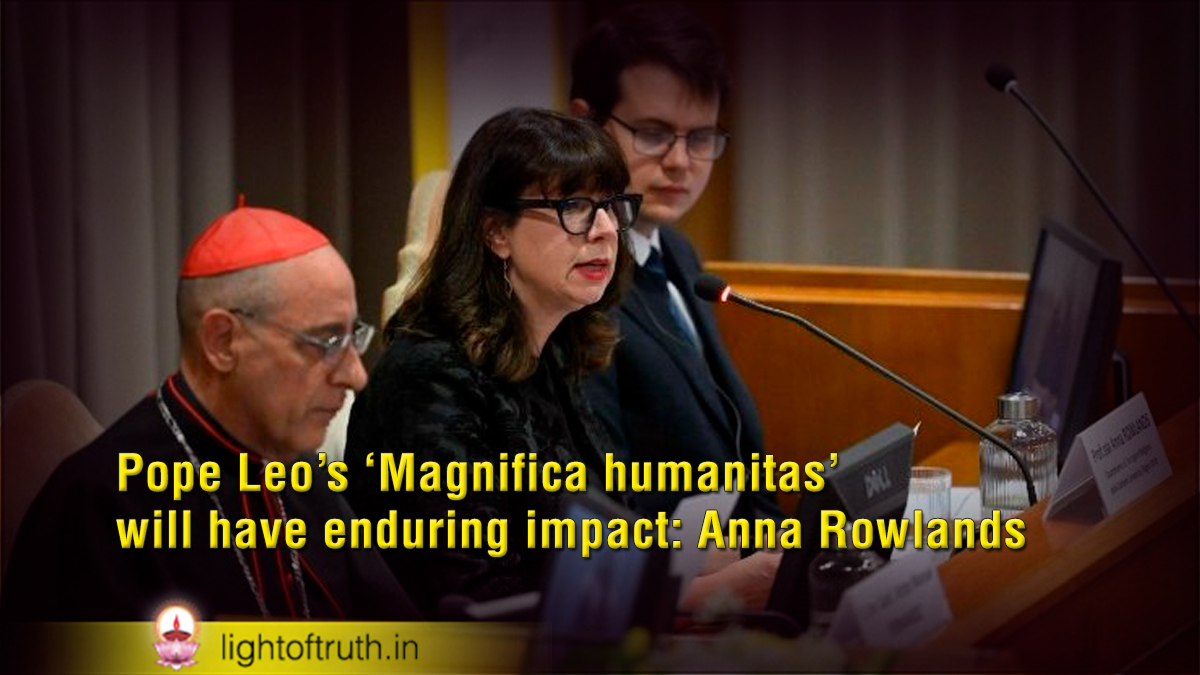
Pope Leo’s ‘Magnifica humanitas’ will have enduring impact: Anna Rowlands
As Pope Leo XIV’s encyclical ‘Magnifica humanitas‘ is unveiled, Professor Anna Rowlands, theologian at Durham University, tells Vatican News that such a powerful message—addressing both the benefits and dangers of our AI era—will leave an enduring mark on the Church and the world.
“There is not a tomorrow to begin thinking about these issues.”
Professor Anna Rowlands, theologian at Durham University in the United Kingdom, stressed this point in an interview with Vatican News following the release of Pope Leo XIV’s first encyclical, Magnifica humainitas: On safeguarding the Human Person in the Time of Artificial Intelligence, presented at the Vatican on May 25.
The document, signed by Pope Leo on May 15 – the 135th anniversary of Pope Leo XIII’s landmark encyclical Rerum Novarum – was unveiled in the Vatican’s New Synod Hall in the presence of the Pope himself. Professor Rowlands was among the speakers at the presentation.
Speaking to Vatican News on the side-lines of the event, Professor Rowlands described the encyclical as “an absolutely vital contribution” for two principal reasons.
First, humanity is facing a moment of profound urgency regarding the technological issues addressed in the document. “There is not a tomorrow to begin to think about these issues,” she warned, “because their impact on workplaces, on labour, on immigrants, on families, on political society and on conflicts globally is now, and was yesterday, and will continue tomorrow as well.”
She acknowledged that many people feel uncertain or unqualified to engage with questions surrounding artificial intelligence. Professor Rowlands suggested that one of the central concerns of Magnifica Humanitas is ensuring that these questions are not left solely to private spaces shaped primarily by profit rather than by human dignity.
“How do we create common spaces,” she asked, “where particularly the voices of the most marginalized, and those most harshly affected by the reality of an algorithmic order, a digital horizon, and an AI world, are heard first?” The encyclical insists that those voices must be central to any conversation aimed at promoting the common good.
The Holy Father, challenges society to reflect on fundamental questions: “What do we think human life is? Who are we as human beings? What vision and goal are we aiming for in our humanity and in our lives together?”
“He offers us both a very strong set of criticisms,” she continued, “of the false storylines, the false narratives about what it means to be human, particularly those that place power and domination over others, whether in politics, war, conflict, or the economy.” In contrast to those narratives, Pope Leo proposes “a rather beautiful vision of a civilization of love.”
The encyclical urges humanity to recover a shared moral imagination, especially “a way of seeing one another and the world that recognizes the inherent value of the human person.” The encyclical warns against transferring human dignity to technological tools or imagining that AI could somehow become “more human” than humanity itself, while simultaneously diminishing our own humanity.
At the same time, the document is also an invitation. “We need together to build that civilization of love,” and we only do that through fully living into a sense that we are finite creatures created for love, yearning for justice, and that we create that world together in participation.”
Professor Rowlands concluded by reflecting on Magnifica humanitas within the broader tradition of Catholic social teaching.
“Magnifica humanitas is fresh and new because it is addressing AI,” but it stands within a long tradition of encyclicals focused on industrialization, capitalism, the condition of work, and the meaning of technology for human beings.” The message of Pope Leo XIV’s encyclical, she suggested, is one that will resonate far beyond the present and will impact generations.
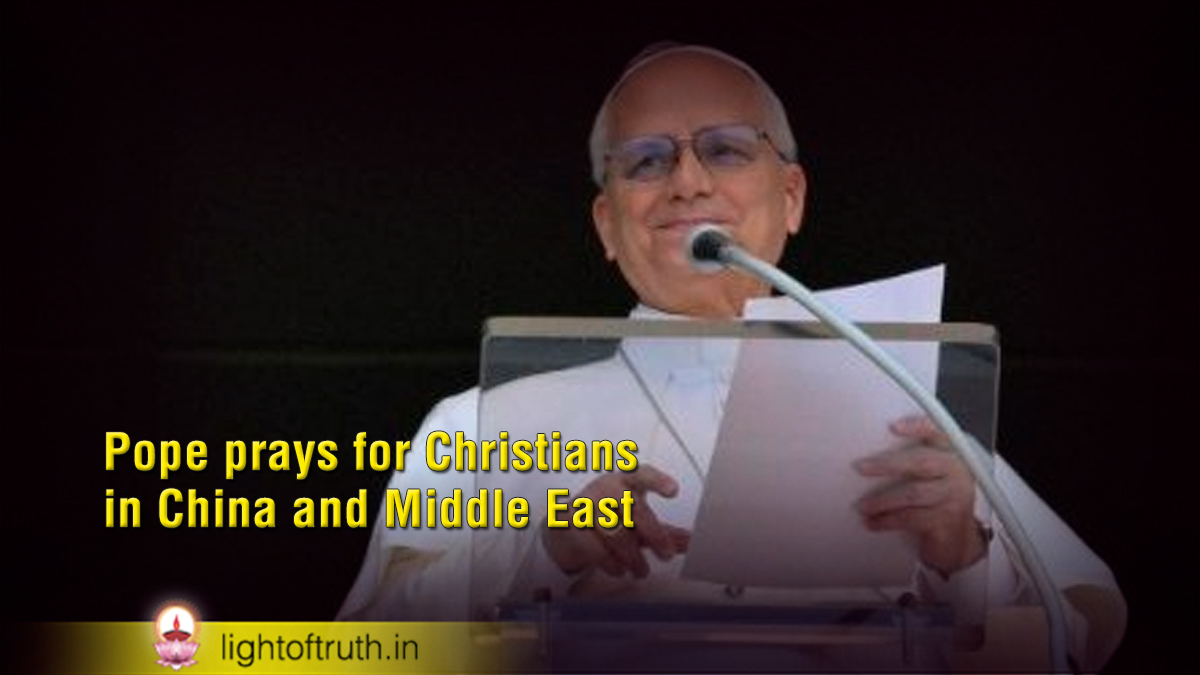
Pope prays for Christians in China and Middle East
Following the Regina Caeli prayer, Pope Leo XIV entrusts Chinese Christians to the Virgin Mary, praying that they might be witnesses of “hope and peace.” The Pope’s thoughts also turn to those suffering from the conflict in the Holy Land.
Following the Regina Caeli prayer on Sunday, the Pope marked the World Day of Prayer for the Church in China. The day of prayer, the Pope noted, coincides with the feast of the Blessed Virgin Mary Help of Christians, who is venerated “with profound devotion” at the Shrine of Sheshan in Shanghai.
Pope Leo thus entrusted the Chinese Christian community to Mary, in order that it might continue bear witness to the Gospel:
“Let us join our prayers with those of Chinese Catholics, as a sign of our affection for them and of their communion with the universal Church and with the Successor of Peter. May the intercession of the Queen of Heaven grant the believing community in China the grace of unity and give everyone the strength to witness the Gospel in their daily struggles, so that they might be seeds of hope and peace. In particular, I invoke eternal peace for the victims of the recent mining accident in northern China.”
The Pope then renewed his appeal to Mary, Help of Christians, entrusting to her “the Christian communities of the Holy Land, Lebanon, and the entire Middle East, who are suffering because of war.”
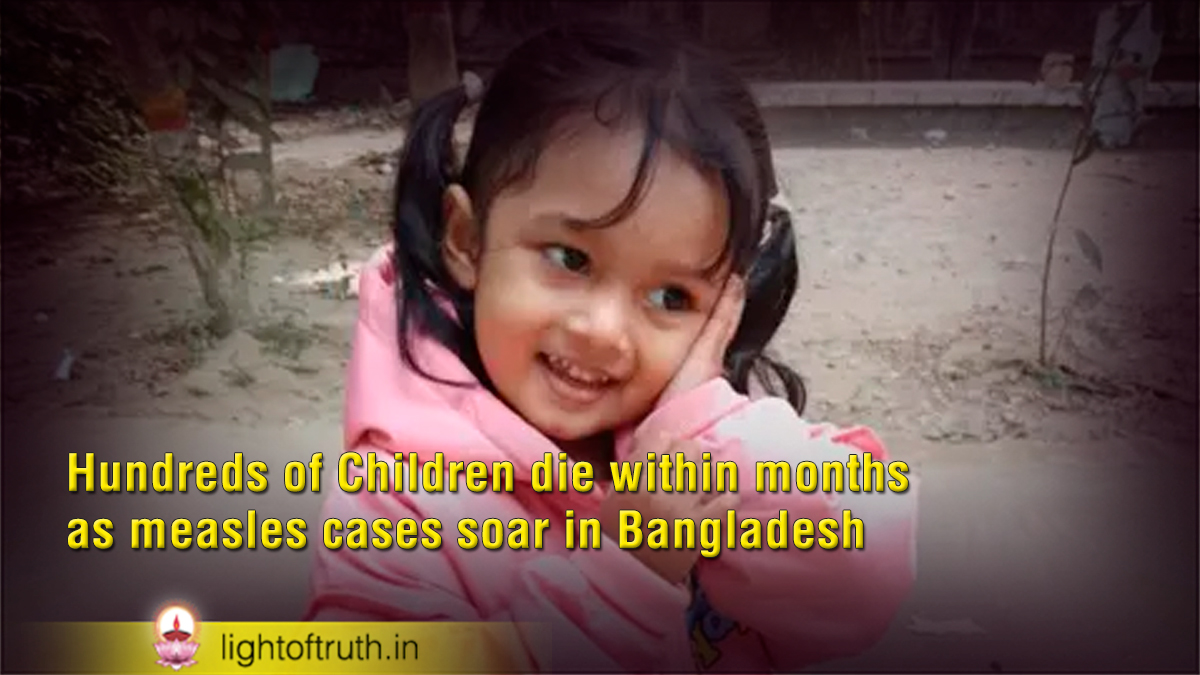
Hundreds of Children die within months as measles cases soar in Bangladesh
Over 500 children with suspected and confirmed cases of measles have died in Bangladesh since March, according to the country’s health ministry
Al Amin, who lives with his family in the Bangladeshi capital of Dhaka, says his daughter had all her vaccines, apart from measles. On 8 March Al Amin took Akira to hospital, suffering with what he thought was a normal fever. She improved, went home, and then started developing a rash, a high fever and sores in her mouth. She was discharged and readmitted to hospital a total of five times, Al Amin says; only on the fifth occasion did a doctor tell him she was suffering from measles. Akira was put on life support. She died 27 days after she was first admitted. Over 500 children with suspected and confirmed cases of measles have died in Bangladesh since March, according to the country’s health ministry.
The health minister said last week that doctors and nurses treating those with the virus have had their Eid holiday leave cancelled and the government has been running a mass vaccination campaign to slow the spread and save lives. Akira’s parents tried on four occasions to get her vaccinated against measles, but were unable.
Al Amin says he and his wife still torture themselves, thinking that their daughter may have picked up the virus in the hospital. Al Amin says he and his wife still torture themselves, thinking that their daughter may have picked up the virus in the hospital. “From the ticket counter line to the x-ray room, there was a measles patient everywhere,” he says.
He is angry; that his child couldn’t get a vaccine, that her symptoms were missed, that he feels the hospitals failed to keep patients with measles apart from others.
In just over two months, the number of suspected cases of measles have reached over 60,000 in Bangladesh, according to the health ministry. The exact number has not been confirmed, as many are waiting for results from the laboratory.
Highly contagious, measles spreads quickly through coughs and sneezes and is particularly dangerous for unvaccinated young children under the age of 5.
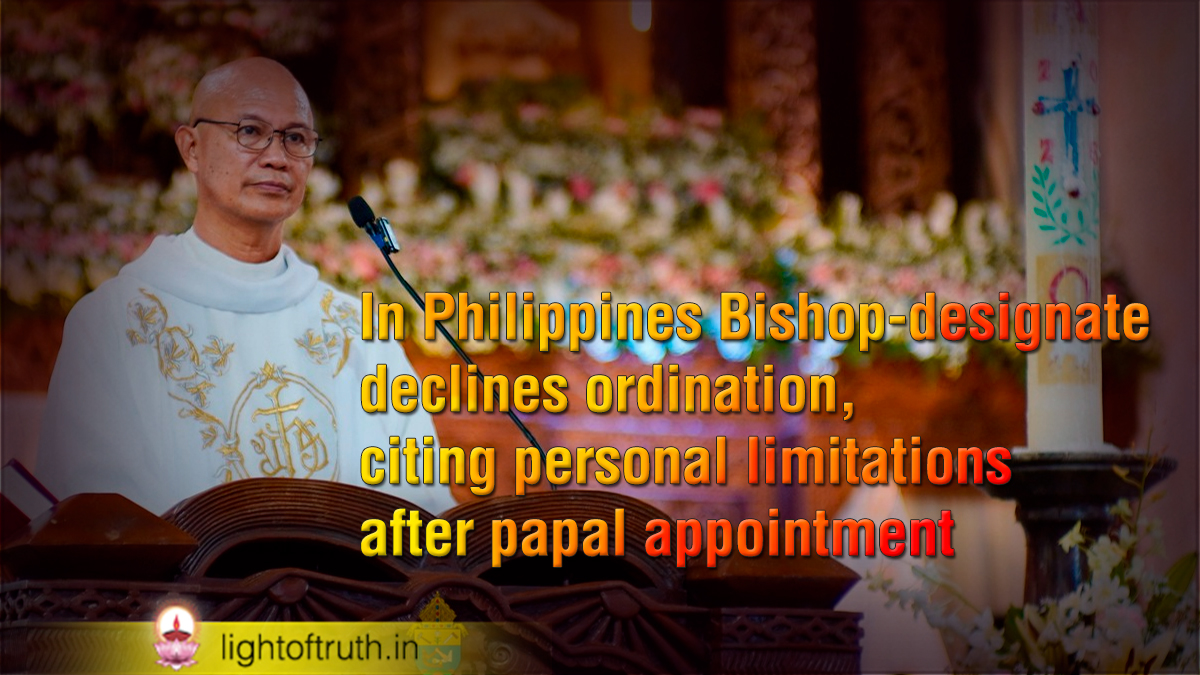
In Philippines Bishop-designate declines ordination, citing personal limitations after papal appointment
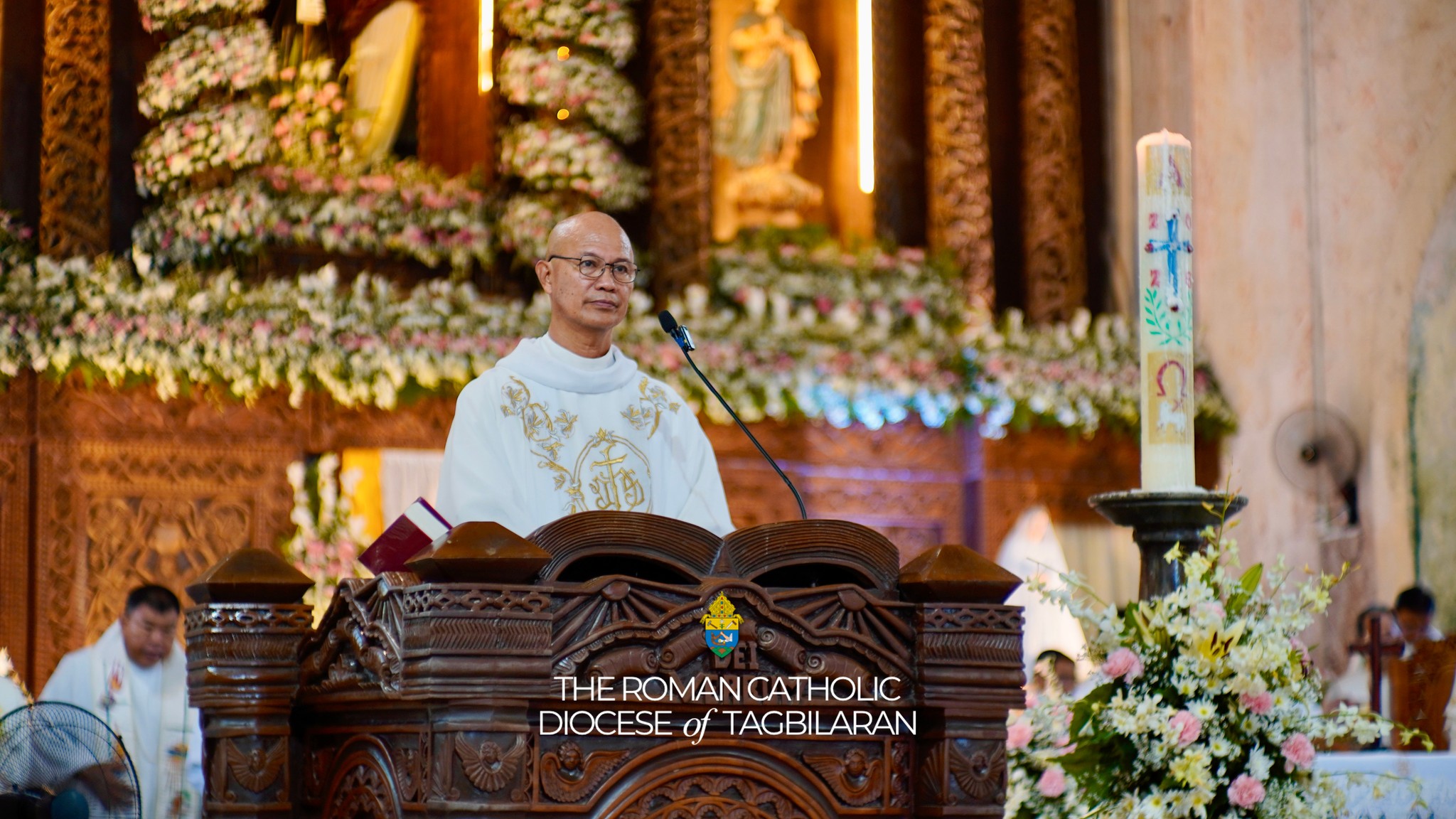
Fr. Gerardo Saco Jr., who had been named bishop of Tagbilaran, announced he would not proceed with his ordination scheduled for May 26, leaving the diocese without a bishop months after its last prelate was transferred.
“After much prayer and careful discernment, I humbly inform the faithful of the Diocese of Tagbilaran of my decision not to proceed with my Episcopal Ordination scheduled on May 26, 2026,” Saco said.
He described the move as a “change of heart” and asked for understanding from the faithful. “It comes from a deep awareness of my own human limitations and inadequacies” .
The Diocese of Tagbilaran, located in Bohol province in the central Philippines, has been without a bishop since September 2025, when Archbishop Alberto Uy of Cebu was transferred to his current post. Saco had been serving as diocesan administrator at the time of his appointment.
In a separate statement, Archbishop Alberto Uy of Cebu confirmed that the Vatican had accepted Saco’s decision. “Bishop-elect Gerardo ‘Jingboy’ Saco Jr. has communicated to the Holy Father his decision not to proceed with his episcopal ordination. The Papal Nuncio has informed that the Holy Father has accepted his decision,” Uy said. He acknowledged the response of the local Church, saying the development “has brought sadness to many of us, especially the faithful of the Diocese of Tagbilaran.”
Saco said he would continue his ministry as a priest. “Please be assured of my continued commitment as a priest, to journey with you in faith in the Risen Lord, who never abandons us in moments of trial and need,” he said.