

Catholic business leaders from Thailand and the Philippines gathered at the Baan Phu Waan Pastoral Training Centre on June 7–8 for the inaugural session of the Catholic Business Wisdom Enhancement Program, a new formation initiative aimed at aligning business leadership with Christian values. Organized by the Catholic Business Executives and Profe-ssionals (CBEP) in Thailand and the Brotherhood of Christian Businessmen and Professionals (BCBP) in the Philippines, the program is part of a broader collaboration under UNIAPAC, the International Christian Union of Business Executives. The network represents over 45,000 executives from 38 countries and promotes faith-driven leadership across global markets. The CBEP Academy is designed as a spiritual and ethical roadmap for business, emphasi-zing discernment, responsible ste-wardship, and the understanding of work as a vocation. In the Philippines, the initiative has already reached more than 20,000 BCBP members.
“Work is not a consequence of sin, it is part of God’s plan,” said Bobby Lavina, chairman of Phinma Foundation Inc., during one of the sessions. He said work is “a noble thing and part of what it means to be human.” He challenged participants to reflect on the moral dimensions of modern business practice. ”What is the greatest challenge in your opinion to make the way business is done now reflect more the face of Christ?” he asked. Joey Avellana, president of Avellana & Associates, echoed this spiritual framing. He said God Himself “is a worker… the first worker.” “Because God created man in His own image, therefore God created man as a worker. We are God’s coworkers. We are God’s co-creators,” he added.
Category Archives: Asian
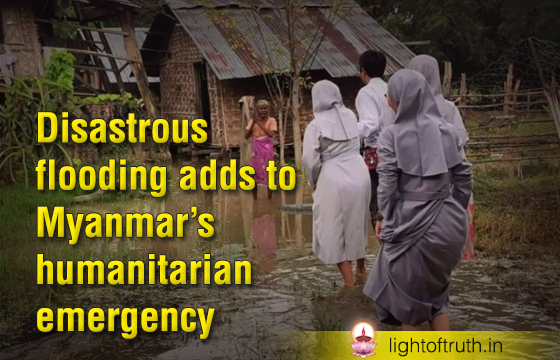
Disastrous flooding adds to Myanmar’s humanitarian emergency
The ongoing humanitarian emergency in Myanmar is being compounded by devastating floods in the north of the country, accor-ding to the Vatican’s Fides news agency, which is operated by the Pontifical Mission Societies. The flooding came as a result of roughly a week of intense rains that espe-cially affected Myanmar’s Saga-ing region and Kachin State, leading to further suffering for the nation’s civilian population, which has already been extremely tried by the ongoing civil conflict.
The Sagaing region had already been under severe strain following the March 28 earth-quake, which killed more than 3,700 people, displaced thousands of others, and caused immense damage to homes and infrastru-cture. Meanwhile, Reuters is reporting that Myanmar’s ruling military junta said it has extended a temporary ceasefire to June to support reconstruction and relief efforts following the quake.
Days after that natural disa-ster, in early April, the junta announced a ceasefire to support relief efforts, following similar moves by anti-junta armed groups. In addition, the opposition groups have also extended their ceasefire to the end of June. Despite the ceasefire announcement, the agency reports, military airstrikes and artillery attacks have conti-nued in some parts of the country.
A new report issued by the United Nations High Commi-ssioner for Human Rights, cited by Fides, confirms the worsening humanitarian crisis in Myanmar, especially due to military viol-ence and the collapsed economy. Set to be presented at the next session of the UN Human Rights Council in early July, the document calls the situation “increasingly catastrophic, marked by incessant atrocities that have affected all aspects of life.” Moreover, it details how the economic plight is compo-unding the nation’s emergency.
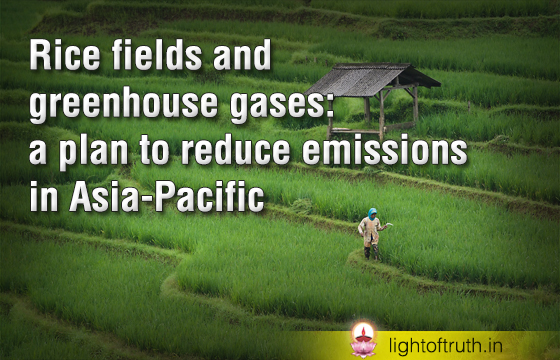
Rice fields and greenhouse gases: a plan to reduce emissions in Asia-Pacific
The Asian Development Bank (ADB), in collaboration with CGIAR and with the support of the Gates Found-ation (the private American foundation founded by Bill Gates and Melinda French Gates) launched a project to boost investments in sustainable rice production.
The initiative includes an initial allocation of US$ 1.5 billion to the Asia-Pacific region, shared between Bangladesh, Cambodia, China, Pakistan and the Philippines. The plan is part of a broader plan, announced in May, to mobilise US$ 40 billion by 2030.
The goal is to make the rice sector more resilient to climate shocks, thanks to more efficient cultivation methods that increase productivity while reducing environmental footprint.
Rice, a staple in the Asian diet, is now at the centre of a heated debate in many parts of the region. In the Philippines, the government has declared a state of “food security emergency” to deal with soaring prices, while in Indonesia, more and more land is being allocated to rice.
In Japan, the authorities are grappling with a major crisis that has had serious political repercussions. The drastic drop in harvest yields is one of the main causes of the emergency in the wake of excessively high temperatures recorded in the summer of 2023.
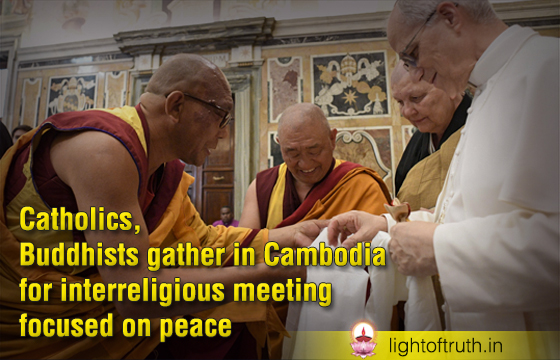
Catholics, Buddhists gather in Cambodia for interreligious meeting focused on peace
The Vatican commenced its eighth Buddhist-Christian Colloquium on 27 May in Cambodia, bringing together representatives of both religions to discuss the promotion of peace in Asia. Prefect for the Dicastery for Interreligious Dialogue Cardinal George Koovakad delivered a short speech on the first day of the May 27–29 conference on “Buddhists and Christians Working Together for Peace through Reconciliation and Resilience,” highlighting the significance of the two religions’ common commitment to peace, Vatican News reported. “Together, as Buddhists and Christians, let us explore how reconciliation and resilience can help shape peaceful and compassionate societies,” Koovakad said.
Approximately 150 people from Cambodia and abroad are participating in the three-day meeting organized by the Vatican’s Dicastery for Interreligious Dialogue, the Apostolic Vicariate of Phnom Penh, Saint Paul Institute, Preah Sihanouk Raja Buddhist University, and the MAGGA Jesuit Research Centre.
Since 1995, the Vatican has held a series of Buddhist-Christian meetings in different countries to advance mutual understanding and collaboration between the Church and non-Christian religions in the spirit of Pope Paul VI’s Second Vatican Council declaration Nostra Aetate released in 1965. The last Buddhist-Christian Colloquium in 2023 was held in Bangkok and focused on the theme of “healing a wounded humanity and the earth.”
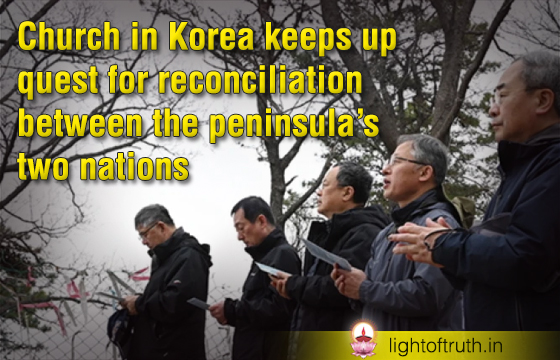
Church in Korea keeps up quest for reconciliation between the peninsula’s two nations
Eight decades after the partition of the Korean peninsula, the Catholic Church in South Korea remains one of the few actors that, with perseverance and faith, keeps alive the hope for reconciliation between the two Koreas. “Hatred and suspicion can never be a solution,” Bishop Simon Kim Jong-Gang, president of the Korean Reconciliation Commission, told ACI Prensa, CNA’s Spanish-language news partner.
Last month, the Korean bishop led a pilgrimage to Kyodong Island on the border with North Korea in a gesture that highlighted the Church’s commitment to reconciliation between the two countries. The bishops walked along the three-mile barbed-wire fence on the island that has divided the two countries since the Korean War (1950–1953) and prayed that the two countries would put their differences behind them.
For 80 years, soldiers on both sides of the demarcation line at the Panmunjom Peace Village in the Demilitarized Zone between the two Koreas have stood guard face to face, armed and under the pressure that any minor incident could trigger a new war. In 2018, as part of agreements between the two countries to build mutual trust, the Joint Security Area was cleared of firearms and military posts. But this openness was short-lived. In early 2020, North Korea closed its borders due to the COVID-19 pandemic and again ordered its soldiers to shoot at any movement across the border.
Kim noted that there are no exchanges between South and North Korea. “It’s impossible to meet people, exchange letters or phone calls, or even send emails between the two sides of Korea.”
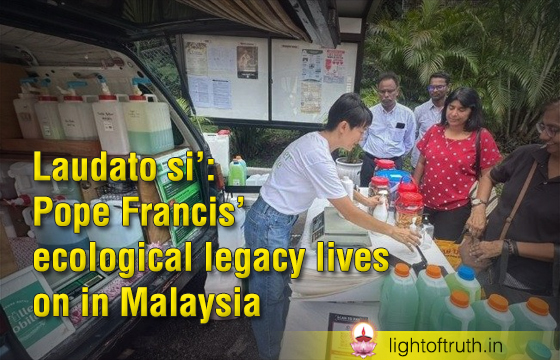
Laudato si’: Pope Francis’ ecological legacy lives on in Malaysia
Pope Francis’ call for ecolo-gical conversion has transformed hearts and communities world-wide. In Malaysia, the late Pope’s call for climate responsibility has flourished, with churches leading the movement for environmental stewardship. Inspired by the late Pope Francis’ encyclical Laudato si’, which came out ten years ago, the Catholic Church in Malaysia is converting used cooking oil into biofuels, planting trees, cutting single-use plastics, recycling candles, and pledging to live out a “deep ecological spirituality.”
In 2023, the country’s bishops signed an Ecological Diocese Pledge, committing parishes to live out “deep ecological spiritua-lity” and advance environmental justice across the country.
All nine bishops in Malaysia initially signed the pledge, before encouraging all the country’s parish priests to do so as well. The document includes ecological protocols, self-monitoring forms, and other documents designed to assist each diocese and parish in their ecological transition, with a focus on reducing carbon foot-prints and fostering community resilience.
The text of the pledge reads, “The Roman Catholic Parish of (name), Malaysia, hereby decla-res its pledge to be an Ecological Diocese in perpetuity, living out a deep ecological spirituality and advancing ecological justice and resilience for all creation, by pursuing decarbonised pathways and the building of community and Earth resilience, according to the Ecological Diocese Protocols appended to this pledge, to the best of its ability and creativity within local circumstances.”
The Archbishop of Kuala Lumpur, Julian Leow Beng Kim, told Vatican News that Pope Francis “truly highlighted the existential problem of climate change with the encyclical Laudato si’ and the more recent and urgent call to action of Laudate Deum.”
“The world is indeed in crisis, and the whole of humanity must respond and have an integral conversion now before it is too late,” Archbishop Julian said. He added that he is encouraging all parishes in the Archdiocese to undergo an ecological conversion, saying that “although much has been done, much more is needed locally and globally to tackle this climate crisis.”
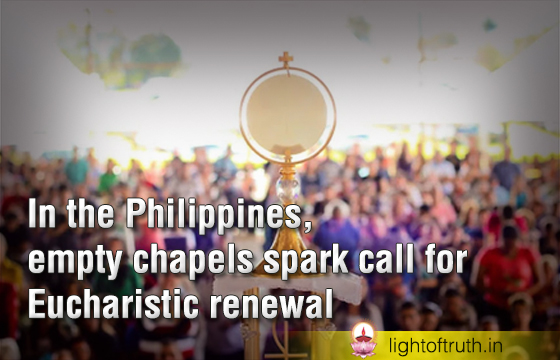
In the Philippines, empty chapels spark call for Eucharistic renewal
As the National Eucharistic Revival comes to an end in the United States this year, many believe there is a need for a global Eucharistic revival in other parts of the world — including the Philippines. Empty adoration chapels in the majority-Catholic country and lack of belief in the Real Presence are leading more parishes to implement a simple initiative called the “Holy Hour Pledge” and call for more catechesis.
Filipino-American priest Father James Cervantes of the Marians of the Immaculate Conce-ption (MIC) lamented the phenomenon throughout different parishes across the Philippines, despite its renown as the largest Catholic nation in Asia and the third largest in the world.
“I came here to Manila just a year and a half ago. I noticed there are a lot of adoration chapels where Jesus is exposed, but they’re empty and abandoned. I was puzzled. I thought, ‘OK, maybe this is just one.’ But then I visited another church and another, across different cities – and again, Jesus was exposed, but they were all empty. In the U.S. and in Poland, this wouldn’t even be allowed. All I could think was, ‘Oh Lord, no one is in here, I’m so sorry Lord.’” Cervantes recounted a tragic situation in one of the Manila parishes whereby the monstrance – with the consecrated host – was stolen by thieves inside an empty adoration chapel.
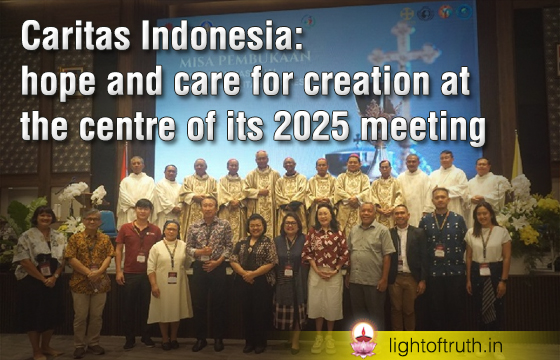
Caritas Indonesia: hope and care for creation at the centre of its 2025 meeting
Caritas Indonesia’s 2025 National Network Meeting was held from 21 to 24 May at the headquarters of the Catholic Bishops’ Confe-rence of Indonesia (KWI), in central Jakarta. The biennial meeting brought together the main actors of the Catholic Church’s huma-nitarian network to renew their commitment to cooperation, environmental justice and inclusive development across Indonesia. The theme echoed the Jubilee motto with hope at its centre.
The event fostered spiritual and strategic reflection, with participants urged to deepen their shared mission of mercy and solidarity. “The National Meeting is a vital opportunity to nurture synergy and strengthen the spirit of fraternal cooperation among diocesan Caritas offices nationwide,” said Emeritus Bishop Aloysius Sudarso SCJ, Chairman of the Karina Foundation’s Governing Board. “This spirit must guide our efforts in disaster response and long-term humanitarian programmes,” he added.
Now in the third year of the 2023-2027 Strategic Plan, Caritas Indonesia’s commit-ment is more on green initiatives. During the event, the dioceses presented their best pra-ctices for the care of Creation, in line with Pope Francis’s encyclical Laudato Si’. “These ecological programmes reflect our commit-ment to care for our common home,” Bishop Sudarso said, expressing hope that the meeting would generate follow-up actions to scale up environmental work across the country.
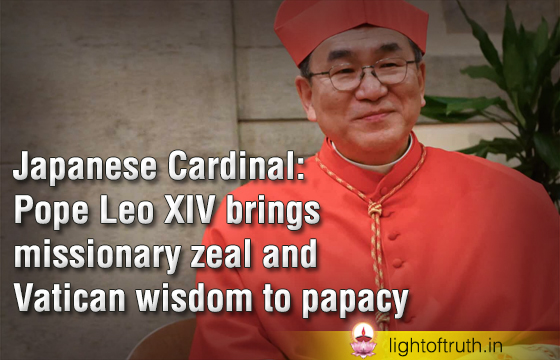
Japanese Cardinal: Pope Leo XIV brings missionary zeal and Vatican wisdom to papacy
Japanese Cardinal Isao Kikuchi of Tokyo says Pope Leo XIV’s previous work as a mi-ssionary and as a Vatican official were important reasons he will make a good pontiff. Speaking to the Catholic Herald, the cardinal gave his reflections on the election of American Cardinal Robert Francis Pre-vost, a member of the Augusti-nian order, to the Chair of Peter on May 8.
“Pope Leo XIV has a rich background in missionary work, especially in Peru, where he served both as a missionary and later as a bishop. He also led the Augustinian Order as its Superior General and most recently served as Prefect of the Vatican’s Dicastery for Bishops, giving him deep experience in both pastoral and administration in the Church and also as an effective and reliable leader,” Kikuchi said.
“During the general con-gregation, many cardinals reflected on the importance of the leadership of Pope Francis, especially his courage and wisdom to lead the People of God,” the Japanese cardinal said. “However, we all understood that we were not looking for a second Pope Francis, photocopy of Pope Francis, but a true successor to Saint Peter, who would faithfully guide the Church according to God’s will and responding to the trust given by Jesus,” he said.
“Many expressed that we need a pope who has deep experience and knowledge in both pastoral and administration of the Church with deep spirituality. Many expressed the need to have pastoral minded Pope to continue the footpath of Pope Francis and deepen the path of synodality,” Kikuchi continued.
“Many expressed that we need Pope to run the Curia well with the mind of restructuring began by Pope Francis. Also many expressed that we need a pope with deep spirituality and sound understanding of the faith to unite all in the Church. There were not so many cardinals among us who could be fit into this category and Cardinal Prevost was just the man to fulfill all these requirements,” he explained. Kikuchi said that after some votes, it was clear for all cardinals in the conclave that Prevost “is the one who had already chosen by Jesus himself: We finally found him.
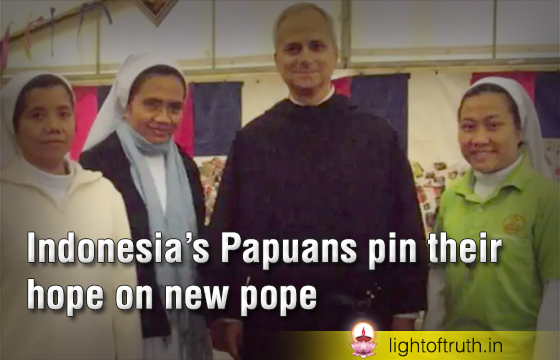
Indonesia’s Papuans pin their hope on new pope
People in Indonesia’s Chri-stian-majority, strife-torn Papua expressed hope that newly elected Pope Leo XIV, who visited the region twenty years ago, will pay attention to their ongoing plight and challenges. The optimism sparked after Cardinal Robert Francis Prevost was elected the successor of late Pope Francis in the Vatican on May 8, becoming the first pope from the United States.
Following the election, several photos from his visit to Papua in 2003 have been widely shared on social media sites, triggering enthusiastic reactions from Papuan netizens. One photo shows Father Prevost posing for a photo with several nuns, another shows he is eating a Papuan dish called papeda and talking to native Papuans.
Prevost visited Papua as the head of the Order of St. Augustine (OSA) to join the 50th anniversary of the order’s arrival in the region. Over the past decades, the order has been involved in various social services including running seminaries and schools.
Both online and offline, Papuans expressed optimism that the new pope’s experience and under-standing of Papua will allow him to pay attention to their problems. Activists, church circles, and academics have often called for dialogue between Jakarta and Papua as an effort to end the conflict. During Pope Francis’ visit to Jakarta in September last year, Papuans expressed their concern by carrying out the ‘Way of the Cross’ rally.
Bishop-elect Bernardus Bofitwos Baru of Timika says the new pope is aware of challenges Papuans face every day because he knows the ground situation from Augustinian members. “Pope Leo XIV has the opportunity to help reduce the conflict in Papua with his position as the highest leader of the Catholic Church,” Baru told.