Category Archives: Asian

UAE mosque renamed after Mary, mother of Jesus

A mosque in Al Mushrif, a district in the capital Abu Dhabi, has been renamed as ‘Mariam, Umm Eisa’ — Arabic for ‘Mary, the mother of Jesus.’ The change on June 14 was ordered by Shaikh Mohammad Bin Zayed Al Nahyan, Abu Dhabi Crown Prince and Deputy Supreme Commander of the United Arab Emirates (UAE) Armed Forces, to “consolidate bonds of humanity between followers of different religions.” Shaikha Lubna Al Qasimi, Minister of State for Tolerance, thanked Shaikh Mohammad Bin Zayed for his “wise directives in carrying out this initiative that set a shining example, and a beautiful image of the tolerance and coexistence enjoyed by the UAE,” according to a statement carried by WAM.

Philippines: Muslim and Christian leaders united against Maute terrorists

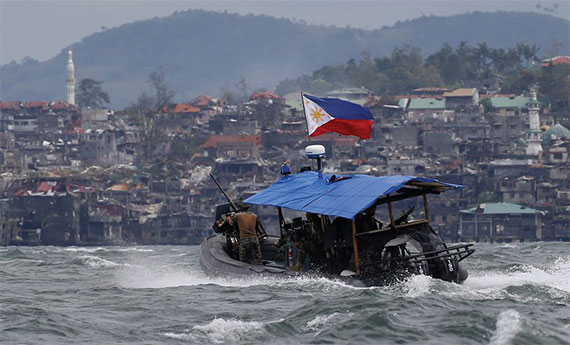
Muslim community leaders in the Philippines have expressed their support for the beleagured Christian community in Marawi. The crisis there has entered its another weeks since 23 May when Maute terrorists occupied the city, torched the cathedral, burning down schools, and forcing the civilian population to flee. They kidnapped about 200 people, including Fr Teresito (Chito) Suganob and 15 parishioners.

With the proclamation of martial law and the massive intervention of the Philippine army to free the city, the terrorists are now confined in a small area and hide themselves in some underground tunnels.

In the last few hours, the army captured Cayamora Maute in Davao, father of the two brothers Abdullah and Omar Maute, founders of the terrorist group.

Although Philippine President Rodrigo Duterte has officially said that “there will be no negotiations with the terrorists,” Fides reports that the arrest of Cayamora Maute could be useful for informal negotiations aimed at the release of hostages who are now being used as human shields.

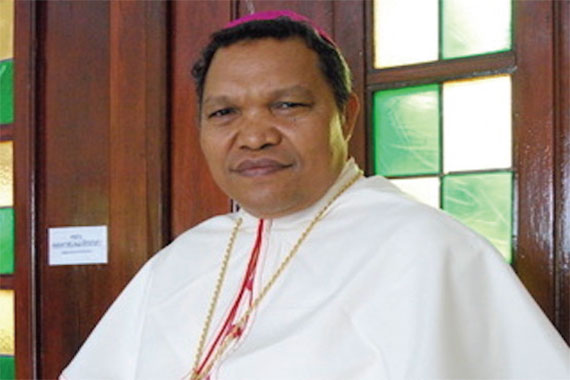
The Bishop of Marawi, Edwin de la Pena said: “Fighting still continues in Marawi and we fear for the hostages. We have no news about their condition: They were kidnapped, they may need food, water and medicines, and they are surely exhausted. We pray for them.”

The Bishop said he was appalled at the release of a video on social media, showing young armed militants desecrating statues and sacred images and destroying the cathedral.

“It is an immoral act of blasphemy. Terrorists want to instill hatred in Christians and provoke a reaction. Our reaction will only be prayer, brotherhood and interreligious solidarity that many Muslim friends have shown us recently. They have also been helping and defending the Christians of Marawi, “ he said. “Our spirit is the evangelical spirit of love for the enemy,” Bishop Edwin said.

Several Muslim leaders have expressed their grave concern. Alim Abdulmuhmin Mujahid, vice president of the Ulama Council in Basilan condemned the profanation of the cathedral saying it was “non-Islamic.”

The Governor of the autonomous Region of Mindanao, Mujiv Hataman has invited all Muslims in Mindanao to “condemn the action of terrorists linked to the Islamic State” and asked Muslims and Christians “not to fall in Maute’s trap” that want to trigger social and religious conflict.

Report shows that lynched student did not blaspheme

Mashal Khan, a student who was lynched for blasphemy, never uttered an offensive word towards the prophet, this according to the official joint report by Pakistani police and intelligence agencies.

The Supreme Court had ordered the probe to shed light on one of the most violent episodes in the history of modern Pakistan.

The report notes that the death of Mardan University student was the result of a plot orchestrated by faculty members and student rivals who wanted to punish him for daring to complain about widespread corruption.

Relieved by the conclusions, Mashal’s father, Muhammad Iqbal, said that the findings had vindicated his son. “This proves my son was not a blasphemer,” he said. On 13 April (Maundy Thursday), the 23-year-old student was stripped, beaten, and killed. After he died, a mob desecrated his body with kicks, punches and sticks. The killing was instigated by members of Khan’s own Pakhtun Students Federation, who felt threatened by his growing prominence as a critic of rising fees and alleged corruption at the university, as well as by the institution’s staff.

“Unfortunately, blasphemy charges have been used all too frequently to settle even smaller scores, [but] So great is the emotional wave around a blasphemy case that it often results in riots, making an honest inquiry next to impossible,” says an editorial in The Dawn, Pakistan’s largest English language daily newspaper.

Doctors refuse treatment, Christian sewage worker dies in Pakistan

A Pakistani Christian sewer-age cleaner has died after three doctors refused to treat him until his sludge-covered body had been washed. The physicians said their Ramadan fast would be invalid (“makruh”) because he was “un-clean” and belonged to a low caste. The word for low caste, “chuhra,” especially derogatory, is reserved for sanitary workers and often used in Pakistan synonymously for “Christian.” Irfan Masih died on June 1, in Umar Kot Civil Hospital, Sindh, 300 kilometers from Karachi. Umar Kot has about 75 Christian families; almost all of them work as sanitary workers, a job that many Muslims refuse to do.

Writer Ethan Casey notes: “Most Pakistani Christians today still do the same work as their untouchable ancestors: sweeping the streets and doing other menial jobs formerly deemed ritually or literally unclean by higher-caste.” Unmarried 35-year-old Irfan Masih, who lived with his family, reached his workplace at about 7 a.m. on June 1. Two Christian sanitary workers – Shaukat Masih and Yaqoob Masih – were ordered by their seniors, with Irfan, to unblock sewerage lines. They were not provided with any protective gear, his brother Parvaiz told World Watch Monitor.

In bold words, Vietnam’s bishops criticize new religion law

Vietnamese bishops have told high ranking communist officials, they are critical of a new religion law that is to take effect next year while also finding fault with the government’s belligerence toward religions. In a formal statement, the bishops criticized the Law on Belief and Religion because it “continues to strengthen asking-and-granting mechanism.” The bishops’ statement said the law replaces words “asking permission” and “giving permission” with “registering, informing, proposing,” which still request “religions to inform government authorities about their activities that authorities may or may not approve.”

“This mechanism shows that religious freedom is really not considered a human right but a grace that needs permission (from the government),” said the statement signed by Archbishop Joseph Nguyen Chi Linh, head of the Catholic Bishops’ Conference of Vietnam and Bishop Peter Nguyen Van Kham, its secretary general. “It is the mechanism itself to legalize the government’s intervention in religions’ internal issues and its tight control over religious activities,” they said. The Catholic Church serves 7 million Catholics in Vietnam. The Vietnamese government currently recognizes 39 religious organizations from 13 religions, with 24 million followers.

To escape abusive marriages, many Christians in Pakistan convert to Islam

For a Pakistani Christian like Shameela Masih, divorcing her abusive husband meant two choices — both nearly as bad as staying in the marriage.

“I have to prove adultery allegations against him,” said Masih, a 34-year-old mother of two. “The other option I have is to convert to Islam.” Masih recently filed for divorce from a husband she said “frequently beats me up” and a mother-in-law who she said burned her leg with coal.

But under the majority-Muslim country’s laws, she must produce a witness who would testify to committing adultery with her husband. As a result, she’s now reluctantly planning to renounce her faith.

“Converting is the easiest way out,” she said. “My family tells me that they will disown me as a Muslim, but I don’t have a choice.”

Masih is one of thousands of Christians in Pakistan who have converted to Islam to divorce their spouses under laws stemming from the British colonial period, when traditional morals held sway.

Now Pakistani officials are considering revising the law to make it easier for couples to part ways.

Ban on religious icons in cars sparks Catholic outcry in Philippines

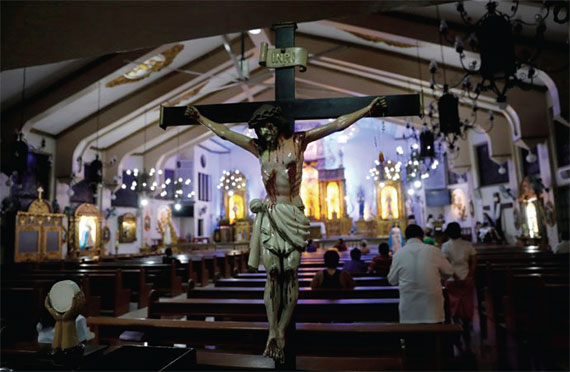
In the most recent clash between the government and the Catholic Church in the Phili-ppines, authorities have banned hanging rosaries and religious icons in vehicles, citing safety concerns.

According to reports from the AFP, the ban is part of a new law that will take effect on May 25 aimed at eliminating distractions for drivers, including talking or texting on mobile phones, applying makeup, or eating or drinking.

The ban, announced, sparked outcry in the majority-Catholic country, where roughly 80% of the population identifies as Catholic.

“This is an overreaction, insensitive and lacks common sense,” Father Jerome Secillano, executive secretary for public affairs at the Catholic Bishops’ Conference of the Philippines, told the AFP.

The Catholic Church has been one of the most outspoken opponents of President Rodrigo Duterte’s violent and unrelenting war on drugs, as well as his policies on the death penalty and reproductive health that go against the social teaching of the Catholic Church.

Gunmen take Catholic hostages; Philippines’ Duterte imposes martial law

Gunmen claiming to have links with the Islamic State group threatened to kill hostages, including a Catholic priest, who were taken from the southern Philippine city of Marawi May 23. President Rodrigo Duterte imposed martial law across the entire Muslim-majority region of Mindanao late May 23, but ucanews.com reported that many, including church leaders, characterized the imposition of martial law as an overreaction.

Initial reports received by ucanews.com said Father Teresito Suganob, vicar general of the Prelature of Marawi, and several staff of St Mary’s Cathedral, which was set on fire, were taken hostage. The gunmen also forced their way into the residence of Bishop Edwin de la Pena of Marawi.

Duterte placed all of Mindanao’s 27 provinces and 33 cities, roughly a third of the country, under martial law for a period of 60 days. Mindanao is home to an estimated 20 million people. “I’ll be harsh,” said Duterte. “I have to do it to preserve the Republic of the Philippines,” he said, even as he assured Filipinos “not to be too scared.” Redemptorist Father Amado Picardal, who works with basic ecclesial communities and the bishops’ conference, said, declaring martial law across Mindanao while only Marawi was attacked “is either idiotic or an excuse to expand dictatorial control.”

A Catholic archbishop has given his blessing to President Rodrigo Duterte’s declaration of martial law in a region of the Philippines as long as human rights are protected.

Archbishop Martin Jumoad of Ozamiz said that the government needs to step up its efforts to restore peace and order to the besieged city of Marawi where Islamic State-linked militant groups have torched buildings, hoisted Islamic State flags, seized 14 Catholic hostages and beheaded a member of the police.

The archbishop warned Marawi’s residents to be careful and to “cooperate” with the military, the news service of the Philippine Catholic Bishops Conference (CBCP), reports.
Five soldiers, two policemen and 13 militants have died in the three days of fighting, according to authorities.

Abu Sayyaf and Maute have been blamed for bombings, attacks against government forces and kidnappings in the Philippines. They have also  beheaded hostages.
Photos posted on social media by Marawi residents showed armed men roaming the city with the black flags of ISIL.

Pakistani official: ‘We have failed minorities’

An official from Pakistan’s most populous Punjab province has admitted that authorities have failed to protect religious minori-ties from hard-line Islamists.

“The intolerance, anger on religious matters and culture of lynching disturbs us,” said Malik Muhammad Ahmad Khan chief spokesman of the Punjab government speaking at the May 12 event titled “Securing Punjab’s Diversity” in Lahore, the capital of Punjab province where majority of Christians in the country reside. Punjab also has 60 percent of the country’s population.

As an example, Khan said four people from the Ahmadiyya sect were killed by hardliners during April. “The religious cleansing must stop,” said Khan who is also special assistant to the Punjab chief minister.

Ahmadis, who believe Prophet Mohammed was not the last prophet, have suffered harsh persecution since they were declared non-Muslims by Pakistan in 1974. “We have failed in protecting minorities from forced conversion,” Khan said at the event attended by more than 30 activists, journalists and edu-cationists. “Everybody knows it, why should we hide it?” he asked.

Out of 1,000 Christian and Hindu women forcibly converted to Islam and forcibly married each year in Pakistan, 700 of them are Punjabi Christians, according to the National Commission of Justice and Peace and the Pakistan Hindu Council. Rights group say many of these are under the age of 18 and are married off to Muslims, or forced into bonded labour.

Four religions in Korea unite for migrants

An inter-religious group in Korea has asked the new government to ensure the protection of migrants and ban racial discrimination.

Solidarity of Four Religions for the Human Rights of Migrants held a press conference on May 17 in front of Jogye-sa Buddhist temple in Seoul. Composed of Buddhists, Catholics, Protestants and Won Buddhists, they have been campaigning against racial discrimination.

“Even during the presidential election campaign, the candidates did give any attention to the two million migrants in Korea. Given that even the basic human rights of migrants are not guaranteed, we should take care of them by establishing concrete policies,” they said in a statement.

The group called on people to raise awareness of the problem, report cases of rights infringe-ment and to pray for an improve-ment in the situation. “Any action based on racial discrimination should be banned and punished,” they added.