
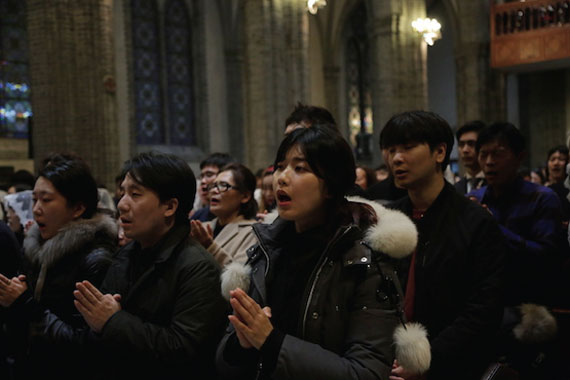
The Catholic Church in South Korea had 5.813 million worshippers accounting for 11% of the country’s population as of Dec. 31, 2017, up 1.3% from one year earlier, according to newly released statistics. But the figures released on April 13 by the Catholic Bishops’ Conference of Korea (CBCK) also represent the slowest rate of growth in the last decade, leaving church authorities concerned about a continued wind-down. Last year, a total of 96,794 young Catholics were baptized in the country but this also represents a slowdown as the figure dropped 12.9% from 2016.
Category Archives: Asian

SRI LANKA WANTS TO MAKE SUNDAY SCHOOLS COMPULSORY
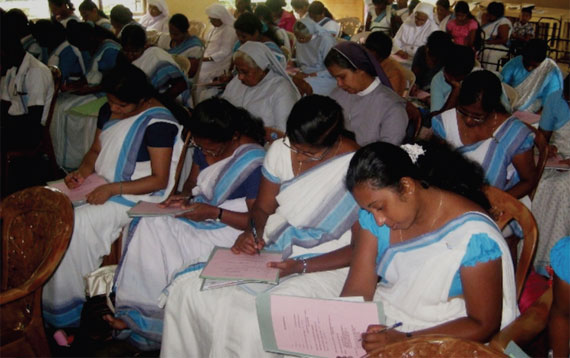
Sri Lanka is awaiting cabinet approval of a proposal to make Sunday school education compulsory for students aged 6-19 of all religions after the Christian Affairs Ministry sought feedback from Catholic priests about the idea earlier.
Father Piyal Janaka Fernando, institute director of the National Catechetical, Educational and Biblical Centre, forwarded their feedback to the government. Officials reportedly approached the priests based on their experience but plan to make Sunday lessons mandatory for Buddhists, Catholics, Hindus and students of other faiths, too. The issue was proposed in 2017 by Cardinal Malcolm Ranjith and chief Buddhist monks in the wake of a series of demonstrations against extra-curricular school-related teaching on Sundays.
Cardinal Ranjith even wrote to Sri Lanka’s president urging that tutorial classes be banned on Sundays from 6am to 2pm so they do not interfere with religious instruction.
Many private tutors work at weekends focusing on secular studies as this can result in a lucrative side income given the intensifying competition for the national school qualifying exams each year.
The Catholic Church has 1,155 Sunday schools, over 13,000 teachers and nearly 202,000 students in 12 dioceses across the country. A cabinet paper will be submitted at an as-yet-undecided date to the ministers in charge of all religions to implement a six-day study week with a focus on religious teaching on Sundays, said Buddhist Affairs Minister Gamini Jayawickrema Perera. He made the remarks while addressing a meeting in the North Western Provincial capital of Kurunegala on March 29. The move is aimed at installing more discipline in young people, he added. When Cardinal Ranjith called for the ban on tutorial classes, the argument he shared with other religious leaders was that these were detrimental to a child’s spiritual education as they preclude enrolment at Sunday school.

ISLAMIC STATE CLAIMS IT KILLED FOUR CATHOLICS IN SOUTHERN PAKISTAN
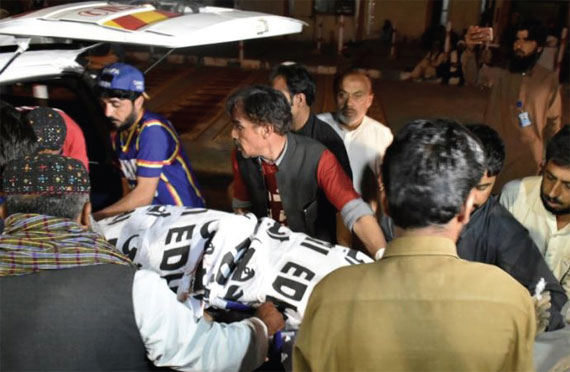
Four members of a Catholic family were killed in a militant attack in southern Pakistan a day after the minority community celebrated Easter.
Ucanews.com reported the deadly gun attack took place April 2 in Quetta, the capital of restive Balochistan province. The Islamic State claimed responsibility for the attack, in a statement carried by its Aamaq news agency. “Four Christian relatives were going to a nearby market on an auto-rickshaw when two unknown gunmen on a motorbike opened fire on them,” police officer Moazzam Jah Ansari told ucanews.com. “It was a targeted attack and an act of terrorism.” Police said the casings of 9 mm bullets were recovered from the crime scene.
Pervaiz Masih, Tariq Masih, Imran Masih and Firdous Bibi died in the attack, and a 10-year-old girl was injured. A neighbor, Aftab, told that Pervaiz, a rickshaw driver, was taking his relatives to an ice cream shop when they were targeted just outside their home. “Pervaiz Masih had been living in Quetta for 10 years. His relatives came from Lahore and Dubai for the first time to celebrate Easter with him on March 29,” Aftab said.

POPE SENDS MESSAGE COMMEMORATING KOREA’S BLOODY JEJU UPRISING
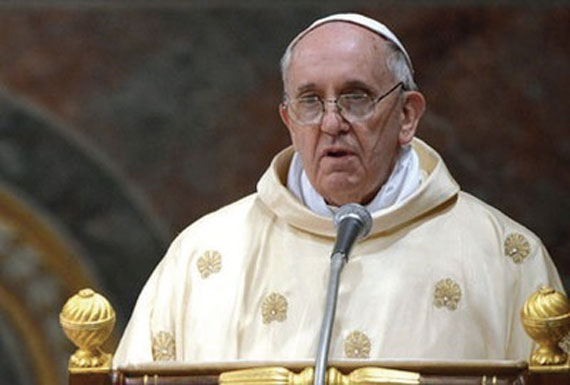
Pope Francis has sent a message of healing and reconci- liation to Koreans commemora- ting the 70th anniversary of the Jeju Uprising and subsequent massacres which resulted in the deaths of more than 10,000 civilians.
“[Pope Francis] hopes that this occasion will foster healing and reconciliation,” wrote Cardinal Pietro Parolin, the Vatican’s secretary of state, in a letter made public by the Catholic Bishops’ Conference of Korea (CBCK). “Entrusting the beloved Korean people to the intercession of Mary, Queen of Peace, I assure all present of my prayers, that they may persevere in hope,” said the letter.
The April 3 uprising by communists on the southern island of Jeju occurred after the division of the Korean Peninsula. It erupted in 1948 and escalated with atrocities being committed, pre- dominantly by the security forces. It lasted from 1948-1954 and was part of Korea’s ideological division following liberation from Japanese colonial rule.
JAFFNA PENINSULA: THE ARMY WILL RETURN 700 ACRES OF LAND TO TAMIL OWNERS
The Sri Lankan army has announced that it will deliver 700 acres of land confiscated during the civil war to its legitimate owners, in short Tamil fishermen and farmers. The lands are located in the Jaffna peninsula and delivery is scheduled for April 13th. Anthony Jesudasan, coordinator of the North-South Peace Desk of the National Fisheries Solidarity Movement (Nafso), told “This is really good news. Finally the Tamils are about to return to their territories, just on the eve of the New Year [the Vesak Buddhist festival that this year in Sri Lanka is celebrated on April 29th.” But, warns the activist, “they must not make false promises yet. It does not have to be a flash in the dark just to satisfy or make fun of the international community.”
The land that will be delivered tomorrow is located near Myliddy, in the High Security Zone, in the Vali-North region. They had been occupied by the military during the civil war between the army and the Tamil Tigers. Specifically, the plots are located in Palali, Varuthalaivilan, in Kadduvan Junction, along the Kadduwan- Myliddy road and opposite the port of Myliddy.
Major General and current commander in chief of the security forces (Sf), Darkshana Hettiarachi, reports that at the moment the road Myliddy- Kankesanthurai-Point Pedro can only be travelled by city buses, but after it will be open to general transit from 6 am to 18 in the afternoon. “The complete reopening of the road will be evaluated later, after having monitored the present conditions.” However, according to the general, “with the return of 700 acres to their legitimate owners, the problem of internally displaced people living in refugee camps will be solved.”

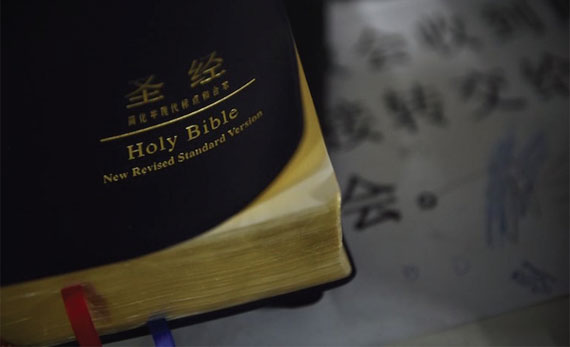
CHINA BANS ONLINE BIBLE SALES, RELIGIOUS BLUEPRINT RELEASED
On Holy Saturday, China’s communist government, deep in talks with the Vatican on a deal to appoint bishops, issued a ban on internet sales of the Bible. Four days later, it issued its first white paper on religious freedom in 21 years, only a week after hauling Bishop Vincent Guo Xijin of Mindong away from his diocese for a few days during Holy Week.
A notice issued on Twitter like Chinese site Weibo banned online bookstores, such as Tabao and Dangdang, China’s equivalents of Amazon, from selling Bibles.
People searching for Bibles on these sites were greeted with the message: “Sorry! No products in this category available.”
One observer noted that there is a long-standing rule that the Bible cannot be sold publicly or on the internet in China but that oversight of this rule has been allowed to slide over the years.
“It can only be sold in churches that the government permits — it looks like the government has started to take the matter seriously,” the observer noted.
William Nee, a researcher for Amnesty International, told that the Chinese government should immediately reverse its ban on the sale of Bibles and ensure that all Christians and people of other religions can exercise their faith without government interference or intimidation.
Chinese Government Official: No Religion ‘Transcends Nations’
A Chinese government official who oversees religious affairs said that government restrictions on bishop appointments are not a violation of religious freedom, as he emphasized that religions in China must “adapt to socialist society.” “I believe there is no religion in human society that transcends nations.”
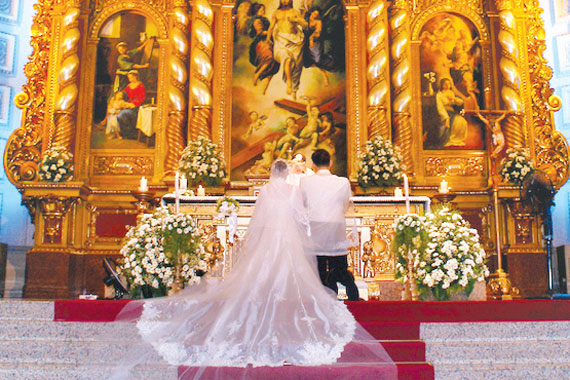
Parish in Manila in hot water for high wedding rates
A Catholic parish in a posh area of the Philippine capital’s business district, Makati, has drawn flak for proposing to charge more than US$1,000 for weddings held in the parish church. A barrage of social media posts has condemned Santuario de San Antonio Parish in Makati’s exclusive Forbes Park village for raising its wedding rates from about US$767 to US$1,250.
The parish church has slots for 936 weddings each year. Of US$1,000 for every wedding held, the parish gets US$936,000 or about 490 million pesos a year.
Most churches in the Philippines charge a wedding fee of about US$100 to US$400.
Special discounts are also given to parishioners, or if couples decide to hold their wedding on a weekday. Air-conditioned churches charge extra to cover electricity and other operational costs.
Santuario de San Antonio Parish also announced on March 15 that it would raise annual accreditation fees for wedding planners, florists, musicians, videogra-phers and photographers.
The parish also planned to charge wedding planners an annual accreditation fee of as much as US$1,000 while photographers and videographers would be charged at least US$575.
Wedding blogger and photographer Dominic Barrios said the new rates are “excessive.” He said those getting married in the church will be burdened because they will pay for the suppliers.
Parish priest Reu Jose Galoy, a Francis-can, immediately withdrew the new rates following the slew of criticism.
“We apologize if the regulations and the rates caused you all concern as it was never our intention to do so,” said the priest in a statement released by the parish.
He said that “while we feel the regulations … were fair and well thought out, we now realize that they should be considered a work in progress rather than the final product.” The new regulations and rates for weddings were presented during the parish’s first “wedding congress” held on March 15.

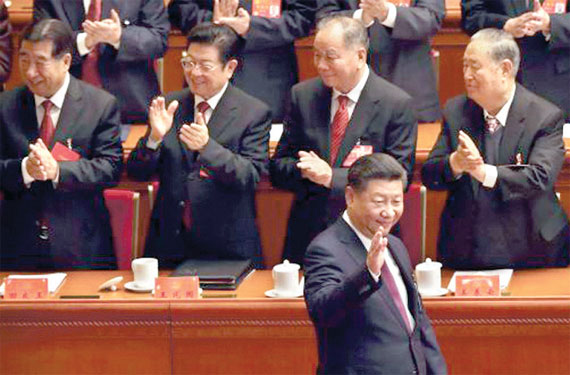
Goodbye to the Religious Affairs Bureau: religions are now under the direct control of the Party
The State Administration for Religious Affairs (SARA), also known as the “Religious Affairs Bureau,” so far under the authority of the Council of State, has passed under the direct rule of the Communist Party. The move is among a detailed program of reforms on the Party and the state institutions released.
The decision to eliminate SARA was passed in the third plenary session of the 19th Communist Party’s Central Committee in late February. Part of the program was reviewed in the recently concluded National People’s Congress, China’s parlia-ment. Detail of the program was made public on March 21, with indication that the reform should be implemented by the end of 2018.
Among the reforms, religious affairs are now managed by the United Front Work Department (UFWD), an organ of the Commu-nist Party’s Central Committee, whose main function is to manage relations with the non-Communist elite, including individuals and organizations, such as religious groups. Also now under the management of the UFWD are the Overseas Chinese Affairs Office and the Ethnic Affairs Commission, both also originally under the State Council.
The structural change received mixed views among Chinese Christians and observers. “There won’t be big change to religious environment, neither loosen nor tighten. It is only a change on management structure and they will do the same thing,” said Father Liu, a priest who serves in a Southern province.
Catholic church in China has crosses removed
Crosses on Shangqiu South Church (Cathedral of the Sacred Heart of Jesus) in China have been removed by the district govern-ment. It is the first Catholic Church in Henan province to have crosses removed. Officials later installed new ones but they were much smaller in numbers and size. A source who asked to be unnamed told ucanews.com that street office and district committee officials on March 8 asked the church to remove its crosses. Church staff reported the incident to both the municipal and district religious affairs bureaus. They also disagreed with the crosses’ removal but the street office and the district committee insisted. Officials from both bureaus visited district officials, who refused to listen and removed the crosses on March 9 by using a crane.
The South Church comprises an old small church, a cathedral and a gate tower. A total of 10 crosses were removed — six above the cathedral, one above the door of the cathedral, and three above the old church next to the cathedral. After their removal, a few Catholics went to the cathedral and prayed outside. An old lady was seen crying.
Several incidents have targeted Christianity in Henan recently, including the removal of crosses and the posting of signs prohibiting minors to enter churches, but Father John believes Henan is not a particular target.