
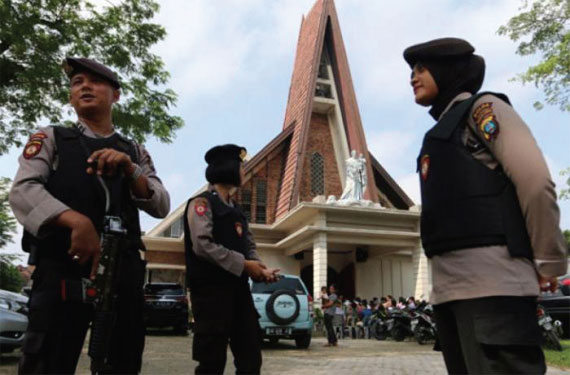
Jakarta Security Forces have arrested 41 suspected terrorists, linked to a series of bomb attacks in Surabaya, the capital of the province of East Java. Four others were killed during counter terrorist operations, reported local police chief Tito Karnavian last night to local media, adding that the victims had resisted arrest. “After the suicide bombings in Surabaya and Sidoarjo on May 13 and 14, we moved quickly and identified the culprits – he said – A suspected terrorist from Probolinggo (East Java) surrendered to the local police because he could not live in peace, as he was always on the run.” Tito Karnavian also revealed the final toll of the victims of the attacks carried out in Surabaya by two militant families of Jamaah Ansharud Daulah (Jad), a local terrorist group linked to the Islamic State (IS). Attacks on three Christian churches and the local police headquarters have killed 14 civilians and 13 terrorists. Over 40 people were injured.
Category Archives: Asian

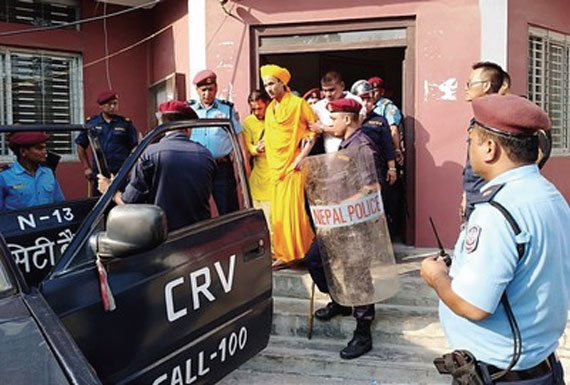
Hindu leader in Nepal ‘faked assassination attempt’
A self-styled religious leader in Nepal linked to hard-line Hindu nationalists has been accused of faking an attempt on his life by instructing a bodyguard to shoot and wound him. Dinesh Pandit, 25, revered as “Acharya Shree Niwas” by Hindu devotees, was shot on April 8 in the country’s east shortly before he was scheduled to address a mass religious gathering.
Some devotees, seeking to fuel street protests, claimed that it was a premeditated attack by Christians.
The government said it would pay for Acharya’s medical treatment while the main opposition political party called for an upgrading of protection for religious leaders.
Acharya was discharged from hospital after 21 days, but on May 8 police detained him before he could board a flight to India. Subsequently, Acharya was charged with staging his own shooting and attempting to incite communal violence.
The initial investigation carried out by police indicated that Acharya had instructed his bodyguard, Madhav Chaudhary, to shoot him in one arm so that it would look like an assassination attempt. Chaudhary, who was arrested 26 days after the attack, reportedly confessed his role.
The administration office in Morang district remanded Acharya in custody. Some Christians suspect that Acharya’s shooting scam was part of a wider conspiracy to suppress religious freedom and spur attacks on non-Hindus.
BP Khanal, Nepal chapter coordinator of the International Panel of Parliamentarians for Freedom of Religion or Belief, said that despite Nepal being officially secular, the state still encouraged the notion that Nepalis had to be Hindu.
“Religious minorities are often persecuted and attacked,” he said. And in recent years Christians have been victimized over the alleged killing of cattle as well as the distribution of Bibles and conversion of non-Christians. Reverend Joseph Shrestha, chairperson of the Christian Society in Nepal’s Province 7, said that in December 2016 Hindu extremists organized mass protests following the deaths of cows in the Kailali district.
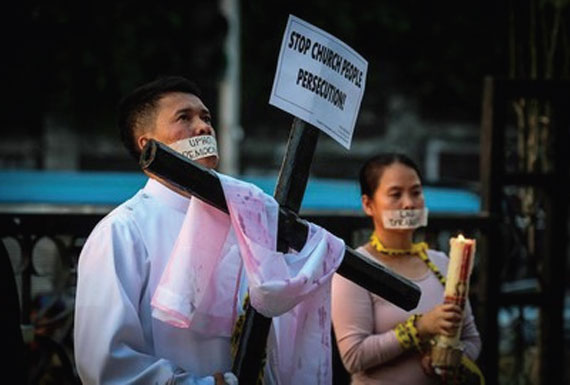
Philippine church groups condemn ‘tyrannical’ Duterte
Priests, nuns, and seminarians staged a candle-lit prayer rally on May 17 to protest against what they called the “tyrannical tendencies” of Philippine President Rodrigo Duterte.
The protest came days after Cardinal Luis Antonio Tagle of Manila released a letter to parishes warning that the Philippines is “facing a crisis of truth.”
The Manila prelate noted that even Philippine legal experts have “given us conflicting interpretations on basic questions of law.” Cardinal Tagle issued the letter to priests and religious in his archdiocese days after the Philippine Supreme Court ousted the country’s chief justice.
The court decision has been widely criticized by various groups, including civil society organizations and Catholic Church leaders.
Bishop Arturo Bastes of Sorsogon said the removal of Chief Justice Maria Lourdes Sereno could be the start of “another dark period in the country’s history.”
“A real dictatorship of a strong man is emerging,” said the prelate, adding that “more controversial issues are surely coming.” He said the court decision “is the most shameful act in the history of the Philippine judiciary.”
Cardinal Tagle said the “crisis of truth” has already resulted in “suspicion, mistrust, and fragmentation.”
“Partisan politics has turned into political tribalization. The common good is one of the first casualties,” the Manila prelate said.

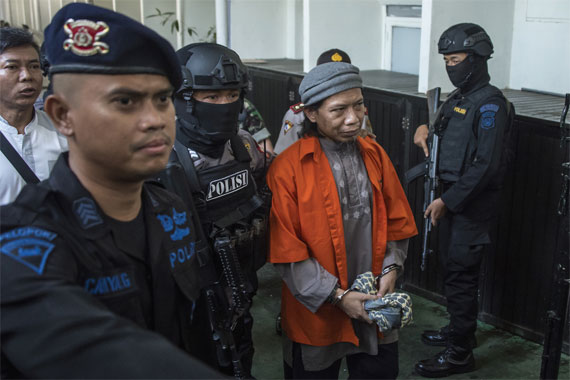
Indonesian Catholics want mercy for terrorist kingpin
Leading Catholics in terrorism-plagued Indonesia have criticized prosecutors who demanded the death sentence for the alleged mastermind behind a deadly spate of suicide bombings and attacks against police that have left many dead.
From a moral perspective and the view of the church, the death penalty is wrong no matter what the crime is, said Father Antonius Benny Susetyo, an adviser to a presidential unit that promotes communal tolerance and understanding. “The death penalty does not provide an effective deterrent against perpetrators of these sort of crimes,” he said.
He was responding to calls on May 18 from prosecutors demanding that judges impose the death sentence on Aman Abdurahman, alleged leader of an Islamic State-linked terror group, Jamaah Ansharut Daulah (JAD), who is standing trial on terrorism charges in a Jakarta court. Abdurahman, 46, is standing trial for allegedly masterminding a series of attacks that included a February 2016 bombing in Jakarta that killed eight people and an attack in November 2017 against the Batak Society Christian Church of Oikumene in Samarinda, East Kalimantan that killed four people.
Surabaya Christians uncowed by church bombings
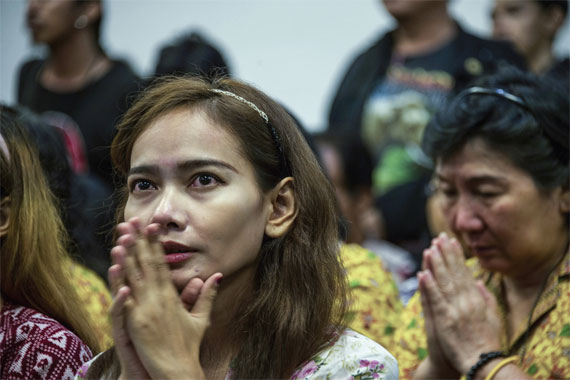
Despite tight security and fears of further deadly attacks, defiant Christians in Surabaya flocked to services and Masses on May 20 – Pentecost Sunday – according to church officials.
Christians at the Santa Maria Catholic Church and Diponegoro Indonesian Christian Church held services in their church buildings which were attacked by suicide bombers on May 13. Meanwhile, members of the Surabaya Pentecostal Church, which suffered the most damage, held services in a large tent. Twelve Christians were killed during the attacks, committed by members of the same Muslim family.
Church officials told on May 20 that Christians prayed as usual, while fully-armed police and military personnel stood guard outside.
Those entering the churches were thoroughly searched and had to pass through a metal detector.
Father Alexius Kurdo Irianto, parish priest at the Santa Maria Church, said he did not see any decline in church attendance during Mass.
In Punjab, Christians who tried to retake their homes grabbed by Muslims suffer gunshot wounds
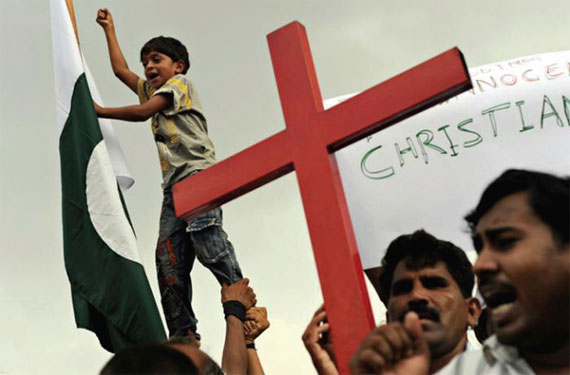
Two Christians have survived after they were fired upon by armed men who wanted to prevent them from regaining possession of their land.
The incident occurred on May 17 in the village of Sankhatra (Punjab province), where the Christian community blocked the streets to protest against the ille-gal occupation of their properties. For months they have been unable to go back into their homes because of a land dispute with a politician from the ruling party. The wounded are Shahbaz Masih Gill, 36, and Samina Tasneem, 28. Both suffered gunshot wounds to the legs and are currently in hospital.
The police took their statement and filed a case under the Pakistan Penal Code, sections 324 (Attempt to commit qatl-i-amd, i.e. murder), 148 (Rioting, armed with deadly weapon), and 149 (Every member of unlawful assembly guilty of offence committed in prosecution of common object).
“I was coming home after fixing an electric motor when armed men on a motorcycle stopped and attacked me with wooden sticks and punches,” Gill told.
“With my forehead bleeding, I joined the protest against the attack. We had gathered at 6:50 pm when they returned and shot five fires.” Despite this, “We did not panic and retaliated by throwing bricks at the attackers causing them to flee. That’s when I realised blood was dripping from my right leg.”
Archbishop of Jakarta decries jihad families as new form of violence
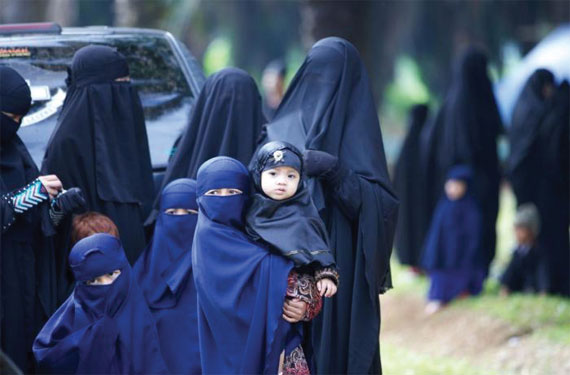
“Planning and implementing a suicide attack by taking their children with them is a new” form “of violence. It is a family tragedy,” decries Msgr. Ignatius Suharyo Hardjoatmodjo, Arch-bishop of Jakarta and President of the Indonesian Bishops’ Con-ference (Kwi).
He was commenting on the dynamics of the attacks that have hit three churches in Surabaya, capital of the province of East Java two days ago. Meanwhile, following the death of Nathanael, an eight-year-old Catholic child, the number of victims of the co-ordinated attack has risen to 12.
The terrorists belonged to a single terrorist family. The father, Dita Oeprianto, is the Pentecostal Church bomber (Gpps), while the two teenage sons carried out the attack on the Catholic Church of Saint Mary Immaculate (Smtb), aboard a motorcycle. The mother and her two small daughters, aged nine and 12, carried out the suicide attack at the Christian Church of Indonesia (Gki).
“I am convinced – says Msgr. Suharyo – that the two young daughters had no idea what would happen. This is incomprehensible and I think this kind of thing should never happen again, clouding our humanity.”
Christians in Nepal concerned over sudden attacks on churches
Christians in Nepal are alarmed after this month’s sudden series of arson and bomb attacks on four church buildings, and church leaders suspect authorities are lax in investigating.
At the same time, six Christians were arrested for evangelizing while suspected Hindu extremists launched attacks on three church buildings and bombed another. The attacks caused extensive property damage but no casualties. The Hebron Church building in the eastern hilly region was set on fire on May 9, Emmanuel Church’s building in western Nepal’s Doti District was burned on May 10, and the Kanchanpur Emmanuel Church building in the Midwest hilly region was set ablaze on May 11. Before midnight on May 12, the Mahima Church building in Dhangadhi, in western Nepal, was bombed. Neither government officials nor police have issued a formal statement on suspects, though police have attributed the attacks to the Nepal Communist Party, known as the Biplab Group. But Christian leaders in Nepal suspect a coordinated campaign by Hindu extremists.

Cardinal Tauran in Riyadh speaks about the needed interreligious dialogue, education and concrete actions
Cardinal Jean-Louis Tau-ran, President of the Ponti-fical Council for Inter-religious Dialogue, visited Saudi Arabia (April 14-20), where he was received by King Salman. During his stay, the media described the visit as a “desire for rapprochement,” as a “stage in the opening of the Saudi kingdom to other religions,” as a “ripples of openness.” However, Tauran’s own words were the most emblematic. For him, “What is threatening all of us is not the clash of civilisations, but rather the clash of forms of ignorance and radicalism,” words that describe in a nutshell all the religious tensions that afflict the world.
The visit itself was the first by a high envoy of the Catholic Church to Saudi Arabia, cradle of Wahhabism, one of the most radical currents in Islam. During his stay, the prelate spoke about issues such as freedom of religion and equal rights for believers of all faiths. Even if he did not explicitly address the issue of allowing churches in the country or even letting Christians worship, the visit had.

Trump administration will terminate temporary status of Nepali immigrants
Nearly 9,000 Nepali immigrants living in the U.S. will lose their temporary protected status (TPS) after the Trump administration determined that the country has sufficiently recovered from a 2015 earthquake to accept their return. Aside from the deaths and injuries caused by the earthquake, said Lisa Parisio, an advocacy attorney for the Catholic Legal Immigration Network (CLINIC), Nepal has not yet recovered from “massive damage to public and private infrastructure across the country,” including homes, health care faci-lities, schools, roads, sanitation and water purification infrastructure.
“All of this has resulted in a situation that remains in Nepal today where the country is absolutely in no shape to safely return the 9,000 TPS holders,” Parisio said.
In a statement April 26 announcing the decision, which came a day after the deadline for the Department of Homeland Security to determine whether or not it would extend the status, Secretary of Homeland Security Kirstjen Nielsen contradicted this assessment.