All posts by Light of Truth

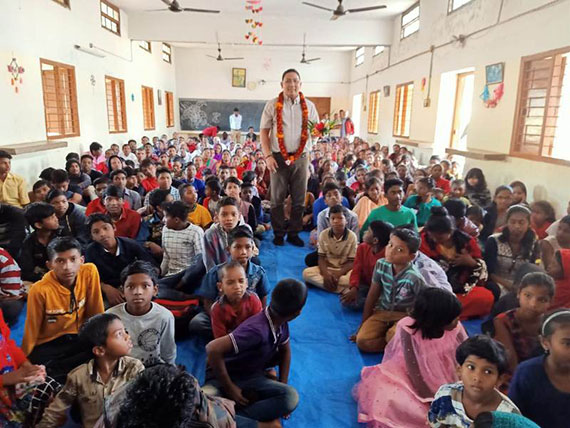
Kandhamal children receive educational support from Canadian group

A Canada-based Catholic humanitarian group has come forward to support the education of children of the Kandhamal survivors in Odisha, eastern India.

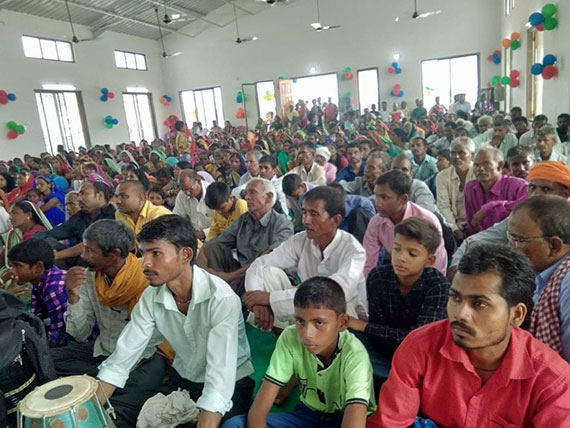
“Faith without work is dead,” said Al Basilo, operations head of the Answering the Cry of the Poor (ANCOP) International Canada, at a gathering of 522 such children who gathered at Catherine’s Girls’ Convent, Raikia, a major parish in the Kandhamal district of Odisha.

The area comes under the Archdiocese of Cuttack-Bhubaneswar. Basilo said they started ANCOP as the social arm of the Couples for Christ to fulfill its responsibility to build the Church of the poor. “I am really inspired to know the sacrifice of Kandhamal people who witnessed Christ even unto death,” he told.

“The persecution, killing and murder just because you are Christian are indeed very sad and unfortunate. I want to listen to the children of Kandhamal survivors,” said Basilo, who was visiting India for the first time.

Franciscans seek ways to evangelize through social media

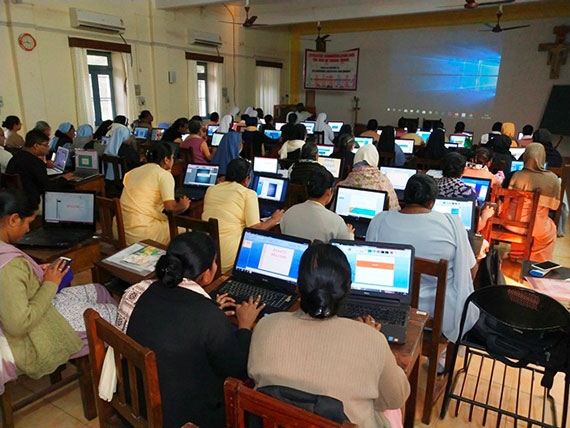
The Association of Franciscan Families of India (AFFI) organized a national training for priests and nuns for effective evangelization through social media at St Fidelis College, Lucknow. As many as 72 members of AFFI along with secretaries of other religious congregation attended the Dec. 1-4 intensive hands-on training on “Social Media and Communications,” said Capuchin Father Nithiya Sagayam, national co-ordinator of AFFI and organizer. Explaining the rationale of the seminar, Father Saga-yam said that the AFFI through its nationwide network of 50,000 members working in various fields through 125 provinces is involved in the socio-economic and cultural uplift of people. The secretaries, administrators and executives of these provinces and institutions are aware of these by their network.

The Religious in India offer their might towards the nation-building through committed apostolate of education, health care and social uplift of the poor and the marginalized. But keeping up with their simplicity and unassuming character by avoiding advertisement, popularity and seeking name and fame, their activities are not known to the world at large, said the priest.

Bishop voices concern over proposed anti-conversion law in India

A local bishop in India has voiced his objection to a proposed new anti-conversion law in the State of Uttar Pradesh.

The UP State Law Commission on submitted a report to Chief Minister Yogi Adityanath suggesting a new law to check “forcible religious conversions.” The head of the commission, Justice Aditya Nath Mittal, was quoted in local media as saying that “existing legal provisions are not enough to check religious conversion and on this serious matter, a new law is needed like in 10 other [Indian] states.”

The proposed law would increase the punishment for “forced conversion” to seven years if the convert is under 18 or belonging to one of India’s Scheduled Castes or Scheduled Tribes, who have traditionally been on the bottom of the country’s society. Bp Gerald John Mathias of Lucknow told Crux the law is not needed.

“The Catholic Church is always against any ‘forceful conversion.’ Forced conversion is a contradictory term; if anyone is forcibly converted, he or she is not actually converted. Unless there is an internal conversion, there is no conversion. There has to be a conversion of ‘heart’ for any real conversion. If a person is not ready to accept Christ, or is unwilling to accept Christ, no amount of force, can convert that person,” the bishop said. He said the Church has seen a “spurt in incidents against the Christians.”

“Ambassador of Peace” calls for ‘ability to listen’

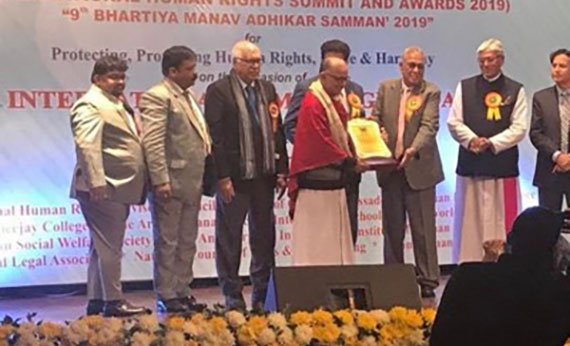
The secret of success of any peace effort is the ability to listen, says Archbishop Thomas Menamparampil, who on December 9 received the latest “Ambassador for Peace” award from the International Human Rights Council. “Many think that volubility and vocabulary, a cute approach and a persuasive tongue will convince the parties in conflict. But far more important is a contextual understanding of their more serious anxieties in their complexity and depth. But ultimately, a ‘sympathetic listening’ to their inner agonies alone will open the doors for dialogue,” said the 83-old Salesian prelate who received the award at a glittering ceremony held at India Islamic Centre Auditorium in New Delhi.

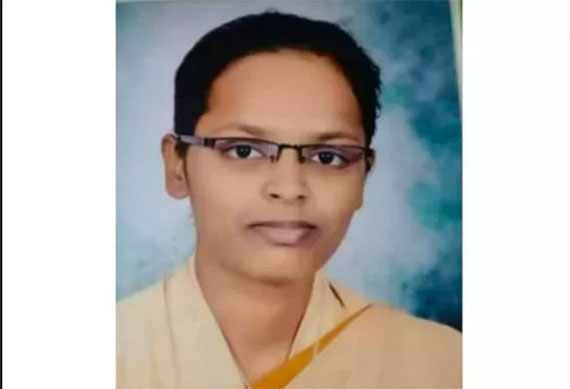
28-year-old nun found dead on railway track

The severed body of 28-year-old nun was found on a railway tracks in Hublitwon of Karnataka.

The shocking incident occurred around 3:30 am on December 4. Sister Mary Sendra Vianney of the Sacred Hearts of Jesus and Mary Convent is the second child in the family of four children born to Gurushantappa and Kosumaria at Gadag, Belgaum.

She joined the Sisters of the Little Flower of Bethany in 2012.

The Filipino fighting for a Japanese samurai’s sainthood

Historian Ernesto De Pedro with statues of Dom Justo UkonTakayama who was beatified in early 2017.

As Pope Francis visits Japan, an 83-year-old Filipino historian is hoping the pontiff will recognize a Japanese samurai who once offered his life for the faith.

Dom Justo UkonTakayama, or “Justus Ucondono” as missionaries fondly called him, was a warrior who fought under the banner of the cross in the land of the rising sun.

He was an eminent Japanese feudal governor who served under Japan’s three hegemons — Oda, Hideyoshi, and Toshiie — who unified Japan.

In 1587, Chancellor Toyotomi Hideyoshi took drastic steps against Takayama, who declined to obey the chancellor’s order to renounce the faith.

Takayama was baptized a Christian in Sawa Castle on June 1, 1563, when he was 11 years old.

For refusing to renounce his Christian faith, Takayama was sent to Manila as an exile on Dec. 21,1614. Months after his arrival, he died on Feb. 3, 1615 in the old walled city of Intramuros.

The faithful of Manila promptly presented the Japanese warrior’s case to the Vatican for beatification. But after centuries passed, Takayama seemed to have been forgotten.

In 1963, Cardinal Rufino Santos of Manila endorsed the cause of the samurai to the Church in Japan. But there were no updates as church officials came and went.

Then one day, a Filipino history enthusiast passed by a statue of a Japanese man in the Plaza Dilao in the old city of Manila where the samurai supposedly baptized Japanese converts.

Historian Ernesto De Pedro wondered why a Japanese figure would standing as such in the Philippines. He did not give it much attention until a group of Japanese Protestant pastors came to inquire.

The Protestants were researching about a certain Takayama whose statue stands in the middle of Manila. They found nothing.

De Pedro wondered. “Why nothing?” he asked. He did his own research. He found out later that in Manila Takayama “Dom Justo Ukon Don.” In the papal archives, he was identified as “Ukon Don.”

Tamil remember their civil war dead despite government opposition

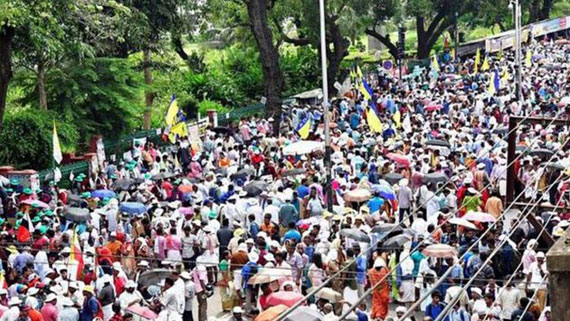
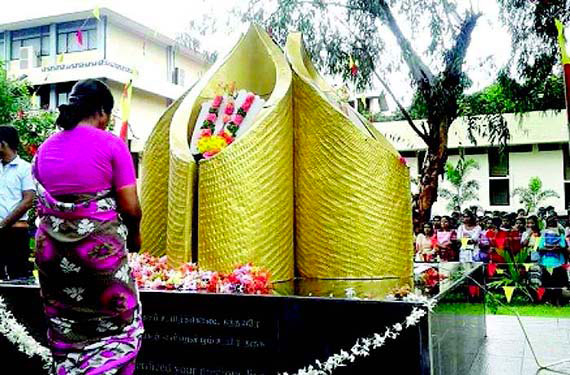
Thousands of Tamil in northern and eastern Sri Lanka have commemorated their relatives who died during and after the country’s civil war, which lasted more than a quarter century.

The main ceremonies were held last Wednesday, Maaveerar Naal (Great Heroes’ Day), as Tamils remembered those who died or went in missing in battle.

The Sri Lankan government has always opposed the remembrance. Under former President Mahinda Rajapaksa, brother of the current president, memorial ceremonies were banned as an apology for Tamil independence ideology.

For their part, Tamil com-plain that under the first Rajapaksa the graves of thousands of Tamils were destroyed, whilst war monuments, luxury buildings and other structures were built on top “in an attempt to erase our memory and control us.” “The graves of our children were in a row in the cemetery of Kopai,” some Tamil told Asia-News. “At least 2,000 people were buried there, but in March 2011 soldiers arrived and demolished everything.”

Mindanao rights group welcomes lifting of martial law

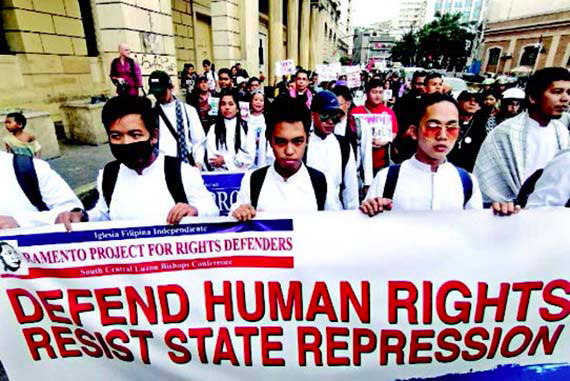
A human rights group in the southern Philippines has welcomed a  government statement announcing the imminent lifting of martial law across Mindanao, but it called for an international probe into alleged atrocities committed by the military while it has been in force.

The group BarugKatungod (Stand for Rights) said two and a half years of martial law in the region had resulted in more than 162 killings. At least 704 cases of “fabricated charges,” 284 cases of illegal arrest and detention, 1,007 victims of aerial bombardments and the forced evacuation of at least a million people were also reported.

“This announcement to end martial law will ultimately not bring relief for all the victims,” said Bishop Redeemer Yanez of the Philippine Independent Church, convener of the rights group. The presidential palace announced on Dec. 10 — International Human Rights Day — that President Rodrigo Duterte will not seek another extension of martial law in Mindanao.

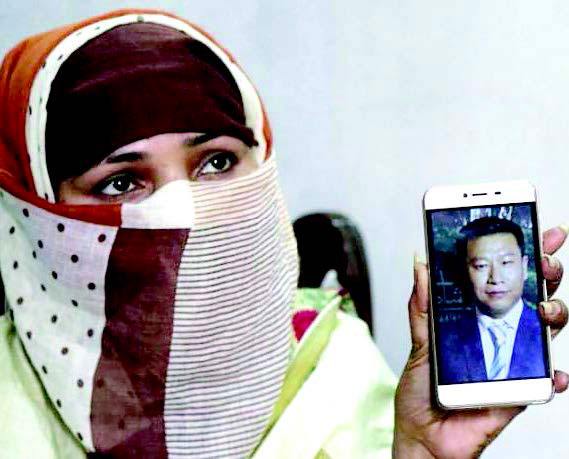
Islamabad, 629 child brides sold to China

At least 629 Pakistani girls sold as enslaved brides to Chinese husbands. This is the official number of the recent phenomenon of trafficking in women from the South Asian country to the Chinese giant. This was revealed by an investigation by the Associated Press, which managed to have the original reports of the complaints filed since 2018.

However, according to investigators, the phenomenon is far more extensive, if only the judicial authorities had continued to register the complaints at the same pace as the first few months. After an initial investigative momentum, there is a progressive slowdown in the registration of cases.

People “informed of the facts” motivate this contraction due to pressure and interference from the Islamabad government. In fact, it would have exercised its influence to curb investigations so as not to damage the “profitable” link with Beijing.

Proof of this is the acquittal of 31 Chinese in a single case of trafficking in human beings, freed by the court of Faisalabad in October. According to some family members of the victims, who speak under anonymity, the accusing victims later refused to testify against their torturers because of threats or for compensation received to keep silent.