All posts by Light of Truth

Indonesian Catholics not letting garbage go to waste

Since Jakarta Archdiocese introduced an anti-plastic waste campaign back in 2006, many parishes and individuals have taken it seriously. The campaign to “collect waste, and make it a blessing” has inspired many Catholics, including Lucia Mona Hartari Windoe from the Holy Family Parish in Rawamangun, East Jakarta.

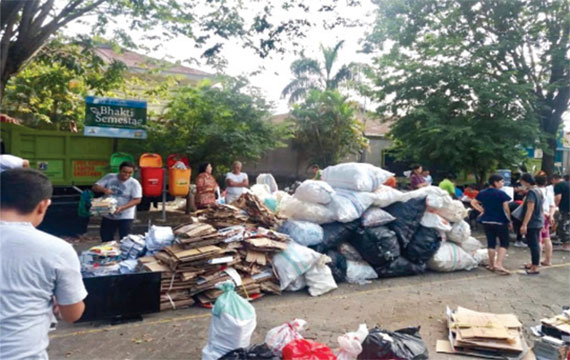
In February 2016, Mona launched a waste management program called the Bhakti Semesta Waste Bank in her parish, just as the country marked its 10th National Waste Care Day.

Through the initiative, she encouraged Catholics in her parish to collect their plastic waste, instead of throwing it away and creating an environmental problem.

She said a waste bank is not a place where people dump their garbage, but rather an initiative to help parishioners who have waste at their homes but do not know what to do with it.

The goal is to raise people’s awareness to care for the environment, and at the same time make a profit out of waste, she said.

In doing so, with the support of her parish priest, she cooperated with the East Jakarta Environment Agency who provided trucks to pick the waste up.

Catholics told not to touch Cross on Good Friday

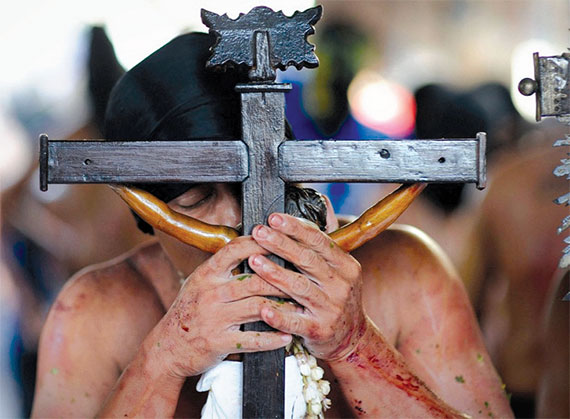
Catholics in the Philippines have been asked not to kiss or touch the cross when they venerate it on Good Friday because of concerns about the corona-virus.

Instead, they should “genuflect or make a profound bow” before the cross during the veneration of the cross, according to updated liturgical guidelines issued on Feb. 20 by the Catholic Bishops’ Conference of the Philippines and posted on Twitter.

Already in January, the bishops’ conference advised priests to distribute the Eucharist in communicants’ hands rather than their mouths, to place protective cloths over the screens of confessionals and to change the holy water in church fonts regularly. The conference also asked the faithful not to hold hands during the “Our Father” and not to shake hands during the sign of peace.

In the new guidelines, which the bishops’ conference said it “strongly recommends” following, priests were asked to distribute ashes on Ash Wednesday, Feb. 26, by “dropping or sprinkling a small portion of blessed ash on the crown of the head of the faithful,” rather than rubbing them on the person’s forehead.

Shot for trying to build a church

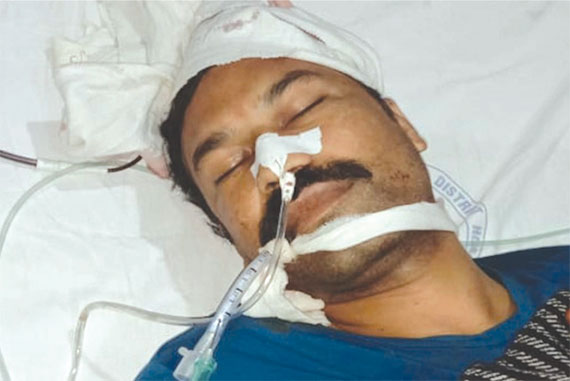
Azeem Gulzar has been left half-paralyzed after being shot in the head in a mob attack on a church under construction in Pakistan. Gulzar, 25, was released from the Civil Hospital Sahiwal on Feb. 24, three weeks after his family tried to resist 15 armed men from pulling down the wall of the church. The Christian tailor had donated his 51-square-meter plot in a village in Punjab’s Sahiwal district for a community church. The Muslim-majority village is home to about 150 Christians.

“He is unable to communicate and is paralyzed from the right shoulder down. One of my cousins is recovering from the wound of a bullet that slightly hit his skull. My uncle was also injured with an axe. We are not rich enough to pursue lengthy court cases. Our property is the only hope we had,” Waseem, his younger brother, told UCA News on Feb. 25.

“There is no church in our village. We gather in the house of a local pastor for weekly prayers. We wanted to facilitate the women and elderly who couldn’t travel each Sunday to the nearby city.”

The attack followed months of heated arguments between Gulzar’s family and Muhammad Liaqat, a Muslim schoolteacher who opposed construction of the church on the empty plot that shares a wall with Liaqat’s house. The District Coordinator Officer had set community consent as a major prerequisite for the registration and issuance of a no-objection certificate (NOC) for the church’s construction. Amid the negotiations, Gulzar’s family erected a front wall and a door at the site on Feb. 2. They were attacked the same night.

“It was Sunday. We spent the whole day building the wall and finished at 7pm. We only wanted to secure our property against any forceful occupation. Three hours later, we heard a crowd chanting on our doorstep. As we tried to explain our stance, someone resorted to aerial firing. My brothers were the next targets,” said Waseem.

Pakistan’s Asia Bibi Asks France For Political Asylum

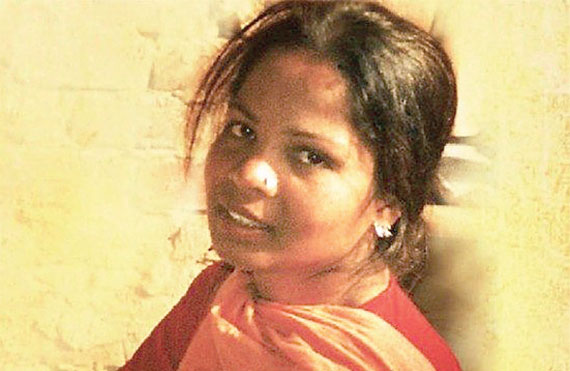
Asia Bibi, the Pakistani Christian woman who spent years on death row after a 2010 conviction of blasphemy, said on February 24 that she was seeking political asylum from the French government.

“My great desire is to live in France,” Bibi said in an interview with RTL radio, her first trip to France since fleeing with her family to Canada in 2018.

Her visit comes a few weeks after the publication of her book “Enfin Libre!” (Finally Free) in French last month, with an English version due in September.

“France is the country from where I received my new life… Anne-Isabelle is an angel for me,” she said, referring to the French journalist Anne-Isabelle Tollet, who waged a long campaign for her release and later co-wrote Bibi’s book.

Paris Mayor Anne Hidalgo is to bestow an honorary citizen-ship certificate granted to Bibi by the city in 2014, when she was still behind bars.

Germany’s synodal assembly draws praise, criticism from participants

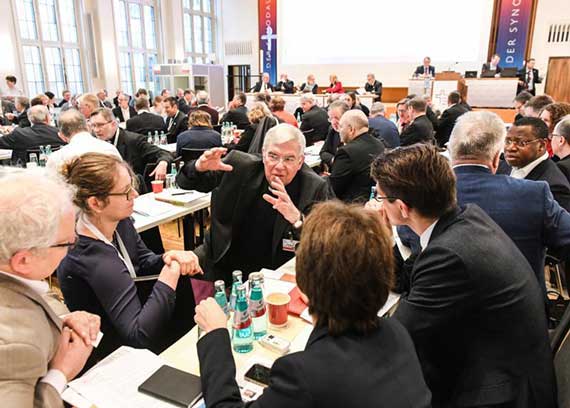
The first Synodal Assembly on the future of the Catholic Church in Germany drew both praise and some criticism, with many of the 230 participants lauding what they called a special atmosphere in the debates on key reforms. Cardinal Reinhard Marx, president of the German bishops’ conference, said the spirit of the talks had been “positive and encouraging” and referred to the synodal path process as a “spiritual experiment,” reported the German Catholic news agency KNA.

Thomas Sternberg, president of the Central Committee of German Catholics, which represents laypeople, said: “No one is disputing the other’s piety here.” A “new image of the Church” had been seen in the Frankfurt talks, he said.

But there was criticism too, particularly from Cologne Cardinal Rainer Maria Woelki, who said: “All my fears were confirmed, actually.” He said the synodal path had installed a form of Protestant Church parliament, and delegates who were skeptical of the reform process had found it comparatively difficult to have their say.

In an interview with KNA, the cardinal also said the talks had been marred by theological shortcomings.

“My impression is that much of what belongs to theological doctrine is no longer shared here with us, and instead one believes that one can shape the Church in a completely new and different way,” he said. Many arguments presented had not been compatible with the faith and teaching of the universal Church, he added.

The Synodal Assembly is the highest decision-making body of the synodal path, an effort by the bishops’ conference and Central Committee of German Catholics to restore trust following a September 2018 church-commissioned report that detailed thousands of cases of sexual abuse by Catholic clergy over six decades. Catholic observers from eight neighbouring countries as well as delegates from other denominations and churches monitored the Synodal Assembly in Frankfurt on Jan. 30-Feb. 1.

Letter from Rome: The shadow pontificate is drawing to a close

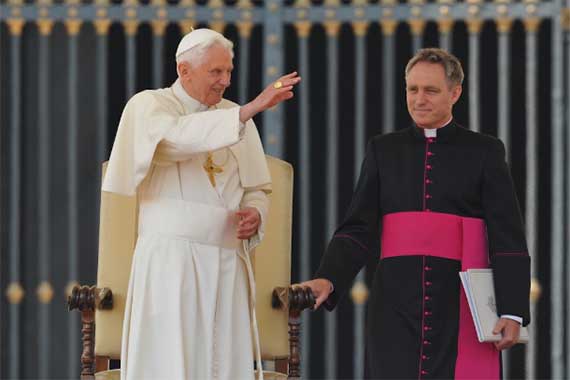
It was only a matter of time. Pope Francis has finally lost his patience and gotten rid of Arch-bishop Georg Ganswein as prefect of the Papal Household.
According to German weekly Die Tagespost, the Pope put the 63-year-old on “indefinite administrative leave.”

He did so, the paper said, because of the German prefect’s involvement in a controversial book that Benedict XVI co-authored with Cardinal Robert Sarah. It was a slim volume that most people saw as a warning to Francis that he dare not even consider allowing the ordination of married priests.

Ganswein, who lives with Benedict and is his long-time personal secretary, was seen – rightly or wrongly – as the man ultimately responsible for dragging the retired Pope into the book project.

Forum examines religious persecution 75 years after Auschwitz liberation

As the world recognizes the 75th anniversary of the liberation of the Nazis’ infamous Auschwitz concentration camp, the vows of “never again” after the Holocaust’s horrors became known threaten to be swallowed up by religious persecution against Christians, Muslims and other groups, said panellists at a Feb. 5 forum at the U.S. Holocaust Memorial Museum.

“The unthinkable is possible, and everyone must act,” said Naomi Kikoler, director of the museum’s Simon-Skjodt Centre for the Prevention of Genocide and panel moderator.

Omer Kanat, chairman of the World Uyghur Congress’s executive committee, said the crisis for Uighur Muslims began in 2017 as China’s crackdown on the minority ethnic group intensified, calling the “eradication of Uighur culture” an “extermination.”

There are 1.8 million to 3 million Uighurs in “concentration camps,” Kanat said. “The statements of government officials are going in this direction: ‘We cannot sustain the weeds among the crops. We have to spray a chemical, and kill all of them.’” He added not only are Uighurs within China traumatized by the ongoing repression, but Uighurs living outside China are despondent over “their inability to help their family back home.”

Belgian Catholic universities to help train imams

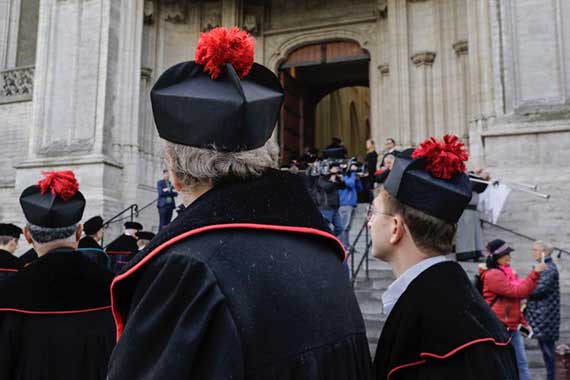
Belgium’s Catholic universities of Leuven and Louvain will begin educating imams this year in six-year programs that aim to transmit “knowledge of the fundamental values of the Belgian State and the resulting legal principles.”

Courses in Dutch will begin in Leuven in February and in French at Louvain in the autumn. Once one bilingual university, they split into two institutions along language lines in 1968. The goal, worked out by an official commission launched after Islamist attacks in Brussels in 2016, is to provide a university-level education in Belgium for imams, who will then be registered as clergy and paid by the state as are clerics from other religions.

Another aim is to reduce the influence of Middle Eastern countries, which now send imams to serve their ethnic groups in Belgium or offer western Muslims an Islamic education. Belgian officials suspect both to be a potential source of radical ideas.

The courses in law, politics, sociology of religion and history of the Muslim world have been worked out with the Muslim Executive of Belgium, the official Muslim interlocutor.

The Muslim partner will arrange Islamic theological studies in a separate academy run by Muslims. Catholic theology will not be part of either university’s course. “In every recognised mosque, there should be someone who has attended this training,” said Justice Minister Koen Geens. “The real purpose must be to have preaching by people educated in Belgium.”

France has a similar programme, with the Catholic Institute of Paris giving courses in the secular subjects and Muslim theology taught at the city’s Grand Mosque.
German efforts to train imams have been complicated by opposition from Turkish-financed mosques but state universities offer degrees in Islamic studies that qualify Muslims to teach Islam in religion classes in state schools.

Archbishop bans receiving host in the hand

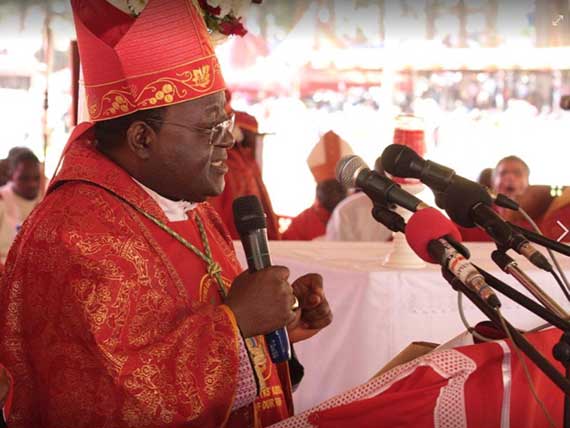
A Catholic Archbishop in Uganda has decreed that Holy Communion can in future be received only by mouth, and not in the hand. The conservative Archbishop of Kampala, the Most Rev Cyprian Kizito Lwanga, said this was because of “many reported instances of dishonouring the Eucharist that have been associated with reception of the Eucharist in the hands.” In addition, he said that those in “illicit marital co-habitation and those who persist in any grave and manifest sin” cannot be admitted to communion at all.

And in the same letter, released on 1 February and headlined: “Decree concerning the proper celebration of the Eucharist in Kampala Arch-diocese,” he said that Mass can no longer be celebrated in people’s houses or other “non-sacred places” unless “grave necessity” requires other-wise. He also stipulates that any priest who is not vested properly must sit with the laity and not the clergy.

In addition, lay people are no longer to be allowed to distribute, unless specifically designated an extraordinary minister of communion. “In celebrating and ad-ministering the Eucharist, priests and deacons are to wear the sacred Vestments prescribed by the rubrics (Can. 929). Following this canonical norm, it is strictly forbidden to admit as a co-celebrant, any priest who is not properly vested in the prescribed liturgical vestments. Such a priest should neither concelebrate nor assist at the distribution of Holy Communion. He should also not sit in the sanctuary but rather take his seat among the faithful in the congregation. Archbishop Lwanga issued the decree after meeting clergy and senior executive committees of parishes at Rubaga Cathedral in Kampala, Uganda’s PML Daily reported.