
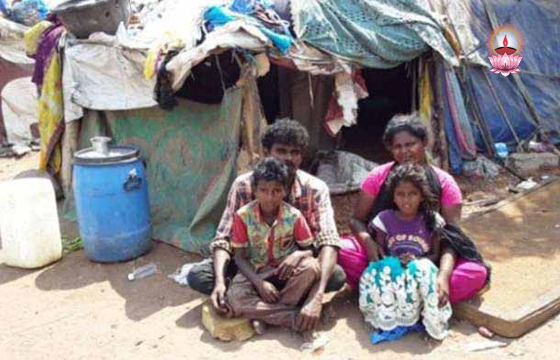
Muslims, Dalits and tribal people are more likely to be imprisoned in India than Hindus, according to a new report. The National Crime Records Bureau (NCRB) report also says that that these groups make up around 52% of inmates across the country.
“Minority groups have been subject to suppre-ssion for several years, so it is nothing new. There is prejudice among people that crime is always committed by minorities,” Father Vijay Kumar Nayak, secretary of the Indian Catholic bishops’ office for Dalits and lower classes.
“It is obvious that their number is more because of their illiteracy, financial crises and lack of means to engage lawyers, plus police bias to file charges against them freely without fearing a backlash.”
The priest said these minorities are poor, vulnerable and easy prey for authorities. Muslims, Dalits and tribal people together account for 39 percent of India’s population, according to the 2011 census, Muslims make up 14.2%, scheduled castes 16.6% and scheduled tribes 8.6%.
According to the NCRB, at the end of year 2019, Muslims formed 16.6%, Dalits 21.7% and tribal people 13.6% of India’s prison population. Muslim leader Muhammad Arif, chairman of the Centre for Harmony and Peace, told that the poor are “left at the mercy of God to fend for themselves.”
“The so-called media, which claims that it is secular, is least bothered to raise its voice at national level as it is more concerned with the activities of the elite group,” said Arif, whose organization is based in Uttar Pradesh.
“There are several cases in our country where the police arrest poor people in the name of solving the problem.”
All posts by Light of Truth
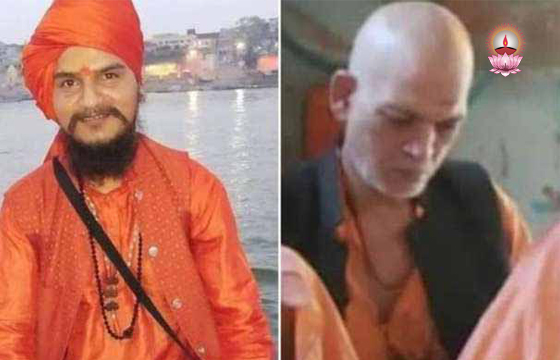
Hindu-led inquiry blames Indian Christians for lynching of priests
A fact-finding team led by a Hindu nationalist group in the western Indian State of Maharashtra has blamed Christians and left-wingers for violence that led to the killing of two Hindu priests.
The report by Vivek Vichar Manch, an NGO affiliated to Hindu nationalist group Rashtriya Swayamsevak Sangh (RSS), said the lynching was “anything but spontaneous.”
Vivek Vichar Manch has demanded federal investigation agencies such as the National Investigation Agency (NIA) or the Central Bureau of Investigation (CBI) handle the case.
“It has become fashionable these days to demand a CBI/NIA investigation. The demand made by the so-called fact-finding inquiry would have been more credible had it not come from an RSS-backed organization,” Joseph Dias, founder of the Mumbai-based Catholic Secular Forum, told.
“After targeting Muslims, it is now the turn of the left and Christians. Our community is known internationally for being non-violent and turning the other cheek and loving even our enemies as Jesus commanded.“
The lynching was fuelled by rumours circulating on Whats-App of thieves operating in the area during India’s nationwide lockdown to stem Covid-19.

Kerala records lowest male-female literacy gap in India
With 96.2 percent literacy rate, Kerala became India’s most literate state, according to the latest figures released by the National Statistical Office. Delhi came in second with 89 percent literacy rate. Uttarakhand with 87.6 percent and Assam with 85.9 percent are placed in third and fourth positions in the list. Earlier, south Indian states had topped as the most literate states. But the latest figures show a different story. Andhra Pradesh marked the worst literacy rate of 66.4 percent. Bihar with 70.9 percent, Telangana 72.8 percent and Karnataka 77.2 percent are the other states which marked low literacy rate compared to Kerala and Delhi.
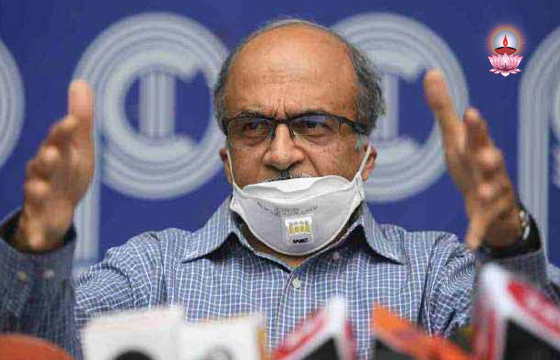
Priest-lawyers regret Indian court punishing activist
The decision of India’s top court to punish an activist lawyer for his criticism of the court raises concerns about free speech in the country, say activists including some Catholic priest-lawyers.
The Supreme Court on Aug. 31 imposed a token fine of one rupee on Prashant Bhushan after he was convicted of contempt of court for two tweets that question-ed the functioning of the court.
“Such a punishment is uncalled for,” said a statement from the National Lawyers Forum of Religious and Priests, a body of more than 200 Catholic priests, brothers and nuns.
The punishment may not be severe “but it could be perceived as an outcome of egotism,” said the forum of priests and nuns who practice law in different courts.
The court “in the name of protecting the institution of the constitution has let down the constitutional tenets,” the statement said.
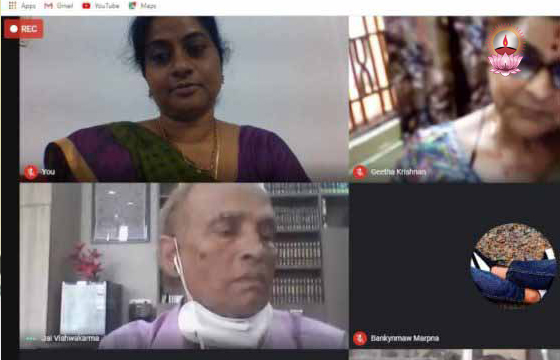
Telangana people’s assembly presents eight-point demands
Revival of grant-in-aid to Christian minority schools, land for cemeteries and stringent action against those attacking Christians are in an eight-point charter of demands that the Telangana State People’s Assembly on September 7 submitted to opposition parties in the southern Indian state. The assembly that met on September 4-7 in the state capital of Hyderabad also demanded that the state government allot necessary budgets to help Christians face problems from Coronavirus pandemic.
More than 3,000 people attended the webinar that heard eminent activists, academicians and legal luminaries address issues of social protection and welfare, rights of vulnerable sections such as minorities, women, transgenders, Aadivasis, Dalits, the disabled and children. The assembly approved the charter of demands presented by Montfort Brother Varghese Theckanath, director of Montfort Social Institute in Hyderabad. Brother Theckanath, one of the organizers, told Matters India that a delegation from the assembly presented the charter to the opposition parties so that they can take them up in the state legislative assembly sessions that began on September 7.
He said the charter stressed democratic rights and the state’s responsibility.
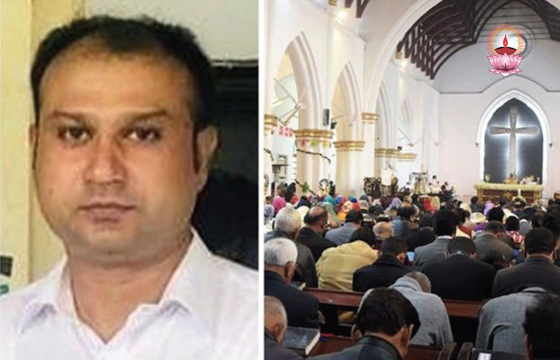
Fear keeps Pak judges from acquitting innocent Christians
Judges in smaller courts in Pakistan are too afraid to let Christians go free in blasphemy cases because of the threat from extremists, a human rights activist says.
The country prosecutes anyone who is seen to be insulting Islam – with the death sentence often handed out.
In light of another Christian falling foul of the laws, Sajid Christopher Paul, President and Executive Director of Human Friends Organisation, has said more needs to be done to make judges feel secure.
“Judges in the low courts do not feel as secure as the judges in the higher courts. The judges in the low courts do not have as much security as the High Court and the Supreme Court,” Paul told religious freedom charity Aid to the Church in Need.
“I am not saying the judges themselves say they are insecure but the lawyers and everyone involved in cases such as this say that they don’t have the same security so they don’t make the bold decisions.
“The Supreme Court can make daring decisions like the acquittal of Asia Bibi because they have high-level security.”

As Vatican ponders China deal, expert says it’s brought ‘little fruit’
As the Vatican sits poised to renew its historic agreement with China on the appointment of bishops later this month, one of the Catholic Church’s leading experts on Chinese affairs has argued that while the desire for dialogue is understandable, there is still nothing to show for the deal two years later.
“I understand the positivity, the temptation to have this relationship with China, but I have to say that there is very little fruit,” said Father Bernardo Cervellera, voicing his hope that “the Vatican, in renewing the agreement, instead of undergoing still more of the demands of China, puts more posts” in the way of their demands.
Head of Asia News and a former missionary in China, Cervellera spoke during a Sept. 4 online discussion hosted by the Acton Institute, a free-market Catholic organization, offering his evaluation of the state of the Asian continent amid the coronavirus pandemic and the new national security law in Hong Kong.
Speaking of the provisional agreement on the appointment of bishops the Vatican made with China in 2018, which is up for renewal this month, Cervellera noted that many officials on the Vatican’s side have praised the deal as something both positive and fruitful, while “China has never said anything.”
He referred to one article printed in the Global Times, a Chinese newspaper with ties to the Communist Party, which quoted Vatican officials praising the agreement, but which contained no references to officials or opinions from members of the Chinese government.
Everything, in this sense, he said, would mean that “the Vatican must give the ‘okay’ for everything that China does, and certainly they must interrupt their dialogue with Taiwan.”
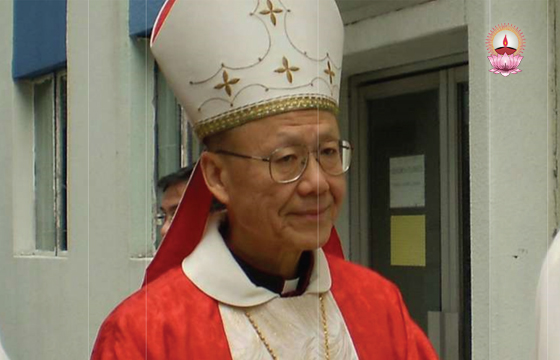
Hong Kong cardinal warns priests to ‘watch your language’ in homilies
The leader of the Diocese of Hong Kong has instructed priests to avoid politics in homilies and admonishing them for “offensive” and “provocative” preaching. The warning comes amid a crackdown on free expression in Hong Kong, after the implementation of the new National Security Law in July.
A letter, obtained by CNA, was sent from Cardinal John Tong Hon, the former Bishop of Hong Kong and current administrator of the diocese. “The homily is not meant to convey the preacher’s personal views (such as his own view on a social or political issue) but God’s message,” the cardinal wrote.
While the letter does not explicitly reference the ongoing political situation, the cardinal warned that priests and deacons “should be well aware that our faithful are all the time listening to what we say and watching what we do.”
“Therefore, we have to be prudent and attentive to what we say in our homilies, sermons and speeches.”
Cardinal Tong has previously spoken in support of the National Security Law, which came into force on July 1. The cardinal insisted the law would have “no effect” on the local Church’s religious freedom. Since the law came into force, Catholic journalists, political activists, and businessmen have been arrested on charges of sedition.
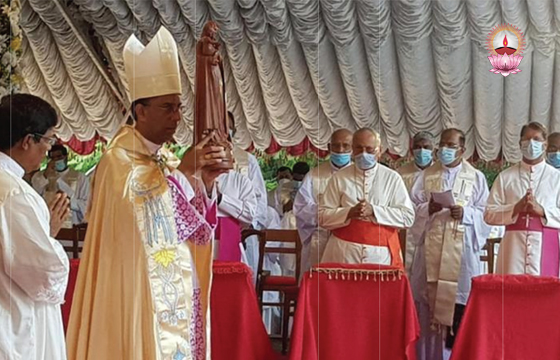
Sri Lanka, Card. Ranjith: No to religious or ethnic political parties
Religious and ethnic parties must be banned: they do nothing but divide the country, says Cardinal Malcolm Ranjith, Archbishop of Colombo, in his homily for the National Day of the Sick, delivered in the basilica of Our Lady of Lanka in Tewatte.
Referring to the Easter attacks last year, and to the slow progress in investigations to find the culprits, Cardinal Ranjith recalled that religion must not divide or kill people: “If one religion destroys another, what is its meaning? Show me where such a God is!”
According to the Archbishop, religious extremism has spread dangerously in the country. He wonders if religious leaders are responsible for the attacks. The suicide bombers targeted three churches – two Catholic and one Protestant – and three hotels. The explosions caused about 280 deaths, including 45 foreigners, and nearly 600 victims.
After more than a year, justice has still not been done. “The investigation is underway – under-lined Cardinal Ranjith – but the authorities have not found out who planted the bombs, who the organizers are and who financed the raids.”
He continued that it is of serious concern that those politicians and officials who failed in their responsibilities have yet to be identified: “We ask and hope that the government will keep its promises to the Church, punishing those responsible.”
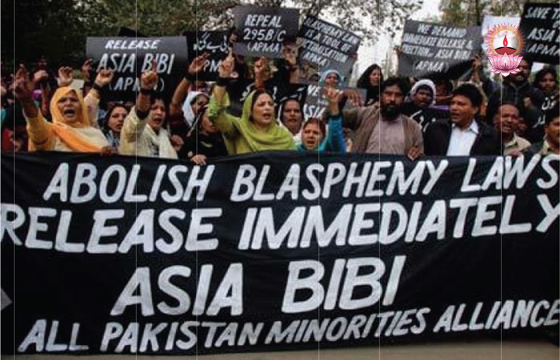
Khyber Pakhtunkhwa, another Christian arrested for blasphemy. The 42nd in a month
On 30 August a Pakistani Christian was arrested on charges of blasphemy in Nowshera (Khyber Pakhtunkhwa). It is the 42nd case of its kind recorded in August in the country, a real record according to the Naya Daur (New Era) website.
David Masih’s arrest occurred three days after a video – which went viral – was posted on social media showing pages of the Koran being thrown down a drain. Reported to the police by some Muslim inhabitants of his neighbourhood, he allegedly confessed to having torn the pages “to practice witchcraft.”
The Pakistani Penal Code states that “anyone who intentionally defiles, damages or desecrates a copy of the Holy Quran or an extract from it, or uses it in a derogatory manner or for any illegal purpose, will be punished with life imprisonment.” In the case of defamation of the Prophet Muhammad (section 295-C), the death sentence is foreseen.
Since 1987, when Pakistan added sections 295-B and 295-C to the blasphemy law, the number of arrests for this crime has increased. According to the National Commission for Justice and Peace of the Pakistani Bishops’ Conference, between 1987 and 2018, 776 Muslims, 505 Ahmadis, 229 Christians and 30 Hindus were accused of blasphemy.